Online exam cheating isn’t just a minor hiccup in digital education—it’s become a full-blown epidemic. According to research published in the Journal of Academic Ethics, reported cheating in online exams jumped from roughly 30% before COVID-19 to an alarming 55% during the pandemic. That’s nearly double the rate in just a few years.
- The Growing Challenge of Online Exam Cheating
- AI-Powered Proctoring: Your Digital Watchdog
- Smart Question Design That Discourages Cheating
- Technical Safeguards That Actually Work
- OnlineExamMaker: Your Complete Anti-Cheating Solution
- Building a Culture of Academic Integrity
The Growing Challenge of Online Exam Cheating
Data from proctoring services reveals that when students take unproctored exams, the dishonesty rate skyrockets to 70%. Think about that for a moment. Seven out of ten students will bend the rules when nobody’s watching.
So what changed? Well, pretty much everything. The shift to remote learning threw a wrench in traditional testing methods. Students suddenly found themselves in bedrooms and kitchen tables instead of exam halls, with Google just a click away and friends available on speed dial. The temptation became too easy, too convenient, and frankly, too normalized.
For teachers, trainers, and HR managers, this creates a real headache. How do you ensure that the scores you’re seeing actually reflect what students know? How do you maintain fairness when some students play by the rules while others exploit every loophole? The good news? Technology that created this problem can also solve it.
AI-Powered Proctoring: Your Digital Watchdog
Remember when proctoring meant sitting in a stuffy exam hall watching students squirm in their seats? Those days are gone. Welcome to the age of AI proctoring—your tireless, emotionless, incredibly observant digital assistant that never blinks, never gets distracted, and catches behaviors human eyes might miss.
Real-Time Webcam Monitoring
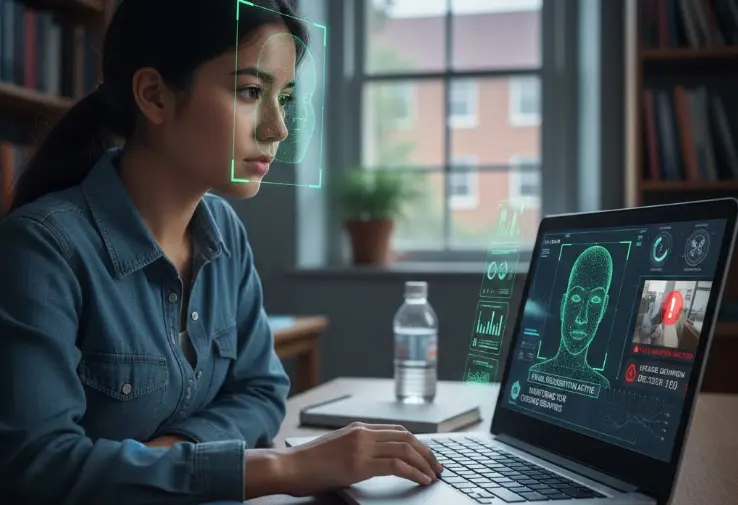
Think of AI webcam monitoring as having a vigilant observer who watches every test-taker simultaneously. The system captures video throughout the exam, looking for telltale signs of cheating. When a student looks away repeatedly, when multiple faces appear in frame, when someone disappears from view—the AI flags it immediately.
Here’s what makes it clever: the system doesn’t just record; it understands. Advanced algorithms analyze behavior patterns. Is the student’s gaze wandering to a second screen? Are they talking to someone off-camera? The AI catches these subtle cues that might slip past a human proctor juggling dozens of students.
Facial Recognition Technology
Identity fraud—where students hire someone smarter to take their exam—used to be nearly impossible to detect in online settings. Not anymore. Facial recognition technology compares the test-taker’s face against their registered photo before the exam starts and periodically throughout.
If the face doesn’t match? The system can automatically end the exam or alert administrators. Some sophisticated systems even detect when someone tries to swap mid-exam. It’s like having a bouncer at the door who never forgets a face.
Audio Detection
Sound suspicious? It probably is. AI audio monitoring listens for voices, background conversations, or unusual noises that might indicate someone’s getting help. You can adjust sensitivity levels—set it high for high-stakes certification exams, or dial it back for lower-pressure assessments where occasional household noise is acceptable.
Lockdown Browsers
Ever wish you could just lock students inside the exam window and throw away the key? Lockdown browsers do exactly that. Once activated, students can’t open new tabs, access other applications, or even minimize the window without triggering an alert.
It’s the digital equivalent of confiscating phones at the door. Students enter full-screen mode and stay there. Try to switch to Google? The system notices. Attempt to message a friend? Blocked. Some systems even disable copy-paste functions and screenshot capabilities.
Smart Question Design That Discourages Cheating
Here’s a secret successful test designers know: the best anti-cheating measure isn’t surveillance—it’s making exams that are hard to cheat on. When your questions require real understanding rather than simple recall, suddenly having Google open doesn’t help much.
Randomized Question Banks
Imagine giving every student a completely different exam. That’s essentially what randomized question banks accomplish. You create a pool of 100 questions, but each student only sees 30—and they’re different 30 questions for everyone.
The genius here? Collaboration becomes nearly impossible. Student A can’t share answers with Student B because they’re answering entirely different questions. Even if they try comparing notes afterward, the pool’s so large they might never overlap.
Higher-Order Thinking Questions
Multiple choice questions asking “What year did X happen?” are Google’s favorite snack. But questions requiring analysis, synthesis, or evaluation? Those make search engines sweat.
Instead of asking students to recall information, ask them to apply it. Present a case study and ask what approach they’d recommend. Give them a problem and ask them to explain their reasoning. These questions assess actual understanding—something AI chatbots and quick searches struggle to replicate convincingly.
Time Pressure (But Not Too Much)
Ever noticed how cheating takes time? Looking up answers, messaging friends, consulting notes—it all eats precious minutes. Strategic time limits make cheating impractical without making honest students panic.
The sweet spot? Give students enough time to think but not enough to consult multiple resources. For a 50-question exam, maybe 60 minutes instead of 90. Students who know the material move through confidently; those relying on external help find themselves scrambling.
Randomized Options and Question Orders
Small changes create big obstacles for cheaters. Shuffle the order of multiple-choice answers so “C” isn’t always correct. Rearrange question sequences so students sitting side-by-side see problems in different orders. These simple tweaks eliminate the classic “just copy my answers” strategy that’s plagued education since forever.
Technical Safeguards That Actually Work
Beyond proctoring and clever questions, several technical measures add extra layers of security. Think of these as your safety net—individually useful, but powerful when combined.
IP Address and Device Tracking
Every device connecting to the internet has a unique identifier—its IP address. Monitoring this reveals suspicious patterns. Is the same student logging in from three different locations simultaneously? Red flag. Did they suddenly switch from New York to California mid-exam? Worth investigating.
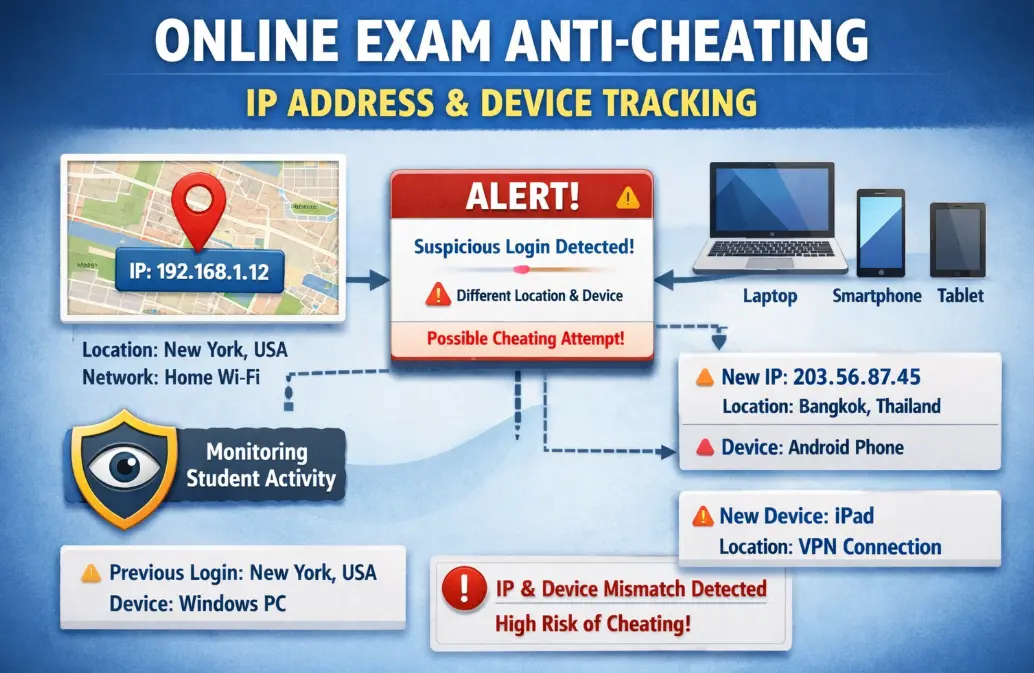
Device fingerprinting goes deeper, identifying the specific computer or tablet being used. This prevents students from logging in multiple times on different devices, a common tactic for having friends take sections of the exam.
Plagiarism Detection for Written Responses
For essay questions or short answers, plagiarism checkers compare responses against billions of online sources and previous submissions. Students who copy-paste from websites get caught. Those using essay mills or AI writing tools? The software detects those patterns too.
Modern plagiarism detectors have gotten scary good. They analyze writing style, vocabulary complexity, and even typing patterns to spot when something doesn’t match a student’s typical work.
Keystroke and Mouse Movement Logging
This feels like science fiction, but it’s reality: some systems track how students type and move their mouse during exams. Sudden changes in typing speed or rhythm can indicate someone else is answering questions. Unusual mouse movements might reveal someone copying from another screen.
The beauty of these behavioral biometrics? They’re nearly impossible to fake. Everyone has unique patterns in how they interact with computers, like a digital fingerprint.
Screen Recording and Tab Monitoring
Some proctoring systems record everything happening on the student’s screen throughout the exam. Every website visited, every application opened, every moment of the session gets captured for review.
This creates a complete audit trail. If questions arise about a student’s integrity, you can review exactly what they did during the exam. It’s like having security camera footage, but for digital activity.
OnlineExamMaker: Your Complete Anti-Cheating Solution for Exam Organizers
Okay, so you understand the strategies. But implementing them all manually sounds exhausting, right? This is where platforms like OnlineExamMaker become game-changers for educators who want comprehensive anti-cheating measures without the headache.
Create Your Next Quiz/Exam with OnlineExamMaker
AI-Powered Exam Proctoring
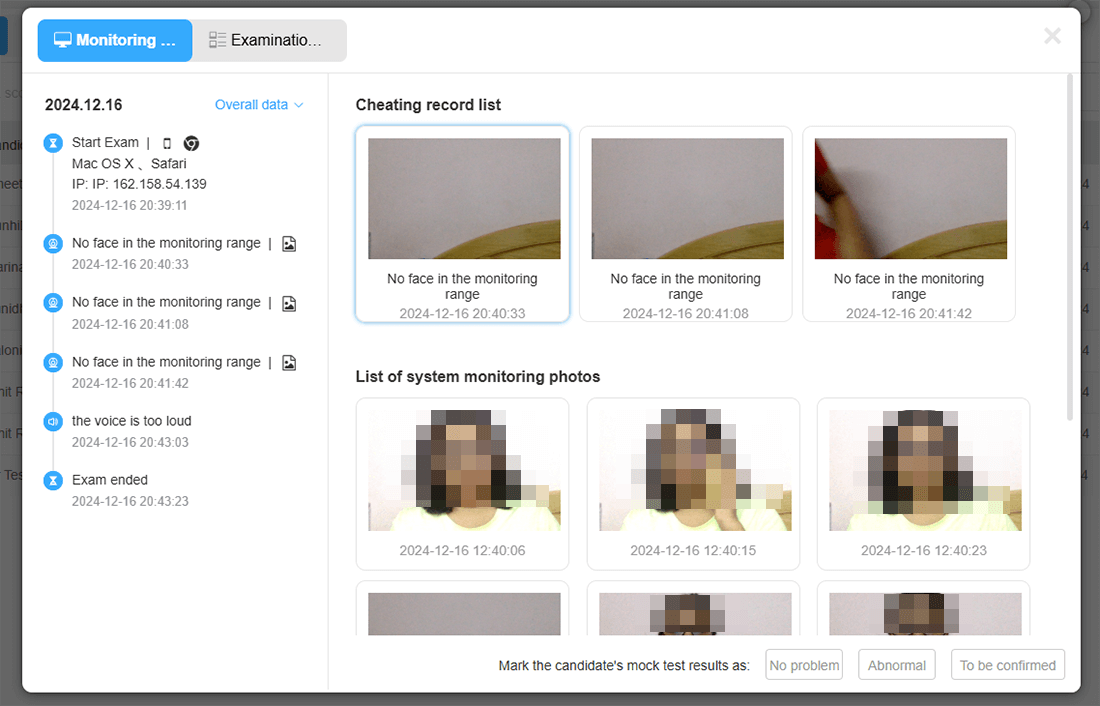
OnlineExamMaker’s intelligent monitoring system combines multiple AI technologies into one seamless experience. The platform uses facial recognition to verify student identity before exams begin and continues monitoring throughout. It detects suspicious behaviors like looking away repeatedly, multiple faces in frame, or the test-taker leaving their seat.
What makes their system particularly smart? It learns and adapts. The AI doesn’t just flag every head turn—it distinguishes between natural movement and suspicious behavior. This reduces false positives that plague less sophisticated systems.
Comprehensive Webcam Monitoring
The webcam proctoring feature captures the test-taking process in real-time, allowing administrators to view multiple students simultaneously through a monitoring dashboard. Think of it as a digital exam hall where you can observe everyone at once.
Teachers can watch live feeds during exams or review recordings afterward. The system automatically captures and timestamps suspicious moments, making post-exam review efficient. No more scrolling through hours of footage—jump straight to the flagged incidents.
Intelligent Cheating Detection
OnlineExamMaker’s system monitors several specific behaviors:
- No face detected: If students disappear from view for more than 10 seconds, the system automatically submits their exam
- Multiple faces: When additional people appear on camera, it triggers warnings and eventual auto-submission
- Face mismatch: If the person taking the exam doesn’t match the registered photo, the system flags or terminates the session
- Suspicious movements: Bowing head, turning away, or other behaviors associated with consulting notes get detected and counted
- Audio detection: Sound levels exceeding set thresholds indicate possible collaboration
You control the sensitivity and thresholds for each behavior. For high-stakes exams, set strict limits. For practice tests, you might allow more flexibility.
Exam Design Features
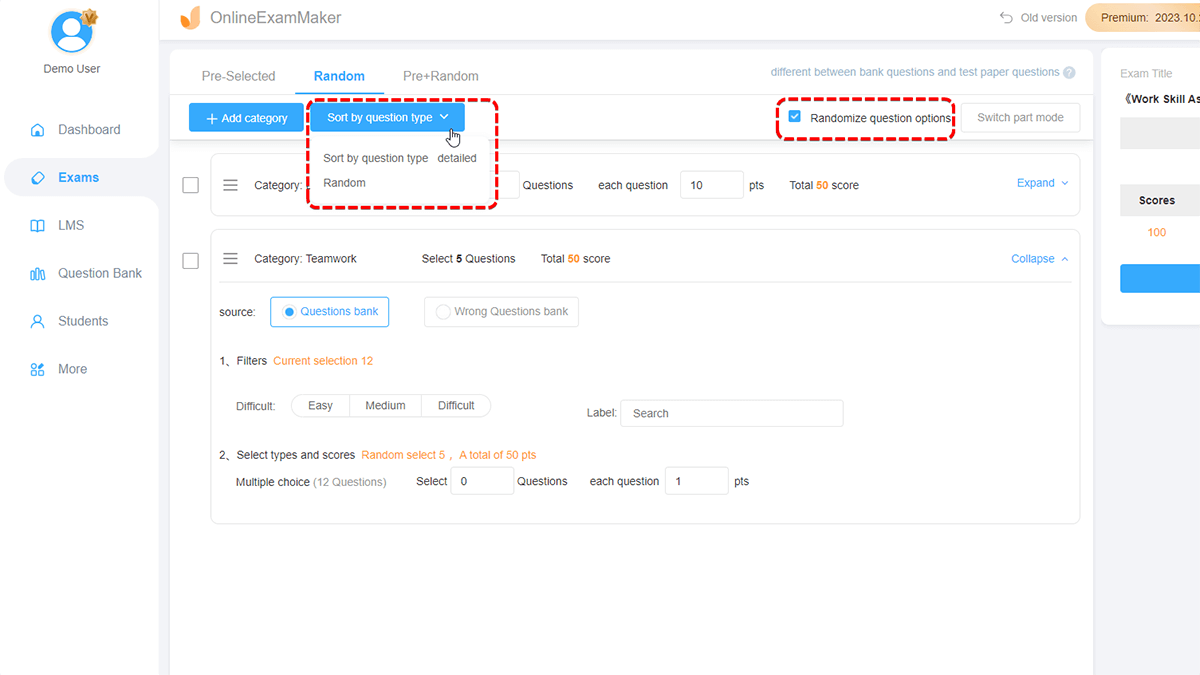
Beyond proctoring, OnlineExamMaker includes all the question-design tools we discussed earlier. Create randomized question banks, shuffle answer options, set individual question timers, and design higher-order thinking questions—all through an intuitive interface.
The platform also offers lockdown browser functionality, limiting screen switching and preventing students from accessing unauthorized resources during exams. Set limits on how many times students can switch tabs; exceed it, and the system ends their session.
AI Question Generator
Here’s a bonus that saves massive time: OnlineExamMaker’s AI can help generate exam questions. Describe your topic and learning objectives, and the system creates relevant questions at appropriate difficulty levels. This makes building large question banks—essential for randomization—far less tedious.
Real-Time Monitoring Dashboard
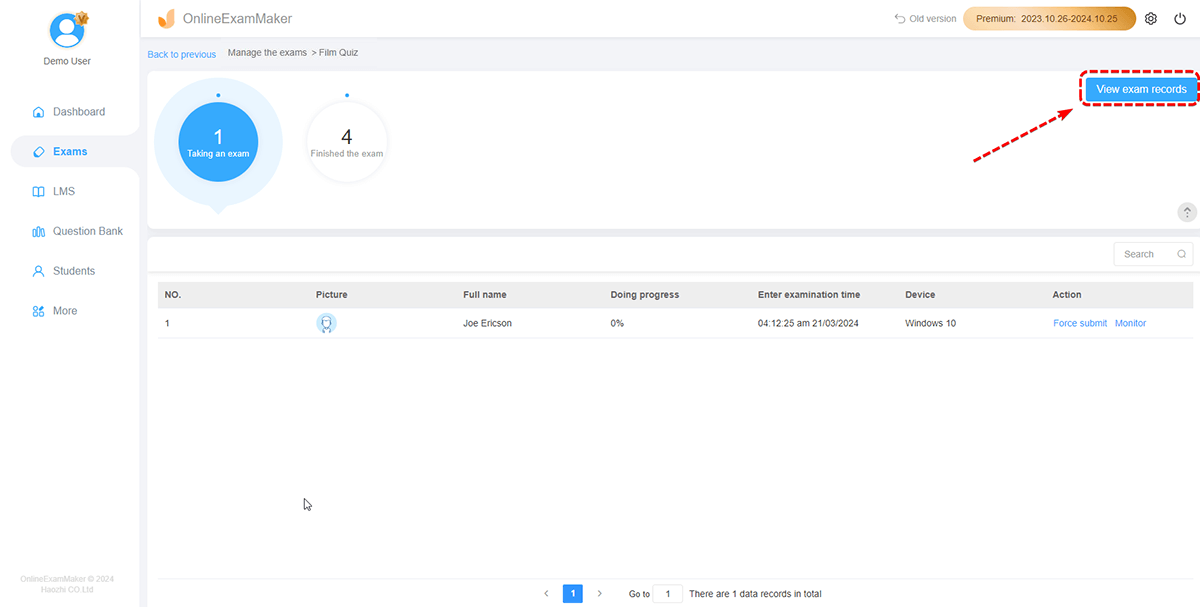
During active exams, proctors access a monitoring center showing all test-takers simultaneously. See who’s taking the exam right now, view their webcam feeds, check for flagged behaviors, and send warnings to specific students if needed.
This gives you the control of traditional in-person proctoring with the convenience of remote assessment. You can literally watch dozens of students at once from your office or home.
Building a Culture of Academic Integrity
Here’s something technology alone can’t fix: student attitudes toward cheating. All the proctoring software in the world won’t help if students view academic dishonesty as acceptable or necessary.
Clear Communication About Expectations
Before ever administering an exam, have frank conversations about academic integrity. Explain not just the rules but the why behind them. Help students understand that cheating undermines their own learning and devalues everyone’s achievements.
Be transparent about your anti-cheating measures. When students know they’re being monitored and understand the consequences, many will think twice. Deterrence works.
Make Learning the Goal, Not Just Grades
Why do students cheat? Often because they feel overwhelming pressure to achieve high scores rather than actually master material. When exams become about learning rather than just grading, motivation shifts.
Consider offering multiple attempts on lower-stakes assessments. Provide detailed feedback that helps students improve. Show them that you care more about their growth than catching them in mistakes.
Design Fair and Reasonable Exams
Unreasonably difficult exams push even honest students toward cheating out of desperation. Make sure your assessments align with what you’ve taught and give students adequate time to demonstrate their knowledge.
This doesn’t mean making tests easy—it means making them fair. When students believe they have a legitimate shot at success through honest effort, they’re less likely to risk cheating.
Provide Support and Resources
Sometimes students cheat because they’re struggling and don’t know where to turn. Offer study guides, review sessions, and opportunities for questions before exams. Make yourself accessible. When students have legitimate paths to success, cheating becomes less tempting.
Follow Through on Violations
If you catch cheating, address it consistently and according to your stated policies. Letting violations slide signals that rules don’t really matter. Conversely, harsh punishment for minor infractions feels unjust and breeds resentment.
The key is proportional, predictable consequences that everyone understands upfront.
The Bottom Line
Creating cheat-detected online exams isn’t about turning education into surveillance theater. It’s about maintaining the integrity and value of your assessments in a digital environment where traditional safeguards don’t apply.
The best approach combines multiple strategies: AI proctoring watches for suspicious behavior, smart question design makes cheating impractical, technical safeguards close loopholes, and thoughtful communication builds a culture where cheating feels unnecessary and wrong.
Platforms like OnlineExamMaker simplify implementation by bundling these features into comprehensive, user-friendly systems. But remember—technology is just a tool. The real foundation of academic integrity comes from clear expectations, fair assessment design, and genuine relationships between educators and students.
Yes, online exam cheating remains a significant challenge. But with the right combination of tools, strategies, and institutional culture, you can create rigorous, secure assessments that accurately measure what students know—and help them actually learn in the process.
Because at the end of the day, that’s what education is really about.
