Hiring the right person was never easy. But for small businesses, it can feel like a high-stakes guessing game — sifting through resumes, scheduling interviews, and hoping the person who looked great on paper actually delivers on the job. The traditional approach of filtering candidates by degrees and years of experience? It’s expensive, slow, and frankly, often wrong.
Skills-based hiring flips the script. Instead of asking “Where did you study?” it asks “What can you actually do?” And with AI tools now powering the process, small businesses can screen smarter, faster, and fairer — without needing a full HR department to pull it off.
According to a report by Eightfold AI, companies that adopt skills-based hiring see significant reductions in time-to-hire and improvements in candidate quality. For small teams where every hire counts, that’s not a nice-to-have — it’s a competitive edge.
Here are five AI tools built for exactly this kind of smarter hiring, plus one that deserves a spotlight of its own.
- What Is Skills-Based Hiring?
- Tool 1: OnlineExamMaker – Build Custom Skills Assessments in Minutes
- Tool 2: Eightfold AI Interviewer
- Tool 3: HireVue
- Tool 4: CodeSignal
- Tool 5: Workable
- Tool 6: Manatal
- Comparison Table
- Why Small Businesses Win with Skills-Based Hiring
- Final Thoughts
What Is Skills-Based Hiring?
Skills-based hiring is a recruitment approach that evaluates candidates based on their demonstrated abilities — not their educational background or job titles. It means testing whether a customer service applicant can de-escalate a complaint, or whether a logistics coordinator can actually read a supply chain spreadsheet, before inviting them to a formal interview.
For small businesses, this matters because you simply don’t have the time or budget to make costly hiring mistakes. AI-powered assessment tools automate the evaluation stage, create consistent scoring, and remove unconscious bias from the equation. The result: faster shortlists and more confident decisions.
Tool 1: OnlineExamMaker – Build Custom Skills Assessments in Minutes
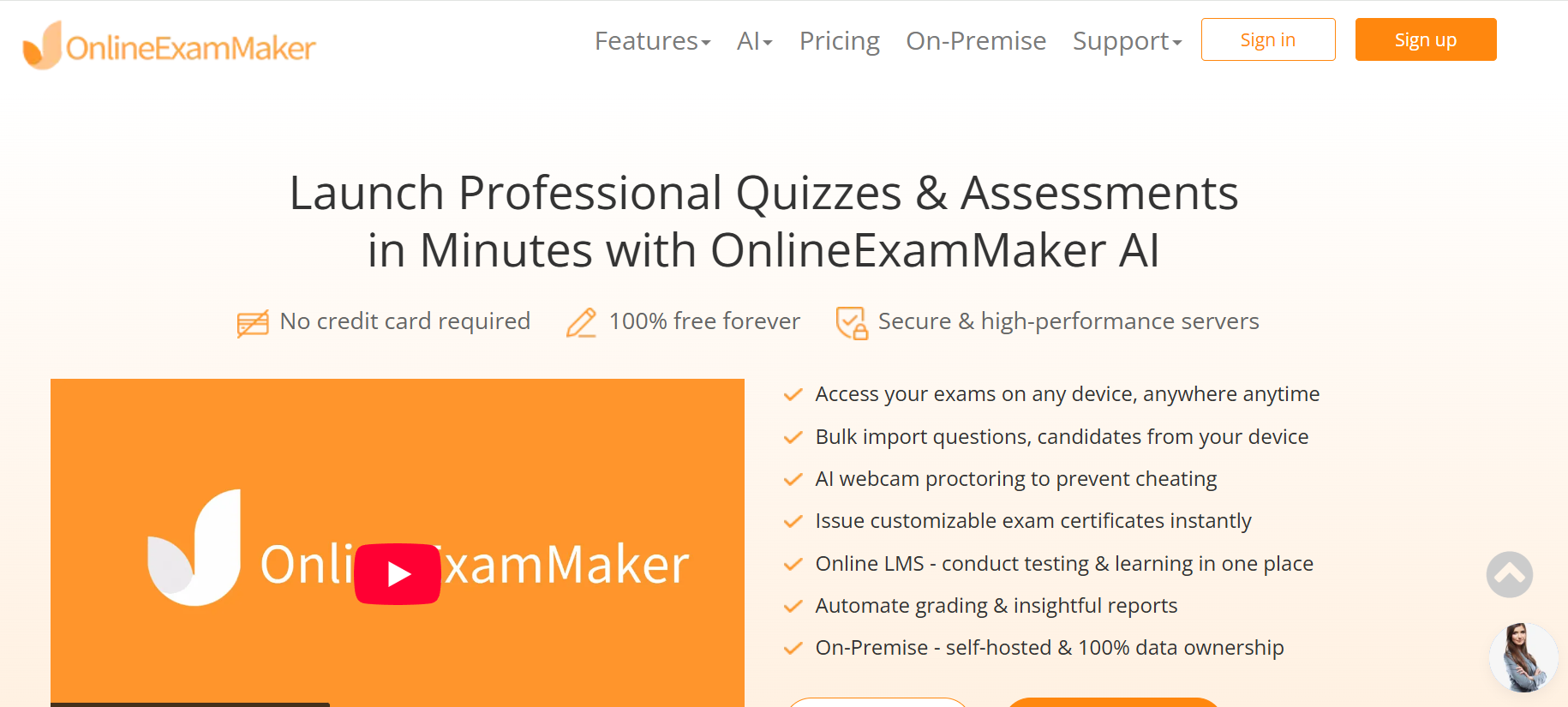
If you want full control over how you test candidates — without paying enterprise prices — OnlineExamMaker is one of the most practical options for small businesses. It’s an AI-powered exam and quiz platform that lets you create tailored assessments for any role, from warehouse staff to sales executives to customer support agents.
What makes it genuinely useful for hiring? Start with the AI Question Generator. You describe the role and the skills you want to test, and the AI builds a relevant question bank for you — instantly. No HR expertise required. No consultants. Just a job description and a few clicks.
Once candidates submit their assessments, Automatic Grading handles scoring in real time. Every response is evaluated consistently, which means your top five candidates are ranked on merit — not on who happened to get the friendliest reviewer. For busy owners managing hiring alongside everything else, this alone saves hours per role.
Worried about candidates cheating or having someone else take the assessment? OnlineExamMaker’s AI Webcam Proctoring monitors candidates during the test, flags suspicious behavior, and ensures your results actually reflect the individual’s abilities. That’s a critical feature when you’re making hiring decisions remotely.
Here’s a quick look at how to use OnlineExamMaker for your small business hiring process:
- Create your assessment — Use the AI Question Generator to build questions tailored to the role. Mix multiple choice, short answer, and scenario-based questions.
- Set up proctoring — Enable webcam monitoring and time limits to ensure test integrity.
- Share the link — Send candidates a unique assessment link. They can complete it on any device.
- Review ranked results — Automatic Grading scores and ranks candidates immediately after submission, so you can move to interviews faster.
- Make data-driven decisions — Use assessment scores alongside your interview notes to select confidently.
OnlineExamMaker also supports a wide variety of question types and is used by HR teams, trainers, and educators globally. It’s available as both a cloud-based SaaS and an on-premise solution — which is ideal for businesses in regulated industries or those managing sensitive candidate data.
Create Your Next Quiz/Exam Using AI in OnlineExamMaker
Tool 2: Eightfold AI Interviewer
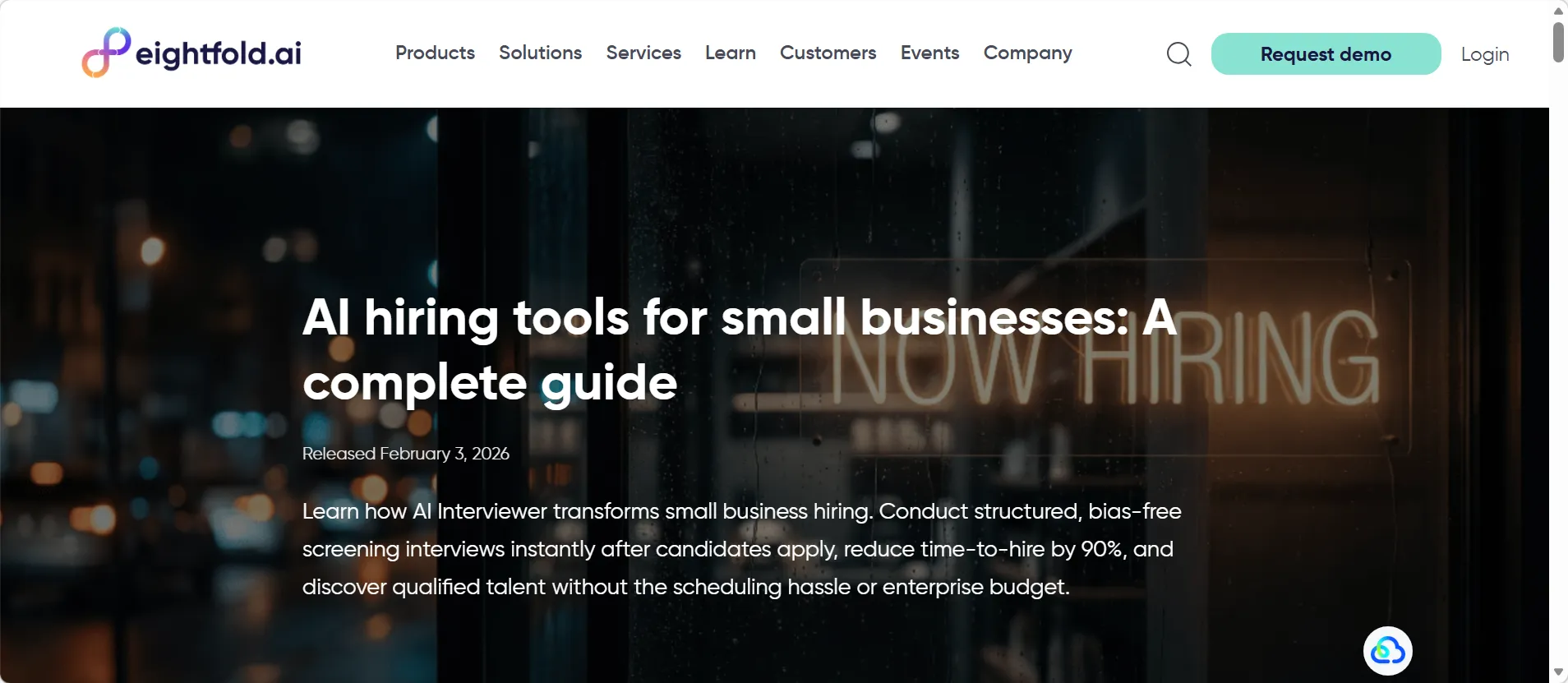
Think of Eightfold AI as your always-on interviewer. The moment a candidate submits an application, Eightfold AI Interviewer can automatically schedule and conduct a structured video interview — no back-and-forth scheduling emails, no waiting for a hiring manager to become available.
The platform evaluates candidates using bias-free AI models, scoring on actual competencies rather than presentation style or name recognition. It supports over 22 languages, which is a big deal for small businesses in diverse urban markets. Setup takes hours rather than weeks, and it integrates with most applicant tracking systems (ATS).
For small retail, hospitality, or service businesses hiring locally, this kind of immediate screening can dramatically shrink your hiring cycle — from weeks to days.
Tool 3: HireVue
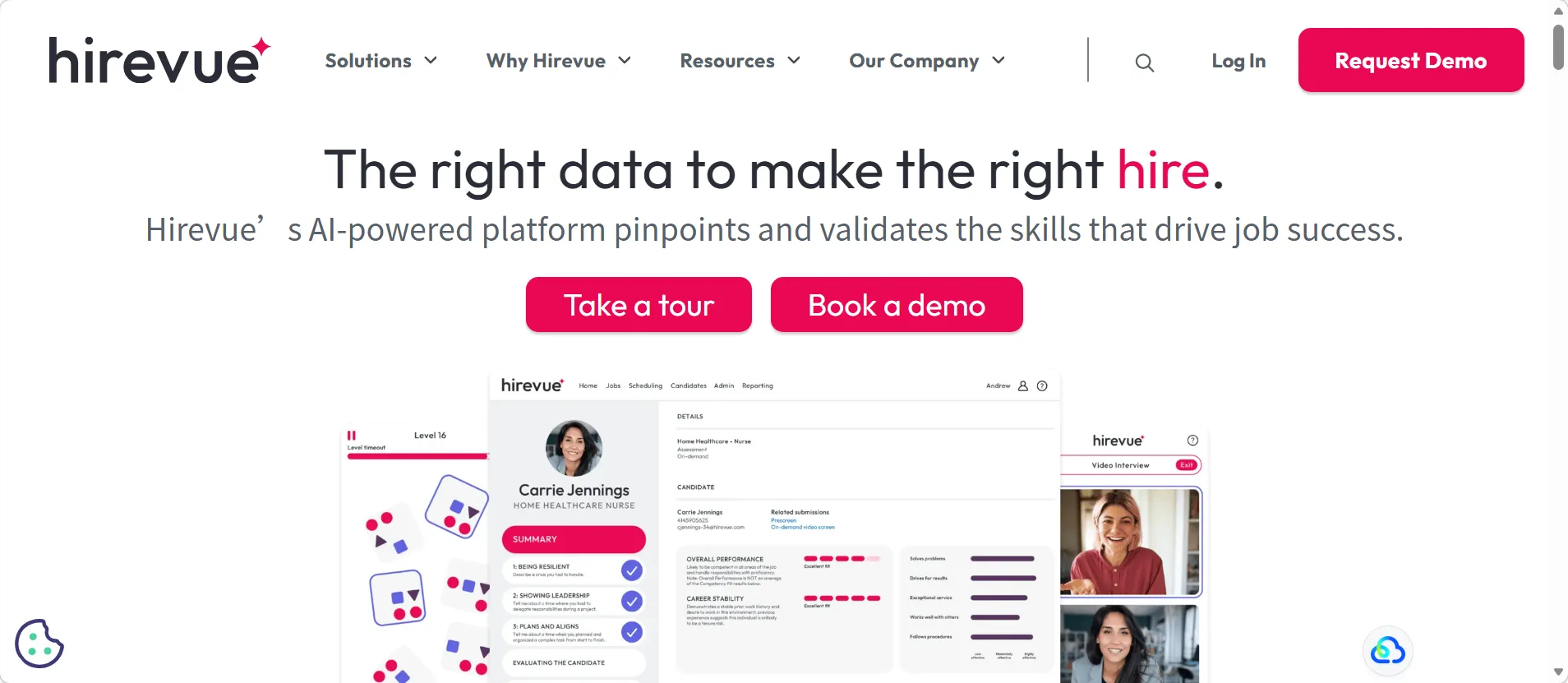
HireVue is one of the more established names in AI-driven hiring. Its strength lies in combining video interviews with structured skill assessments, scored by AI against role-specific competencies like communication, problem-solving, and situational judgment.
According to OmniAI’s 2026 roundup, HireVue is especially valued for its scalability — meaning you can use it to screen 10 applicants or 10,000 without changing your workflow. For small businesses anticipating growth, that’s a worthwhile consideration.
It places performance evidence above resume credentials, which means a career-changer with strong demonstrated skills won’t be filtered out by an algorithm that’s just counting years of experience. The trade-off: it’s priced higher than some alternatives, so it’s best suited for businesses that are hiring frequently.
Tool 4: CodeSignal
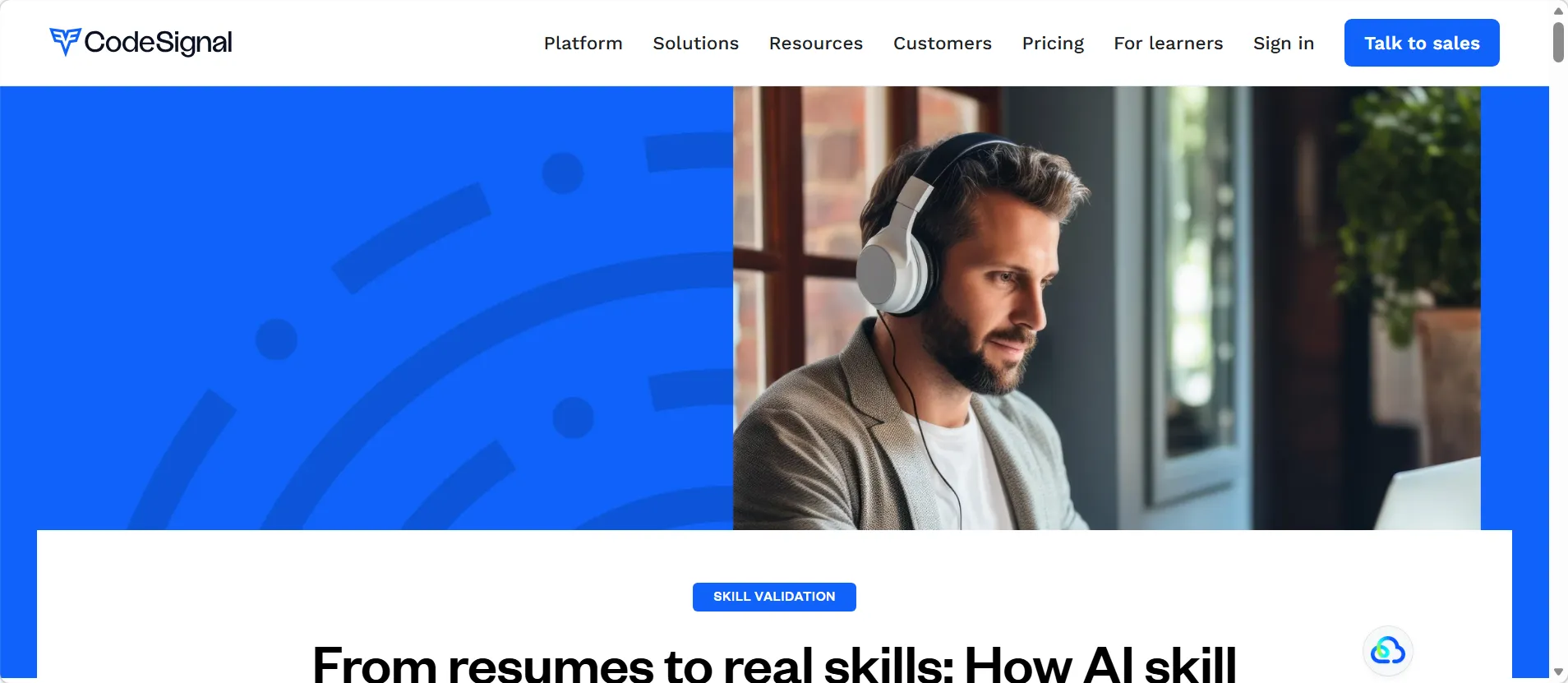
If you’re hiring for any technical role — developer, data analyst, IT support — CodeSignal is purpose-built for the job. It offers AI-powered coding challenges and technical skill validations that go far beyond what a resume can show.
Candidates complete real-world tasks and coding exercises in a monitored environment, and their performance is scored objectively. CodeSignal also supports skills-based frameworks for evolving roles — which is important when the tech stack you need today may look different in two years.
For small tech startups or manufacturing businesses with digital operations teams, CodeSignal can dramatically improve hire quality and reduce early attrition. When you hire someone who was tested on the actual work, they’re far less likely to struggle once they’re in the role.
Tool 5: Workable
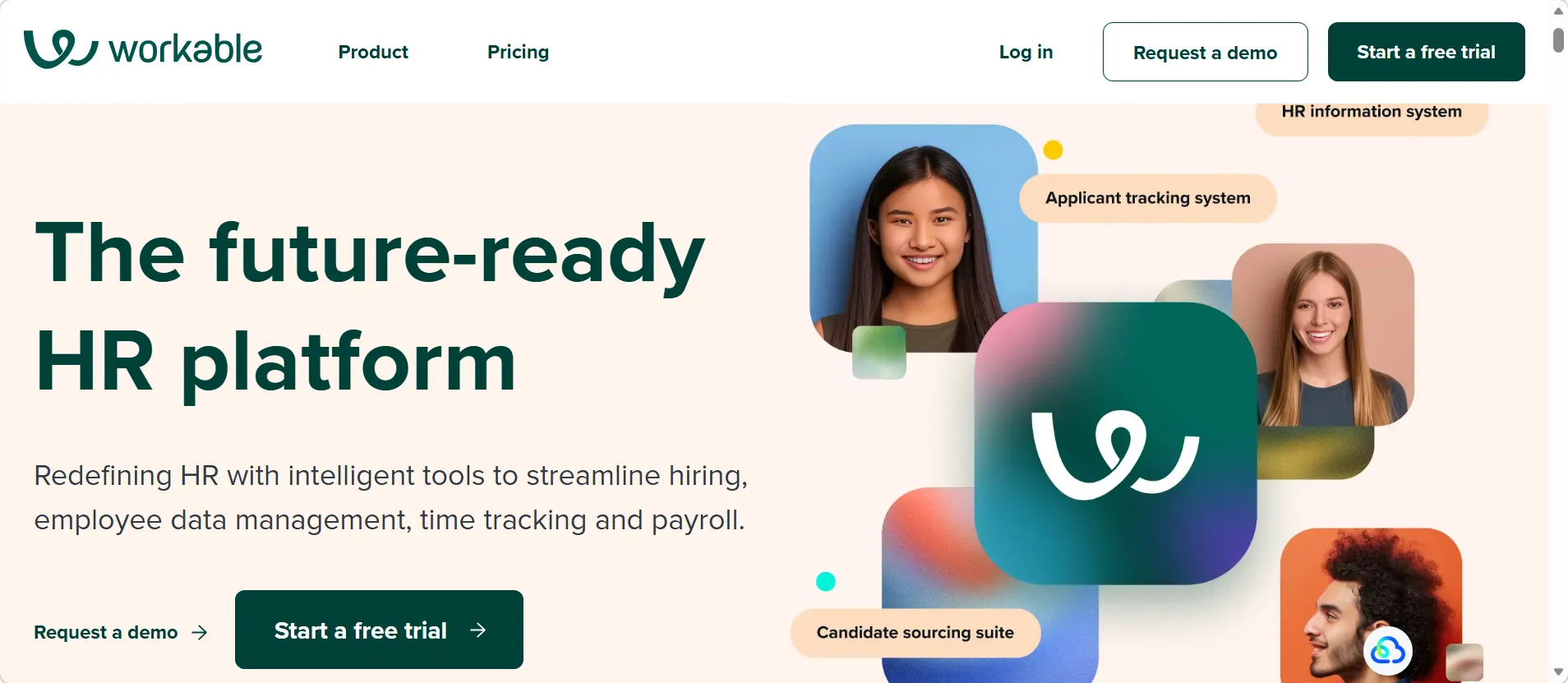
Not every small business has time to post jobs across twelve different platforms and manually filter the results. Workable takes a proactive approach: its AI surfaces and sources candidates from job boards and professional profiles, matching them to your role requirements before they’ve even applied.
As highlighted by Paychex’s HR resource guide, Workable’s pricing model is designed with small business budgets in mind. It expands your candidate reach without requiring you to hire a dedicated recruiter — and the AI matching means you spend your time on genuinely qualified prospects, not random applications.
It’s particularly useful in competitive hiring markets where passive candidates (people who aren’t actively job-hunting but would consider the right opportunity) represent an untapped talent pool.
Tool 6: Manatal
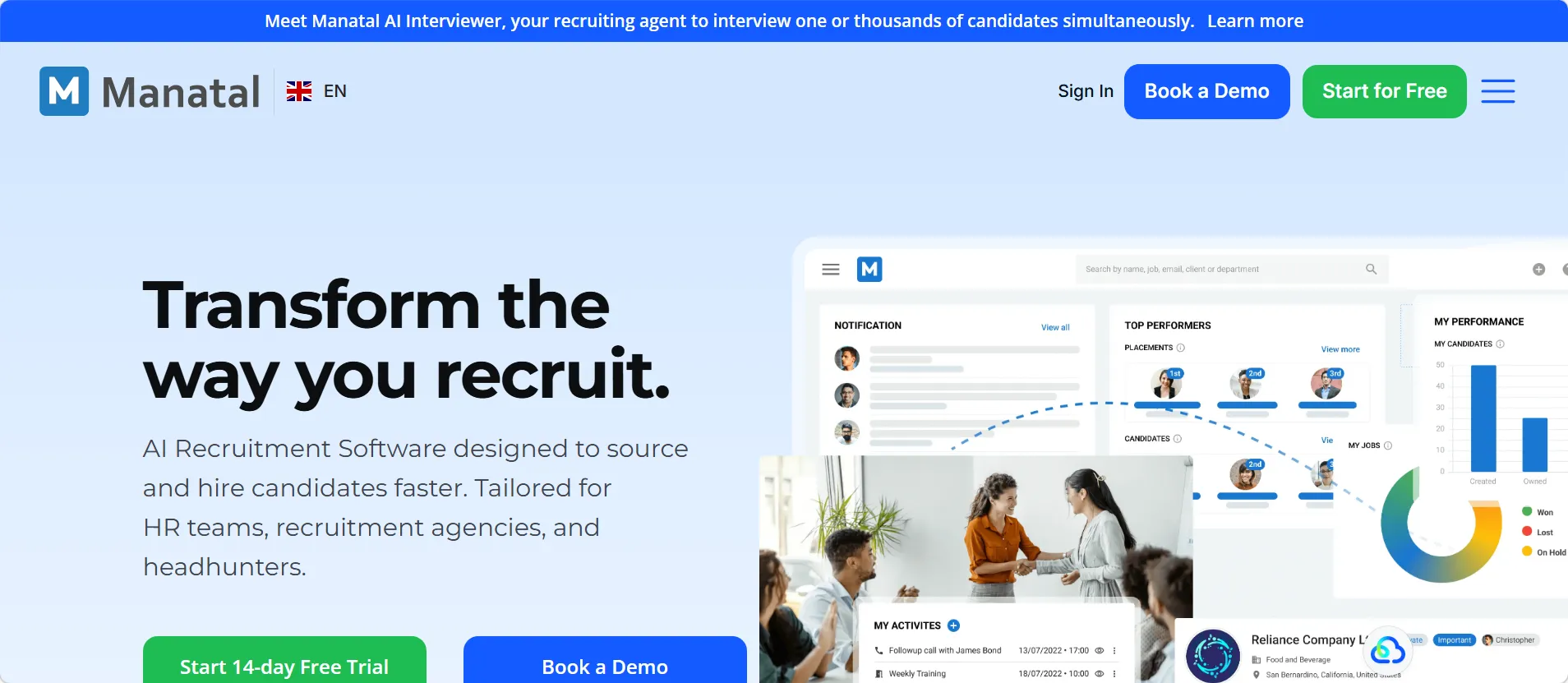
Manatal is a strong all-in-one ATS for small businesses that want simplicity without sacrificing capability. Its AI parses resumes automatically, extracts skills and experience data, and ranks candidates by fit — all without requiring a technical setup.
According to OmniAI, Manatal includes a Chrome extension that lets you pull candidate profiles directly from LinkedIn and other platforms, which is a real time-saver when you’re sourcing and shortlisting simultaneously. Its interface is intuitive enough for business owners with no HR background, and it handles the organizational complexity of tracking multiple open roles at once.
For businesses running lean — where one person wears the HR hat alongside five other hats — Manatal keeps hiring organized and moving.
Comparison Table
| Tool | Best For | Key Feature | Pricing Fit |
|---|---|---|---|
| OnlineExamMaker | Custom skills assessments for any role | AI question generation + auto grading + proctoring | Free tier available |
| Eightfold AI | Automated structured video interviews | 22+ languages, bias-free AI scoring | Mid-range |
| HireVue | Scalable video + competency assessments | Performance-over-resume scoring | Higher tier |
| CodeSignal | Technical and developer hiring | Real-world coding challenges | Mid-range |
| Workable | Candidate sourcing and matching | AI-powered job board outreach | Budget-friendly |
| Manatal | Simple ATS for lean teams | Resume parsing + Chrome extension | Budget-friendly |
Why Small Businesses Win with Skills-Based Hiring
Here’s the honest math: traditional hiring is expensive. Between job postings, interview time, reference checks, and onboarding costs, a single bad hire at a small business can cost anywhere from $4,000 to $15,000 — a figure that can genuinely set a small operation back. Skills-based hiring, backed by AI assessment tools, cuts that risk significantly.
Businesses using AI hiring tools report:
- 50%+ reduction in time spent on manual screening
- Higher retention rates because candidates are tested on real job tasks
- More diverse shortlists due to reduced credential bias
- Faster time-to-hire, especially important when competing with larger employers
The shift is happening across sectors too. In tech and healthcare, degree requirements are quietly disappearing from job postings as employers realize that a skills test tells them far more than a diploma. Manufacturing businesses are using assessments to test technical aptitude before investing in training. Retailers are using them to evaluate customer service instincts before a single interview is scheduled.
You don’t need to overhaul your entire hiring process overnight. Start with one role, run a free trial on one of these platforms, and compare the quality of candidates who passed a skills assessment against those who didn’t. The data usually speaks for itself.
Final Thoughts
Hiring on instinct alone is a luxury small businesses can’t afford. The good news? You don’t have to. AI tools have made skills-based hiring accessible, affordable, and genuinely effective — even for teams of five or ten people with no dedicated recruiter.
Whether you need a full assessment platform like OnlineExamMaker, a video interview solution like HireVue, or a sourcing engine like Workable, the right tool depends on your role type, budget, and how much of the process you want automated.
Start with a free trial. Test one role. See what a skills-first approach actually looks like in practice. Chances are, you won’t go back to resume-only screening again.