Gone are the days when creating a comprehensive history exam meant burning the midnight oil, wrestling with question banks, and praying your multiple-choice options aren’t too obvious. Today’s educators are discovering that AI in history education isn’t just a fancy buzzword – it’s a game-changer that’s reshaping how we approach assessment.
Table of contents
- Why AI is the History Teacher’s Secret Weapon?
- Step-by-Step: Creating Your AI-Powered History Exam
- Advanced AI Features That’ll Make Your Colleagues Jealous
Why AI is the History Teacher’s Secret Weapon?
Let’s be honest – history teachers have always been time travelers, juggling ancient civilizations with modern deadlines. But here’s where things get interesting: AI historical research tools aren’t just making exam creation faster; they’re making it smarter.
Think about it. Traditional exam creation is like being a detective, historian, and fortune teller all rolled into one. You need to predict what students should know, figure out how to test it fairly, and somehow make it engaging enough that they don’t fall asleep halfway through the Renaissance section.
Enter artificial intelligence – your digital teaching assistant that never needs coffee and doesn’t judge your 3 AM brainstorming sessions.
The Real Benefits That Matter
When educators first hear about AI tools for history research and teaching, they often think it’s just about speed. But here’s what really happens when you embrace AI education technology history:
Personalization becomes possible. Remember Sarah, the student who blazes through World War II content but struggles with economic concepts? AI can help you create adaptive questions that challenge her strengths while supporting her growth areas.
Bias gets checked at the door. We all have our favorite historical periods (mine happens to be the Jazz Age, thanks for asking), but AI helps ensure your exams cover the full spectrum of required content without unconscious favoritism.
Creativity flourishes. Instead of spending hours on logistics, you can focus on crafting those “aha!” moments that make students actually care about why the printing press mattered.
Step-by-Step: Creating Your AI-Powered History Exam
Ready to dive in? Here’s how to use OnlineExamMaker to create a history exam that would make even the most reluctant student sit up and take notice.
Create Your Next Quiz/Exam Using AI in OnlineExamMaker
Step 1: Set Up Your Digital Command Center
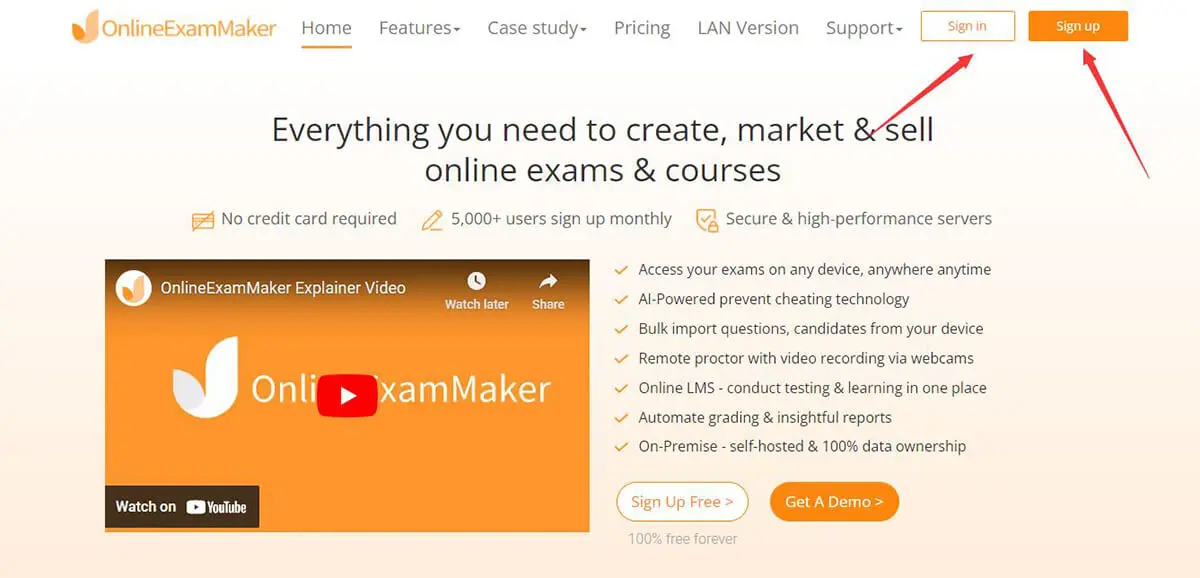
First things first – head over to OnlineExamMaker and create your account. Think of this as setting up your digital classroom where the magic happens. The interface is refreshingly straightforward – no PhD in computer science required.
Once you’re in, you’ll want to create a new exam. Click that “Create Exam” button like you mean it. This is where your history exam construction AI journey officially begins.
Step 2: Define Your Historical Territory
Here’s where things get exciting. Instead of starting with a blank page and a prayer, you’ll input your exam parameters. Are you covering the American Civil War? The rise and fall of ancient Rome? The complexities of the Industrial Revolution?
The AI needs to know your battlefield – literally and figuratively. Input your topic, grade level, and learning objectives. Be specific here. “The Civil War” is good, but “Causes and consequences of the American Civil War, focusing on economic, social, and political factors” is better.
Step 3: Let AI Work Its Question-Generating Magic
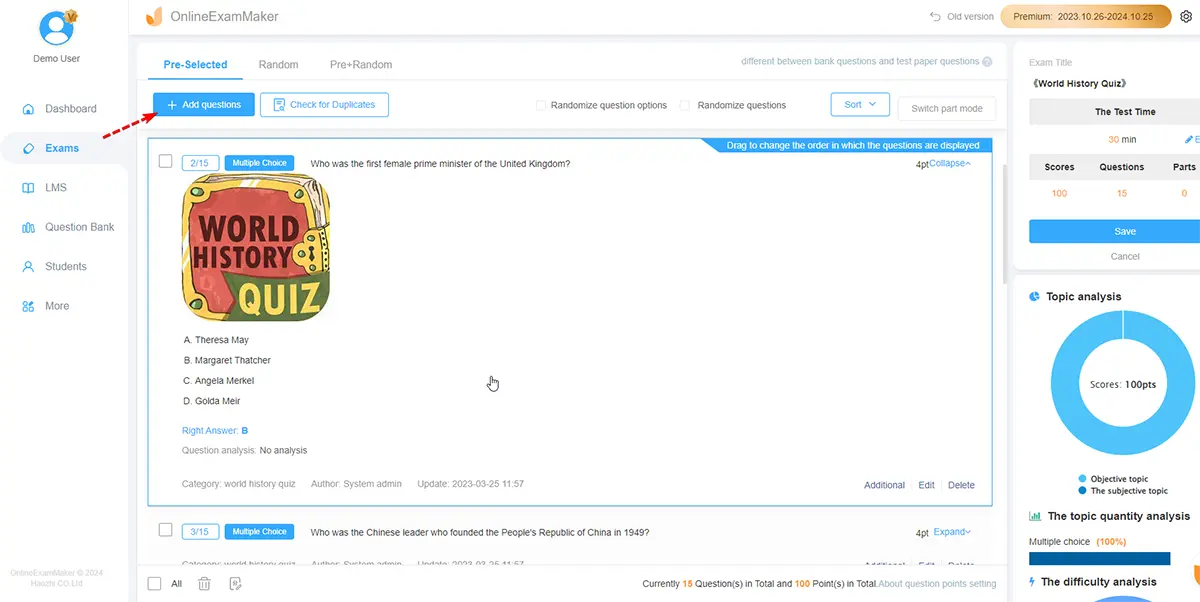
This is where creating history test questions with AI gets genuinely impressive. The system analyzes your parameters and starts generating questions that would take you hours to craft manually.
But here’s the beautiful part – it’s not just spitting out random trivia. The AI considers different question types: multiple choice for fact recall, short answer for analysis, and essay questions for critical thinking. It’s like having a teaching assistant who actually understands Bloom’s Taxonomy.
Step 4: Customize Like the Pro You Are
Now comes the fun part – making it yours. Review each AI-generated question and add your personal touch. Maybe that question about the Boston Tea Party needs a local angle for your Massachusetts students. Perhaps that Civil Rights question could benefit from a primary source excerpt you’ve been saving.
This is where your expertise shines. The AI provides the foundation, but you’re the architect who makes it meaningful for your specific students.
Step 5: Preview and Perfect
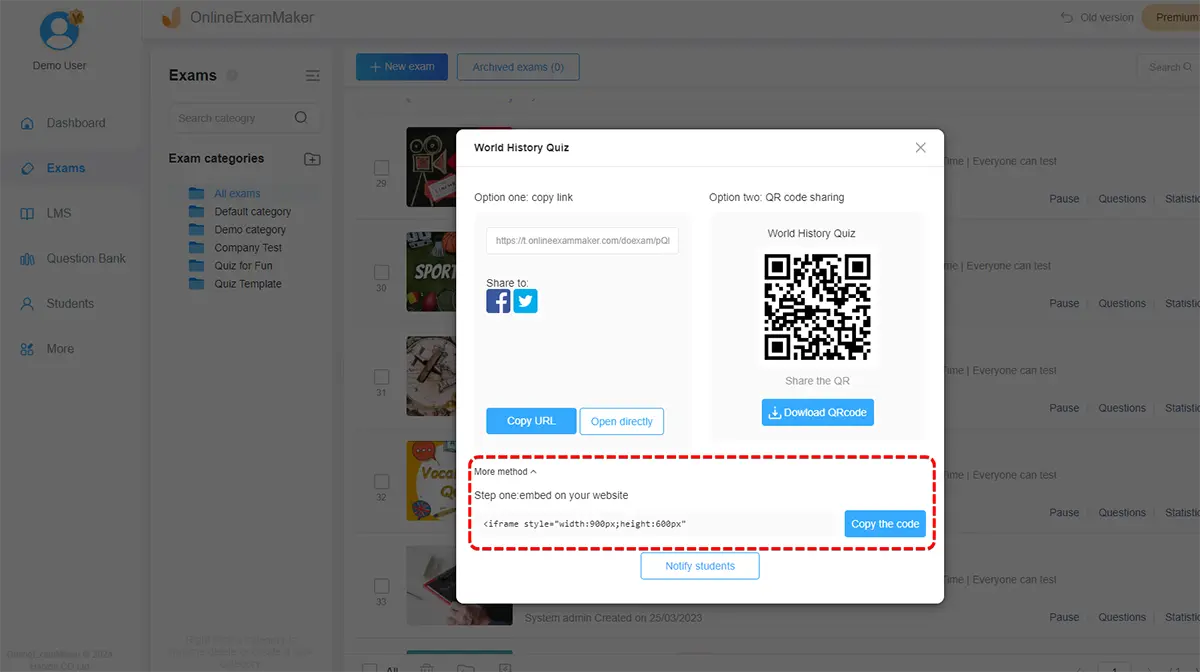
Before unleashing your creation on unsuspecting sophomores, take it for a test drive. OnlineExamMaker’s preview function lets you experience the exam from a student’s perspective. Does the flow make sense? Are the instructions clear? Would you be able to tackle this if you were 16 again?
Advanced AI Features That’ll Make Your Colleagues Jealous
Adaptive Testing: The Smart Exam That Thinks
Here’s where things get seriously cool. AI-assisted history lesson planning extends into adaptive testing – exams that adjust difficulty based on student responses. Struggling with Reconstruction? The exam provides more scaffolding. Acing medieval history? Time for some challenging analysis questions.
It’s like having a personal tutor built into your assessment, ensuring every student is appropriately challenged without being overwhelmed.
Automatic Grading with Human Insight
The AI handles the heavy lifting of grading objective questions instantly, but here’s the smart part – it flags subjective responses that need your expert eye. You’re not replaced; you’re amplified.
Think of it as having a teaching assistant who sorts through the straightforward answers so you can focus on those nuanced essay responses about whether Napoleon was a hero or villain (spoiler alert: it’s complicated).
Ready to revolutionize your history assessments? Here’s your action plan:
Try it risk-free. Most AI exam platforms, including OnlineExamMaker, offer free trials. Use this opportunity to explore features without commitment.
Start with a familiar unit. Choose content you know inside and out for your first AI-assisted exam. This way, you can easily spot and correct any AI hiccups.
Share with colleagues. The best innovations spread when educators collaborate. Share your successes (and learning moments) with your department.
The bottom line? AI in history education isn’t about replacing the human element that makes teaching special. It’s about amplifying your expertise, freeing up your time for what matters most, and creating better learning experiences for every student who walks through your classroom door.
