Running an exam for 50 people is manageable. Running one for 5,000? That’s a different beast entirely. Multiply the venues, invigilators, subject papers, special accommodations, and last-minute dropouts—and you’re staring down a logistical challenge that can derail even the most experienced exam teams.
The good news: there’s a proven approach that transforms chaos into clarity. Segmentation and grouping—dividing your candidate pool into meaningful, manageable units—are the backbone of every well-run large-scale exam. This article breaks down why these strategies matter, how to implement them, and how tools like OnlineExamMaker make the whole process significantly less painful.

- What Is Segmentation and Grouping in Exam Management?
- Why Segmentation Matters at Scale
- Why Grouping Matters at the Operational Level
- Common Segmentation Criteria to Consider
- How to Organize Thousands of Exam Candidates with OnlineExamMaker
- Benefits of Getting Segmentation and Grouping Right
- Pitfalls to Avoid
- A Day in the Life of a Segmented Exam
- Conclusion: Structure Is Not Optional
What Is Segmentation and Grouping in Exam Management?
Before diving into the tactics, let’s clarify the two terms—because they’re often used interchangeably when they’re actually distinct layers of the same strategy.
Segmentation means dividing your entire candidate pool into meaningful categories based on shared characteristics. Think: subject and level, exam center location, delivery mode (online vs. in-person), or special needs requirements. Segmentation is your high-level map.
Grouping is what happens inside each segment. It’s the creation of smaller operational units—a seating hall, a digital exam room, an invigilation batch, a check-in queue. Grouping is where the plan meets the ground.
Together, these two layers allow exam administrators to break a 10,000-candidate cohort into something that actually feels governable.
Why Segmentation Matters at Scale
Better Resource Allocation
When you know exactly how many candidates are sitting “Level 3 Biology, Evening Session, Remote” versus “Foundation Math, Urban Centre, Morning,” you can allocate halls, staff, and materials with precision. No more over-ordering paper for venues that don’t need it, or under-staffing a center that’s twice as large as expected.
According to Meta-i Technologies, strategic segmentation directly reduces bottlenecks on exam day by enabling balanced workload distribution across teams and venues.
Tailored Communication
Sending the same generic instruction email to every candidate is a recipe for confusion. Overseas candidates need different logistics information than local ones. Candidates with accommodations need different timing details. Segmentation makes targeted, relevant communication possible—and your candidates will notice the difference.
Security and Compliance
Different segments often carry different security requirements. A proctored remote exam needs webcam monitoring protocols. A supervised in-person hall needs physical ID checks. When segments are clearly defined, it’s far easier to apply the right rules to the right group—and to audit compliance afterward if questions arise.
Why Grouping Matters at the Operational Level
Supervision Becomes Manageable
An invigilator assigned to “Hall B, Seats 1–40, 9:00am session” knows exactly who they’re responsible for. That clarity reduces errors, speeds up roll-call, and makes any irregularity far easier to flag and trace. Without grouping, you have a crowd. With grouping, you have accountability.
Faster Check-In and Identity Verification
Grouped seating lists and staggered check-in batches cut down queue times dramatically. Candidates who know their group and seat number arrive, get verified, and sit down—without creating a bottleneck at the entrance.
Peer Support in Preparatory Settings
For training organizations and HR assessment teams running pre-employment tests or practice exams, grouping has a bonus use: it enables peer-review, group feedback sessions, and targeted coaching. Small groups sharing the same test form naturally create discussion cohorts—useful long after the exam itself is done.
Common Segmentation Criteria to Consider
| Segmentation Criteria | Examples | Why It Matters |
|---|---|---|
| Subject and level | Math Paper 1 vs. Paper 2; Foundation vs. Higher | Different papers, marking schemes, and timing requirements |
| Location and center | Urban vs. rural; local vs. overseas | Logistics, time zones, and communication differ significantly |
| Delivery mode | On-site, remote, hybrid, platform-specific | Different proctoring and tech requirements |
| Candidate needs | Extra time, language support, late registrations | Compliance with accessibility and equity requirements |
| Cohort or organization | By school, department, or employer | Enables group-level reporting and benchmarking |
How to Organize Thousands of Exam Candidates with OnlineExamMaker
Manually managing segmentation across thousands of candidates using spreadsheets and email chains is how mistakes happen. That’s where a purpose-built platform changes everything.
OnlineExamMaker is an all-in-one online exam platform designed specifically for organizations running assessments at scale—whether you’re an exam board, a university, a corporate training team, or an HR department screening hundreds of applicants. It handles the heavy lifting so your team can focus on what matters: the quality of the exam itself.
Create Your Next Quiz/Exam Using AI in OnlineExamMaker
Here’s how OnlineExamMaker directly supports segmentation and grouping workflows:
1. Candidate Management and Group Assignment
OnlineExamMaker lets you import candidate lists in bulk and assign them to specific exams, groups, or sessions with just a few clicks. You can create distinct candidate groups based on department, location, subject, or any custom field—eliminating the need for manual sorting. Each group gets its own access window, instructions, and settings.
2. Build Question Banks at Scale with AI
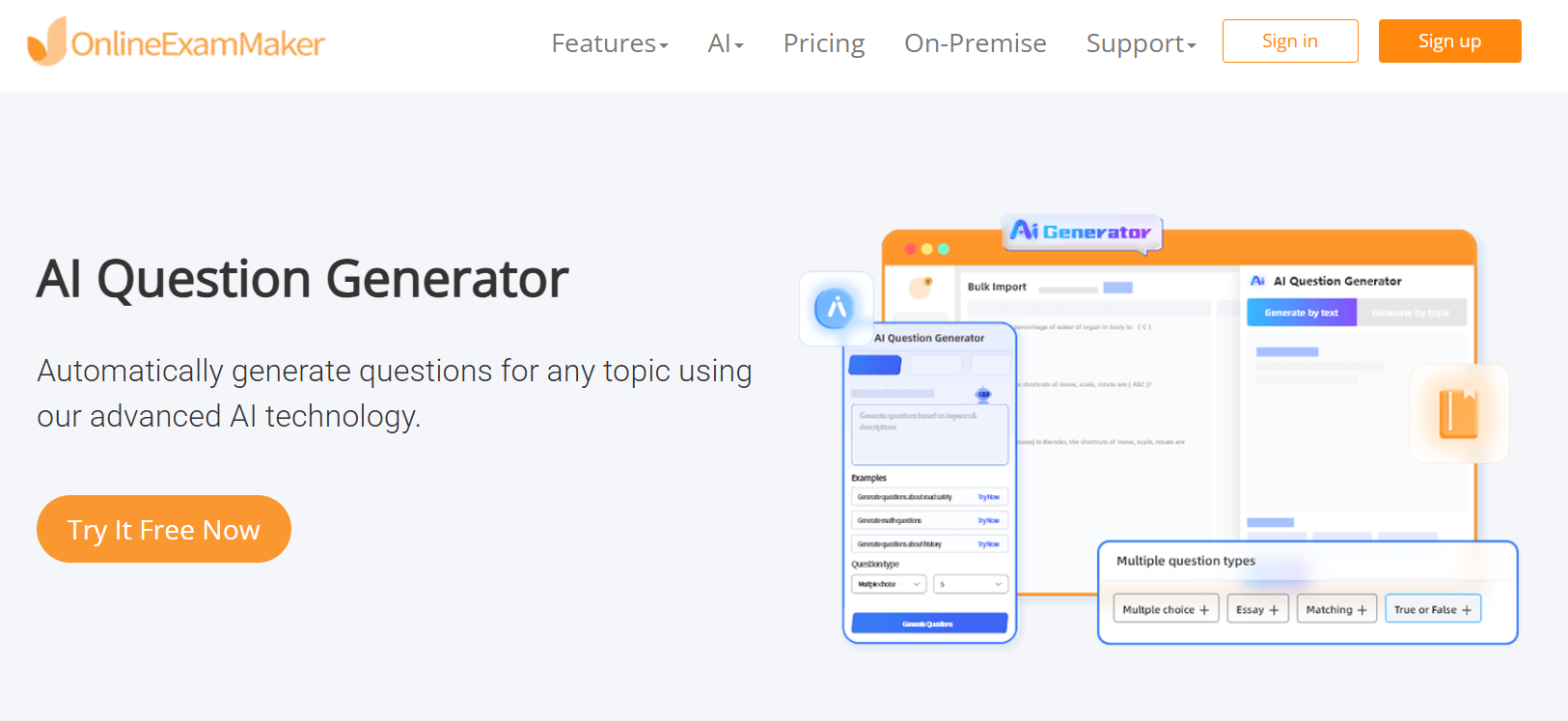
Creating unique, high-quality question sets for different segments is time-consuming—unless you use OnlineExamMaker’s AI Question Generator. It can produce hundreds of questions across topics and difficulty levels in minutes, allowing you to build tailored question pools for each segment without starting from scratch every time.
3. Automated Grading Across All Groups
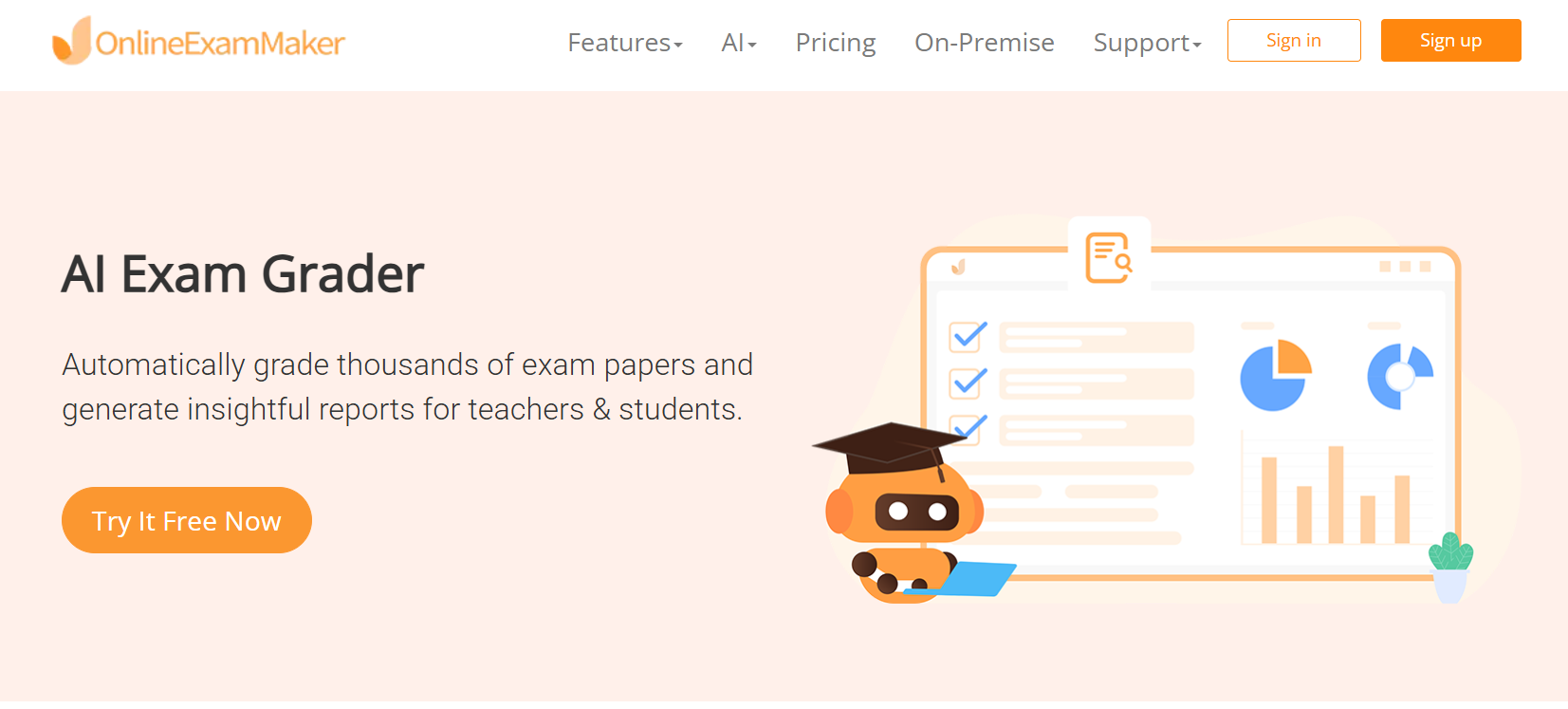
Once the exam ends, the last thing you want is to manually grade responses from thousands of candidates across five segments. Automatic Grading in OnlineExamMaker handles scoring instantly—with support for multiple question types including multiple choice, true/false, and short answer. Results are available at both the individual and group level, making segment-level analysis fast and reliable.
4. Proctoring by Segment
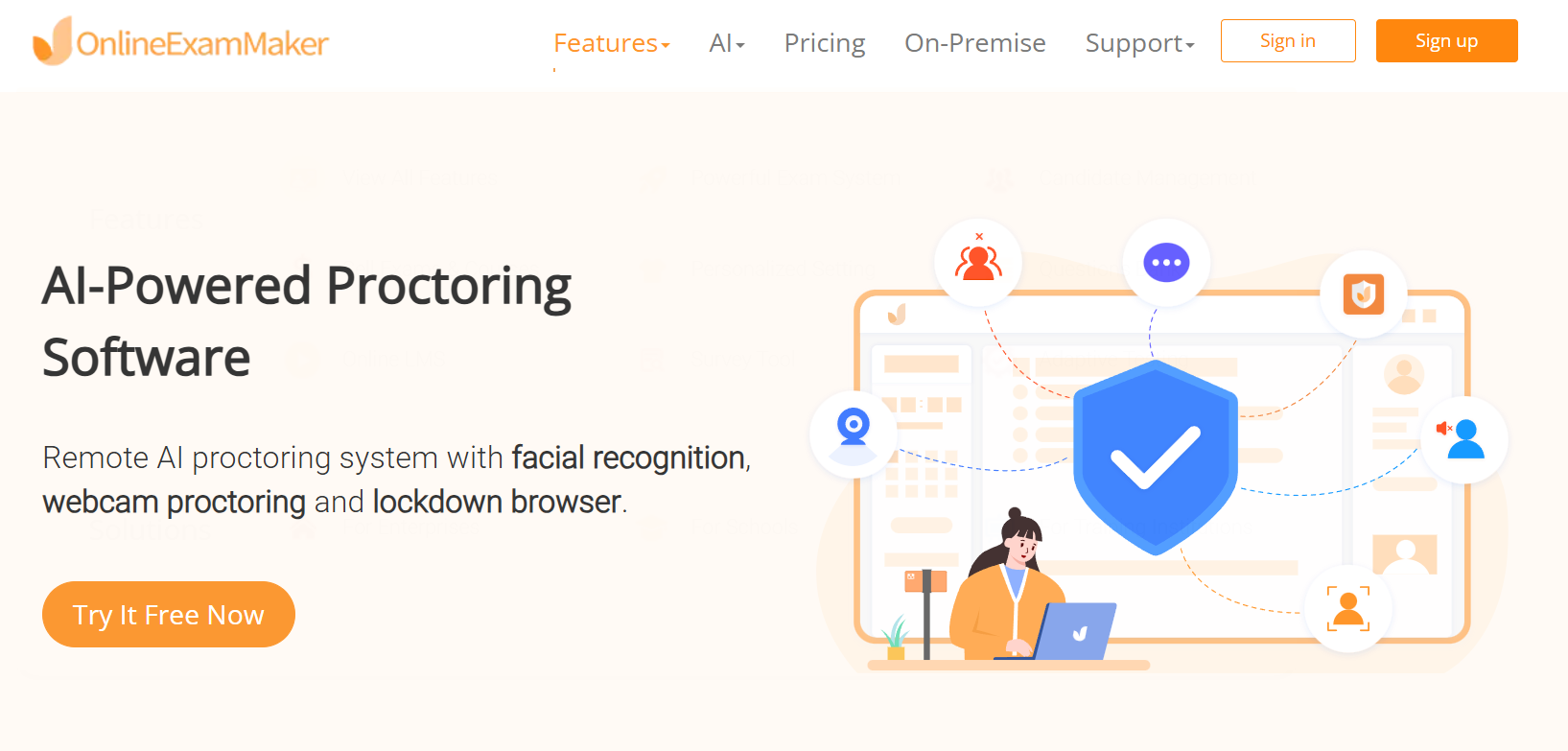
Not every segment needs the same level of supervision. High-stakes certification exams may require strict proctoring, while internal training assessments may not. OnlineExamMaker’s AI Webcam Proctoring can be applied selectively—enabling you to apply rigorous monitoring for the segments that need it without imposing unnecessary friction on others.
5. Segment-Level Reporting
After the exam, you need data—not just individual scores, but group-level trends. OnlineExamMaker’s analytics dashboard lets you compare performance across segments, identify outliers, and flag anomalies. This is especially useful for HR teams benchmarking candidates across departments, or exam boards comparing results across different centers.
Want to see how other organizations have used the platform? Check out these related resources from the OnlineExamMaker blog:
- OnlineExamMaker Knowledge Base – tutorials, guides, and best practices for exam administrators
Benefits of Getting Segmentation and Grouping Right
When segmentation and grouping are done well, the whole exam ecosystem runs more smoothly. Here’s what you gain:
- Fairness and consistency – Every candidate within a segment receives the same conditions, timing, and instructions. No one falls through the cracks because they were accidentally placed in the wrong group.
- Efficiency and cost savings – Fewer manual errors mean less rework. Optimized staff deployment reduces overtime costs. Automated check-in cuts down administrative hours.
- Better data and analytics – Grouped and segmented data makes it possible to identify performance gaps, spot suspicious patterns, and generate reports that are actually useful to stakeholders.
- Scalability – A well-structured segmentation framework can be replicated across exam sessions. Once you build it, scaling to double the number of candidates becomes a configuration task, not a crisis.
Pitfalls to Avoid
Even with the right tools, a few common mistakes can undermine your efforts:
- Over-complicating segments – Twelve sub-segments for 300 candidates creates more admin burden than value. Keep segments meaningful and manageable.
- Inconsistent grouping rules – If one department groups by subject and another groups by school, the resulting data is incomparable. Standardize your logic upfront.
- Poor communication to groups – Candidates shouldn’t have to guess which group they’re in or where they should go. Clear, timely, segment-specific communication is non-negotiable.
- Ignoring edge cases – Late registrations, accessibility needs, and technology failures need their own mini-protocols. Plan for them before exam day, not during it.
A Day in the Life of a Segmented Exam
Picture this: a professional certification body is running a national exam across 12 centers on the same day, with 4,000 registered candidates sitting three different papers.
Three months out, candidates are segmented by paper, center, and accommodation status. Each segment gets its own communication timeline—specific venue instructions for local candidates, time-zone-adjusted schedules for overseas centers, and extended-time confirmations for candidates with accessibility needs.
Two weeks before the exam, grouping kicks in. Hall assignments are generated, seating plans are published, and invigilators are briefed by group, not by center. Check-in batches are staggered across 30-minute windows to avoid queues.
On the day, each group moves through registration, identity verification, and seating in under 10 minutes. The invigilators know exactly who’s in their hall. Irregularities are logged per group. Results are processed and reported by segment within 48 hours.
That’s not luck. That’s structure doing its job.
Conclusion: Structure Is Not Optional
At scale, every assumption you don’t codify becomes a risk. Segmentation and grouping are how exam administrators turn a logistical mountain into a series of manageable slopes. They’re not bureaucratic extras—they’re core to fairness, efficiency, and trust in the exam process.
If you’re still managing candidate lists in spreadsheets and sending one-size-fits-all emails, it might be time to upgrade your approach. OnlineExamMaker gives teachers, trainers, HR managers, and exam boards the tools to segment, group, automate, and analyze—all from one platform.
Start by auditing your current grouping practices. Define your segment criteria. Then explore how a digital exam management platform can carry the rest. The candidates sitting your next exam—all several thousand of them—will thank you for it.