Let’s be honest — the annual safety training marathon isn’t exactly anyone’s favorite day at work. You sit through a two-hour slide deck, answer a multiple-choice quiz at the end, and promptly forget 80% of it by Thursday. Sound familiar?
Here’s the uncomfortable truth: traditional safety training often fails the people it’s meant to protect. Not because workers don’t care — they absolutely do — but because the format is simply not how human brains learn and retain information. We retain best when we learn in small doses, repeatedly, in context. That’s the science behind microlearning for workplace safety training, and it’s reshaping how smart organizations protect their most valuable asset: their people.
This guide is for HR managers, EHS (Environment, Health & Safety) leaders, trainers, and manufacturing team leads who want to make safety training actually stick — not just check a compliance box.
- What Is Safety Microlearning?
- Why Microlearning Works: The Business Case
- Instructional Design Principles for Safety Microlearning
- Use Cases Across the Safety Lifecycle
- How to Use OnlineExamMaker for Workplace Safety Training
- Step-by-Step: Building Your Safety Microlearning Program
- Measurement, Analytics, and Compliance
- Common Pitfalls (and How to Dodge Them)
- The Future: AI-Adaptive Safety Microlearning
What Is Safety Microlearning?
Microlearning is exactly what it sounds like — learning delivered in small, focused bites. In the context of workplace safety, that means a 3–10 minute lesson (sometimes as short as 60 seconds) targeting one specific risk, rule, or procedure. No fluff, no filler, no three-hour sessions where half the room is checking their phone.
Common formats include:
- Short videos demonstrating correct PPE use or lockout/tagout procedures
- Interactive scenarios where workers choose how to handle a near-miss situation
- Micro-quizzes delivered via mobile app, email, or text
- “Safety moments” embedded into daily standups or toolbox talks
- QR codes on equipment linking to a 90-second refresher before a worker uses a machine
Delivery channels are just as flexible: LMS platforms, mobile apps, email, digital signage on the shop floor, or even a quick scan at the start of a shift. The goal is to meet workers where they already are — not drag them to a conference room.
Think of it this way: microlearning turns safety training from a one-time compliance event into an ongoing behavior-change system. That’s a very different thing.
Why Microlearning Works: The Business Case
Numbers talk, so let’s let them. Research on learning retention consistently shows that people forget roughly 50% of new information within an hour and up to 70% within 24 hours — a phenomenon known as the “forgetting curve.” Traditional annual training does almost nothing to counter this. Microlearning, with its spaced repetition and frequent reinforcement, is specifically designed to fight back.
Here’s what organizations are seeing when they shift to microlearning for safety:
| Metric | Traditional Training | Microlearning |
|---|---|---|
| Knowledge retention at 1 week | ~20–30% | ~70–80% |
| Average completion rate | 60–75% | 85–95% |
| Average time to complete | 2–4 hours/year | 5–10 min/week |
| Mobile accessibility | Low | High |
| Ability to target specific risks | Limited | High |
Beyond the data, there’s something simpler going on: workers actually engage with content that feels relevant to their specific job, their specific risk, today. A three-minute video on forklift blind spots before a warehouse shift hits differently than a generic annual “warehouse safety” module. Relevance drives attention. Attention drives behavior change. And behavior change is the whole point.
There are also meaningful cost benefits — shorter development cycles, less production downtime, fewer remedial sessions, and the ability to quickly deploy targeted content after an incident or near miss without waiting for the next scheduled training day.
Instructional Design Principles for Safety Microlearning
Here’s where a lot of organizations get it wrong: they take their existing safety content, chop it into smaller pieces, and call it microlearning. That’s not microlearning — that’s just shorter boring content.
Real safety microlearning is designed from the ground up with specific principles in mind:
- One lesson, one behavior. Each micro-lesson should target a single, specific safety behavior — “perform lockout/tagout correctly on press machine #3,” not “understand electrical safety in general.”
- Start with a real scenario. Drop workers into a situation they’ll actually recognize. “You’re starting your shift and notice a colleague skipped the pre-task checklist…” creates immediate engagement.
- Keep visuals clean and purposeful. Minimal text on screen. Strong visuals. Clear audio. No clip art.
- End with an action. Every lesson should close with a clear, concrete takeaway: “Next time you see X, do Y.” Not “remember to always be safe.”
- Quiz immediately — and explain the answers. Quick assessments that explain why an answer is right or wrong deepen understanding far more than simple pass/fail scoring.
Near-miss stories are particularly powerful here. Workers who hear “this almost happened to someone on shift 2 last Tuesday” pay very different attention than those hearing generic safety statistics. Real is memorable. Generic is forgettable.
Use Cases Across the Safety Lifecycle
One of the things that makes microlearning so versatile is that it fits at every stage of the safety lifecycle, not just onboarding or annual refreshers. Here are the most impactful applications:
- Pre-shift refreshers: A quick video before working near energized lines or in a high-traffic area. Takes 90 seconds. Potentially prevents a serious injury.
- New procedure introductions: Rolling out a new lockout/tagout protocol or emergency evacuation update? A focused micro-lesson with a quiz ensures everyone actually absorbed the change.
- Post-incident interventions: After a near miss or incident, deploy a targeted micro-lesson on the specific rule or control that failed — to the relevant team, immediately, before the next shift.
- Seasonal risk campaigns: Heat stress in summer, cold exposure in winter, slip-and-trip awareness when it rains. Timely, topical, short.
- Culture building: Daily safety questions, scenario polls during standups, “safety moment” micro-discussions. These turn safety from a compliance checkbox into a genuine team habit.
The common thread? Specificity and timing. The right lesson, to the right person, at the right moment — that’s microlearning at its best.
How to Use OnlineExamMaker for Workplace Safety Training
If you’re looking for a practical, ready-to-use platform to bring your safety microlearning to life, OnlineExamMaker is worth a serious look. It’s an online exam and quiz platform that goes well beyond simple multiple-choice testing — it’s genuinely built for the kind of smart, trackable, engaging safety training we’ve been describing.
Here’s what makes it particularly well-suited for workplace safety programs:
1. AI-Powered Question Generation
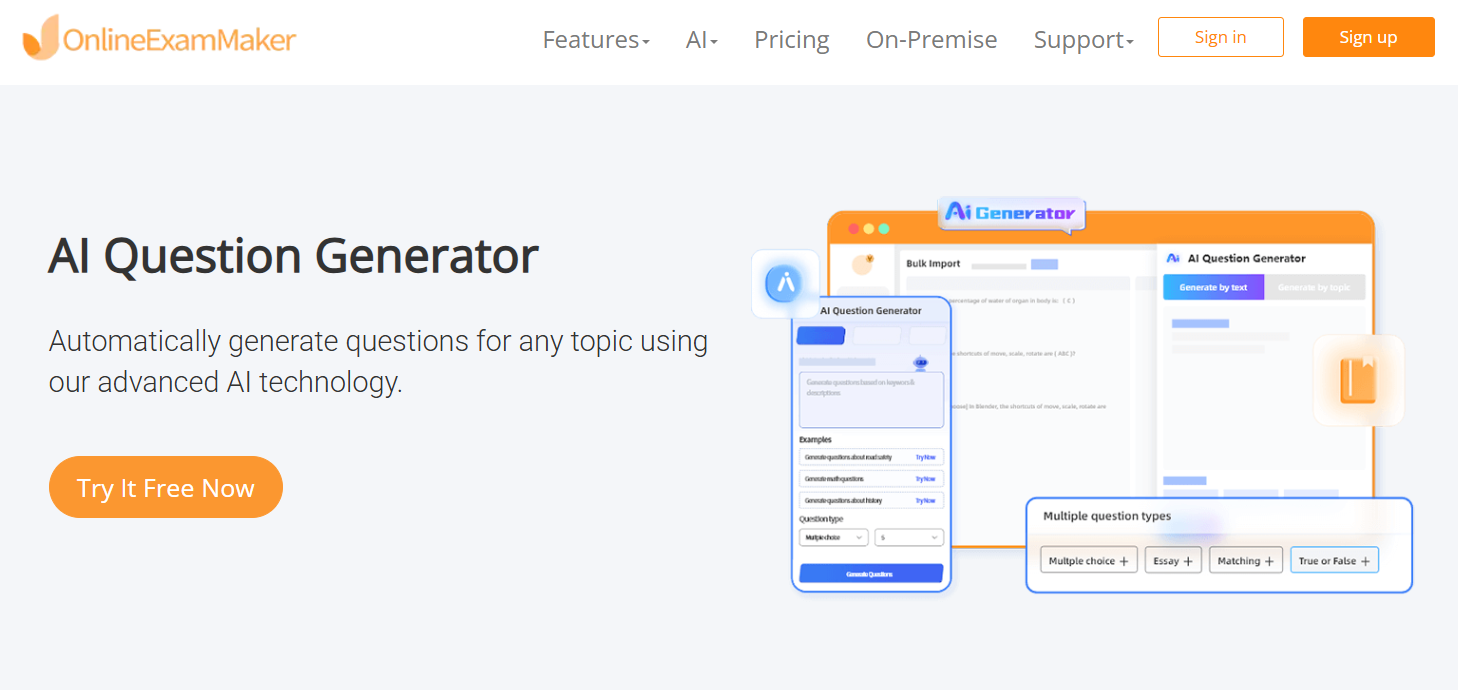
Building a quiz on forklift safety or chemical handling procedures used to mean hours of manual content creation. OnlineExamMaker’s AI Question Generator can create a full bank of relevant, varied safety questions from your existing materials in minutes. More content, less time — your EHS team will love it.
2. Automatic Grading and Instant Feedback
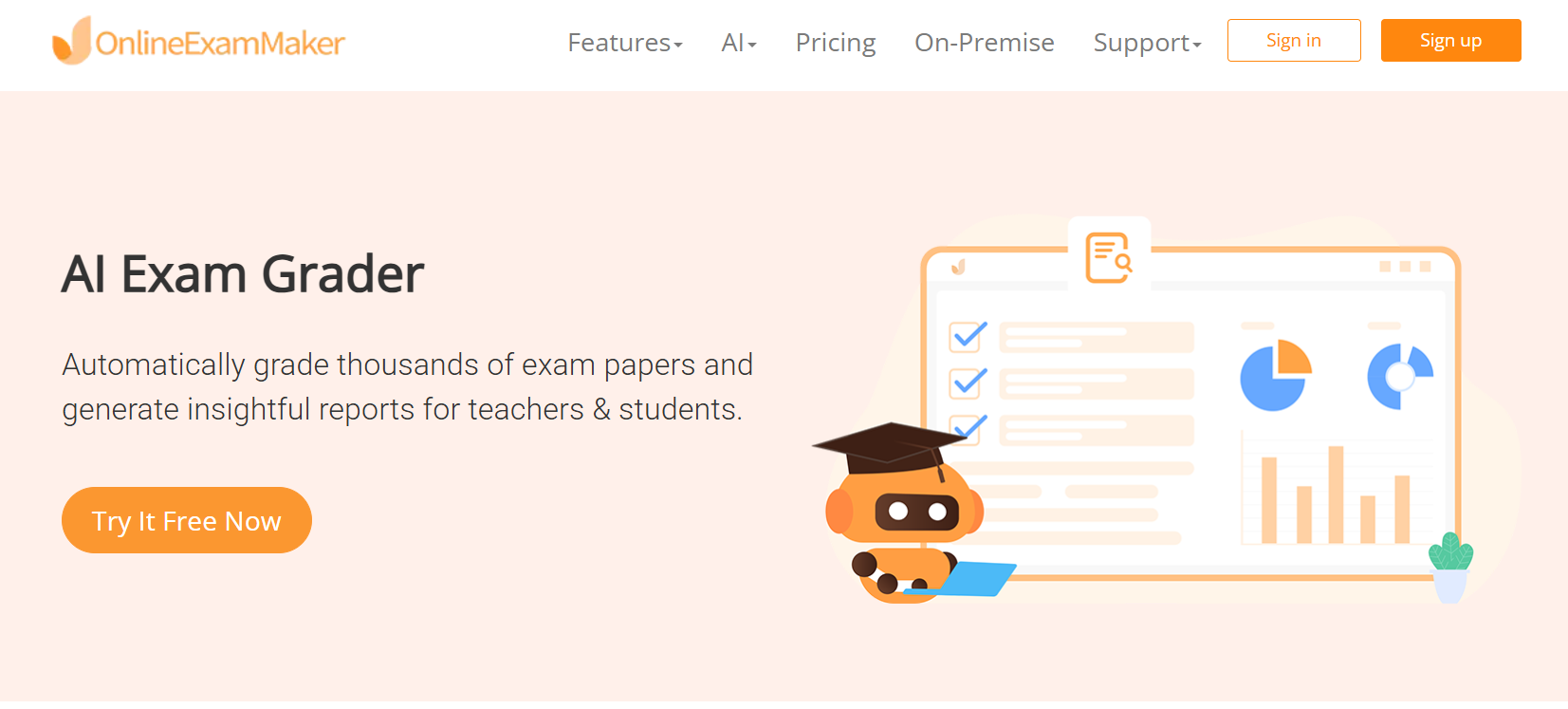
Remember how we said instant feedback deepens learning? OnlineExamMaker’s Automatic Grading scores assessments instantly and can be configured to show learners exactly why an answer was correct or incorrect. That’s the reinforcement loop that makes safety knowledge stick.
3. AI Webcam Proctoring
For certifications or compliance-critical assessments where integrity matters — think hazmat handling sign-off or confined space entry certification — AI Webcam Proctoring ensures results are legitimate without requiring a human proctor in the room. Audit-ready, automated, and surprisingly affordable.

4. Mobile-Friendly, Anytime Access
Your frontline workers aren’t at desks. OnlineExamMaker is built for mobile access, which means a safety quiz can be completed on a phone in the break room, at the start of a shift, or right after a toolbox talk — exactly when the learning moment is hottest.
5. Detailed Analytics and Reporting
Track completion rates by team, identify knowledge gaps by topic, and generate audit-ready compliance documentation without manual data wrangling. When an inspector asks “how do we know workers are trained on X?” — you have a real answer.
Create Your Next Quiz/Exam Using AI in OnlineExamMaker
Step-by-Step: Building Your Safety Microlearning Program
Ready to actually do this? Here’s a practical implementation roadmap that works for organizations of all sizes, from a 50-person manufacturing plant to a 5,000-person logistics operation.
Step 1: Audit Your Risks and Gaps
Start by reviewing your incident logs, near-miss reports, and most recent safety audit findings. Where are workers getting hurt or almost getting hurt? What procedures are consistently misunderstood or skipped? These aren’t just problems — they’re your content brief.
Step 2: Identify Your Quick Wins
Not everything needs a full micro-course. Pick 3–5 high-frequency, high-risk topics where a single, well-designed 5-minute lesson could make a real difference this month. Think: pre-task inspection of equipment, PPE selection for a specific process, or emergency response procedures for a chemical spill.
Step 3: Choose Your Tools and Cadence
Daily, weekly, or event-triggered — pick a delivery cadence that fits how your workforce actually operates. A platform like OnlineExamMaker lets you set up scheduled quiz delivery so the right content reaches the right people at the right time, automatically.
Step 4: Co-Design With Frontline Workers
This is the step most organizations skip, and it’s the reason so much safety content feels fake and disconnected. Bring two or three experienced frontline workers into the content creation process. Ask them: “What do new people get wrong about this task?” Their answers will produce better content than any instructional designer working alone.
Step 5: Launch, Measure, Iterate
Run a pilot with one team or one topic. Track completion, quiz scores, and — most importantly — whether incident rates in that area change over the following quarter. Use the data to refine content and expand the program. Rinse, repeat, improve.
Measurement, Analytics, and Compliance
One of the quiet superpowers of microlearning is that it generates data — lots of it. Every quiz attempt, every answer choice, every completion timestamp becomes a signal about where your workforce’s safety knowledge is strong and where it needs reinforcement.
With a platform like OnlineExamMaker, you can:
- Identify knowledge gaps at the team or individual level and deploy targeted remedial content
- Track trends over time — are scores improving after repeated exposure? (They should be.)
- Connect training data to incident reports to demonstrate the ROI of your safety program to leadership
- Generate compliance documentation for OSHA audits, ISO certifications, or client-mandated safety requirements — without manual spreadsheet heroics
This is the moment where safety training stops being a cost center and starts looking like a strategic investment. Data changes conversations.
Common Pitfalls (and How to Dodge Them)

A few honest warnings before you dive in:
- Don’t overload the calendar. Five micro-lessons a week is too many. Workers will start ignoring them. Aim for one focused lesson per week and build from there based on engagement data.
- Don’t just digitize information. A micro-lesson that’s essentially a PDF turned into a video isn’t microlearning — it’s digitized boredom. Focus on behavior change, not information transfer.
- Don’t replace hands-on practice. Microlearning is brilliant at building knowledge and awareness. It cannot replace physically practicing a lockout procedure, doing a simulated fire evacuation, or having a supervisor watch and correct technique. Use microlearning to prepare and reinforce — not to replace practice.
- Don’t ignore feedback. If workers consistently score poorly on a specific quiz, the problem might be the quiz — or the content. Treat low scores as a flag to investigate, not just a list of people who need remediation.
The best safety microlearning programs feel less like compliance requirements and more like useful tools that help people do their jobs safely and confidently. Aim for that.
The Future: AI-Adaptive Safety Microlearning
We’re only at the beginning of what’s possible. The next wave of safety microlearning is adaptive — systems that adjust the difficulty, content, and frequency of lessons based on each worker’s performance history, role, location, and even recent incident patterns at their site.
Imagine: a worker who scored poorly on chemical storage quizzes automatically gets three additional micro-lessons on that topic over the next two weeks, while a colleague who aced the same content gets a different reinforcement lesson on a topic where their team’s scores have been slipping. No manual intervention required — the system learns and responds.
AI-powered platforms are also beginning to offer real-time recommendations tied to tasks and location. A worker scanning a QR code on a piece of equipment gets a micro-lesson tailored to their specific machine, their experience level, and the last time they completed that refresher.
The vision? Safety training becomes an everyday, data-informed habit — as natural as checking the weather before heading outside. Not an annual event you dread. Not a compliance checkbox. A genuine part of how safe organizations operate, every day, at every level.
And honestly? That’s a future worth building toward. Tools like OnlineExamMaker are already making pieces of it available right now — no research grant or enterprise budget required.
The question isn’t whether to evolve your safety training. The question is whether you’re going to do it proactively — before the next incident — or reactively afterward.
Choose proactive. Your team deserves it.