Sifting through hundreds of resumes for a single role is exhausting — and honestly, not very accurate. A polished CV tells you how well someone writes about themselves, not how well they’ll actually do the job. That’s exactly why AI pre-employment test makers have become a go-to tool for smart hiring teams. They help you screen candidates faster, evaluate real skills, and reduce the gut-feel guesswork that sneaks into every hiring decision.
The best platforms today support skills assessments, automated scoring, structured interviews, and role-specific test libraries. But they’re not all built the same. Some shine for technical hiring, others for high-volume frontline recruitment, and some are all-purpose workhorses for HR generalists. Below, we’ve rounded up the 8 best options worth your attention.
- Why AI Pre-Employment Tests Matter
- How We Picked These Tools
- The 8 Best AI Pre-Employment Test Makers
- Quick Comparison Table
- How to Choose the Right Tool
- Best Practices for Smarter Hiring
- Conclusion
Why AI Pre-Employment Tests Matter
Hiring has quietly shifted from resume-first to skills-first. Companies are realizing that credentials on paper rarely predict on-the-job performance. AI assessment tools fill that gap by standardizing evaluation, scoring candidates consistently, and surfacing the most qualified people — regardless of where they went to school.
Beyond efficiency, AI-driven assessments help reduce unconscious bias by applying the same criteria to every candidate. That said, responsible use still matters. Human oversight, transparency about how scores are calculated, and fairness checks should always be part of the process. These tools work best alongside your team, not instead of it.
How We Picked These Tools
Every tool on this list was evaluated against the same set of criteria:
- AI-assisted scoring or assessment creation
- Support for role-based or skills-based screening
- Practical use cases — technical roles, frontline hiring, or general pre-employment testing
- Evidence from product pages, third-party reviews, or video demonstrations
The 8 Best AI Pre-Employment Test Makers
1. OnlineExamMaker
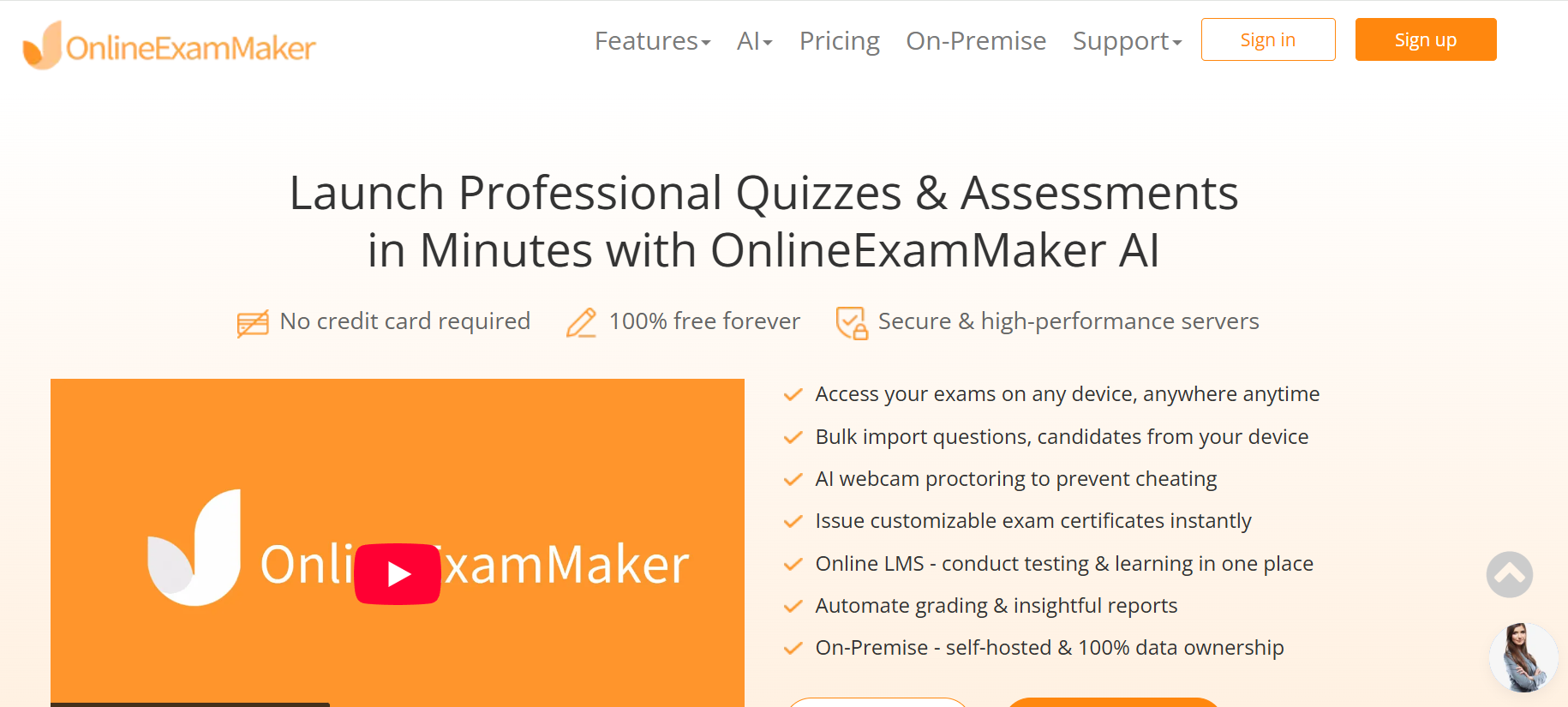
Best for: HR teams, trainers, and organizations that want full control over custom pre-employment assessments.
OnlineExamMaker is a versatile online test creation platform designed for businesses that need more than a cookie-cutter quiz. Whether you’re assessing a warehouse operative’s safety knowledge or screening a marketing manager’s strategic thinking, OnlineExamMaker lets you build exactly the test you need — fast.
At the heart of the platform is its AI Question Generator, which lets you create a full bank of role-relevant questions in seconds. Just input a job description or topic, and the AI drafts questions across multiple formats: multiple choice, true/false, short answer, and more. No more spending an afternoon crafting every item from scratch.
Once candidates complete their assessments, Automatic Grading kicks in immediately — no manual scoring, no bottlenecks. Results are ready when you need them, making it ideal for high-volume hiring where speed is non-negotiable.
Worried about candidates sharing answers or looking things up? OnlineExamMaker’s AI Webcam Proctoring monitors candidates throughout the test, flagging suspicious behavior without requiring a human invigilator. It’s discreet, effective, and gives your hiring data a layer of integrity that resume screening simply can’t offer.
Here’s a quick walkthrough of how the platform works in practice:
OnlineExamMaker also integrates well with broader online assessment workflows, supports custom branding, and offers both a cloud-based SaaS version and an on-premise option for organizations that need full data ownership.
Create Your Next Quiz/Exam Using AI in OnlineExamMaker
2. TestGorilla
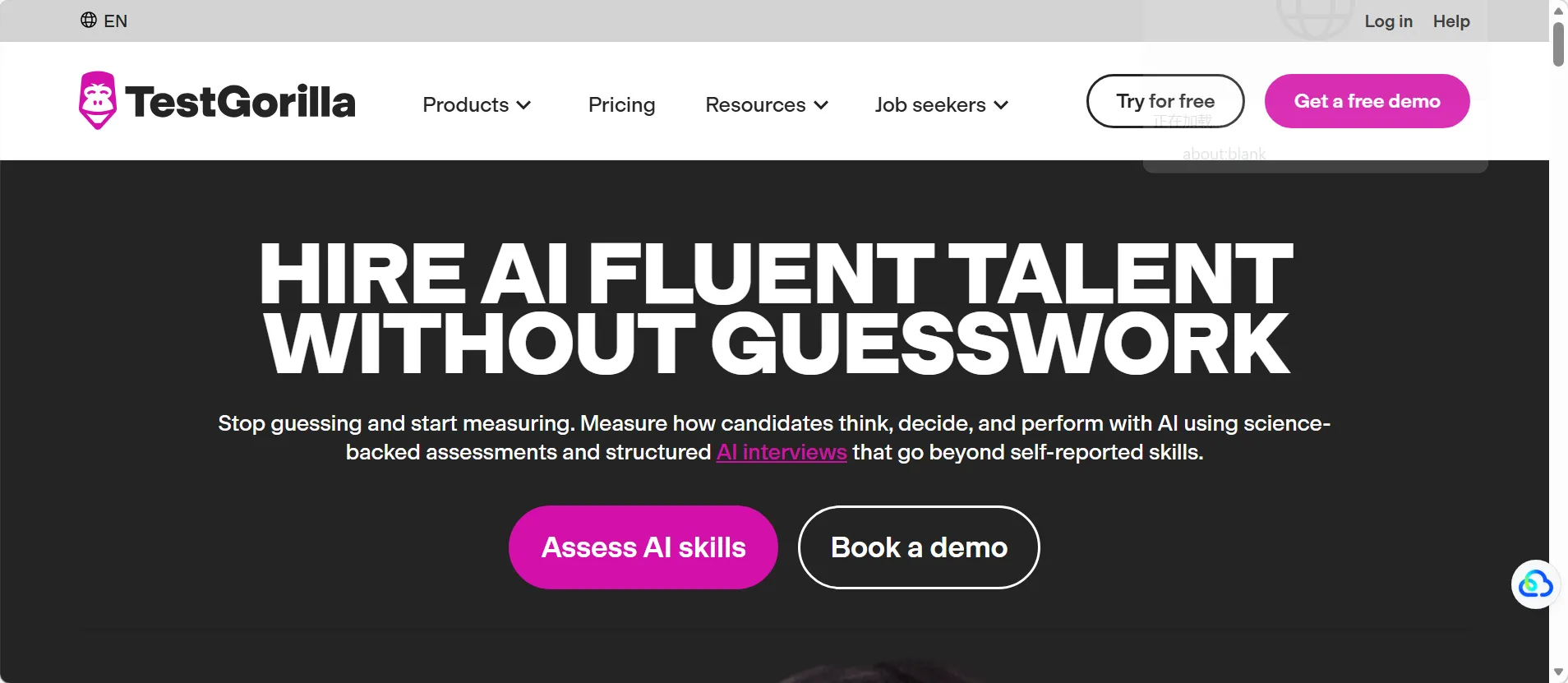
Best for: Broad skills-based screening with a ready-made test library.
TestGorilla is one of the most recognizable names in pre-employment testing — and for good reason. It offers a massive library of assessments covering cognitive ability, language, personality, and hundreds of role-specific skills. Automated grading and candidate ranking mean your team can spend time interviewing, not scoring spreadsheets. A free tier makes it accessible for smaller hiring teams, with paid plans available as you scale.
3. HireVue
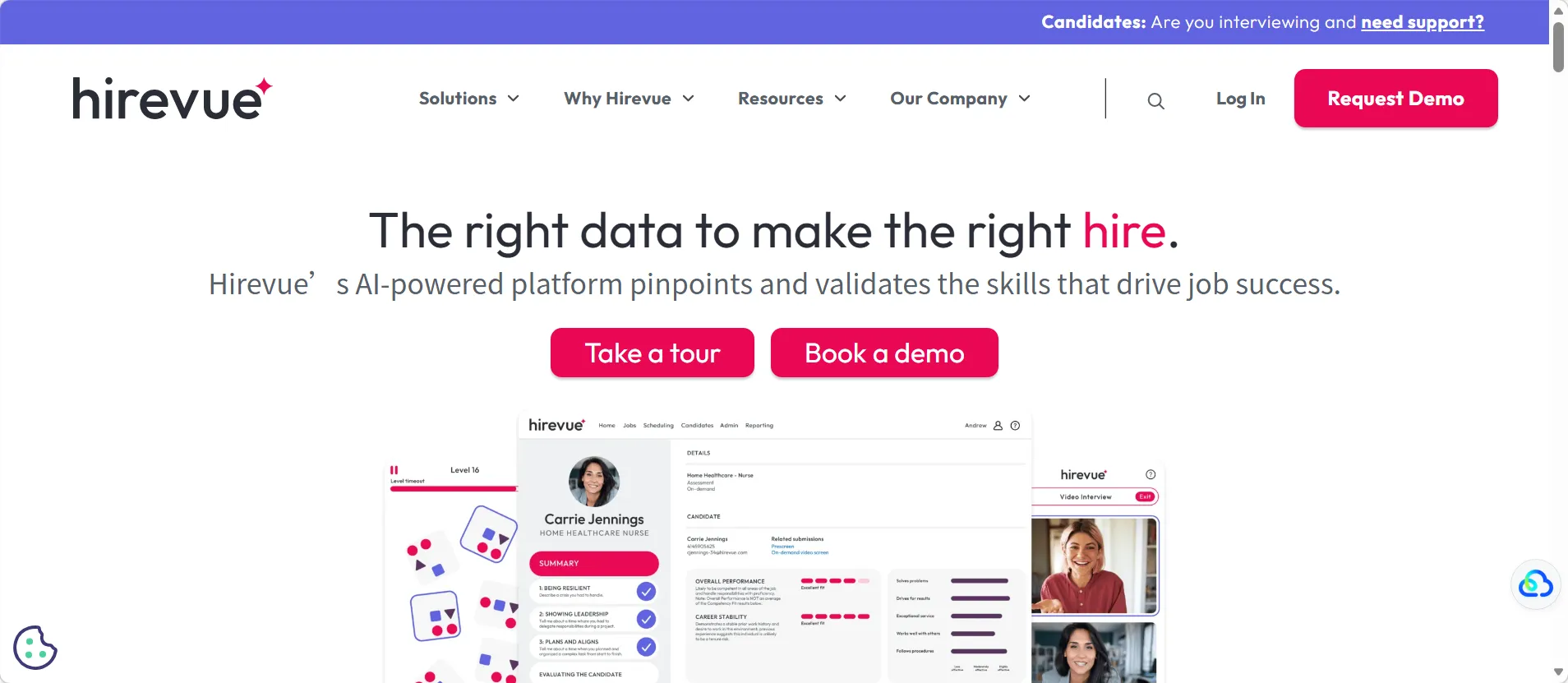
Best for: Enterprise interview workflows and AI-powered video screening.
HireVue combines AI video interviews with skill assessments and enterprise-grade automation. It’s a strong fit for large organizations that need to move fast on candidate pipelines without sacrificing consistency. Pricing is custom and enterprise-focused, so it’s best suited for companies with serious hiring volume and budget to match.
4. Vervoe
Best for: Role-specific job simulations and skills-based hiring.
Vervoe stands out by putting candidates through machine-learning-graded simulations of real job tasks. Rather than asking abstract questions, it tests what people can actually do. The platform auto-grades responses and ranks candidates accordingly, saving hours of manual review. Subscription-style plans make it accessible for growing teams.
5. Sapia.ai
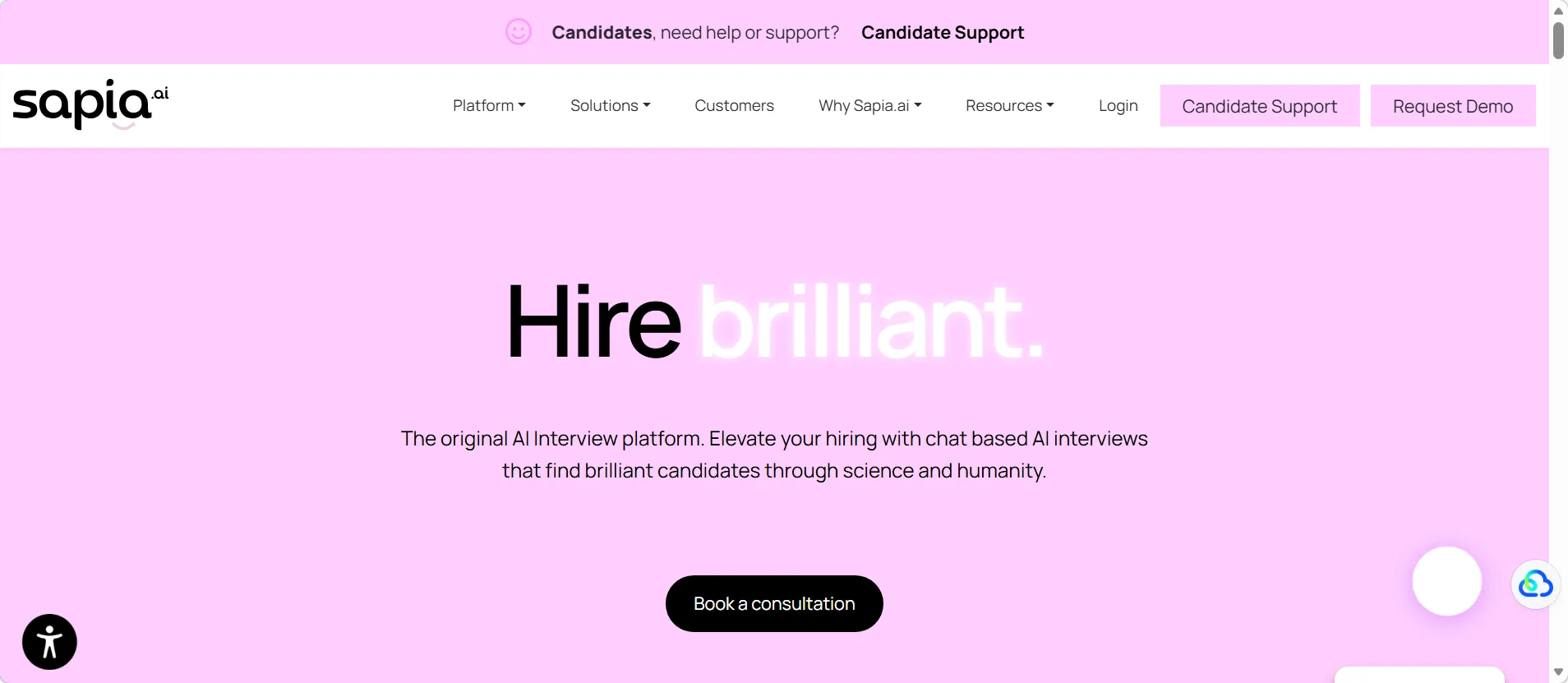
Best for: High-volume and frontline hiring at scale.
Sapia.ai replaces the initial phone screen with a structured chat interview, then uses explainable AI to score candidate responses. It’s built with fairness and candidate experience front of mind — important for enterprise teams that need to hire thousands of people without alienating them in the process. The scoring is transparent enough that hiring managers can actually understand why a candidate ranked where they did.
6. Codility
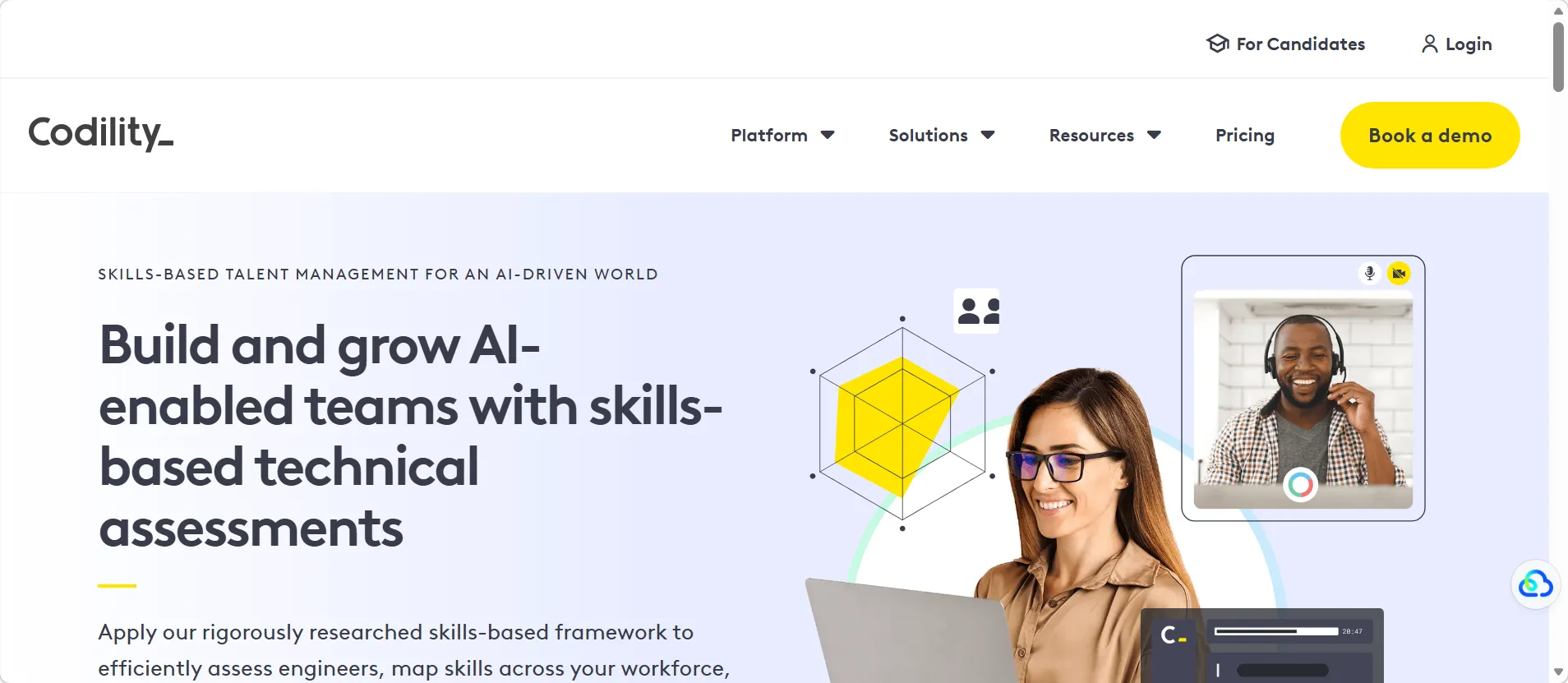
Best for: Technical and developer hiring.
Codility is purpose-built for engineering teams. It focuses on real-world coding challenges and practical skills verification, so you’re testing actual programming ability — not just a candidate’s knack for memorizing interview answers. It’s a staple tool in technical recruitment pipelines worldwide.
7. CodeSignal
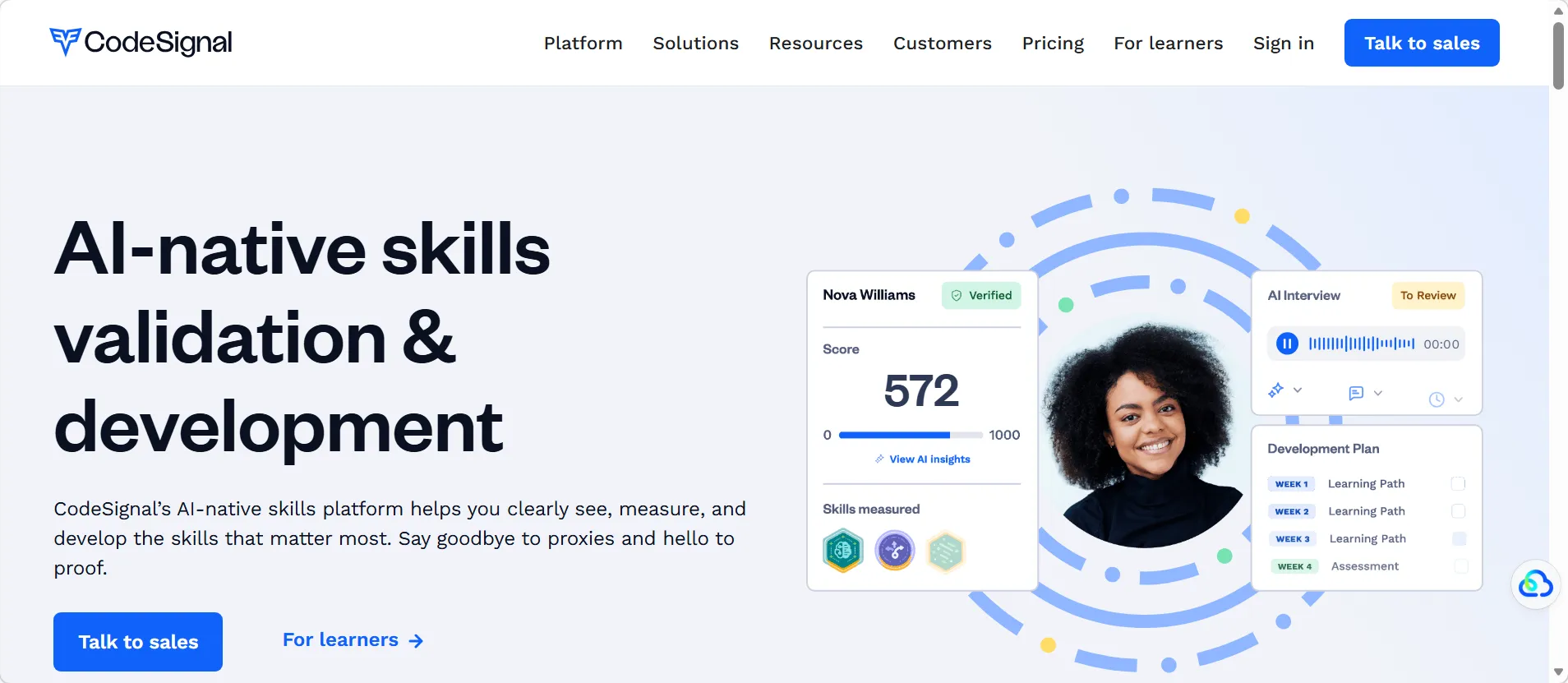
Best for: Engineering screening and standardized technical benchmarking.
CodeSignal brings a data-driven approach to technical interviews, with standardized assessments that produce comparable scores across candidates. It’s especially useful when you’re evaluating many engineers for similar roles and need apples-to-apples comparisons rather than gut instinct.
8. Harver
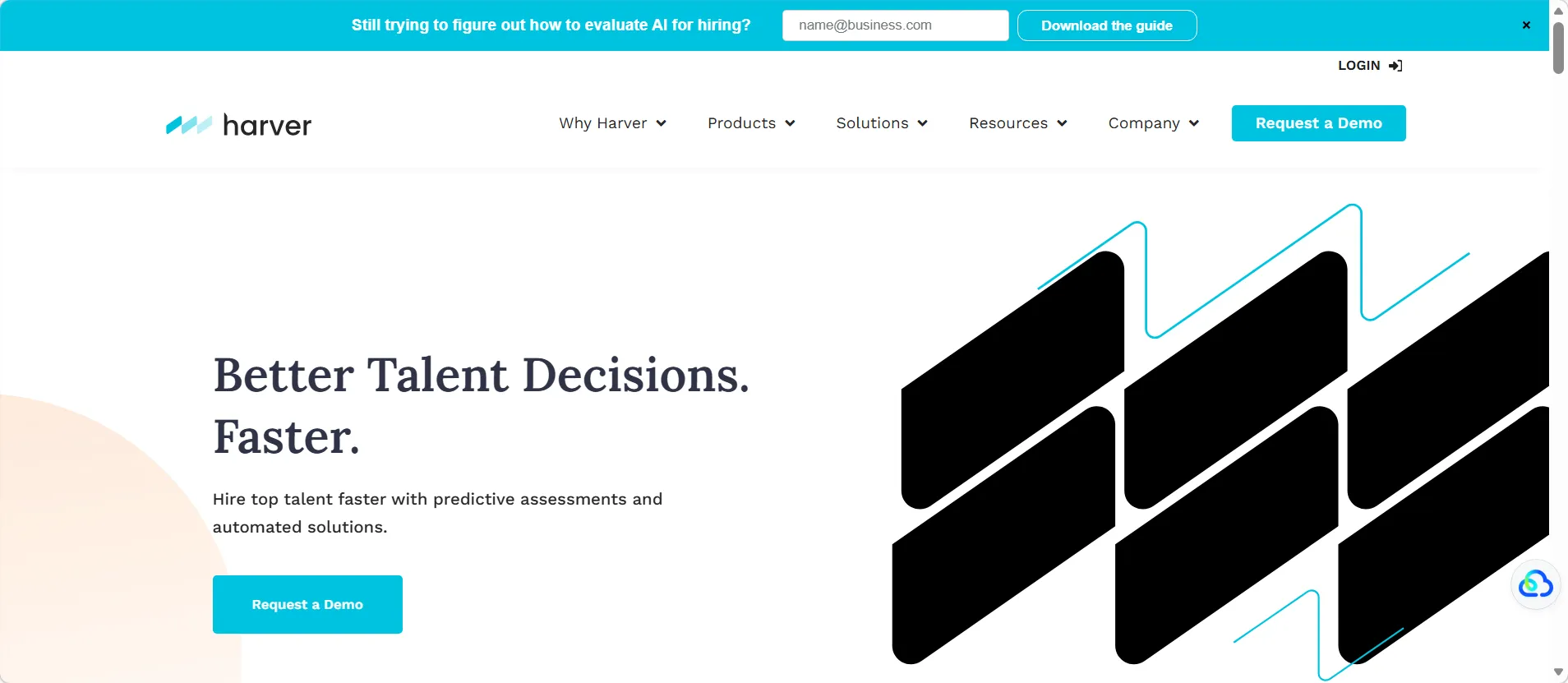
Best for: High-volume hiring with gamified, predictive assessments.
Harver takes a refreshingly candidate-centric approach — gamified assessments, realistic job previews, and predictive hiring signals all work together to help both the employer and the candidate figure out if the role is a good fit. It’s particularly effective for industries like retail, logistics, and hospitality where speed and volume are everything.
Quick Comparison Table
| Tool | Best For | Key AI Feature | Ideal Company Size |
|---|---|---|---|
| OnlineExamMaker | Custom pre-employment tests | AI question generation, auto-grading, webcam proctoring | SMB to Enterprise |
| TestGorilla | Broad skills screening | Automated grading & candidate ranking | Startup to Mid-size |
| HireVue | Enterprise video interviews | AI video analysis & scoring | Enterprise |
| Vervoe | Job simulations | ML-graded skills simulations | SMB to Mid-size |
| Sapia.ai | Frontline & high-volume hiring | Explainable AI chat interviews | Enterprise |
| Codility | Developer hiring | Real-world coding challenges | Mid-size to Enterprise |
| CodeSignal | Technical benchmarking | Standardized engineering assessments | Mid-size to Enterprise |
| Harver | High-volume predictive hiring | Gamified assessments & job previews | Mid-size to Enterprise |
How to Choose the Right Tool
Not every platform is right for every team. Here’s a quick mental model:
- Building custom, role-specific tests from scratch? Start with OnlineExamMaker — its AI-powered test builder and proctoring features make it one of the most flexible options available.
- Need broad, ready-made assessments fast? TestGorilla or Vervoe will get you up and running without much setup time.
- Running enterprise-scale video interviews? HireVue or Sapia.ai are built for exactly that workflow.
- Hiring engineers or developers? Codility and CodeSignal are the industry go-tos for technical screening.
- Need to hire hundreds of frontline workers quickly? Harver’s gamified, predictive approach is hard to beat at scale.
Before committing to any platform, also consider: How will candidates experience the process? Does it integrate with your existing ATS? Is the scoring methodology transparent enough to explain to a hiring manager — or a candidate who asks why they didn’t advance? These questions matter more than the feature list.
You can also read our guide on how to create an online test effectively for practical tips on building assessments that actually predict job performance.
Best Practices for Smarter Hiring
Even the best AI tool is only as good as the process around it. A few principles to keep front of mind:
- Use assessments as one input, not the final word. Combine test results with structured interviews and a human review before making any offer.
- Be upfront with candidates. Tell people upfront that AI is part of your screening process. Transparency builds trust — and attracts better candidates.
- Validate job relevance. Every test you use should connect directly to skills required for the role. Random trivia dressed up as an “assessment” helps no one.
- Check for fairness. Periodically audit your assessment data to make sure no group is being systematically disadvantaged by the tool’s scoring logic.
Conclusion
AI pre-employment test makers have changed what’s possible in recruiting — and the gap between teams using them well and teams still relying on gut feel is only widening. If you’re just getting started, OnlineExamMaker is a flexible, cost-effective entry point that works for everything from a five-person startup to a manufacturing enterprise onboarding hundreds of workers. For enterprise video screening, look at HireVue or Sapia.ai. For technical hiring, Codility or CodeSignal are purpose-built for the job.
The best hiring decisions are still human ones — but the best hiring teams use AI to make sure the right people are in the room to begin with.