- Why Enterprise Training ROI Is So Hard to Prove
- What Makes an AI Training Evaluation Tool Worth Your Budget?
- The 7 Best AI Training Evaluation Tools for Enterprises
- Quick Comparison by Enterprise Use Case
- How These Tools Actually Maximize ROI
- How to Choose the Right Tool for Your Organization
- Final Recommendation
Enterprise training budgets are not small. Yet when leadership asks, “So what did that $200,000 training program actually change?” — most L&D teams fumble for an answer. Completion rates go up. Satisfaction scores look fine. But real performance? That part stays murky.
That gap between training activity and business outcome is exactly what AI training evaluation tools are built to close. They go beyond quizzes and attendance logs to measure skill transfer, quality improvement, and operational impact — the metrics that actually matter to executives.
This guide breaks down 7 AI training evaluation tools that enterprises are using right now to prove ROI, cut waste, and make smarter decisions about learning investment.
Why Enterprise Training ROI Is So Hard to Prove
Traditional training metrics — completion rates, quiz scores, post-session surveys — tell you whether employees attended training, not whether it changed anything. That distinction is enormous.
Real ROI lives in questions like:
- Did onboarding time shrink after the new training module?
- Are support escalations down because agents learned better?
- Is QA error rate improving quarter over quarter?
Without tools that connect learning activity to performance data, you are essentially flying blind — spending on training and hoping something sticks. AI evaluation tools change that equation. They bring measurement precision, continuous feedback, and business-aligned analytics to the table.
What Makes an AI Training Evaluation Tool Worth Your Budget?
Not every tool earns its license fee. The ones that do tend to share a few traits:
- Scale: They assess effectiveness across thousands of learners, not just pilot groups.
- Business alignment: They track outcomes tied to operations, revenue, or quality — not just engagement.
- Continuous feedback: They surface insights in real time, not just in quarterly reports.
- Integration: They plug into your LMS, HR systems, or AI platforms without a six-month implementation project.
- Governance and compliance: They support auditability and enterprise security standards.
Keep these criteria in mind as you review the tools below.
The 7 Best AI Training Evaluation Tools for Enterprises
1. OnlineExamMaker
Best for: Enterprises that need end-to-end training assessment — from building tests to tracking performance impact.
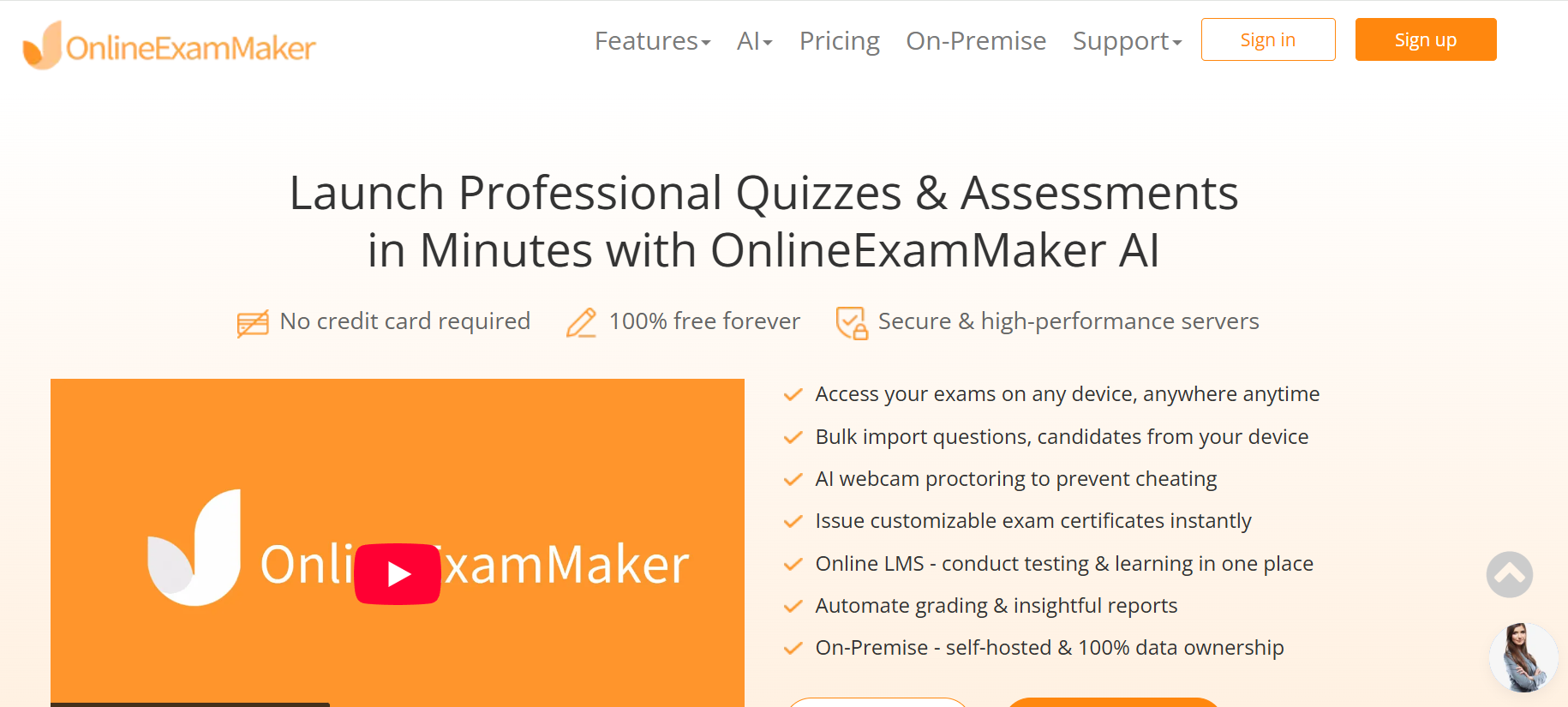
If your enterprise runs structured training programs and needs to actually measure whether learning happened, OnlineExamMaker is a natural fit. It combines AI-powered test creation, automated evaluation, and real-time analytics into one platform — exactly what large organizations need to close the loop between training delivery and measurable outcomes.
The AI Question Generator lets trainers build assessments in minutes from existing course materials — no more spending half a day writing quiz questions manually. You feed in your content, and the AI generates scenario-based questions that actually test applied knowledge, not just memorization.
When it comes to grading at scale, Automatic Grading handles the heavy lifting. For enterprises running training across hundreds of employees simultaneously, this is a genuine time-saver and consistency win. No human scorer variation, no backlog of ungraded assessments.
Compliance-heavy industries — finance, healthcare, manufacturing — will especially appreciate AI Webcam Proctoring, which ensures assessment integrity without requiring an invigilator in the room. It monitors behavior in real time and flags anomalies automatically.
ROI benefit: Reduces assessment design and grading time dramatically. Connects training completion to measurable knowledge gain, giving L&D teams hard data to present to leadership. You can also check out related resources on the OnlineExamMaker blog for best practices on building effective enterprise assessments.
Key enterprise strength: Scalable, secure, and simple enough that trainers — not just IT teams — can run it. Available as both a SaaS platform and an on-premise deployment for organizations that require full data ownership.
Create Your Next Quiz/Exam Using AI in OnlineExamMaker
2. Braintrust
Best for: Workflow-integrated AI evaluation with continuous quality measurement.
Braintrust focuses on what happens after the model or training system goes live. It automates regression checks, traces evaluations back to specific runs, and shortens the feedback loop between deployment and correction. For enterprises with AI-powered training systems — think intelligent tutoring, knowledge assistants, or automated coaching — this kind of continuous quality monitoring is invaluable.
ROI benefit: Catches training degradation early before it compounds into a bigger performance problem.
Key enterprise strength: Fast feedback loops and trace-to-evaluation workflows that integrate cleanly into existing AI development pipelines.
3. Arize
Best for: Enterprise AI observability and compliance.
Arize is built for organizations where training outcomes are directly tied to model behavior in production. It monitors for model drift, flags performance degradation, and provides the auditability that regulated industries require. Think of it as a compliance layer on top of your AI training infrastructure.
ROI benefit: Prevents costly failures by catching model drift before it affects real business operations.
Key enterprise strength: Strong governance features and production reliability monitoring for large-scale AI deployments.
4. Galileo
Best for: Hallucination detection and model quality assurance.
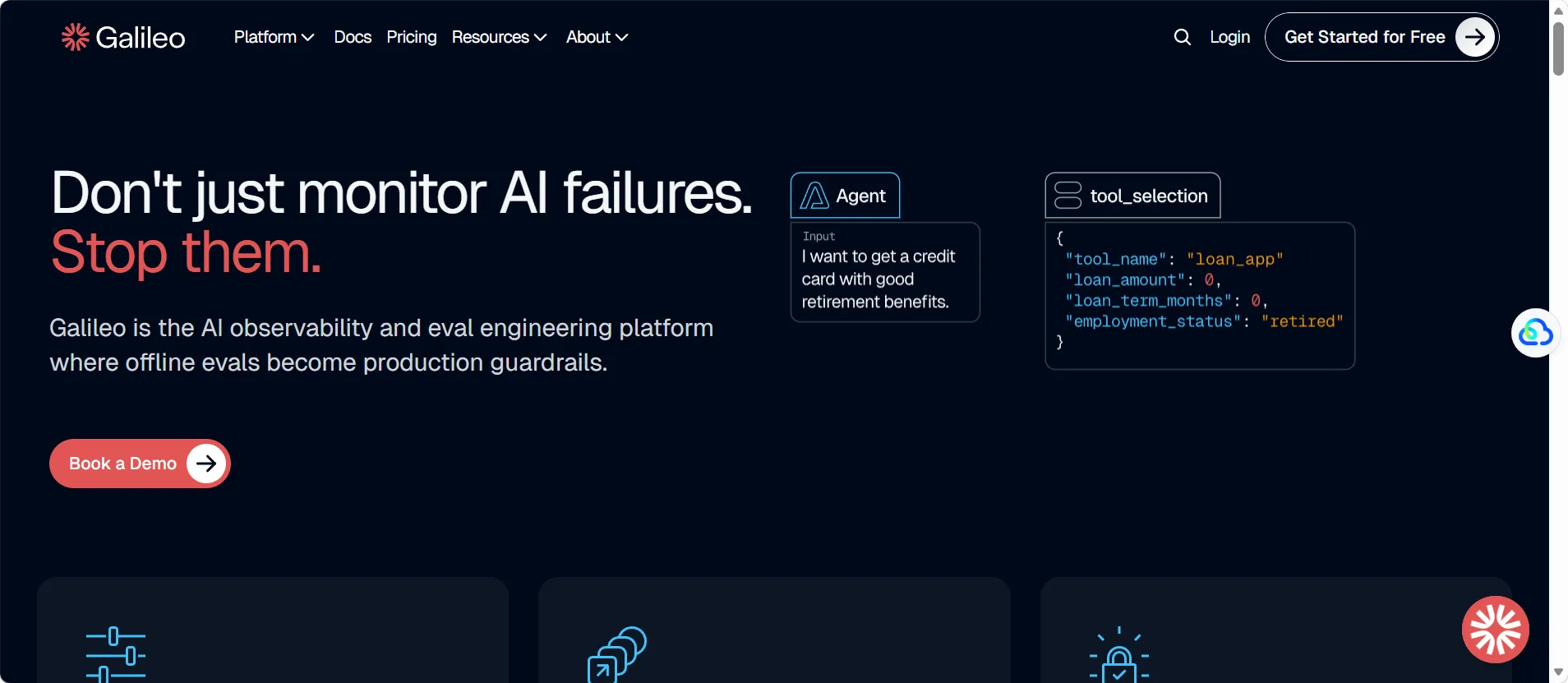
Galileo earns its place in enterprise environments where AI-driven training systems — knowledge bases, chatbots, learning assistants — need to produce accurate outputs. Hallucinations in training content are not just embarrassing; they actively harm learning outcomes. Galileo surfaces these errors systematically so teams can fix them at scale.
ROI benefit: Reduces errors in AI-powered training content, protecting learning quality and organizational credibility.
Key enterprise strength: Systematic quality assurance for AI-generated training materials and knowledge assistants.
5. Maxim
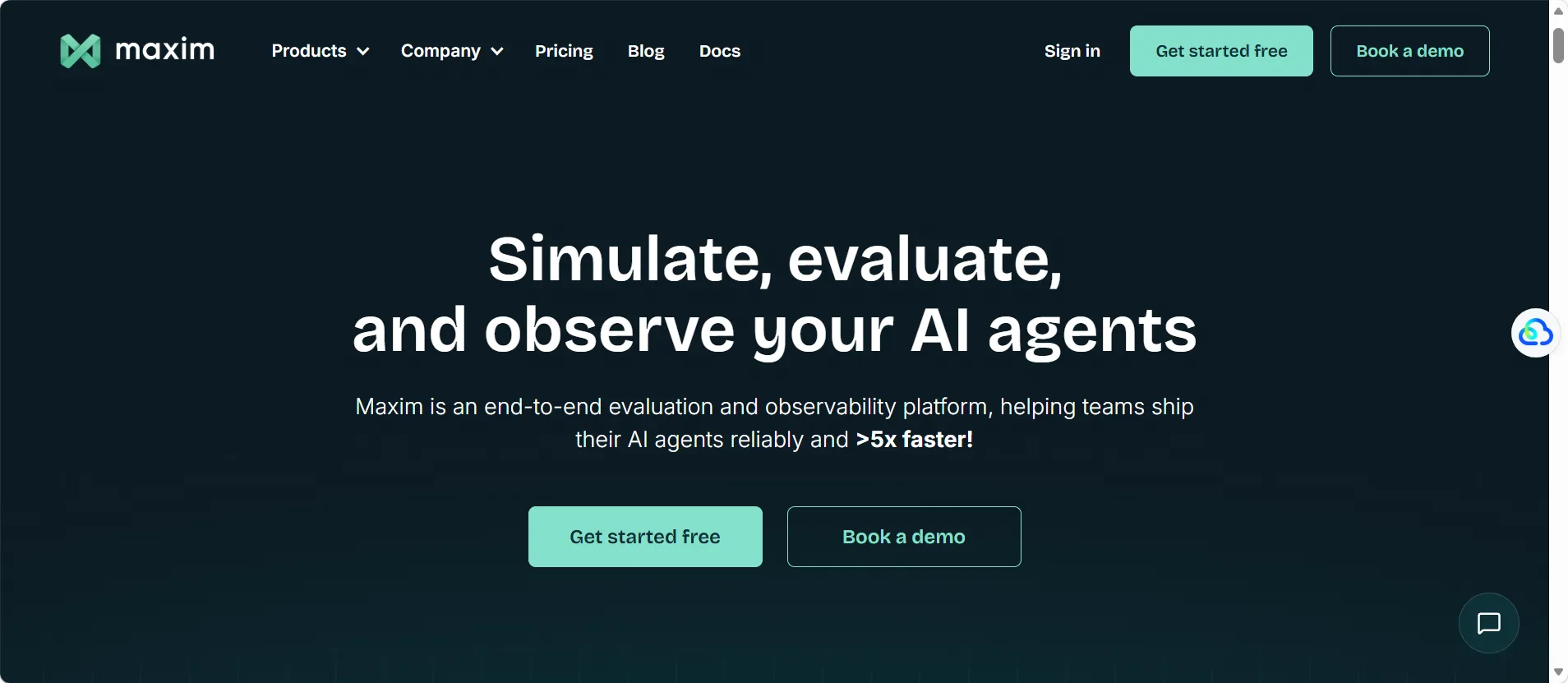
Best for: Agent simulation and scenario testing.
When training programs include AI copilots, workflow assistants, or automated coaching agents, you need to test how those agents perform across realistic enterprise scenarios — before rolling them out to thousands of employees. Maxim simulates those interactions, surfaces failure modes, and helps teams iterate confidently.
ROI benefit: Reduces the risk of deploying undertested AI systems into high-stakes training environments.
Key enterprise strength: Realistic scenario coverage that bridges the gap between lab testing and live deployment.
6. MLflow
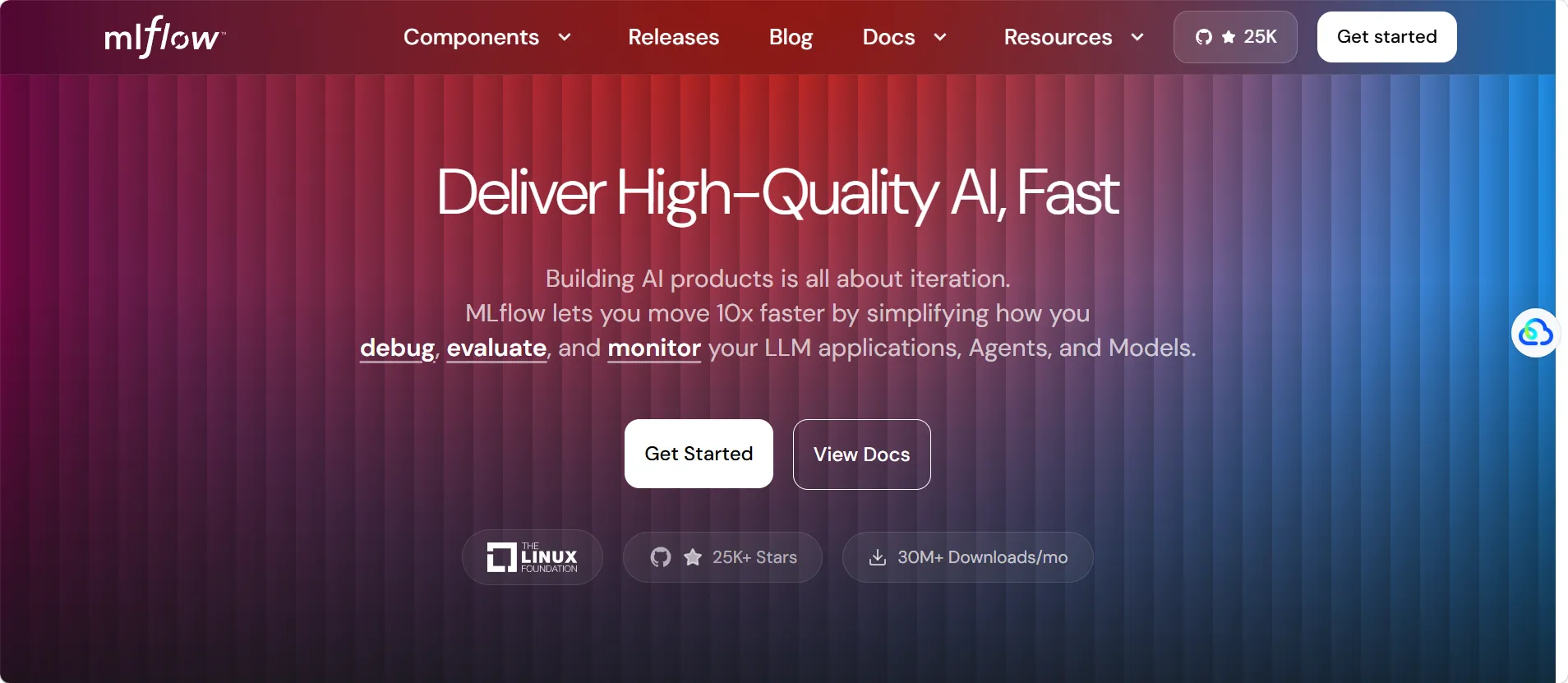
Best for: Tracking, evaluating, and deploying models across the ML lifecycle.
MLflow is open-source, battle-tested, and deeply integrated into enterprise ML workflows. If your organization needs a broader platform that handles experiment tracking, model registry, and deployment alongside evaluation, MLflow provides that operational visibility without vendor lock-in. It is especially useful for data science teams managing multiple training-related models simultaneously.
ROI benefit: Structured measurement and full lifecycle visibility reduce duplication and accelerate model iteration.
Key enterprise strength: Platform flexibility and a large community of enterprise adopters making it a low-risk, high-value choice.
7. Orq.ai
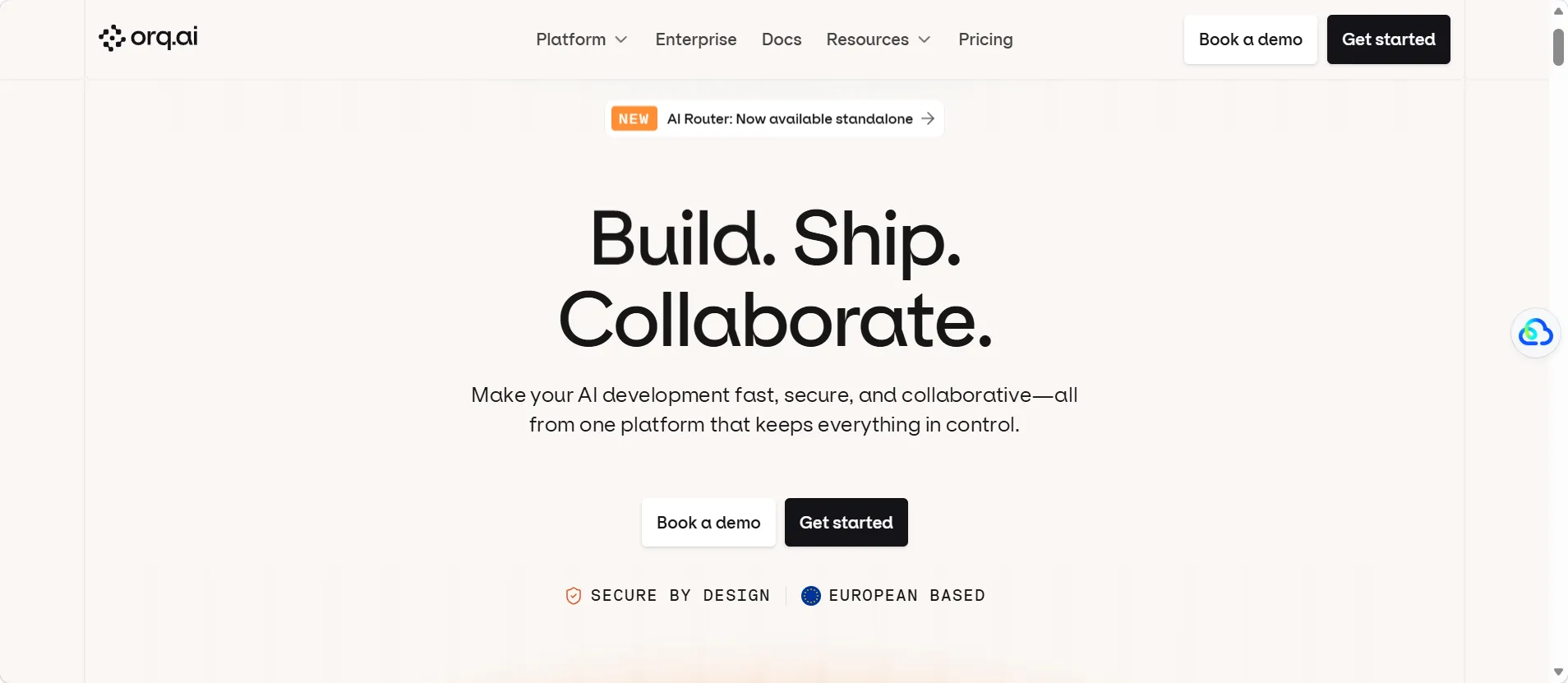
Best for: Performance and quality monitoring in production AI systems.
Orq.ai is designed for teams that need ongoing visibility into how AI systems perform once they are live. It supports human-in-the-loop review, annotation workflows, and side-by-side comparison of experiment variants — making it well-suited for enterprises that want to continuously optimize training-related AI applications rather than just evaluate them once at launch.
ROI benefit: Continuous optimization of AI-driven training systems means performance compounds over time instead of plateauing after initial deployment.
Key enterprise strength: Human-in-the-loop review combined with experiment comparison gives teams both speed and precision in refining AI training outputs.
Quick Comparison by Enterprise Use Case
| Use Case | Best Tool |
|---|---|
| End-to-end assessment & learner evaluation | OnlineExamMaker |
| Workflow-integrated AI quality monitoring | Braintrust |
| Governance & compliance monitoring | Arize |
| Hallucination detection & content quality | Galileo |
| Agent & scenario simulation | Maxim |
| Broad ML lifecycle management | MLflow |
| Business-impact measurement | Orq.ai |
How These Tools Actually Maximize ROI
It would be easy to say “they improve outcomes” and leave it there — but let’s be specific about the mechanisms at work:
- Shorter feedback loops. Problems get caught and corrected faster, reducing the window where poor training damages performance.
- Less wasted spend. When you can see which training modules are not moving the needle, you stop funding them.
- Improved accuracy and consistency. AI evaluation removes the human inconsistency from large-scale assessment scoring.
- Prioritization intelligence. Real-time analytics help L&D teams focus energy on training that demonstrably changes behavior.
- Executive credibility. Hard data on learning impact makes budget conversations with leadership significantly easier to win.
How to Choose the Right Tool for Your Organization
No single tool wins for every enterprise. A smarter approach is to match the tool to your specific situation:
- Start with the outcome you want to improve. Is it knowledge retention? Assessment integrity? AI model quality? Each leads to a different shortlist.
- Match the tool to your training environment. Are you running structured assessments, AI-driven simulations, or production model monitoring?
- Check integration requirements. The best tool is useless if it cannot connect to your LMS, HR systems, or AI platform.
- Prioritize reporting and auditability. Enterprise stakeholders and compliance teams will need documentation trails.
- Choose tools that speak both languages. The ideal platform bridges technical metrics and business KPIs so everyone from engineers to executives can interpret the results.
For a deeper look at how to structure enterprise assessments effectively, the OnlineExamMaker knowledge base has practical guides covering everything from question design to analytics interpretation.
Final Recommendation
Rather than chasing a single “best” tool, think in terms of fit:
- Best for structured enterprise training assessment: OnlineExamMaker — especially for organizations that need assessment creation, automated grading, and integrity monitoring in one platform.
- Best for production AI quality monitoring: Braintrust or Arize, depending on whether your priority is speed-of-feedback or compliance depth.
- Best for business-impact measurement: Orq.ai, when the priority is ongoing production monitoring and human-in-the-loop refinement of AI training systems.
- Best for simulation-heavy training programs: Maxim, for organizations deploying AI copilots or automated coaching agents at scale.
The enterprise training programs that prove ROI consistently are not necessarily the ones with the biggest budgets — they are the ones with the best measurement infrastructure. These seven tools give you the building blocks to create that infrastructure and make every training dollar accountable.