Category Theory is a branch of mathematics that abstracts and generalizes the structure of mathematical objects and the relationships between them. It was formally introduced in the 1940s by Samuel Eilenberg and Saunders Mac Lane as a way to study common patterns in algebra, topology, and other fields.
At its core, a category consists of objects and morphisms (arrows) between those objects. Morphisms represent processes or functions, such as maps between sets or transformations in geometry, and must satisfy properties like composition (morphisms can be chained) and the existence of identity morphisms for each object.
Key concepts include:
– Functors: These are mappings between categories that preserve the structure, allowing the transfer of concepts from one category to another.
– Natural Transformations: These describe ways to “morph” one functor into another while maintaining compatibility with the categories’ morphisms.
– Limits and Colimits: These generalize notions like products, coproducts, and equalizers, providing tools for constructing new objects from existing ones.
– Adjunctions: Pairs of functors that establish a deep relationship between categories, often representing universal properties.
Category Theory emphasizes abstraction, enabling mathematicians to identify universal constructions and theorems that apply across disciplines. For instance:
– In algebra, it unifies the study of groups, rings, and vector spaces.
– In topology, it helps analyze spaces and continuous functions.
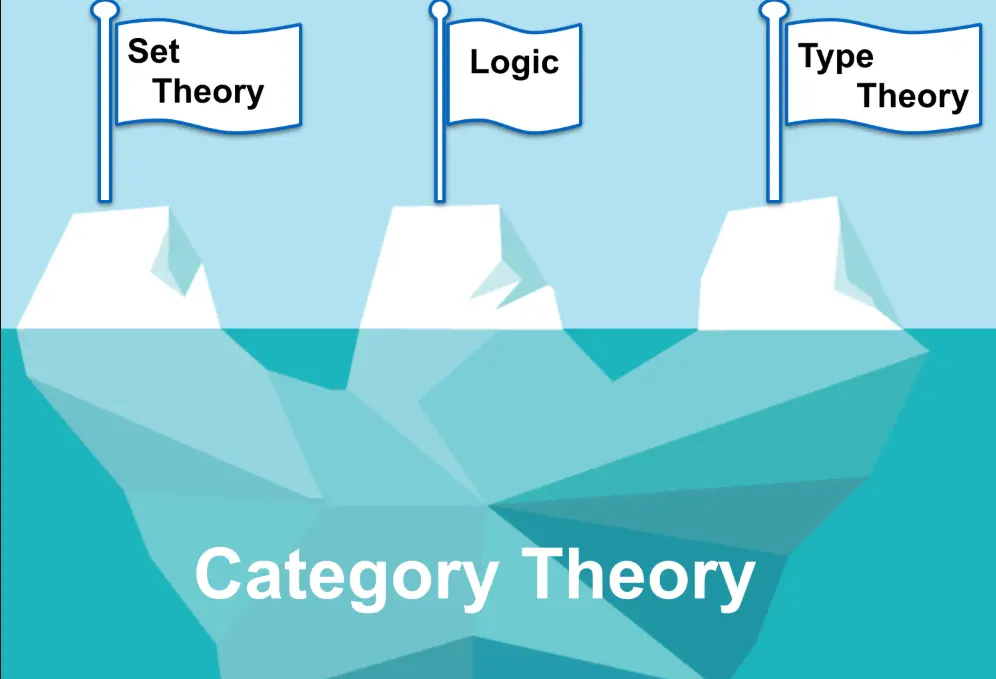
– In computer science, it underpins functional programming, type theory, and database theory.
– In logic and philosophy, it models reasoning and structures of knowledge.
One of its strengths is its ability to reveal hidden connections, such as equivalences between seemingly unrelated areas. However, its high level of abstraction can make it challenging for beginners, as it requires familiarity with other mathematical foundations.
Applications extend beyond pure math: Category Theory influences machine learning, quantum mechanics, and even linguistics, demonstrating its versatility as a foundational framework for modern science.
Table of Contents
- Part 1: OnlineExamMaker AI Quiz Maker – Make A Free Quiz in Minutes
- Part 2: 20 Category Theory Quiz Questions & Answers
- Part 3: Automatically Generate Quiz Questions Using AI Question Generator
Part 1: OnlineExamMaker AI Quiz Maker – Make A Free Quiz in Minutes
What’s the best way to create a Category Theory quiz online? OnlineExamMaker is the best AI quiz making software for you. No coding, and no design skills required. If you don’t have the time to create your online quiz from scratch, you are able to use OnlineExamMaker AI Question Generator to create question automatically, then add them into your online assessment. What is more, the platform leverages AI proctoring and AI grading features to streamline the process while ensuring exam integrity.
Key features of OnlineExamMaker:
● Create up to 10 question types, including multiple-choice, true/false, fill-in-the-blank, matching, short answer, and essay questions.
● Build and store questions in a centralized portal, tagged by categories and keywords for easy reuse and organization.
● Automatically scores multiple-choice, true/false, and even open-ended/audio responses using AI, reducing manual work.
● Create certificates with personalized company logo, certificate title, description, date, candidate’s name, marks and signature.
Automatically generate questions using AI
Part 2: 20 Category Theory Quiz Questions & Answers
or
1. Question: What is a category in Category Theory?
Options:
A) A set of numbers with addition and multiplication.
B) A collection of objects and morphisms between them, with composition and identity morphisms satisfying associativity and unit laws.
C) A graph with no loops.
D) A function from sets to sets.
Answer: B
Explanation: A category is defined as a structure with objects and morphisms that compose associatively and have identity elements, forming the foundation of Category Theory.
2. Question: Which of the following is a property of morphisms in a category?
Options:
A) Morphisms are always invertible.
B) Morphisms can be composed, and the composition is associative.
C) Every morphism is a function.
D) Morphisms must be symmetric.
Answer: B
Explanation: In a category, morphisms compose associatively, which is a key axiom, whereas invertibility applies only to isomorphisms.
3. Question: What is a functor between two categories?
Options:
A) A morphism between objects.
B) A mapping that preserves objects, morphisms, composition, and identities between categories.
C) A natural transformation.
D) An equivalence relation.
Answer: B
Explanation: A functor is a structure-preserving map between categories, ensuring that the categorical structure is maintained.
4. Question: In Category Theory, what is an isomorphism?
Options:
A) A morphism that is one-to-one.
B) A morphism with an inverse morphism.
C) A functor that is fully faithful.
D) A limit of a diagram.
Answer: B
Explanation: An isomorphism is a morphism that has an inverse, meaning there exists another morphism that composes to the identity on both sides.
5. Question: What is a monomorphism?
Options:
A) A morphism that is surjective.
B) A morphism that is left-cancellative, meaning if f ∘ g = f ∘ h, then g = h.
C) A functor between categories.
D) An identity morphism.
Answer: B
Explanation: A monomorphism is defined by the left-cancellation property, analogous to injectivity in sets, though it depends on the category.
6. Question: What is a natural transformation?
Options:
A) A functor from a category to itself.
B) A morphism between functors that commutes with the functors’ actions.
C) An isomorphism in a category.
D) A diagram in a category.
Answer: B
Explanation: A natural transformation assigns, for each object, a morphism that makes the diagrams commute, linking two functors.
7. Question: Which of the following best describes a contravariant functor?
Options:
A) It reverses the direction of morphisms.
B) It preserves the direction of morphisms.
C) It is the same as a covariant functor.
D) It only applies to monoids.
Answer: A
Explanation: A contravariant functor reverses the arrows of morphisms, turning a morphism f: A → B into something like f: B → A in the target category.
8. Question: What is the Yoneda lemma?
Options:
A) A way to define limits in a category.
B) A statement that natural transformations correspond to elements of hom-sets.
C) A functor that is an equivalence.
D) The definition of a monad.
Answer: B
Explanation: The Yoneda lemma embeds a category into the category of functors, showing that morphisms to a representable functor correspond to elements of the hom-set.
9. Question: In Category Theory, what is a product of two objects?
Options:
A) An object with projections that satisfies a universal property.
B) The coproduct of the objects.
C) A functor applied to both objects.
D) An isomorphism between them.
Answer: A
Explanation: The product is defined via a universal property: it comes with projections such that any other pair of morphisms factors uniquely through it.
10. Question: What is an adjoint functor?
Options:
A) A functor that is its own inverse.
B) A pair of functors where one is left-adjoint to the other, satisfying a unit-counit condition.
C) A natural transformation.
D) A limit in a category.
Answer: B
Explanation: Adjoint functors form a pair where there is a natural bijection between hom-sets, often representing optimizations or free constructions.
11. Question: What is a limit in a category?
Options:
A) An initial object.
B) A universal cone over a diagram.
C) A functor from a category to sets.
D) A morphism that is epic.
Answer: B
Explanation: A limit is a universal object that completes a diagram by providing morphisms to all objects in the diagram.
12. Question: Which category has objects as sets and morphisms as functions?
Options:
A) The category of groups.
B) The category of vector spaces.
C) The category of sets.
D) The category of topological spaces.
Answer: C
Explanation: In the category of sets, objects are sets, and morphisms are functions between them, with composition as function composition.
13. Question: What is a monoid in the category of sets?
Options:
A) A group with inverses.
B) A set with an associative binary operation and an identity element.
C) A functor from a monoid to sets.
D) A natural transformation.
Answer: B
Explanation: A monoid is a set equipped with an associative multiplication and an identity, which generalizes to other categories.
14. Question: What is an equivalence of categories?
Options:
A) Two categories that are isomorphic as sets.
B) A pair of functors that are inverses up to natural isomorphism.
C) A full and faithful functor.
D) A diagram in a category.
Answer: B
Explanation: An equivalence means the categories are essentially the same, with functors providing a way to translate between them.
15. Question: What is a coproduct?
Options:
A) An object with injections that is initial in a certain slice category.
B) The product of two objects.
C) A limit of a diagram.
D) An adjoint functor.
Answer: A
Explanation: The coproduct is dual to the product, defined by a universal property with inclusions into the coproduct.
16. Question: In Category Theory, what is a terminal object?
Options:
A) An object with a unique morphism to every other object.
B) An initial object.
C) A product of all objects.
D) A functor.
Answer: A
Explanation: A terminal object has exactly one morphism from any object to it, making it a categorical generalization of a point.
17. Question: What does the term “universal property” refer to?
Options:
A) A property that all objects satisfy.
B) A characterization of an object by the uniqueness of morphisms to or from it.
C) A natural transformation.
D) An isomorphism.
Answer: B
Explanation: Universal properties define objects up to unique isomorphism via morphisms, avoiding explicit constructions.
18. Question: What is a groupoid?
Options:
A) A category where every morphism is an isomorphism.
B) A monoid with inverses.
C) A functor category.
D) A limit.
Answer: A
Explanation: In a groupoid, every morphism has an inverse, making it a category where objects are connected by invertible arrows.
19. Question: What is the category of functors?
Options:
A) A category where objects are categories.
B) A category whose objects are functors from one category to another, with morphisms as natural transformations.
C) A monoidal category.
D) A topos.
Answer: B
Explanation: The functor category has functors as objects and natural transformations as morphisms, forming a new category.
20. Question: What is a topos?
Options:
A) A category equivalent to the category of sets.
B) A category with properties like having finite limits and power objects, generalizing set theory.
C) A groupoid.
D) An adjoint functor.
Answer: B
Explanation: A topos is a categorical structure that behaves like the category of sets, supporting logic and geometry.
or
Part 3: Automatically generate quiz questions using OnlineExamMaker AI Question Generator
Automatically generate questions using AI