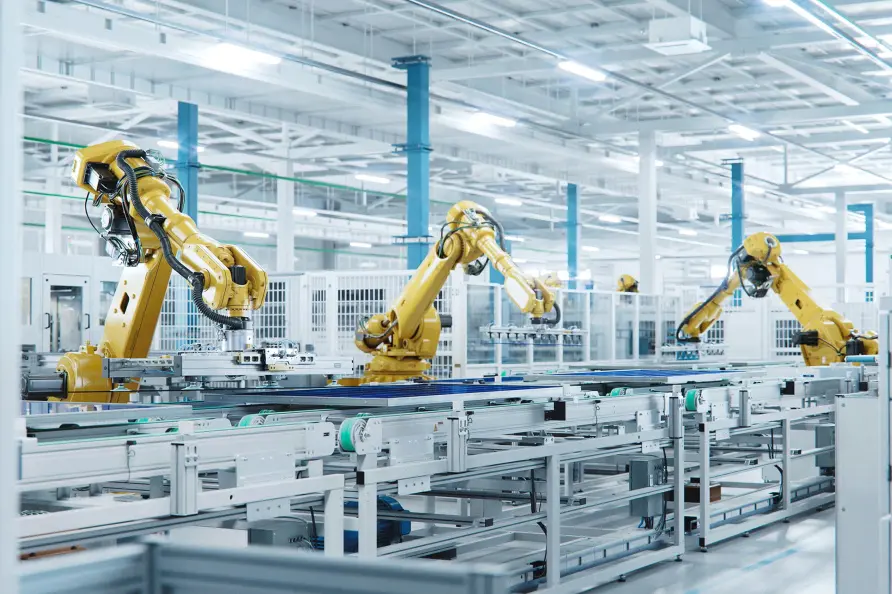
Manufacturing Engineering is a dynamic branch of engineering that focuses on the design, development, and optimization of systems for producing goods efficiently and cost-effectively. It integrates principles from mechanical, industrial, and materials engineering to streamline manufacturing processes, such as assembly lines, automation, and quality control. This field emphasizes innovation in technologies like robotics, 3D printing, and sustainable practices to enhance productivity, reduce waste, and ensure high-quality output in industries ranging from automotive and aerospace to electronics and consumer goods. By bridging the gap between design and production, Manufacturing Engineering plays a pivotal role in driving technological advancements and economic growth.
Table of Contents
- Part 1: OnlineExamMaker AI Quiz Maker – Make A Free Quiz in Minutes
- Part 2: 20 Manufacturing Engineering Quiz Questions & Answers
- Part 3: Automatically Generate Quiz Questions Using AI Question Generator
Part 1: OnlineExamMaker AI Quiz Maker – Make A Free Quiz in Minutes
What’s the best way to create a Manufacturing Engineering quiz online? OnlineExamMaker is the best AI quiz making software for you. No coding, and no design skills required. If you don’t have the time to create your online quiz from scratch, you are able to use OnlineExamMaker AI Question Generator to create question automatically, then add them into your online assessment. What is more, the platform leverages AI proctoring and AI grading features to streamline the process while ensuring exam integrity.
Key features of OnlineExamMaker:
● Create up to 10 question types, including multiple-choice, true/false, fill-in-the-blank, matching, short answer, and essay questions.
● Build and store questions in a centralized portal, tagged by categories and keywords for easy reuse and organization.
● Automatically scores multiple-choice, true/false, and even open-ended/audio responses using AI, reducing manual work.
● Create certificates with personalized company logo, certificate title, description, date, candidate’s name, marks and signature.
Automatically generate questions using AI
Part 2: 20 Manufacturing Engineering Quiz Questions & Answers
or
Question 1:
What is the primary purpose of annealing in manufacturing?
A. To increase hardness
B. To relieve internal stresses
C. To improve electrical conductivity
D. To reduce ductility
Answer: B
Explanation: Annealing heats and cools metal slowly to remove internal stresses and improve ductility, making the material easier to machine or form without cracking.
Question 2:
In CNC machining, what does the “G-code” primarily control?
A. Machine speed
B. Tool paths and movements
C. Material selection
D. Cooling systems
Answer: B
Explanation: G-code is a programming language that instructs the CNC machine on tool paths, speeds, and coordinates, enabling precise automated manufacturing.
Question 3:
Which welding process uses an electric arc and consumable electrode?
A. Laser welding
B. Shielded Metal Arc Welding (SMAW)
C. Ultrasonic welding
D. Friction welding
Answer: B
Explanation: SMAW creates an electric arc between a flux-coated electrode and the workpiece, melting the electrode to form the weld, making it suitable for various metals.
Question 4:
What is the main advantage of injection molding over other plastic forming methods?
A. Lower initial costs
B. Ability to produce complex shapes quickly
C. Limited to small parts only
D. No need for cooling
Answer: B
Explanation: Injection molding allows for high-speed production of intricate and detailed plastic parts with minimal waste, ideal for mass manufacturing.
Question 5:
In quality control, what does “Six Sigma” aim to achieve?
A. Reduce defects to 3.4 per million opportunities
B. Increase production speed by 50%
C. Eliminate all inspections
D. Focus only on raw materials
Answer: A
Explanation: Six Sigma is a methodology that uses statistical tools to minimize process variations and defects, targeting no more than 3.4 defects per million opportunities for high reliability.
Question 6:
What is the key characteristic of a cantilever robot in manufacturing?
A. It has multiple arms
B. It extends from a fixed base without support on the opposite end
C. It operates underwater
D. It is used only for assembly
Answer: B
Explanation: A cantilever robot features an arm that protrudes from a single support point, allowing access to confined spaces while maintaining stability for tasks like welding or painting.
Question 7:
Which material property is most critical for selecting metals in high-temperature applications?
A. Density
B. Melting point
C. Color
D. Hardness
Answer: B
Explanation: The melting point determines a metal’s ability to withstand high temperatures without deforming, ensuring structural integrity in environments like engines or furnaces.
Question 8:
What does “lean manufacturing” primarily seek to eliminate?
A. All machinery
B. Waste and inefficiencies
C. Skilled workers
D. Product variety
Answer: B
Explanation: Lean manufacturing focuses on streamlining processes to remove waste, such as excess inventory or unnecessary steps, to improve efficiency and reduce costs.
Question 9:
In extrusion processes, what happens to the material as it passes through the die?
A. It is compressed into a solid block
B. It is shaped into a continuous cross-section
C. It is cut into pieces
D. It is heated to evaporate
Answer: B
Explanation: Extrusion forces material through a die to create a uniform cross-sectional profile, commonly used for producing items like pipes or rods.
Question 10:
What is the role of a fixture in manufacturing?
A. To measure parts
B. To hold workpieces securely during machining
C. To provide power to tools
D. To store materials
Answer: B
Explanation: Fixtures stabilize and position workpieces accurately, ensuring precision and repeatability in operations like drilling or milling.
Question 11:
Which grinding process uses a bonded abrasive wheel?
A. Electrochemical machining
B. Surface grinding
C. Water jet cutting
D. Plasma cutting
Answer: B
Explanation: Surface grinding employs a rotating wheel with bonded abrasives to remove material and achieve a smooth finish on flat surfaces.
Question 12:
What is the primary benefit of using additive manufacturing (3D printing)?
A. Faster production of large quantities
B. Ability to create complex geometries without tooling
C. Lower material costs for metals
D. Elimination of design phases
Answer: B
Explanation: Additive manufacturing builds objects layer by layer from digital models, allowing for intricate designs that are difficult or impossible with traditional subtractive methods.
Question 13:
In assembly lines, what does “just-in-time” production mean?
A. Producing goods ahead of schedule
B. Receiving materials exactly when needed
C. Storing excess inventory
D. Increasing production downtime
Answer: B
Explanation: Just-in-time production minimizes inventory by delivering materials and components at the precise time they are required, reducing waste and costs.
Question 14:
What type of defect is commonly associated with casting processes?
A. Porosity
B. Excessive shine
C. Increased weight
D. Color variation
Answer: A
Explanation: Porosity occurs when gas bubbles are trapped in the cast material, leading to weak spots; it’s a common issue in processes like sand casting if not properly vented.
Question 15:
Which factor primarily affects the surface finish in turning operations?
A. Spindle speed
B. Operator’s height
C. Room temperature
D. Tool material
Answer: A
Explanation: Spindle speed influences the cutting action in turning, directly impacting the smoothness of the surface finish on the workpiece.
Question 16:
What is the main purpose of a gearbox in manufacturing machinery?
A. To generate electricity
B. To change speed and torque
C. To cool the engine
D. To store tools
Answer: B
Explanation: Gearboxes transmit power by altering the rotational speed and torque between the input and output shafts, essential for controlling machine operations.
Question 17:
In powder metallurgy, how are parts typically formed?
A. By melting and pouring
B. By compressing and sintering powders
C. By welding sheets
D. By injection molding
Answer: B
Explanation: Powder metallurgy involves compacting metal powders into a desired shape and then sintering them to bond the particles, creating strong components without melting.
Question 18:
What does “ergonomics” focus on in a manufacturing environment?
A. Machine aesthetics
B. Worker safety and efficiency
C. Product marketing
D. Energy consumption
Answer: B
Explanation: Ergonomics designs workstations and tools to fit the worker’s capabilities, reducing injury risks and improving productivity in manufacturing settings.
Question 19:
Which non-destructive testing method uses sound waves?
A. X-ray inspection
B. Ultrasonic testing
C. Visual inspection
D. Dye penetrant testing
Answer: B
Explanation: Ultrasonic testing sends high-frequency sound waves through a material to detect internal flaws, such as cracks, without damaging the part.
Question 20:
What is the key advantage of using automation in manufacturing?
A. Reducing the need for quality checks
B. Increasing consistency and reducing human error
C. Eliminating all costs
D. Slowing down production
Answer: B
Explanation: Automation employs machines and robots for repetitive tasks, providing consistent output and minimizing errors that can occur with manual labor.
or
Part 3: Automatically generate quiz questions using OnlineExamMaker AI Question Generator
Automatically generate questions using AI