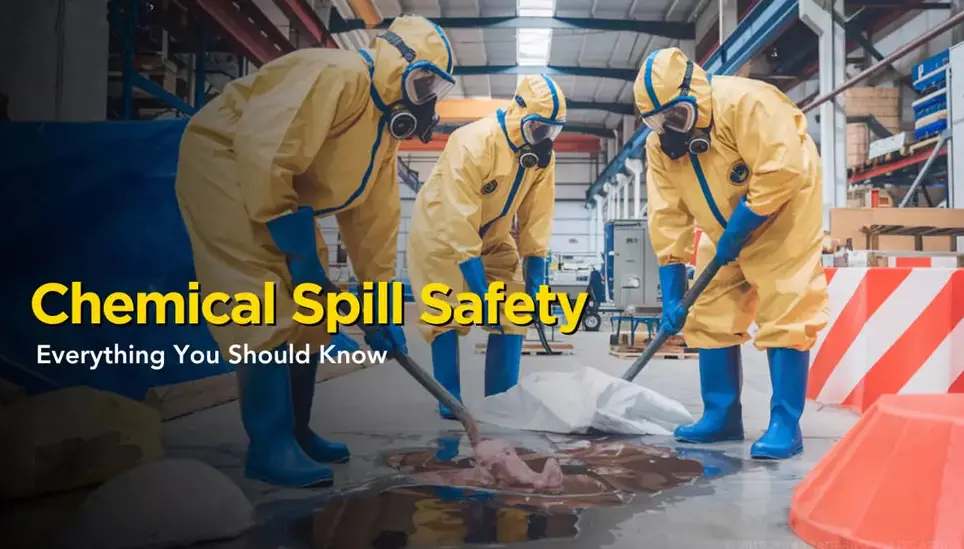
Chemical spill safety involves protocols to prevent, respond to, and mitigate the risks associated with accidental releases of hazardous substances. These incidents can occur in laboratories, industrial settings, or transportation, posing threats such as fires, explosions, toxic exposure, environmental contamination, and health hazards like skin irritation, respiratory issues, or long-term illnesses.
Prevention is the first line of defense. Always store chemicals in properly labeled, compatible containers, use secondary containment systems, and conduct regular inspections of storage areas. Train personnel on safe handling techniques, including wearing appropriate personal protective equipment (PPE) like gloves, goggles, and respirators. Implement engineering controls, such as fume hoods and spill kits, and adhere to regulations from bodies like OSHA and EPA to minimize risks.
In the event of a spill, act quickly but calmly. Evacuate the area immediately if the spill is large or involves highly hazardous materials, and alert emergency responders. For small spills, follow the “STOP” method: Stop the source if safe, Contain the spill with absorbents or barriers, and Clean up using designated tools while avoiding direct contact. Always neutralize acids or bases as needed, dispose of waste properly, and document the incident for review.
Post-spill, decontaminate affected areas and equipment, and conduct a thorough investigation to identify root causes and prevent recurrence. Regular drills, clear signage, and access to safety data sheets (SDS) are essential for maintaining a culture of preparedness. Remember, effective chemical spill safety saves lives, protects the environment, and ensures operational continuity.
Table of Contents
- Part 1: Create A Chemical Spill Safety Quiz in Minutes Using AI with OnlineExamMaker
- Part 2: 20 Chemical Spill Safety Quiz Questions & Answers
- Part 3: AI Question Generator – Automatically Create Questions for Your Next Assessment
Part 1: Create A Chemical Spill Safety Quiz in Minutes Using AI with OnlineExamMaker
Are you looking for an online assessment to test the Chemical Spill Safety skills of your learners? OnlineExamMaker uses artificial intelligence to help quiz organizers to create, manage, and analyze exams or tests automatically. Apart from AI features, OnlineExamMaker advanced security features such as full-screen lockdown browser, online webcam proctoring, and face ID recognition.
Recommended features for you:
● Includes a safe exam browser (lockdown mode), webcam and screen recording, live monitoring, and chat oversight to prevent cheating.
● Enhances assessments with interactive experience by embedding video, audio, image into quizzes and multimedia feedback.
● Once the exam ends, the exam scores, question reports, ranking and other analytics data can be exported to your device in Excel file format.
● Offers question analysis to evaluate question performance and reliability, helping instructors optimize their training plan.
Automatically generate questions using AI
Part 2: 20 Chemical Spill Safety Quiz Questions & Answers
or
1. Question: What is the first action you should take upon discovering a chemical spill?
Options:
A) Clean up the spill immediately.
B) Evacuate the area and alert others.
C) Ignore it if it’s a small spill.
D) Try to neutralize the chemical.
Answer: B
Explanation: The first step is to ensure safety by evacuating the area and alerting others to prevent exposure, as per standard emergency response protocols.
2. Question: Which personal protective equipment (PPE) is essential when dealing with a chemical spill?
Options:
A) Gloves and safety glasses.
B) It depends on the chemical; always check the SDS.
C) Just a lab coat.
D) No PPE is needed for small spills.
Answer: B
Explanation: PPE requirements vary by chemical, and the Safety Data Sheet (SDS) provides specific guidance to minimize health risks.
3. Question: What does the acronym SDS stand for in the context of chemical safety?
Options:
A) Safety Data Sheet.
B) Spill Detection System.
C) Secure Disposal Standard.
D) Standard Danger Signal.
Answer: A
Explanation: SDS contains critical information about chemical hazards, handling, and emergency measures, which is vital for spill response.
4. Question: If a chemical spill occurs in a laboratory, who should be notified first?
Options:
A) Your supervisor or lab manager.
B) The janitorial staff.
C) No one, if you can handle it.
D) The fire department directly.
Answer: A
Explanation: Notifying your supervisor ensures proper protocol is followed, including any internal emergency procedures before external authorities.
5. Question: What is the primary purpose of a chemical spill kit?
Options:
A) To clean up spills quickly.
B) To contain and absorb hazardous materials safely.
C) To store chemicals properly.
D) To test for chemical reactions.
Answer: B
Explanation: Spill kits are designed to contain, absorb, and neutralize spills to prevent spread and reduce risks to people and the environment.
6. Question: Which of the following is a sign of a corrosive chemical spill?
Options:
A) Fumes or strong odors.
B) Damage to surfaces or skin upon contact.
C) Color change in the liquid.
D) All of the above.
Answer: D
Explanation: Corrosive spills can exhibit fumes, surface damage, and color changes, indicating potential hazards like burns or material degradation.
7. Question: When should you attempt to clean up a chemical spill yourself?
Options:
A) Only if it’s a minor spill and you’re trained.
B) Never; always call for help.
C) If it’s in a remote area.
D) Immediately, regardless of size.
Answer: A
Explanation: Self-cleanup is appropriate only for small, non-hazardous spills where you have the training, to avoid escalating risks.
8. Question: What is the best way to contain a spreading chemical spill?
Options:
A) Use absorbent materials around the edges.
B) Pour water on it to dilute.
C) Open windows for ventilation.
D) Sweep it into a drain.
Answer: A
Explanation: Absorbent materials create a barrier to prevent the spill from spreading further, protecting surrounding areas.
9. Question: Why is it important to wear respiratory protection during a chemical spill?
Options:
A) To protect against inhaling toxic vapors.
B) It’s not necessary if the room is ventilated.
C) Only for large spills.
D) To keep the air clean for others.
Answer: A
Explanation: Inhaling chemical vapors can cause immediate health issues, so respiratory protection is crucial to safeguard the respiratory system.
10. Question: What should you do if chemical residue remains after a spill cleanup?
Options:
A) Dispose of it as regular waste.
B) Follow proper hazardous waste disposal procedures.
C) Leave it for the next shift.
D) Rinse it down the sink.
Answer: B
Explanation: Residue may still be hazardous, so it must be handled as hazardous waste to comply with regulations and prevent environmental contamination.
11. Question: Which factor determines the level of response to a chemical spill?
Options:
A) The type and quantity of the chemical.
B) The time of day.
C) The color of the chemical.
D) Whether it’s indoors or outdoors.
Answer: A
Explanation: The chemical’s properties and amount dictate the response level, as they affect toxicity, flammability, and potential harm.
12. Question: What is the role of ventilation in managing a chemical spill?
Options:
A) To disperse fumes and reduce concentration.
B) To speed up evaporation.
C) It has no role.
D) To mix the air with the chemical.
Answer: A
Explanation: Proper ventilation helps dilute and remove hazardous vapors, lowering the risk of inhalation exposure.
13. Question: If a chemical spill involves a flammable liquid, what immediate action is critical?
Options:
A) Eliminate ignition sources.
B) Add water to cool it.
C) Cover it with a cloth.
D) Turn on lights to see better.
Answer: A
Explanation: Removing ignition sources prevents fires or explosions, which are common risks with flammable chemicals.
14. Question: How often should chemical spill response training be conducted?
Options:
A) Annually or as required by regulations.
B) Only once, upon hiring.
C) When a spill occurs.
D) It’s optional.
Answer: A
Explanation: Regular training ensures personnel are up-to-date on procedures, reducing errors during actual incidents.
15. Question: What does the term “neutralization” mean in chemical spill contexts?
Options:
A) Rendering the chemical less harmful by adding a base or acid.
B) Completely removing the chemical.
C) Diluting it with water.
D) Ignoring it until it evaporates.
Answer: A
Explanation: Neutralization involves chemical reactions to make the substance safer for handling and disposal.
16. Question: Why should you avoid walking through a chemical spill?
Options:
A) To prevent spreading the chemical.
B) It might damage your shoes.
C) It’s unsanitary.
D) You could slip and fall.
Answer: A
Explanation: Walking through a spill can track the chemical to other areas, increasing contamination and exposure risks.
17. Question: What information should be included in a chemical spill report?
Options:
A) Date, time, location, chemical involved, and actions taken.
B) Only the cleanup method.
C) Your personal contact details.
D) Nothing, if it was minor.
Answer: A
Explanation: A detailed report helps in incident analysis, regulatory compliance, and preventing future occurrences.
18. Question: In a chemical spill emergency, what is the purpose of establishing a perimeter?
Options:
A) To restrict access and contain the hazard.
B) To mark the spill area for photos.
C) To allow easy entry for cleanup.
D) It’s not necessary.
Answer: A
Explanation: A perimeter controls the area, protects responders and bystanders, and prevents unauthorized exposure.
19. Question: Which agency might be involved in a large-scale chemical spill?
Options:
A) Environmental Protection Agency (EPA) or local hazardous materials team.
B) The post office.
C) Your company’s HR department.
D) A nearby school.
Answer: A
Explanation: Agencies like the EPA handle major spills to ensure environmental and public safety through specialized response.
20. Question: What is the key to preventing chemical spills in the first place?
Options:
A) Proper storage, handling, and regular inspections.
B) Using cheaper containers.
C) Storing chemicals outdoors.
D) Relying on spill kits alone.
Answer: A
Explanation: Proactive measures like secure storage and inspections reduce the likelihood of spills occurring.
or
Part 3: AI Question Generator – Automatically Create Questions for Your Next Assessment
Automatically generate questions using AI