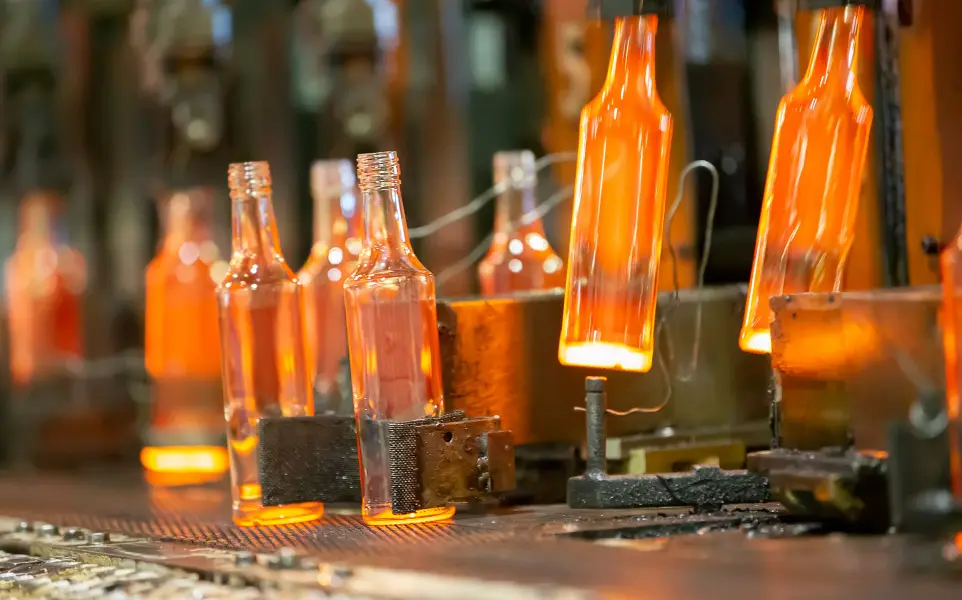
The glass industry is a vital sector in manufacturing, producing materials used across construction, automotive, packaging, and electronics. It involves the melting of raw materials like silica sand, soda ash, and limestone at high temperatures to form various glass products.
Historically, glassmaking dates back to ancient Mesopotamia and Egypt around 3500 BC, evolving through the Roman era’s blown glass techniques to the Industrial Revolution’s mass production. Today, the industry is dominated by advanced processes such as float glass production, invented in the 1950s, which revolutionized flat glass manufacturing.
Globally, the glass market is valued at approximately $150 billion annually, with projections to reach $200 billion by 2025, driven by urbanization and infrastructure development. Key regions include Asia-Pacific, which accounts for over 50% of production due to rapid growth in China and India, followed by Europe and North America. Major players like Corning, Saint-Gobain, and NSG Group lead in innovation and market share, while emerging companies focus on sustainable practices.
The industry produces diverse products, including flat glass for windows and mirrors, container glass for bottles and jars, fiberglass for insulation, and specialty glass for screens and optical lenses. Applications span automotive windshields, architectural facades, food packaging, and high-tech displays, contributing to sectors like renewable energy through solar panels.
Challenges include high energy consumption in production, which emits significant CO2, and fluctuating raw material prices. Environmental regulations are pushing for greener alternatives, such as recycled glass (cullet) to reduce waste. Technological advancements, like low-emission coatings and smart glass, are addressing these issues.
Future trends emphasize sustainability, with a shift towards electric melting furnaces and bio-based materials. The rise of electric vehicles and green building standards is boosting demand for energy-efficient glass, while digitalization and AI optimize manufacturing processes. Overall, the glass industry remains resilient, adapting to global demands for innovation and eco-friendly solutions.
Table of Contents
- Part 1: OnlineExamMaker AI Quiz Generator – Save Time and Efforts
- Part 2: 20 Glass Industry Quiz Questions & Answers
- Part 3: OnlineExamMaker AI Question Generator: Generate Questions for Any Topic
Part 1: OnlineExamMaker AI Quiz Generator – Save Time and Efforts
Still spend a lot of time in editing questions for your next Glass Industry assessment? OnlineExamMaker is an AI quiz maker that leverages artificial intelligence to help users create quizzes, tests, and assessments quickly and efficiently. You can start by inputting a topic or specific details into the OnlineExamMaker AI Question Generator, and the AI will generate a set of questions almost instantly. It also offers the option to include answer explanations, which can be short or detailed, helping learners understand their mistakes.
What you may like:
● Automatic grading and insightful reports. Real-time results and interactive feedback for quiz-takers.
● The exams are automatically graded with the results instantly, so that teachers can save time and effort in grading.
● LockDown Browser to restrict browser activity during quizzes to prevent students searching answers on search engines or other software.
● OnlineExamMaker API offers private access for developers to extract your exam data back into your system automatically.
Automatically generate questions using AI
Part 2: 20 Glass Industry Quiz Questions & Answers
or
1. Question: What is the primary raw material used in the production of most types of glass?
A) Limestone
B) Soda ash
C) Silica sand
D) Borax
Answer: C
Explanation: Silica sand provides the silicon dioxide essential for forming the basic structure of glass, making it the most critical ingredient in glass manufacturing.
2. Question: Which process is commonly used to produce flat glass for windows?
A) Blowing
B) Pressing
C) Floating
D) Casting
Answer: C
Explanation: The float glass process involves pouring molten glass onto a bed of molten tin, resulting in a smooth, flat surface ideal for windows and mirrors.
3. Question: What type of glass is resistant to thermal shock and often used in laboratory equipment?
A) Soda-lime glass
B) Borosilicate glass
C) Tempered glass
D) Laminated glass
Answer: B
Explanation: Borosilicate glass has a low coefficient of thermal expansion, allowing it to withstand rapid temperature changes without breaking, which is crucial for lab applications.
4. Question: In glass manufacturing, what is the purpose of the annealing process?
A) To add color to the glass
B) To remove impurities
C) To relieve internal stresses
D) To shape the glass
Answer: C
Explanation: Annealing involves slowly cooling the glass to eliminate internal stresses, preventing it from cracking or shattering during handling or use.
5. Question: Which additive is primarily used to lower the melting point of glass?
A) Silica
B) Alumina
C) Soda ash
D) Calcium oxide
Answer: C
Explanation: Soda ash (sodium carbonate) acts as a flux, reducing the melting temperature of the silica mixture, making the glass production process more energy-efficient.
6. Question: What is the main environmental concern associated with glass production?
A) High water usage
B) Excessive waste generation
C) Energy consumption and CO2 emissions
D) Chemical pollution from dyes
Answer: C
Explanation: Glass manufacturing requires high temperatures, leading to significant energy use and carbon dioxide emissions, which contribute to climate change.
7. Question: Which type of glass is designed to break into small, blunt pieces for safety?
A) Float glass
B) Tempered glass
C) Borosilicate glass
D) Fused glass
Answer: B
Explanation: Tempered glass is heated and rapidly cooled to create compressive stresses on the surface, causing it to shatter into safer, cube-like fragments upon impact.
8. Question: What innovation allowed for the mass production of glass bottles in the early 20th century?
A) Hand-blowing techniques
B) The Owens automatic bottle machine
C) Float glass process
D) Press molding
Answer: B
Explanation: The Owens automatic bottle machine automated the blowing process, enabling rapid and cost-effective production of glass containers on an industrial scale.
9. Question: Which property makes glass suitable for optical lenses?
A) High opacity
B) Transparency and refractive index
C) Thermal conductivity
D) Flexibility
Answer: B
Explanation: Glass’s transparency and ability to bend light through its refractive index make it ideal for manufacturing precise optical lenses used in cameras and eyeglasses.
10. Question: What role does cullet play in glass recycling?
A) It increases production costs
B) It is a raw material additive
C) It replaces virgin materials
D) It adds color to glass
Answer: C
Explanation: Cullet, or recycled glass, can be melted down and reused, reducing the need for raw materials and lowering energy consumption in the melting process.
11. Question: Which glass type is commonly used in automotive windshields to prevent shattering?
A) Annealed glass
B) Laminated glass
C) Soda-lime glass
D) Borosilicate glass
Answer: B
Explanation: Laminated glass consists of layers of glass with a plastic interlayer, holding the fragments together upon impact and enhancing safety in vehicles.
12. Question: What is the typical melting temperature range for soda-lime glass?
A) 500–600°C
B) 1000–1500°C
C) 2000–2500°C
D) 300–400°C
Answer: B
Explanation: Soda-lime glass melts between 1000–1500°C, allowing it to be shaped and formed during manufacturing while maintaining its structural integrity.
13. Question: In the glass industry, what does “frit” refer to?
A) A type of raw ore
B) Pre-fused glass particles
C) A finishing polish
D) A cooling agent
Answer: B
Explanation: Frit is ground glass that has been pre-melted and cooled, used in enamels, glazes, and as a raw material to enhance the melting process in glass production.
14. Question: Which factor has driven the growth of the solar glass market?
A) Increased demand for decorative glass
B) Expansion of renewable energy sources
C) Reduced use in construction
D) Advances in plastic alternatives
Answer: B
Explanation: Solar glass, often coated for photovoltaic panels, has grown due to the global push for solar energy, which requires durable, transparent materials for efficient energy capture.
15. Question: What is the primary advantage of using fiberglass in composites?
A) It is highly conductive
B) It provides strength and insulation
C) It is easily biodegradable
D) It lowers production costs
Answer: B
Explanation: Fiberglass, made from fine glass fibers, offers high tensile strength and thermal insulation, making it valuable in applications like insulation and reinforced plastics.
16. Question: Which historical invention marked the beginning of modern glassmaking?
A) The discovery of fire
B) The Syro-Palestinian core-formed vessels
C) The Bessemer process
D) The invention of plastics
Answer: B
Explanation: Syro-Palestinian core-formed vessels from around 1500 BCE represent early glassmaking techniques, leading to the development of more advanced methods over time.
17. Question: What effect does adding lead oxide have on glass?
A) It makes the glass opaque
B) It increases refractive index and brilliance
C) It reduces thermal resistance
D) It accelerates cooling
Answer: B
Explanation: Lead oxide enhances the glass’s density and refractive index, resulting in the high clarity and sparkle seen in crystal glassware.
18. Question: In glass packaging, why is dark-colored glass used for certain products?
A) To reduce weight
B) To protect contents from UV light
C) To improve thermal insulation
D) To enhance aesthetic appeal
Answer: B
Explanation: Dark-colored glass blocks ultraviolet rays, preserving the quality and shelf life of light-sensitive products like beer and medications.
19. Question: What is the key benefit of the extrusion process in glass production?
A) It creates intricate shapes easily
B) It produces large sheets quickly
C) It is used for fiber optics
D) It minimizes waste
Answer: A
Explanation: Extrusion forces molten glass through a die to form specific shapes, such as tubes or rods, allowing for precise and complex designs in glass products.
20. Question: Which global standard regulates safety glass for buildings?
A) ISO 9001
B) ANSI Z97.1
C) ASTM C1036
D) EN 12600
Answer: D
Explanation: EN 12600 is a European standard that specifies impact resistance tests for safety glass, ensuring it meets safety requirements for architectural applications.
or
Part 3: OnlineExamMaker AI Question Generator: Generate Questions for Any Topic
Automatically generate questions using AI