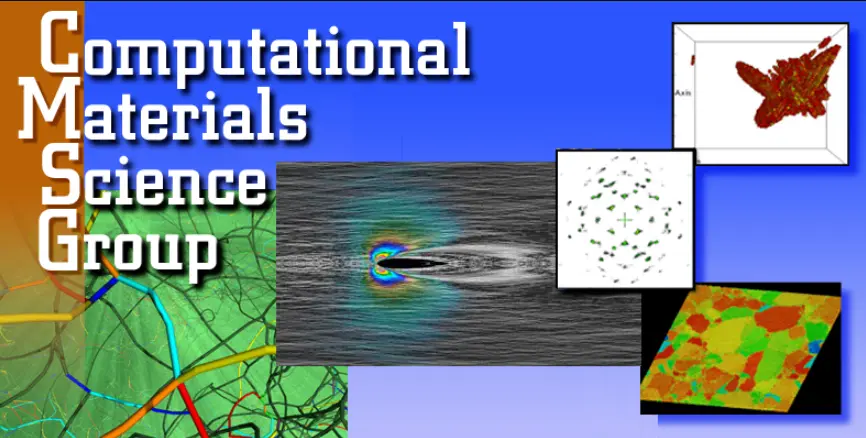
Computational Materials Science is an interdisciplinary field that harnesses computational techniques to simulate, analyze, and predict the behavior of materials at the atomic and molecular levels. By employing advanced methods such as quantum mechanics, molecular dynamics, and density functional theory, researchers can model material properties like strength, conductivity, and reactivity without relying solely on physical experiments. This approach accelerates the discovery of new materials for applications in electronics, energy storage, nanotechnology, and pharmaceuticals, while minimizing costs and environmental impact. It bridges physics, chemistry, and engineering, enabling innovations in areas like drug design, alloy development, and sustainable technologies.
Table of Contents
- Part 1: OnlineExamMaker – Generate and Share Computational Materials Science Quiz with AI Automatically
- Part 2: 20 Computational Materials Science Quiz Questions & Answers
- Part 3: Automatically Generate Quiz Questions Using AI Question Generator
Part 1: OnlineExamMaker – Generate and Share Computational Materials Science Quiz with AI Automatically
OnlineExamMaker is a powerful AI-powered assessment platform to create auto-grading Computational Materials Science skills assessments. It’s designed for educators, trainers, businesses, and anyone looking to generate engaging quizzes without spending hours crafting questions manually. The AI Question Generator feature allows you to input a topic or specific details, and it generates a variety of question types automatically.
Top features for assessment organizers:
● Prevent cheating by randomizing questions or changing the order of questions, so learners don’t get the same set of questions each time.
● AI Exam Grader for efficiently grading quizzes and assignments, offering inline comments, automatic scoring, and “fudge points” for manual adjustments.
● Embed quizzes on websites, blogs, or share via email, social media (Facebook, Twitter), or direct links.
● Handles large-scale testing (thousands of exams/semester) without internet dependency, backed by cloud infrastructure.
Automatically generate questions using AI
Part 2: 20 Computational Materials Science Quiz Questions & Answers
or
1. Question: What is the primary purpose of Density Functional Theory (DFT) in computational materials science?
A) To solve the Schrödinger equation exactly for multi-electron systems
B) To approximate the electronic structure using electron density functionals
C) To simulate molecular dynamics at room temperature
D) To calculate lattice vibrations in crystals
Answer: B
Explanation: DFT approximates the many-electron problem by using functionals of the electron density, making it computationally efficient for predicting material properties.
2. Question: In molecular dynamics simulations, what does the term “time step” refer to?
A) The total simulation duration
B) The interval at which atomic positions are updated
C) The energy scale of the system
D) The number of atoms in the simulation
Answer: B
Explanation: The time step is the small increment of time used in numerical integration to update the positions and velocities of atoms, ensuring stability in the simulation.
3. Question: Which potential is commonly used in simulations of metallic systems due to its ability to model electron interactions?
A) Lennard-Jones potential
B) Embedded Atom Method (EAM) potential
C) Morse potential
D) Buckingham potential
Answer: B
Explanation: The EAM potential accounts for the embedding energy of an atom in the electron gas of its neighbors, making it suitable for metals where electron delocalization is significant.
4. Question: What is the key advantage of using ab initio methods in computational materials science?
A) They require no experimental data
B) They derive properties directly from quantum mechanics without empirical parameters
C) They are faster than classical simulations
D) They only work for organic materials
Answer: B
Explanation: Ab initio methods, like DFT, calculate material properties from first principles using fundamental physical laws, reducing reliance on fitted parameters.
5. Question: In Monte Carlo simulations, what role does the Metropolis algorithm play?
A) It optimizes the energy of the system
B) It determines the acceptance probability of new configurations
C) It calculates forces between atoms
D) It visualizes simulation results
Answer: B
Explanation: The Metropolis algorithm decides whether to accept a new configuration based on the energy change, allowing the system to explore phase space probabilistically.
6. Question: Which software package is widely used for performing DFT calculations?
A) LAMMPS
B) VASP
C) GROMACS
D) MATLAB
Answer: B
Explanation: VASP (Vienna Ab initio Simulation Package) is specifically designed for DFT calculations, enabling accurate electronic structure computations for materials.
7. Question: What does the band gap represent in computational band structure calculations?
A) The energy difference between valence and conduction bands
B) The total energy of the crystal lattice
C) The vibrational frequency of atoms
D) The magnetic moment of electrons
Answer: A
Explanation: The band gap is the energy range where no electron states exist, determining whether a material is a conductor, semiconductor, or insulator.
8. Question: In finite element analysis for materials, what is the main purpose of meshing?
A) To divide the material into discrete elements for numerical solving
B) To measure the physical properties of the sample
C) To visualize atomic trajectories
D) To apply external forces directly
Answer: A
Explanation: Meshing breaks down a complex geometry into smaller, manageable elements, allowing for the numerical solution of partial differential equations in material simulations.
9. Question: What is the significance of the exchange-correlation functional in DFT?
A) It accounts for electron-electron interactions
B) It calculates kinetic energy only
C) It models nuclear forces
D) It is used for temperature-dependent simulations
Answer: A
Explanation: The exchange-correlation functional approximates the effects of electron exchange and correlation, which are crucial for accurately describing electron interactions in DFT.
10. Question: Which method is primarily used for simulating defect formation energies in crystals?
A) Molecular dynamics
B) Density functional theory
C) Monte Carlo sampling
D) Finite difference methods
Answer: B
Explanation: DFT can compute the energy differences associated with defects by calculating total energies of defect-free and defective structures.
11. Question: In computational thermodynamics, what does the CALPHAD method involve?
A) Calculating phase diagrams from first principles
B) Using empirical data to model alloy thermodynamics
C) Simulating atomic vibrations
D) Optimizing crystal structures
Answer: B
Explanation: CALPHAD (CALculation of PHAse Diagrams) integrates experimental data and thermodynamic models to predict phase equilibria in multi-component systems.
12. Question: What is the role of periodic boundary conditions in molecular simulations?
A) They prevent edge effects in finite systems
B) They limit the simulation to one dimension
C) They increase computational cost unnecessarily
D) They are only for quantum simulations
Answer: A
Explanation: Periodic boundary conditions mimic an infinite system by replicating the simulation cell, reducing artifacts from surface effects.
13. Question: Which approximation is often used in DFT for weakly correlated systems?
A) Local Density Approximation (LDA)
B) Generalized Gradient Approximation (GGA)
C) Hybrid functionals
D) Hartree-Fock method
Answer: B
Explanation: GGA improves upon LDA by including gradients of the density, providing better accuracy for systems with varying electron densities.
14. Question: In machine learning for materials science, what is a common application of neural networks?
A) Predicting material properties from descriptors
B) Directly solving the Schrödinger equation
C) Generating crystal structures manually
D) Measuring experimental data
Answer: A
Explanation: Neural networks can learn from data to predict properties like band gaps or elastic moduli, accelerating materials discovery.
15. Question: What is the primary limitation of classical molecular dynamics simulations?
A) They cannot handle quantum effects
B) They require excessive computational resources
C) They only work for gases
D) They ignore temperature
Answer: A
Explanation: Classical MD uses Newtonian mechanics and does not account for quantum phenomena like tunneling or electronic transitions.
16. Question: In phonon calculations, what does the phonon density of states represent?
A) The distribution of vibrational frequencies in a material
B) The electronic band structure
C) The defect concentration
D) The thermal conductivity directly
Answer: A
Explanation: The phonon density of states describes the number of vibrational modes per unit frequency, which is essential for understanding thermal properties.
17. Question: Which technique is used to study phase transitions in materials simulations?
A) Wang-Landau sampling
B) Simple energy minimization
C) Force field optimization
D) Static lattice calculations
Answer: A
Explanation: Wang-Landau sampling in Monte Carlo methods estimates the density of states, helping to identify phase transitions by exploring free energy landscapes.
18. Question: What is the basis set in quantum chemistry calculations?
A) A set of functions used to expand molecular orbitals
B) A list of experimental data points
C) The initial atomic positions
D) The simulation time steps
Answer: A
Explanation: The basis set consists of mathematical functions that approximate the wavefunctions of electrons, enabling the solution of the Schrödinger equation.
19. Question: In high-throughput computational screening, what is the goal?
A) To rapidly evaluate properties of thousands of materials
B) To perform detailed simulations on a single material
C) To replace experimental testing entirely
D) To focus on organic compounds only
Answer: A
Explanation: High-throughput methods use automated workflows to screen large databases of materials for desirable properties, such as in drug or battery design.
20. Question: What does the term “convergence” mean in the context of DFT calculations?
A) Achieving stable results with respect to parameters like k-points or energy cutoff
B) The speed of the simulation
C) The accuracy of experimental validation
D) The number of iterations required
Answer: A
Explanation: Convergence in DFT ensures that calculated properties do not change significantly when computational parameters are refined, indicating reliable results.
or
Part 3: Automatically generate quiz questions using OnlineExamMaker AI Question Generator
Automatically generate questions using AI