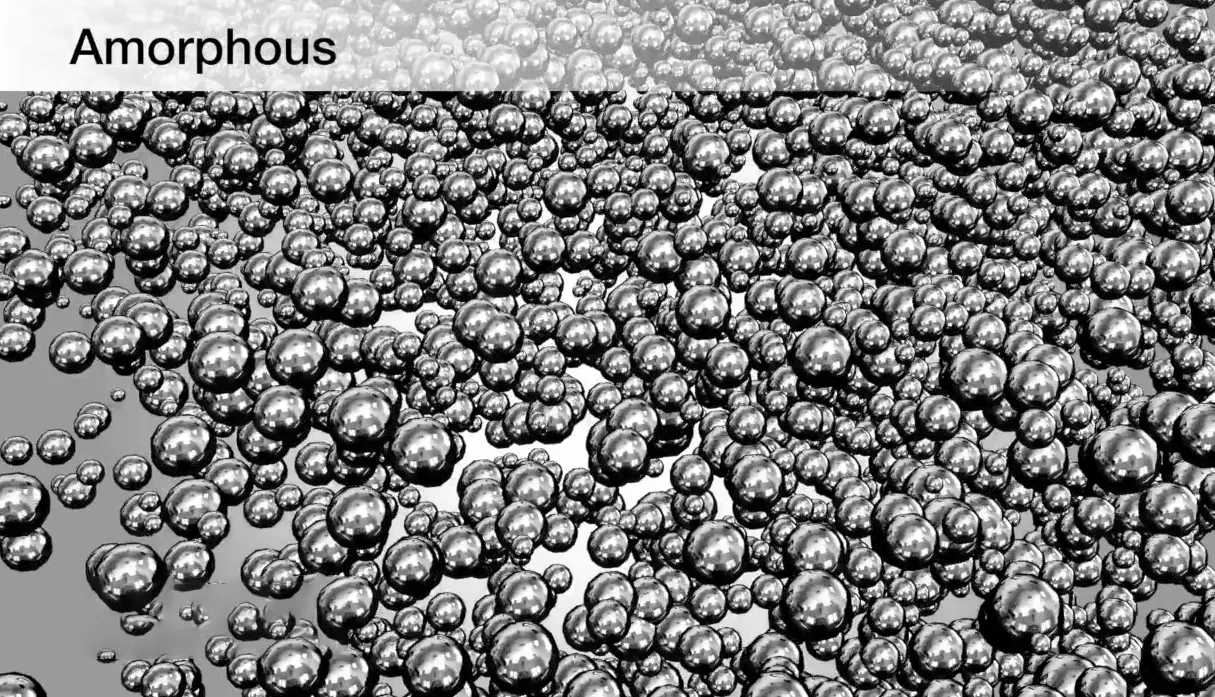
Amorphous metals, also known as metallic glasses, are alloys with a non-crystalline structure, where atoms are arranged in a disordered manner rather than the typical ordered lattice of conventional metals. This unique atomic configuration endows them with remarkable properties, including exceptional strength, high elasticity, superior corrosion resistance, and excellent magnetic characteristics. Due to these attributes, amorphous metals are utilized in a variety of applications, such as transformers, sensors, surgical tools, and sporting equipment, where their ability to maintain performance under extreme conditions makes them invaluable in modern engineering and technology.
Table of Contents
- Part 1: Best AI Quiz Making Software for Creating A Amorphous Metals Quiz
- Part 2: 20 Amorphous Metals Quiz Questions & Answers
- Part 3: Automatically Generate Quiz Questions Using AI Question Generator
Part 1: Best AI Quiz Making Software for Creating A Amorphous Metals Quiz
Nowadays more and more people create Amorphous Metals quizzes using AI technologies, OnlineExamMaker a powerful AI-based quiz making tool that can save you time and efforts. The software makes it simple to design and launch interactive quizzes, assessments, and surveys. With the Question Editor, you can create multiple-choice, open-ended, matching, sequencing and many other types of questions for your tests, exams and inventories. You are allowed to enhance quizzes with multimedia elements like images, audio, and video to make them more interactive and visually appealing.
Take a product tour of OnlineExamMaker:
● Create a question pool through the question bank and specify how many questions you want to be randomly selected among these questions.
● Build and store questions in a centralized portal, tagged by categories and keywords for easy reuse and organization.
● Simply copy a few lines of codes, and add them to a web page, you can present your online quiz in your website, blog, or landing page.
● Randomize questions or change the order of questions to ensure exam takers don’t get the same set of questions each time.
Automatically generate questions using AI
Part 2: 20 Amorphous Metals Quiz Questions & Answers
or
1. What is the primary characteristic that distinguishes amorphous metals from crystalline metals?
A) Higher density
B) Disordered atomic structure
C) Lower melting point
D) Increased ductility
Answer: B
Explanation: Amorphous metals lack the long-range atomic order found in crystalline metals, resulting in a non-crystalline structure formed by rapid cooling.
2. How are amorphous metals typically produced?
A) Slow cooling of molten metal
B) Rapid quenching from a liquid state
C) High-temperature annealing
D) Electroplating
Answer: B
Explanation: Rapid quenching prevents the atoms from arranging into a crystalline lattice, allowing the metal to solidify in an amorphous state.
3. What property makes amorphous metals useful in transformer cores?
A) High electrical conductivity
B) Low magnetic hysteresis loss
C) High thermal expansion
D) Poor corrosion resistance
Answer: B
Explanation: Amorphous metals have low coercivity and hysteresis losses, making them efficient for reducing energy loss in electrical applications like transformers.
4. Which element is commonly alloyed to create amorphous metals?
A) Carbon
B) Boron
C) Sodium
D) Aluminum
Answer: B
Explanation: Elements like boron are added to metals such as iron to form amorphous alloys by disrupting crystallization during cooling.
5. What is a key advantage of amorphous metals over crystalline metals?
A) Easier machinability
B) Higher strength-to-weight ratio
C) Lower cost of production
D) Better thermal conductivity
Answer: B
Explanation: Amorphous metals exhibit exceptional strength due to their disordered structure, which eliminates grain boundaries that weaken crystalline metals.
6. In what state must a metal be cooled to form an amorphous structure?
A) Solid state
B) Gaseous state
C) Liquid state
D) Plasma state
Answer: C
Explanation: Amorphous metals are formed by cooling a molten (liquid) metal so quickly that atoms do not have time to form a crystalline structure.
7. Why do amorphous metals often exhibit high corrosion resistance?
A) They have a uniform atomic arrangement
B) Their disordered structure lacks easy corrosion paths
C) They contain high levels of impurities
D) They are always coated with protective layers
Answer: B
Explanation: The lack of grain boundaries in amorphous metals reduces sites for corrosion initiation, enhancing their resistance compared to crystalline metals.
8. What technique is used to produce amorphous metal ribbons?
A) Forging
B) Melt spinning
C) Extrusion
D) Casting
Answer: B
Explanation: Melt spinning involves ejecting molten metal onto a rotating wheel for rapid cooling, producing thin amorphous ribbons.
9. Which of the following is NOT a typical application of amorphous metals?
A) Surgical instruments
B) Power transformers
C) Golf club heads
D) Standard structural beams
Answer: D
Explanation: Amorphous metals are used in specialized applications like transformers and sports equipment due to their unique properties, but not in standard structural beams where crystalline metals are preferred.
10. What happens to amorphous metals when heated above their glass transition temperature?
A) They become more brittle
B) They crystallize
C) They melt immediately
D) They expand rapidly
Answer: B
Explanation: Heating amorphous metals above their glass transition temperature provides enough energy for atoms to rearrange into a crystalline structure.
11. How does the cooling rate affect the formation of amorphous metals?
A) Slower rates promote crystallization
B) Faster rates prevent crystallization
C) Cooling rate has no effect
D) Only moderate rates work
Answer: B
Explanation: Extremely fast cooling rates are required to bypass the crystallization process, allowing the metal to solidify in an amorphous form.
12. What is the primary limitation of amorphous metals in widespread use?
A) High production costs
B) Poor aesthetic appeal
C) Low strength
D) Excessive weight
Answer: A
Explanation: The need for rapid cooling and specialized processes makes amorphous metals expensive to produce, limiting their commercial applications.
13. In amorphous metals, what role do alloying elements play?
A) They increase the melting point
B) They stabilize the amorphous structure
C) They add color to the metal
D) They reduce electrical conductivity
Answer: B
Explanation: Alloying elements like metalloids help in suppressing crystallization by altering atomic packing, thus maintaining the amorphous state.
14. Which physical property is typically enhanced in amorphous metals?
A) Elastic modulus
B) Thermal conductivity
C) Magnetic permeability
D) Optical transparency
Answer: A
Explanation: Amorphous metals often have a high elastic modulus, meaning they can store more elastic energy, due to their dense, disordered atomic arrangement.
15. What is the term for the process of forming amorphous metals via vapor deposition?
A) Sintering
B) Quenching
C) Physical vapor deposition
D) Annealing
Answer: C
Explanation: Physical vapor deposition allows for rapid condensation of metal vapors, creating thin films with amorphous structures.
16. Why are amorphous metals sometimes called metallic glasses?
A) They are transparent like glass
B) They have a similar atomic disorder to glass
C) They shatter like glass
D) They are made from glass mixtures
Answer: B
Explanation: Like glass, amorphous metals have a non-crystalline, glassy structure, which is why they share the name despite being metallic.
17. In what industry are amorphous metals frequently used for their wear resistance?
A) Automotive
B) Aerospace
C) Electronics
D) Textiles
Answer: A
Explanation: Amorphous metals’ hardness and resistance to wear make them suitable for automotive components like gears and bearings.
18. What structural feature do amorphous metals lack that crystalline metals have?
A) Atoms
B) Periodic lattice
C) Electrons
D) Density
Answer: B
Explanation: Crystalline metals have a repeating periodic lattice, while amorphous metals have a random atomic arrangement without such regularity.
19. How do amorphous metals compare to crystalline metals in terms of fatigue strength?
A) Lower fatigue strength
B) Similar fatigue strength
C) Higher fatigue strength
D) No fatigue at all
Answer: C
Explanation: The absence of grain boundaries in amorphous metals reduces crack propagation, leading to superior fatigue strength under cyclic loading.
20. What is a common method to characterize the amorphous structure of metals?
A) X-ray diffraction
B) Visual inspection
C) Weight measurement
D) Color analysis
Answer: A
Explanation: X-ray diffraction shows broad peaks for amorphous metals, indicating a lack of long-range order, unlike the sharp peaks in crystalline metals.
or
Part 3: Automatically generate quiz questions using OnlineExamMaker AI Question Generator
Automatically generate questions using AI