Climate science is the interdisciplinary study of Earth’s climate system, encompassing the atmosphere, oceans, land surfaces, ice, and living organisms. It examines how these components interact over time, influenced by natural processes and human activities.
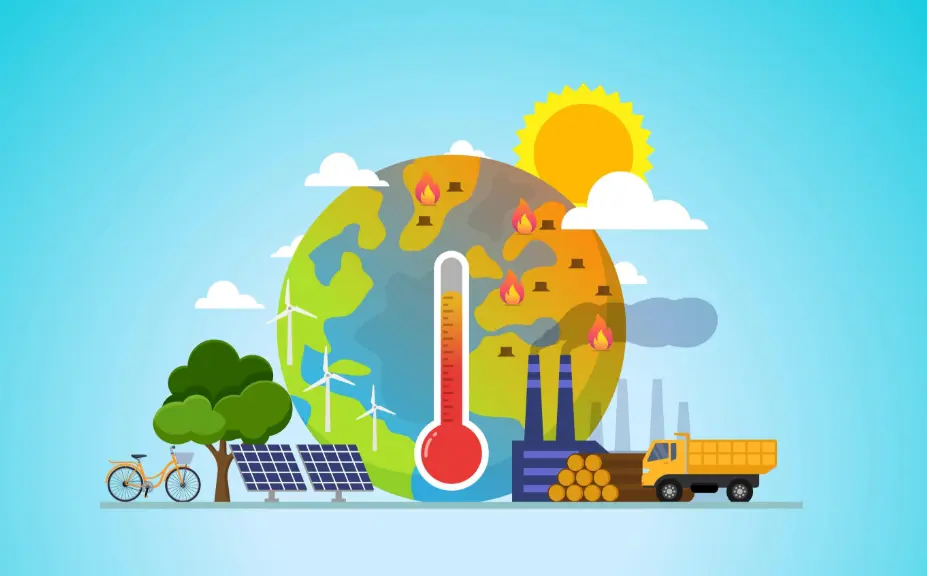
At its core, climate science relies on principles from physics, chemistry, biology, and geology. Key concepts include the greenhouse effect, where gases like carbon dioxide (CO₂), methane (CH₄), and nitrous oxide (N₂O) trap heat from the sun, maintaining Earth’s habitable temperature. However, human-induced emissions from burning fossil fuels, deforestation, and industrial processes have intensified this effect, leading to global warming.
The Earth’s climate has always varied naturally due to factors such as solar radiation, volcanic eruptions, and orbital changes. Evidence from ice cores, tree rings, and sediment records shows that the current rate of warming is unprecedented in the last 800,000 years. Since the Industrial Revolution, average global temperatures have risen by about 1.1°C (2°F), with the past decade being the warmest on record.
Major drivers of modern climate change include:
– Anthropogenic emissions: Fossil fuel combustion accounts for roughly 75% of CO₂ emissions, while agriculture and land-use changes contribute to methane and other gases.
– Feedback loops: Melting ice reduces albedo (reflectivity), causing more heat absorption; warming oceans release stored CO₂, amplifying change.
– Ocean and atmospheric circulation: Disruptions like the El Niño-Southern Oscillation affect weather patterns globally.
Consequences of climate change are wide-ranging:
– Rising sea levels: Thermal expansion and melting glaciers have caused a 20 cm rise since 1900, threatening coastal communities.
– Extreme weather: Increased frequency of heatwaves, droughts, floods, and storms, as seen in events like Hurricane Katrina and the 2021 European floods.
– Biodiversity loss: Habitat shifts and species extinction, with coral reefs facing bleaching from warmer oceans.
– Human impacts: Food insecurity, water scarcity, and health risks from heat-related illnesses and disease vectors.
Scientific tools and methods include satellite observations, climate models, and paleoclimate data. The Intergovernmental Panel on Climate Change (IPCC) synthesizes this research, with reports like the Sixth Assessment (2021-2023) highlighting that human influence is “unequivocal” and predicting a potential 1.5°C to 4°C warming by 2100, depending on emission scenarios.
Mitigation strategies focus on reducing emissions through renewable energy, energy efficiency, reforestation, and carbon pricing. Adaptation measures include building resilient infrastructure, improving early warning systems, and protecting vulnerable populations. International efforts, such as the Paris Agreement, aim to limit warming to well below 2°C.
Advancing climate science requires ongoing research into geoengineering, carbon capture, and equitable policies to address disparities in climate vulnerability. Ultimately, it underscores the urgent need for global cooperation to safeguard the planet’s future.
Table of Contents
- Part 1: Create An Amazing Climate Science Quiz Using AI Instantly in OnlineExamMaker
- Part 2: 20 Climate Science Quiz Questions & Answers
- Part 3: OnlineExamMaker AI Question Generator: Generate Questions for Any Topic
Part 1: Create An Amazing Climate Science Quiz Using AI Instantly in OnlineExamMaker
The quickest way to assess the Climate Science knowledge of candidates is using an AI assessment platform like OnlineExamMaker. With OnlineExamMaker AI Question Generator, you are able to input content—like text, documents, or topics—and then automatically generate questions in various formats (multiple-choice, true/false, short answer). Its AI Exam Grader can automatically grade the exam and generate insightful reports after your candidate submit the assessment.
Overview of its key assessment-related features:
● Create up to 10 question types, including multiple-choice, true/false, fill-in-the-blank, matching, short answer, and essay questions.
● Automatically generates detailed reports—individual scores, question report, and group performance.
● Instantly scores objective questions and subjective answers use rubric-based scoring for consistency.
● API and SSO help trainers integrate OnlineExamMaker with Google Classroom, Microsoft Teams, CRM and more.
Automatically generate questions using AI
Part 2: 20 Climate Science Quiz Questions & Answers
or
1. Question: What is the primary greenhouse gas responsible for trapping heat in Earth’s atmosphere?
A) Oxygen
B) Carbon dioxide
C) Nitrogen
D) Argon
Answer: B
Explanation: Carbon dioxide is the most significant greenhouse gas from human activities, as it absorbs and re-emits infrared radiation, contributing to the greenhouse effect and global warming.
2. Question: Which process describes the gradual increase in Earth’s average surface temperature due to human activities?
A) Ozone depletion
B) Global warming
C) Acid rain formation
D) Desertification
Answer: B
Explanation: Global warming results from the buildup of greenhouse gases, leading to enhanced greenhouse effects and a rise in temperatures worldwide.
3. Question: What is the main source of methane emissions, a potent greenhouse gas?
A) Volcanic eruptions
B) Livestock farming and rice paddies
C) Automobile exhaust
D) Forest fires
Answer: B
Explanation: Methane is primarily released from agricultural activities like livestock digestion and rice cultivation, making it a key contributor to climate change.
4. Question: How do oceans play a role in regulating Earth’s climate?
A) By reflecting sunlight back into space
B) By absorbing and storing carbon dioxide
C) By increasing atmospheric oxygen levels
D) By creating more landmasses
Answer: B
Explanation: Oceans act as carbon sinks, absorbing CO2 from the atmosphere, which helps mitigate climate change but also leads to ocean acidification.
5. Question: What is the term for the long-term alteration of temperature and weather patterns in a specific region?
A) Weather forecast
B) Climate change
C) Seasonal variation
D) Atmospheric pressure
Answer: B
Explanation: Climate change refers to significant shifts in global temperatures and weather patterns over extended periods, primarily driven by human-induced factors.
6. Question: Which international agreement aims to limit global warming to well below 2 degrees Celsius?
A) Kyoto Protocol
B) Montreal Protocol
C) Paris Agreement
D) Copenhagen Accord
Answer: C
Explanation: The Paris Agreement, adopted in 2015, sets goals to reduce greenhouse gas emissions and keep global temperature rise below 2 degrees Celsius, preferably 1.5 degrees.
7. Question: What effect does deforestation have on climate change?
A) It increases oxygen production
B) It reduces the planet’s ability to absorb CO2
C) It cools the Earth’s surface
D) It prevents urban heat islands
Answer: B
Explanation: Trees absorb CO2 through photosynthesis; deforestation releases stored carbon and diminishes this absorption, exacerbating global warming.
8. Question: Which gas is primarily responsible for the depletion of the ozone layer?
A) Carbon dioxide
B) Chlorofluorocarbons (CFCs)
C) Methane
D) Nitrous oxide
Answer: B
Explanation: CFCs break down ozone molecules in the stratosphere, leading to ozone depletion, though they also contribute to greenhouse effects.
9. Question: How does the burning of fossil fuels contribute to climate change?
A) By releasing oxygen into the atmosphere
B) By emitting greenhouse gases like CO2
C) By increasing water vapor in the air
D) By reducing atmospheric pollution
Answer: B
Explanation: Fossil fuel combustion releases CO2 and other gases that trap heat, directly driving the increase in global temperatures.
10. Question: What is a key indicator of climate change in polar regions?
A) Increased snowfall
B) Melting of ice caps and glaciers
C) Decreased sea levels
D) More frequent tropical storms
Answer: B
Explanation: Rising temperatures cause ice caps and glaciers to melt, leading to sea-level rise and loss of reflective ice surfaces that help regulate global climate.
11. Question: Which factor is a natural cause of climate change?
A) Industrial emissions
B) Volcanic eruptions
C) Deforestation for agriculture
D) Urbanization
Answer: B
Explanation: Volcanic eruptions release aerosols and gases that can temporarily alter climate, unlike human activities which are the dominant drivers today.
12. Question: What is the greenhouse effect?
A) The cooling of Earth by reflecting sunlight
B) The process where gases trap heat in the atmosphere
C) The evaporation of water from oceans
D) The formation of clouds
Answer: B
Explanation: The greenhouse effect is essential for life, as it warms the planet by trapping heat, but human enhancements amplify it, causing climate change.
13. Question: How does climate change affect biodiversity?
A) It increases habitat availability
B) It leads to species extinction and ecosystem shifts
C) It promotes uniform global weather
D) It reduces the need for migration
Answer: B
Explanation: Changing climates disrupt habitats, causing species to migrate, adapt, or face extinction due to altered temperatures and resources.
14. Question: What role do renewable energy sources play in combating climate change?
A) They increase fossil fuel dependency
B) They reduce greenhouse gas emissions
C) They cause more air pollution
D) They deplete natural resources faster
Answer: B
Explanation: Sources like solar and wind produce little to no emissions, helping to lower the carbon footprint and mitigate global warming.
15. Question: Which phenomenon is linked to rising sea levels?
A) Thermal expansion of water
B) Decreased glacier formation
C) Reduced rainfall
D) Ocean cooling
Answer: A
Explanation: As ocean water warms, it expands, and melting ice adds volume, both contributing to sea-level rise associated with climate change.
16. Question: What is carbon sequestration?
A) The release of carbon into the atmosphere
B) The process of capturing and storing carbon dioxide
C) The burning of carbon-based fuels
D) The conversion of CO2 to oxygen
Answer: B
Explanation: Carbon sequestration involves methods to remove and store CO2 from the atmosphere, aiding in reducing its concentration and slowing climate change.
17. Question: How do extreme weather events relate to climate change?
A) They become less frequent
B) They increase in intensity and occurrence
C) They only affect coastal areas
D) They stabilize global temperatures
Answer: B
Explanation: Warmer temperatures enhance the energy in weather systems, leading to more frequent and severe events like hurricanes and droughts.
18. Question: What is the main goal of the Intergovernmental Panel on Climate Change (IPCC)?
A) To promote fossil fuel use
B) To assess scientific information on climate change
C) To regulate international trade
D) To forecast daily weather
Answer: B
Explanation: The IPCC provides objective reports on climate science to inform policy, highlighting risks and solutions for global warming.
19. Question: Which human activity is the largest contributor to global CO2 emissions?
A) Transportation
B) Electricity and heat production
C) Agriculture
D) Waste management
Answer: B
Explanation: Burning fossil fuels for electricity and heat generates the majority of anthropogenic CO2, making it a primary target for emission reductions.
20. Question: What is adaptation in the context of climate change?
A) Preventing all future emissions
B) Adjusting to the impacts of climate change
C) Ignoring environmental changes
D) Increasing greenhouse gas production
Answer: B
Explanation: Adaptation involves strategies like building sea walls or developing drought-resistant crops to cope with the effects of a changing climate.
or
Part 3: OnlineExamMaker AI Question Generator: Generate Questions for Any Topic
Automatically generate questions using AI