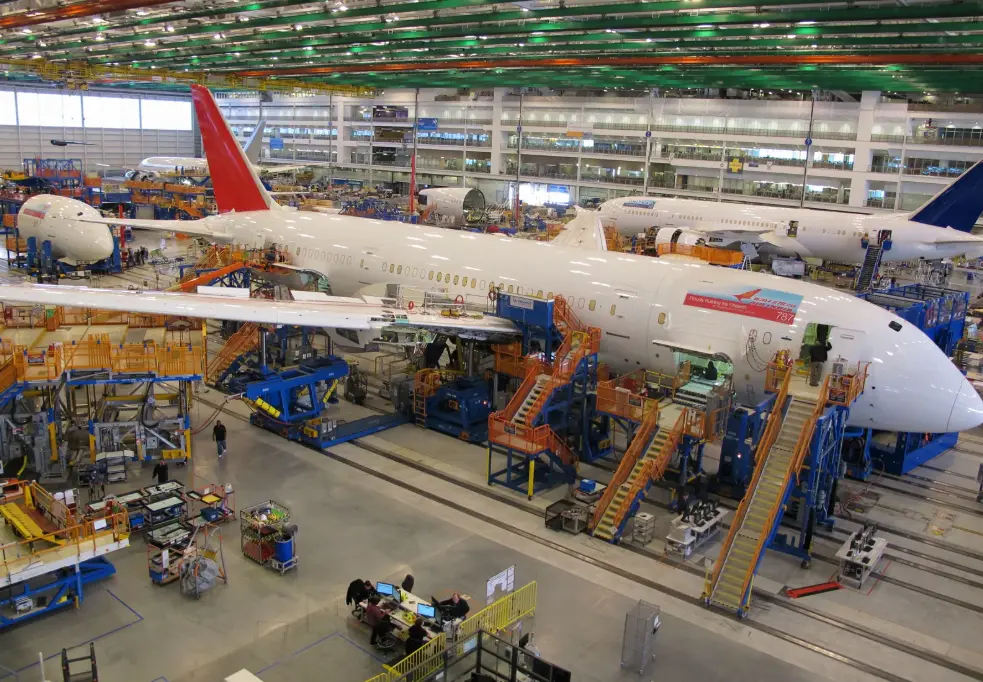
The aircraft industry is a dynamic and highly innovative sector that encompasses the design, manufacturing, maintenance, and operation of aircraft, including commercial airliners, military jets, helicopters, and unmanned drones. Rooted in early aviation pioneers like the Wright brothers, it has evolved into a global powerhouse driven by technological advancements such as advanced materials, aerodynamics, and digital automation.
Major players, including companies like Boeing, Airbus, Lockheed Martin, and Embraer, dominate the market, producing aircraft that facilitate international travel, cargo transport, and defense operations. The industry is characterized by its emphasis on safety, fuel efficiency, and environmental sustainability, with ongoing developments in electric propulsion, hydrogen-powered flight, and supersonic travel aimed at reducing carbon emissions.
Economically, it contributes significantly to global GDP, employing millions in engineering, supply chains, and services, while fostering international trade and tourism. However, it faces challenges such as regulatory hurdles, supply chain disruptions, and the need for adaptation to climate change goals, making it a critical arena for future innovation and collaboration.
Table of Contents
- Part 1: OnlineExamMaker AI Quiz Maker – Make A Free Quiz in Minutes
- Part 2: 20 Aircraft Industry Quiz Questions & Answers
- Part 3: Try OnlineExamMaker AI Question Generator to Create Quiz Questions
Part 1: OnlineExamMaker AI Quiz Maker – Make A Free Quiz in Minutes
Still spend a lot of time in editing questions for your next Aircraft Industry assessment? OnlineExamMaker is an AI quiz maker that leverages artificial intelligence to help users create quizzes, tests, and assessments quickly and efficiently. You can start by inputting a topic or specific details into the OnlineExamMaker AI Question Generator, and the AI will generate a set of questions almost instantly. It also offers the option to include answer explanations, which can be short or detailed, helping learners understand their mistakes.
What you may like:
● Automatic grading and insightful reports. Real-time results and interactive feedback for quiz-takers.
● The exams are automatically graded with the results instantly, so that teachers can save time and effort in grading.
● LockDown Browser to restrict browser activity during quizzes to prevent students searching answers on search engines or other software.
● Create certificates with personalized company logo, certificate title, description, date, candidate’s name, marks and signature.
Automatically generate questions using AI
Part 2: 20 Aircraft Industry Quiz Questions & Answers
or
1. Question: What is the primary function of ailerons on an aircraft?
Options: A) To control pitch; B) To control roll; C) To control yaw; D) To increase thrust
Answer: B
Explanation: Ailerons are hinged surfaces on the wings that move in opposite directions to bank the aircraft, controlling its roll and enabling turns.
2. Question: Who is credited with inventing the first successful powered aircraft?
Options: A) Alexander Graham Bell; B) Orville and Wilbur Wright; C) Charles Lindbergh; D) Leonardo da Vinci
Answer: B
Explanation: The Wright brothers successfully flew the Wright Flyer in 1903, marking the first controlled, sustained flight of a powered aircraft.
3. Question: What does the acronym FAA stand for in the context of aviation?
Options: A) Federal Aviation Administration; B) Flight and Aerospace Association; C) Federal Aircraft Agency; D) Flight Analysis Authority
Answer: A
Explanation: The FAA is a U.S. government agency responsible for regulating civil aviation safety, including aircraft design, operations, and air traffic control.
4. Question: Which principle explains how an aircraft wing generates lift?
Options: A) Newton’s Third Law; B) Bernoulli’s Principle; C) Archimedes’ Principle; D) Boyle’s Law
Answer: B
Explanation: Bernoulli’s Principle states that faster-moving air over the wing’s curved upper surface creates lower pressure, resulting in lift as higher pressure below pushes the wing upward.
5. Question: What are the four fundamental forces acting on an aircraft in flight?
Options: A) Lift, weight, thrust, and drag; B) Speed, altitude, power, and control; C) Torque, friction, gravity, and inertia; D) Pressure, temperature, wind, and humidity
Answer: A
Explanation: Lift opposes weight, thrust opposes drag, and these forces must be balanced for stable flight; lift comes from wings, weight from gravity, thrust from engines, and drag from air resistance.
6. Question: Which type of engine is most commonly used in modern commercial jet aircraft?
Options: A) Piston engine; B) Turbofan engine; C) Rocket engine; D) Reciprocating engine
Answer: B
Explanation: Turbofan engines are efficient for subsonic flight, providing high thrust with lower fuel consumption by bypassing a large amount of air around the core engine.
7. Question: What material is most widely used in the construction of aircraft fuselages due to its strength-to-weight ratio?
Options: A) Steel; B) Aluminum alloys; C) Titanium; D) Carbon fiber composites
Answer: B
Explanation: Aluminum alloys are lightweight, corrosion-resistant, and easy to manufacture, making them ideal for aircraft structures like fuselages in many commercial planes.
8. Question: What is the purpose of flaps on an aircraft wing?
Options: A) To increase speed; B) To reduce drag during cruise; C) To increase lift at low speeds; D) To control the aircraft’s yaw
Answer: C
Explanation: Flaps extend from the wing’s trailing edge to increase the wing’s surface area and camber, generating more lift for takeoff and landing at slower speeds.
9. Question: Which organization sets international standards for civil aviation safety?
Options: A) FAA; B) ICAO; C) NASA; D) EASA
Answer: B
Explanation: The International Civil Aviation Organization (ICAO) develops global standards and regulations to ensure the safety, efficiency, and regularity of international air transport.
10. Question: What does the term “stall” mean in aircraft operations?
Options: A) Engine failure; B) Loss of lift due to excessive angle of attack; C) Sudden increase in speed; D) Aircraft collision
Answer: B
Explanation: A stall occurs when the angle of attack exceeds a critical point, causing airflow to separate from the wing and reducing lift, which can lead to a loss of control.
11. Question: Which component of an aircraft controls its yaw?
Options: A) Elevator; B) Aileron; C) Rudder; D) Flap
Answer: C
Explanation: The rudder, located on the vertical stabilizer, deflects to swing the aircraft’s nose left or right, controlling directional stability and yaw.
12. Question: What is the speed of sound at sea level under standard conditions?
Options: A) 340 meters per second; B) 500 meters per second; C) 768 miles per hour; D) 1,000 kilometers per hour
Answer: A
Explanation: At sea level and 15°C, the speed of sound is approximately 340 meters per second (or about 761 miles per hour), which is crucial for understanding supersonic flight.
13. Question: Which aircraft manufacturer is known for producing the Boeing 737 series?
Options: A) Airbus; B) Lockheed Martin; C) Boeing; D) Embraer
Answer: C
Explanation: Boeing is a leading U.S.-based manufacturer that designed the 737 as a narrow-body, short-to-medium-range jet, one of the best-selling commercial aircraft.
14. Question: How does a helicopter achieve lift differently from a fixed-wing aircraft?
Options: A) By using wings for forward motion; B) By rotating blades to create lift; C) By jet engines for vertical thrust; D) By gliding on air currents
Answer: B
Explanation: Helicopters use rotating rotor blades to generate lift and thrust, allowing them to hover, take off vertically, and maneuver without forward runway movement.
15. Question: What is the main environmental concern associated with the aircraft industry?
Options: A) Noise pollution; B) Greenhouse gas emissions; C) Water contamination; D) Soil erosion
Answer: B
Explanation: Aircraft emissions, particularly CO2 and nitrogen oxides, contribute to climate change, making greenhouse gas reduction a key focus for the industry through fuel-efficient technologies.
16. Question: What is transonic flight?
Options: A) Flight faster than the speed of sound; B) Flight near the speed of sound with mixed airflow; C) Subsonic flight only; D) Vertical flight maneuvers
Answer: B
Explanation: Transonic flight occurs when an aircraft travels at speeds close to Mach 1, creating shock waves and compressibility effects that affect aerodynamics.
17. Question: Which factor most affects an aircraft’s performance at high altitudes?
Options: A) Increased air density; B) Decreased air density; C) Higher temperature; D) Stronger gravity
Answer: B
Explanation: At high altitudes, lower air density reduces lift and engine efficiency, requiring aircraft to fly faster or use more power to maintain performance.
18. Question: What is the role of avionics in modern aircraft?
Options: A) Structural reinforcement; B) Electronic systems for navigation and control; C) Fuel storage; D) Engine cooling
Answer: B
Explanation: Avionics encompass the electronic systems that handle communication, navigation, flight management, and monitoring, enhancing safety and efficiency.
19. Question: What distinguishes a turboprop engine from a turbojet?
Options: A) Turboprop uses a propeller for thrust; B) Turbojet is more fuel-efficient; C) Turboprop is only for military use; D) They are the same type of engine
Answer: A
Explanation: A turboprop engine drives a propeller for propulsion, making it suitable for shorter ranges, while a turbojet produces thrust directly from exhaust gases.
20. Question: Which innovation significantly improved aircraft safety in the 20th century?
Options: A) Jet engines; B) Radar technology; C) Wooden frames; D) Biplane design
Answer: B
Explanation: Radar technology enabled air traffic control to detect and track aircraft, reducing collision risks and enhancing overall aviation safety.
or
Part 3: Try OnlineExamMaker AI Question Generator to Create Quiz Questions
Automatically generate questions using AI