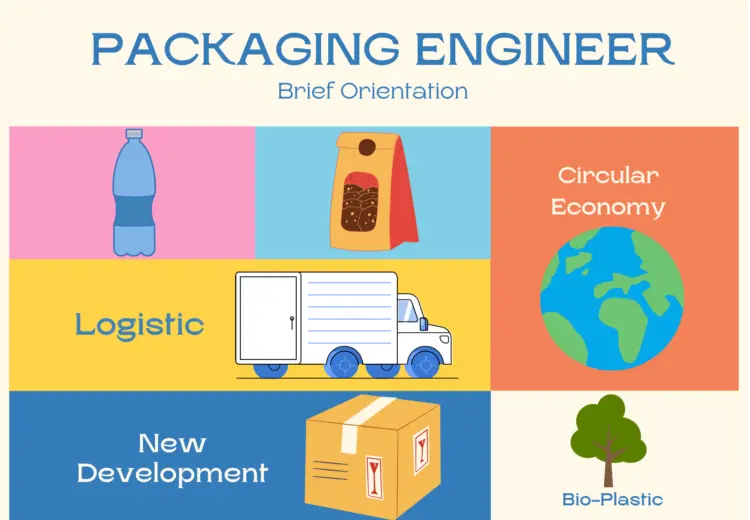
Packaging Engineering is a multidisciplinary field that focuses on the design, development, evaluation, and production of packaging systems to protect, preserve, and promote products throughout their lifecycle. It integrates principles from engineering, materials science, and industrial design to create efficient, sustainable, and cost-effective packaging solutions.
Key elements include:
– Packaging Design: Involves conceptualizing structures that ensure product safety, usability, and aesthetic appeal, while considering factors like size, shape, and functionality.
– Materials Selection: Choosing appropriate materials (e.g., plastics, paper, metals, or biodegradables) based on durability, environmental impact, and regulatory compliance.
– Testing and Quality Assurance: Conducting simulations for shock, vibration, and environmental stress to verify packaging performance and meet standards like ISO or ASTM.
– Sustainability Practices: Emphasizing eco-friendly innovations, such as reducing waste, using recyclable materials, and minimizing carbon footprints to address global environmental challenges.
This field plays a critical role in industries like food and beverage, pharmaceuticals, consumer goods, and logistics, where effective packaging enhances product integrity, extends shelf life, optimizes supply chain efficiency, and supports branding strategies. As technology advances, Packaging Engineering is evolving with smart packaging (e.g., RFID tags), automation, and circular economy principles to meet future demands.
Table of Contents
- Part 1: Best AI Quiz Making Software for Creating A Packaging Engineering Quiz
- Part 2: 20 Packaging Engineering Quiz Questions & Answers
- Part 3: Try OnlineExamMaker AI Question Generator to Create Quiz Questions
Part 1: Best AI Quiz Making Software for Creating A Packaging Engineering Quiz
Nowadays more and more people create Packaging Engineering quizzes using AI technologies, OnlineExamMaker a powerful AI-based quiz making tool that can save you time and efforts. The software makes it simple to design and launch interactive quizzes, assessments, and surveys. With the Question Editor, you can create multiple-choice, open-ended, matching, sequencing and many other types of questions for your tests, exams and inventories. You are allowed to enhance quizzes with multimedia elements like images, audio, and video to make them more interactive and visually appealing.
Take a product tour of OnlineExamMaker:
● Create a question pool through the question bank and specify how many questions you want to be randomly selected among these questions.
● Build and store questions in a centralized portal, tagged by categories and keywords for easy reuse and organization.
● Simply copy a few lines of codes, and add them to a web page, you can present your online quiz in your website, blog, or landing page.
● Randomize questions or change the order of questions to ensure exam takers don’t get the same set of questions each time.
Automatically generate questions using AI
Part 2: 20 Packaging Engineering Quiz Questions & Answers
or
1. What is the primary purpose of barrier packaging in food products?
A. To enhance aesthetic appeal
B. To prevent moisture and oxygen ingress
C. To increase product weight
D. To reduce manufacturing costs
Answer: B
Explanation: Barrier packaging protects contents from environmental factors like moisture and oxygen, which can degrade food quality and extend shelf life.
2. Which material is most commonly used for its recyclability in sustainable packaging?
A. Polystyrene
B. Polyethylene terephthalate (PET)
C. Polyvinyl chloride (PVC)
D. Styrofoam
Answer: B
Explanation: PET is widely recycled and can be reprocessed into new products, making it a preferred choice for eco-friendly packaging.
3. In packaging design, what does the term “cushioning” refer to?
A. Adding decorative elements
B. Protecting products from impact during transit
C. Sealing packages against leaks
D. Labeling for branding
Answer: B
Explanation: Cushioning materials absorb shock and vibrations, reducing the risk of damage to fragile items during handling and shipping.
4. Which packaging test evaluates a material’s resistance to tearing?
A. Compression test
B. Tensile strength test
C. Drop test
D. Elmendorf tear test
Answer: D
Explanation: The Elmendorf tear test measures the force required to propagate a tear in packaging materials, ensuring durability.
5. What is the main advantage of using corrugated boxes in shipping?
A. They are waterproof
B. They provide high strength-to-weight ratio
C. They are inexpensive to produce
D. They conduct heat efficiently
Answer: B
Explanation: Corrugated boxes offer excellent protection while being lightweight, which optimizes costs and efficiency in logistics.
6. In pharmaceutical packaging, what does child-resistant packaging aim to prevent?
A. Tampering by adults
B. Accidental ingestion by children
C. Exposure to light
D. Bacterial contamination
Answer: B
Explanation: Child-resistant packaging features designs that make it difficult for young children to open, reducing the risk of poisoning or accidental consumption.
7. Which factor is critical for selecting packaging materials for perishable goods?
A. Color variety
B. Permeability to gases
C. Electrical conductivity
D. Transparency
Answer: B
Explanation: Low permeability to gases like oxygen helps maintain freshness by slowing down oxidation and microbial growth in perishable items.
8. What is the role of aseptic packaging in the food industry?
A. To add flavors during processing
B. To sterilize products and packaging separately
C. To increase product volume
D. To enhance nutritional value
Answer: B
Explanation: Aseptic packaging involves sterilizing the product and package individually before filling, ensuring a longer shelf life without refrigeration.
9. Which packaging type is best for products requiring microwave heating?
A. Glass jars
B. Dual-ovenable trays
C. Metal cans
D. Paper bags
Answer: B
Explanation: Dual-ovenable trays are designed to withstand both conventional and microwave heating without degrading, making them ideal for ready meals.
10. What does the term “down-gauging” mean in packaging engineering?
A. Increasing material thickness
B. Reducing material thickness while maintaining performance
C. Adding multiple layers
D. Using colored materials
Answer: B
Explanation: Down-gauging involves using thinner materials to cut costs and waste without compromising the protective qualities of the packaging.
11. In logistics, why is unitization important for packaging?
A. To make packages more attractive
B. To consolidate multiple items for efficient handling
C. To reduce product weight
D. To alter product shape
Answer: B
Explanation: Unitization, such as palletizing, groups products into larger units, streamlining storage, transportation, and inventory management.
12. Which standard is commonly used for evaluating packaging recyclability?
A. ISO 9001
B. ASTM D6400
C. FDA regulations
D. UL standards
Answer: B
Explanation: ASTM D6400 specifies requirements for plastics that are degradable in composting facilities, promoting environmentally friendly packaging.
13. What is the primary benefit of vacuum packaging for meat products?
A. Improving taste
B. Extending shelf life by removing air
C. Adding moisture
D. Enhancing color
Answer: B
Explanation: Vacuum packaging removes oxygen, inhibiting bacterial growth and oxidation, which helps preserve meat longer.
14. Which packaging material is known for its excellent barrier against UV light?
A. HDPE (High-Density Polyethylene)
B. Aluminum foil
C. Cardboard
D. Biodegradable plastics
Answer: B
Explanation: Aluminum foil blocks UV rays effectively, protecting sensitive products like medications from light-induced degradation.
15. In packaging engineering, what is a blister pack primarily used for?
A. Bulk storage
B. Individual unit dosing of pharmaceuticals
C. Liquid transportation
D. Heavy industrial goods
Answer: B
Explanation: Blister packs provide tamper-evident, single-dose packaging, ensuring accurate dosing and protection for pills and small items.
16. What impact does packaging have on a product’s carbon footprint?
A. It always increases it due to added weight
B. It can reduce it through efficient design and materials
C. It has no effect
D. It only affects transportation
Answer: B
Explanation: Optimized packaging uses less material and improves logistics efficiency, lowering overall emissions and the product’s carbon footprint.
17. Which method is used to seal flexible packaging materials?
A. Heat sealing
B. Gluing with adhesives
C. Mechanical clamping
D. All of the above
Answer: D
Explanation: Heat sealing, adhesives, and mechanical methods can all be used depending on the material, ensuring a secure and airtight package.
18. What is the key consideration for packaging electronics?
A. Aesthetic appeal only
B. Electrostatic discharge (ESD) protection
C. Fragrance addition
D. Weight reduction
Answer: B
Explanation: ESD protection in packaging prevents static electricity from damaging sensitive electronic components during handling.
19. In food packaging, what does MAP stand for and its purpose?
A. Modified Atmosphere Packaging; to alter gas composition for preservation
B. Maximum Allowable Pressure; to ensure safety
C. Material Analysis Process; for quality control
D. Manual Assembly Packaging; for efficiency
Answer: A
Explanation: MAP involves replacing the air in packaging with a specific gas mixture to extend the shelf life of perishable foods by controlling spoilage.
20. Why is shelf impact testing important in packaging development?
A. To test for color fastness
B. To simulate real-world drops and impacts
C. To measure package weight
D. To evaluate printing quality
Answer: B
Explanation: Shelf impact testing assesses how packaging withstands falls and collisions on store shelves, ensuring product integrity and reducing returns.
or
Part 3: Try OnlineExamMaker AI Question Generator to Create Quiz Questions
Automatically generate questions using AI