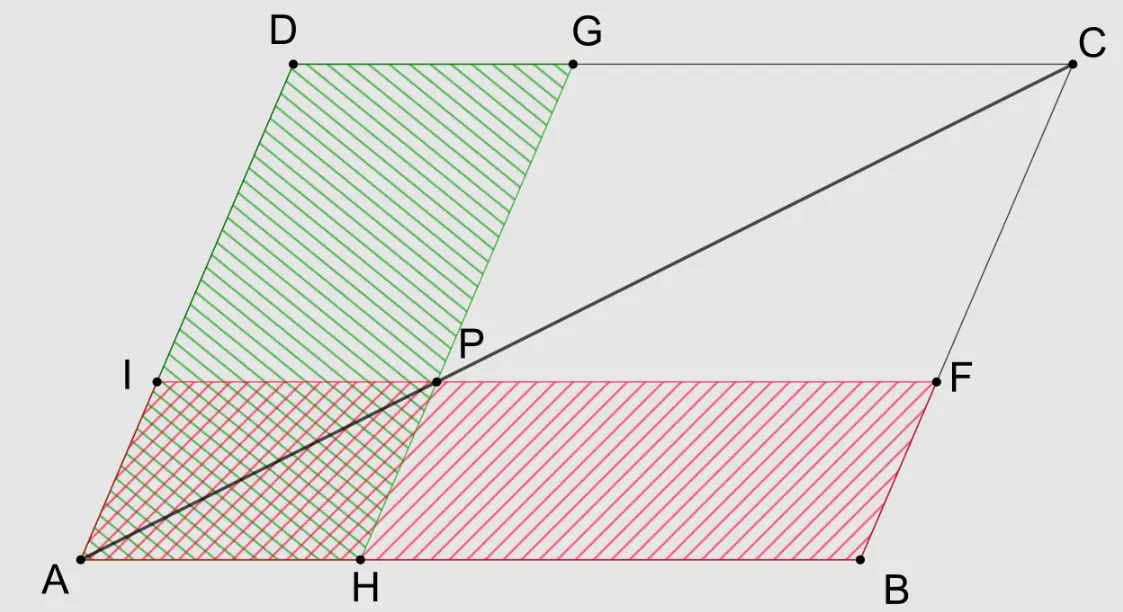
The Theorem of the Gnomon, a concept from ancient Greek geometry attributed to Euclid, states that in a geometric figure such as a square or rectangle, the gnomon—a shape formed by removing or adding a smaller similar figure—preserves certain proportional relationships. For instance, if a square is divided into a smaller square and surrounding gnomon strips, the areas maintain a balance that can be used to demonstrate properties like those in the Pythagorean Theorem. Historically, this theorem was pivotal in early mathematics for visualizing area additions and subtractions, illustrating how the gnomon’s area relates to the original figure’s dimensions. In practical terms, it shows that when a gnomon is added to one side of a figure, the resulting area equals the difference of squares, providing a foundation for understanding ratios and proportions in geometry.
Table of Contents
- Part 1: Create A Theorem Of The Gnomon Quiz in Minutes Using AI with OnlineExamMaker
- Part 2: 20 Theorem Of The Gnomon Quiz Questions & Answers
- Part 3: AI Question Generator – Automatically Create Questions for Your Next Assessment
Part 1: Create A Theorem Of The Gnomon Quiz in Minutes Using AI with OnlineExamMaker
When it comes to ease of creating a Theorem Of The Gnomon skills assessment, OnlineExamMaker is one of the best AI-powered quiz making software for your institutions or businesses. With its AI Question Generator, just upload a document or input keywords about your assessment topic, you can generate high-quality quiz questions on any topic, difficulty level, and format.
Overview of its key assessment-related features:
● AI Question Generator to help you save time in creating quiz questions automatically.
● Share your online exam with audiences on social platforms like Facebook, Twitter, Reddit and more.
● Instantly scores objective questions and subjective answers use rubric-based scoring for consistency.
● Simply copy and insert a few lines of embed codes to display your online exams on your website or WordPress blog.
Automatically generate questions using AI
Part 2: 20 Theorem Of The Gnomon Quiz Questions & Answers
or
1. Question: What is a gnomon in the context of geometry?
Options:
A. A straight line segment
B. An L-shaped figure
C. A circular arc
D. A triangular shape
Answer: B
Explanation: A gnomon is an L-shaped figure that, when added to a geometric shape like a square, extends it to form a larger similar shape, as described in ancient Greek mathematics.
2. Question: In the Theorem of the Gnomon, what is the relationship between the side lengths of two consecutive squares?
Options:
A. The difference is constant
B. The difference forms an odd number
C. The sum is even
D. The product is a prime
Answer: B
Explanation: For squares with side lengths n and n+1, the gnomon added is 2n + 1, which is always an odd number, illustrating the theorem’s pattern in figurate numbers.
3. Question: If a square has a side length of 3 units, what is the area of the gnomon needed to form the next square?
Options:
A. 6 square units
B. 7 square units
C. 9 square units
D. 12 square units
Answer: B
Explanation: The gnomon for a square of side n=3 is 2n + 1 = 7 square units, which is added to make a square of side 4.
4. Question: According to the Theorem of the Gnomon, how does the gnomon relate to the difference of squares?
Options:
A. It equals the sum of the sides
B. It is the difference between two consecutive squares
C. It forms a rectangle
D. It has no relation
Answer: B
Explanation: The gnomon represents (n+1)^2 – n^2 = 2n + 1, which is the area difference between two consecutive squares.
5. Question: What shape is typically formed when a gnomon is added to a square?
Options:
A. A rectangle
B. A larger square
C. A parallelogram
D. A trapezoid
Answer: B
Explanation: Adding a gnomon to a square results in a larger square, maintaining the square’s properties as per the theorem.
6. Question: For a square with side length 5, what is the gnomon’s area?
Options:
A. 9 square units
B. 10 square units
C. 11 square units
D. 25 square units
Answer: C
Explanation: The gnomon for n=5 is 2n + 1 = 11 square units, which extends the square to one with side length 6.
7. Question: In the Theorem of the Gnomon, what type of numbers are represented by the gnomon areas for successive squares?
Options:
A. Even numbers
B. Odd numbers
C. Prime numbers
D. Composite numbers
Answer: B
Explanation: The gnomon areas (2n + 1) are always odd numbers for integer n, as seen in the sequence of square differences.
8. Question: If the gnomon of a square is 9 square units, what was the original square’s side length?
Options:
A. 3 units
B. 4 units
C. 5 units
D. 9 units
Answer: B
Explanation: If the gnomon is 9, then 2n + 1 = 9, so n=4; thus, the original square had a side length of 4 units.
9. Question: How is the Theorem of the Gnomon related to figurate numbers?
Options:
A. It generates triangular numbers
B. It produces square numbers through addition
C. It creates pentagonal numbers
D. It has no relation to figurate numbers
Answer: B
Explanation: The theorem shows how adding gnomons builds successive square numbers, linking to the concept of figurate numbers in mathematics.
10. Question: What is the formula for the gnomon of a square with side n?
Options:
A. n^2
B. 2n
C. 2n + 1
D. n + 1
Answer: C
Explanation: The gnomon’s area is given by 2n + 1, which is the amount needed to increase the square from side n to n+1.
11. Question: In a sequence of squares, the gnomon for n=2 is how many square units?
Options:
A. 3
B. 4
C. 5
D. 6
Answer: C
Explanation: For n=2, the gnomon is 2(2) + 1 = 5 square units, extending the square to side 3.
12. Question: The Theorem of the Gnomon is often associated with which ancient mathematician?
Options:
A. Pythagoras
B. Euclid
C. Archimedes
D. Newton
Answer: B
Explanation: Euclid discussed gnomons in his Elements, particularly in relation to squares and their extensions.
13. Question: If you add a gnomon to a square of side 1, what is the resulting shape’s side length?
Options:
A. 2
B. 3
C. 4
D. 1
Answer: A
Explanation: Adding a gnomon of 2(1) + 1 = 3 square units to a 1×1 square (area 1) makes a square of area 4, so side length 2.
14. Question: What does the Theorem of the Gnomon demonstrate about the growth of squares?
Options:
A. Linear growth
B. Exponential growth
C. Quadratic growth
D. Constant growth
Answer: C
Explanation: The theorem illustrates quadratic growth, as each gnomon adds an area that increases with n, leading to square numbers.
15. Question: For a square with side length 6, calculate the gnomon’s area.
Options:
A. 11 square units
B. 12 square units
C. 13 square units
D. 36 square units
Answer: C
Explanation: The gnomon for n=6 is 2(6) + 1 = 13 square units, extending to a square of side 7.
16. Question: How many gnomons are needed to build a square from a unit square up to a square of side 4?
Options:
A. 1
B. 2
C. 3
D. 4
Answer: C
Explanation: To go from side 1 to 4, you add gnomons for n=1, n=2, and n=3, totaling 3 gnomons.
17. Question: In the Theorem of the Gnomon, the gnomon for n=10 is what?
Options:
A. 19
B. 20
C. 21
D. 100
Answer: C
Explanation: For n=10, the gnomon is 2(10) + 1 = 21 square units.
18. Question: What geometric property does the gnomon preserve when added to a square?
Options:
A. Perimeter
B. Squareness
C. Area ratio
D. Angle measures
Answer: B
Explanation: The gnomon maintains the squareness, ensuring the new figure is still a square.
19. Question: If the gnomon is 15 square units, what is the side length of the original square?
Options:
A. 6
B. 7
C. 8
D. 15
Answer: B
Explanation: For gnomon = 15, 2n + 1 = 15, so n=7; the original square has side length 7.
20. Question: The Theorem of the Gnomon can be used to explain which mathematical sequence?
Options:
A. Fibonacci sequence
B. Arithmetic sequence
C. Odd numbers sequence
D. Prime numbers sequence
Answer: C
Explanation: The gnomons themselves form the sequence of odd numbers (1, 3, 5, etc.), as each is 2n + 1.
or
Part 3: AI Question Generator – Automatically Create Questions for Your Next Assessment
Automatically generate questions using AI