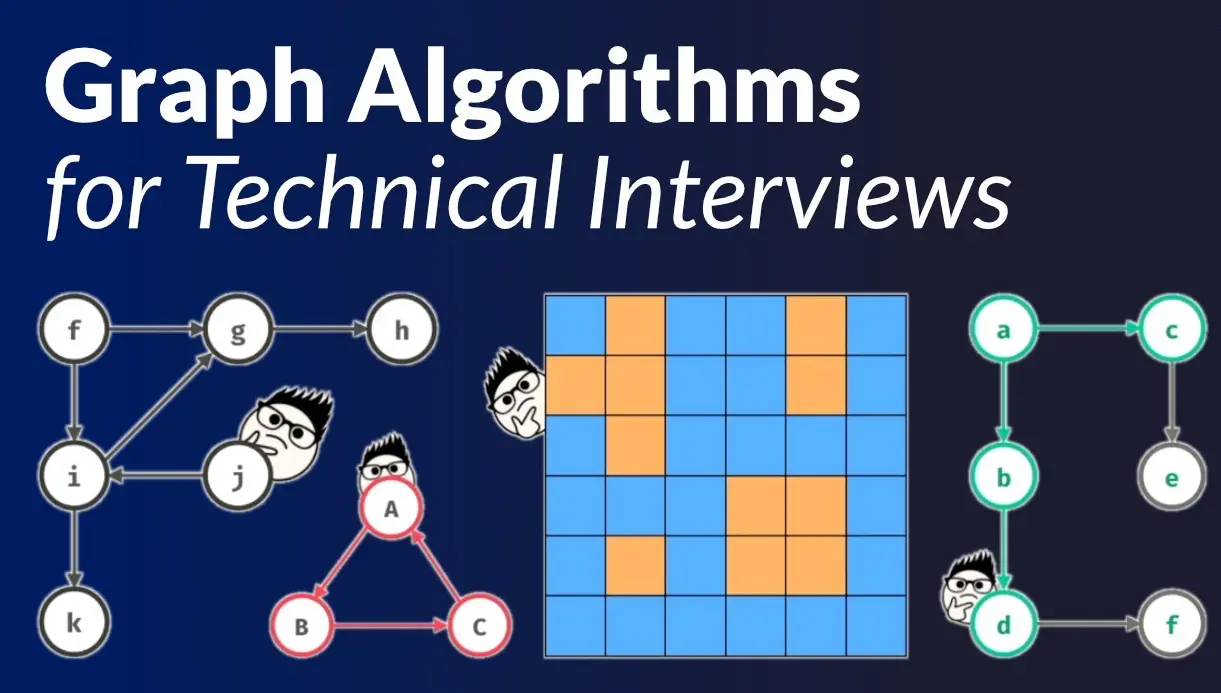
Graph algorithms are essential tools in computer science for analyzing and solving problems related to graphs, which are structures that represent networks of objects (nodes or vertices) connected by relationships (edges). These algorithms enable efficient exploration, manipulation, and optimization of graphs in various applications.
At their core, graphs model real-world scenarios like social networks, transportation systems, or the internet, where entities are linked in complex ways. Key graph algorithms include:
– Traversal Algorithms: Such as Breadth-First Search (BFS), which explores all neighbors of a node before moving to the next level, ideal for finding the shortest path in unweighted graphs. Depth-First Search (DFS) delves deeply into one path before backtracking, useful for detecting cycles or exploring mazes.
– Shortest Path Algorithms: Dijkstra’s algorithm computes the shortest path from a starting node to all others in a weighted graph, commonly used in GPS navigation and network routing. Bellman-Ford handles graphs with negative weights, detecting negative cycles.
– Minimum Spanning Tree Algorithms: Kruskal’s and Prim’s algorithms connect all nodes with the minimum total edge weight, optimizing costs in telecommunications networks or electrical grids.
– Connectivity and Flow Algorithms: Ford-Fulkerson maximizes flow in networks, while Tarjan’s algorithm finds strongly connected components, aiding in social network analysis.
Graph algorithms are computationally intensive but highly scalable, with time complexities varying based on graph size and structure. They underpin technologies like recommendation systems, web crawlers, and artificial intelligence, making them indispensable for data-driven decision-making.
Table of Contents
- Part 1: Create An Amazing Graph Algorithms Quiz Using AI Instantly in OnlineExamMaker
- Part 2: 20 Graph Algorithms Quiz Questions & Answers
- Part 3: AI Question Generator – Automatically Create Questions for Your Next Assessment
Part 1: Create An Amazing Graph Algorithms Quiz Using AI Instantly in OnlineExamMaker
The quickest way to assess the Graph Algorithms knowledge of candidates is using an AI assessment platform like OnlineExamMaker. With OnlineExamMaker AI Question Generator, you are able to input content—like text, documents, or topics—and then automatically generate questions in various formats (multiple-choice, true/false, short answer). Its AI Exam Grader can automatically grade the exam and generate insightful reports after your candidate submit the assessment.
Overview of its key assessment-related features:
● Create up to 10 question types, including multiple-choice, true/false, fill-in-the-blank, matching, short answer, and essay questions.
● Automatically generates detailed reports—individual scores, question report, and group performance.
● Instantly scores objective questions and subjective answers use rubric-based scoring for consistency.
● API and SSO help trainers integrate OnlineExamMaker with Google Classroom, Microsoft Teams, CRM and more.
Automatically generate questions using AI
Part 2: 20 Graph Algorithms Quiz Questions & Answers
or
Question 1:
What is the primary purpose of Breadth-First Search (BFS) in graphs?
A. To find the shortest path in an unweighted graph
B. To detect cycles in a directed graph
C. To find strongly connected components
D. To compute the minimum spanning tree
Answer: A
Explanation: BFS explores all vertices at the present depth before moving on to vertices at the next depth level, making it ideal for finding the shortest path in an unweighted graph by ensuring the path with the fewest edges is discovered first.
Question 2:
In Depth-First Search (DFS), what data structure is typically used to keep track of vertices?
A. Queue
B. Stack
C. Priority Queue
D. Hash Table
Answer: B
Explanation: DFS uses a stack (either explicitly or via recursion) to manage the order of vertex exploration, allowing it to delve deeply into one branch before backtracking.
Question 3:
Dijkstra’s algorithm is guaranteed to work correctly on which type of graph?
A. Graphs with negative edge weights
B. Directed graphs only
C. Graphs with non-negative edge weights
D. Undirected graphs only
Answer: C
Explanation: Dijkstra’s algorithm assumes non-negative edge weights to ensure that once a vertex is visited, its shortest path is finalized; negative weights could lead to incorrect results by altering distances during relaxation.
Question 4:
What is the time complexity of Bellman-Ford algorithm for a graph with V vertices and E edges?
A. O(1)
B. O(V + E)
C. O(V^2)
D. O(VE)
Answer: D
Explanation: Bellman-Ford relaxes all edges |V-1| times, resulting in O(VE) time complexity, which makes it suitable for detecting negative cycles in addition to finding shortest paths.
Question 5:
In Kruskal’s algorithm, edges are sorted based on:
A. Vertex degree
B. Edge weight
C. Graph density
D. Number of cycles
Answer: B
Explanation: Kruskal’s algorithm sorts edges by increasing weight and adds them to the minimum spanning tree if they do not form a cycle, ensuring the overall weight is minimized.
Question 6:
Prim’s algorithm starts from a:
A. Random vertex
B. Vertex with the highest degree
C. Arbitrary vertex
D. Sink vertex
Answer: C
Explanation: Prim’s algorithm begins from any arbitrary vertex and grows the minimum spanning tree by adding the smallest edge that connects a new vertex to the existing tree.
Question 7:
Topological sorting is possible only in which type of graph?
A. Undirected graphs
B. Directed Acyclic Graphs (DAGs)
C. Cyclic graphs
D. Weighted graphs
Answer: B
Explanation: Topological sorting orders vertices such that for every directed edge (u, v), vertex u comes before v in the ordering, which is only feasible in DAGs as cycles would prevent a valid order.
Question 8:
What does A* search algorithm use to guide its search?
A. Heuristic function
B. Breadth-first approach
C. Random selection
D. Depth limit
Answer: A
Explanation: A* uses a heuristic function to estimate the cost from the current node to the goal, combining it with the actual cost so far to prioritize paths that are likely to reach the goal efficiently.
Question 9:
In a graph, what is the purpose of Floyd-Warshall algorithm?
A. Finding the minimum spanning tree
B. All-pairs shortest paths
C. Single-source shortest paths
D. Detecting cycles
Answer: B
Explanation: Floyd-Warshall computes the shortest paths between all pairs of vertices by considering all possible intermediate vertices, making it useful for dense graphs.
Question 10:
Which algorithm is used to find strongly connected components in a directed graph?
A. BFS
B. Tarjan’s algorithm
C. Dijkstra’s algorithm
D. Kruskal’s algorithm
Answer: B
Explanation: Tarjan’s algorithm uses depth-first search and keeps track of discovery times and low links to efficiently identify strongly connected components in a single pass.
Question 11:
What is the main difference between BFS and DFS in terms of traversal order?
A. BFS uses a stack, DFS uses a queue
B. BFS explores level by level, DFS explores as far as possible along each branch
C. BFS is for weighted graphs, DFS for unweighted
D. DFS is faster than BFS
Answer: B
Explanation: BFS processes nodes level by level in a breadth-wise manner, while DFS goes deep into one path before exploring others, affecting the order and applications of each algorithm.
Question 12:
In which scenario would you use the Ford-Fulkerson algorithm?
A. Finding shortest paths
B. Maximum flow in a network
C. Minimum spanning tree
D. Cycle detection
Answer: B
Explanation: Ford-Fulkerson computes the maximum flow by finding augmenting paths from source to sink and increasing the flow until no more paths exist, using capacities on edges.
Question 13:
What is the worst-case time complexity of QuickSort-based sorting in Kruskal’s algorithm?
A. O(E log E)
B. O(V log V)
C. O(1)
D. O(E^2)
Answer: A
Explanation: Kruskal’s algorithm sorts E edges, and using a comparison-based sort like QuickSort results in O(E log E) time, followed by union-find operations for cycle checks.
Question 14:
Edmonds-Karp algorithm is an implementation of:
A. Dijkstra’s algorithm
B. Ford-Fulkerson method
C. Prim’s algorithm
D. Bellman-Ford algorithm
Answer: B
Explanation: Edmonds-Karp is a specific implementation of the Ford-Fulkerson method that uses BFS to find the shortest augmenting paths, ensuring polynomial time complexity.
Question 15:
In a bipartite graph, what does Hopcroft-Karp algorithm solve?
A. Shortest path
B. Maximum bipartite matching
C. Minimum spanning tree
D. Topological sort
Answer: B
Explanation: Hopcroft-Karp uses BFS and DFS to find a maximum matching in bipartite graphs by augmenting paths, improving on simpler matching algorithms.
Question 16:
What condition must be met for a graph to have an Eulerian path?
A. All vertices have even degree
B. Exactly zero or two vertices have odd degree
C. All vertices have odd degree
D. No cycles present
Answer: B
Explanation: An Eulerian path exists if exactly zero (for a circuit) or two vertices have odd degree, as the path must enter and leave vertices except for the start and end.
Question 17:
Boruvka’s algorithm is similar to which other minimum spanning tree algorithm?
A. Dijkstra’s
B. Kruskal’s and Prim’s
C. Bellman-Ford
D. A*
Answer: B
Explanation: Boruvka’s algorithm, like Kruskal’s, adds the cheapest edge from each component but contracts components like Prim’s, making it a parallelizable MST algorithm.
Question 18:
In Johnson’s algorithm, what is the key step before running shortest path calculations?
A. Reweighting the graph
B. Removing edges
C. Adding vertices
D. Sorting edges
Answer: A
Explanation: Johnson’s algorithm first reweights the graph to eliminate negative weights using Bellman-Ford, then applies Dijkstra’s on each vertex to find all-pairs shortest paths.
Question 19:
What is the output of the Articulation Point algorithm in a graph?
A. Bridges in the graph
B. Vertices whose removal increases the number of connected components
C. Cycles in the graph
D. Shortest paths
Answer: B
Explanation: The algorithm identifies articulation points (or cut vertices) using DFS, as removing them disconnects the graph, which is crucial for network reliability analysis.
Question 20:
Warshall’s algorithm is essentially the same as:
A. Floyd-Warshall algorithm
B. Dijkstra’s algorithm
C. BFS
D. Prim’s algorithm
Answer: A
Explanation: Warshall’s algorithm is an earlier name for the transitive closure version, but in the context of shortest paths, it refers to Floyd-Warshall, which finds paths between all pairs of vertices.
or
Part 3: AI Question Generator – Automatically Create Questions for Your Next Assessment
Automatically generate questions using AI