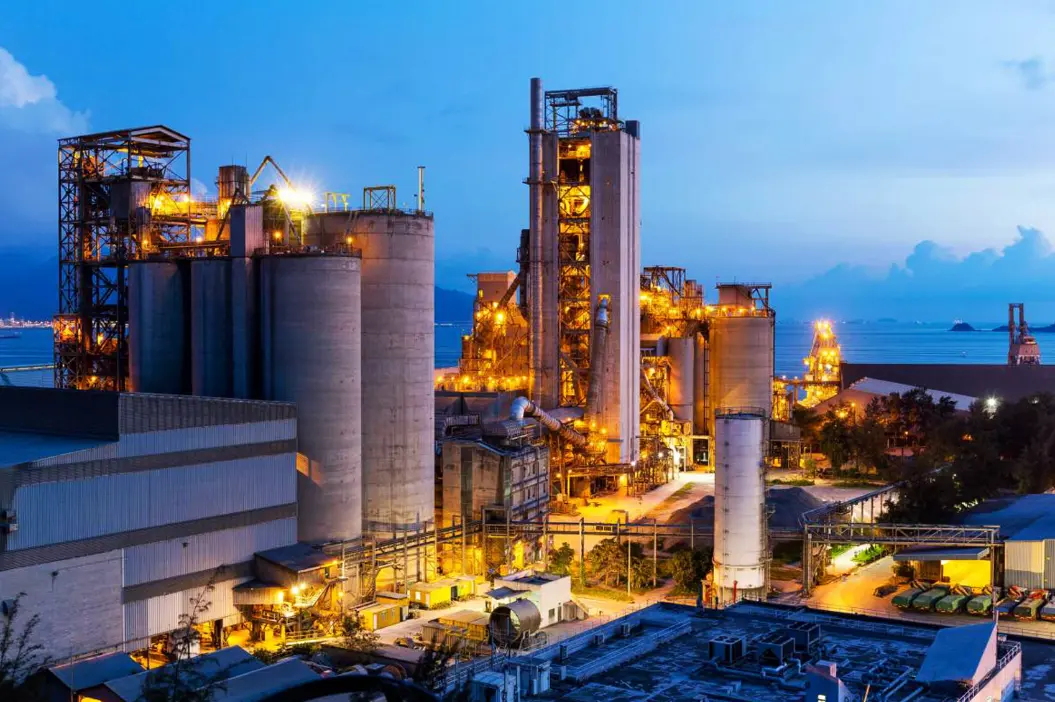
The cement industry is a vital pillar of global construction and infrastructure development, producing the essential binding material that forms the backbone of concrete, mortar, and other building essentials. It begins with the extraction of raw materials such as limestone, clay, and shale from quarries, which are then crushed and blended into a fine powder. This mixture undergoes intense heating in rotary kilns at temperatures exceeding 1,450°C, transforming it into clinker through a process called calcination, where calcium carbonate decomposes into calcium oxide and carbon dioxide. The clinker is subsequently cooled, ground with gypsum, and sometimes blended with additives to create various types of cement, including Portland, blended, and specialty variants.
This industry plays a crucial role in economic growth, supporting urbanization, road networks, and housing projects worldwide. It operates on a massive scale, with production measured in billions of tons annually, driven by demand from emerging markets and infrastructure investments. However, it faces significant environmental challenges, including high energy consumption, substantial greenhouse gas emissions from fossil fuel use and the chemical process itself, and resource depletion. To address these, modern practices emphasize sustainability, such as adopting alternative fuels like waste materials, improving energy efficiency through advanced technologies, and developing eco-friendly alternatives like geopolymer cements.
Key players in the sector, including multinational corporations like LafargeHolcim, CEMEX, and HeidelbergCement, invest heavily in innovation to enhance production processes and reduce ecological footprints. The industry’s future is shaped by regulatory pressures, technological advancements, and a global push towards circular economies, making it a dynamic force in balancing industrial progress with environmental responsibility.
Table of Contents
- Part 1: OnlineExamMaker – Generate and Share Cement Industry Quiz with AI Automatically
- Part 2: 20 Cement Industry Quiz Questions & Answers
- Part 3: Try OnlineExamMaker AI Question Generator to Create Quiz Questions
Part 1: OnlineExamMaker – Generate and Share Cement Industry Quiz with AI Automatically
OnlineExamMaker is a powerful AI-powered assessment platform to create auto-grading Cement Industry skills assessments. It’s designed for educators, trainers, businesses, and anyone looking to generate engaging quizzes without spending hours crafting questions manually. The AI Question Generator feature allows you to input a topic or specific details, and it generates a variety of question types automatically.
Top features for assessment organizers:
● Prevent cheating by randomizing questions or changing the order of questions, so learners don’t get the same set of questions each time.
● AI Exam Grader for efficiently grading quizzes and assignments, offering inline comments, automatic scoring, and “fudge points” for manual adjustments.
● Embed quizzes on websites, blogs, or share via email, social media (Facebook, Twitter), or direct links.
● Handles large-scale testing (thousands of exams/semester) without internet dependency, backed by cloud infrastructure.
Automatically generate questions using AI
Part 2: 20 Cement Industry Quiz Questions & Answers
or
Question 1:
What is the primary raw material used in cement production?
A. Sand
B. Limestone
C. Clay
D. Gypsum
Answer: B
Explanation: Limestone is the main raw material because it provides the calcium oxide necessary for the chemical reactions in cement manufacturing.
Question 2:
Which process is commonly used in modern cement plants to reduce energy consumption?
A. Wet process
B. Dry process
C. Semi-dry process
D. Batch process
Answer: B
Explanation: The dry process uses less water and energy compared to the wet process, making it more efficient for large-scale production.
Question 3:
What is the main chemical compound in Portland cement?
A. Tricalcium silicate
B. Dicalcium silicate
C. Tricalcium aluminate
D. Tetracalcium aluminoferrite
Answer: A
Explanation: Tricalcium silicate is the primary compound that contributes to the early strength development in Portland cement.
Question 4:
Which additive is used to control the setting time of cement?
A. Limestone
B. Gypsum
C. Fly ash
D. Slag
Answer: B
Explanation: Gypsum is added to cement to regulate the setting time by controlling the hydration of tricalcium aluminate.
Question 5:
What is the approximate temperature required in the kiln for clinker formation?
A. 500°C
B. 1000°C
C. 1450°C
D. 2000°C
Answer: C
Explanation: The kiln operates at around 1450°C to facilitate the chemical reactions that form clinker from raw materials.
Question 6:
Which type of cement is resistant to sulfate attacks?
A. Ordinary Portland cement
B. Rapid hardening cement
C. Sulfate-resistant cement
D. White cement
Answer: C
Explanation: Sulfate-resistant cement has a lower C3A content, which helps prevent expansion and cracking when exposed to sulfates in soil or water.
Question 7:
What is the role of coal in cement production?
A. As a raw material
B. As a fuel source
C. As an additive for strength
D. For coloring
Answer: B
Explanation: Coal is primarily used as a fuel to generate the high temperatures needed in the kiln for clinker production.
Question 8:
Which environmental issue is most associated with cement production?
A. Deforestation
B. Carbon emissions
C. Water pollution
D. Noise pollution
Answer: B
Explanation: Cement manufacturing releases significant CO2 from the calcination of limestone and fuel combustion, contributing to global warming.
Question 9:
What is the purpose of grinding in cement production?
A. To mix raw materials
B. To produce fine powder for better reactivity
C. To heat the materials
D. To add water
Answer: B
Explanation: Grinding reduces the particle size of clinker and other materials, increasing the surface area for faster hydration and strength gain.
Question 10:
Which organization sets international standards for cement?
A. ISO
B. ASTM
C. Both A and B
D. Neither A nor B
Answer: C
Explanation: ISO and ASTM provide global and regional standards, respectively, ensuring quality and consistency in cement products.
Question 11:
What is the typical composition percentage of calcium oxide in cement clinker?
A. 10-20%
B. 20-30%
C. 60-67%
D. 80-90%
Answer: C
Explanation: Calcium oxide, derived from limestone, makes up 60-67% of clinker, as it is a key component in the formation of cement compounds.
Question 12:
Which factor primarily affects the compressive strength of cement?
A. Fineness of grinding
B. Color of cement
C. Water content during mixing
D. Storage temperature
Answer: A
Explanation: Finer grinding increases the surface area, allowing for better hydration and higher compressive strength in the final product.
Question 13:
What is the main use of white cement?
A. In structural foundations
B. For decorative purposes
C. In road construction
D. For high-strength applications
Answer: B
Explanation: White cement is used for aesthetic reasons, such as in tiles, grouts, and architectural finishes, due to its light color.
Question 14:
How does the wet process differ from the dry process in cement manufacturing?
A. It uses more water
B. It requires less energy
C. It produces finer cement
D. It avoids grinding
Answer: A
Explanation: The wet process involves mixing raw materials with water to form a slurry, which increases energy use due to the need for drying.
Question 15:
What is the impact of silica in cement raw materials?
A. Provides color
B. Acts as a flux
C. Forms silicates for strength
D. Controls setting time
Answer: C
Explanation: Silica combines with calcium to form calcium silicates, which are essential for the binding and strength properties of cement.
Question 16:
Which alternative fuel is increasingly used in cement kilns to reduce costs?
A. Natural gas
B. Waste tires
C. Diesel
D. Propane
Answer: B
Explanation: Waste tires serve as an alternative fuel, helping to lower operational costs and reduce landfill waste in cement production.
Question 17:
What is the primary reason for using fly ash in cement?
A. To increase cost
B. To enhance durability and reduce heat of hydration
C. To speed up setting
D. To add color
Answer: B
Explanation: Fly ash improves the workability and long-term strength of concrete while reducing the heat generated during curing.
Question 18:
In which stage of cement production is the rotary kiln used?
A. Raw material preparation
B. Clinker formation
C. Grinding and packaging
D. Quality testing
Answer: B
Explanation: The rotary kiln is crucial for the high-temperature process that converts raw meal into clinker.
Question 19:
What economic factor most influences cement demand?
A. Agricultural output
B. Construction activity
C. Textile production
D. Mining operations
Answer: B
Explanation: Cement demand is directly tied to construction projects, such as buildings and infrastructure, which drive the industry’s growth.
Question 20:
Which test is used to measure the fineness of cement?
A. Compressive strength test
B. Setting time test
C. Blaine air permeability test
D. Soundness test
Answer: C
Explanation: The Blaine air permeability test determines the specific surface area of cement particles, indicating its fineness and reactivity.
or
Part 3: Try OnlineExamMaker AI Question Generator to Create Quiz Questions
Automatically generate questions using AI