This is a number that should make any university administrator pause: 55,000 students spread across three campuses. That’s the University of South Florida—a sprawling educational ecosystem where groundbreaking research collides with the everyday chaos of getting tens of thousands of young minds through graduation.
Enter Microsoft Copilot for Microsoft 365. But this isn’t just another tech adoption story where an institution buys shiny new software and hopes for the best. This is about fundamentally rethinking what’s possible when you hand intelligent tools to smart people who are already stretched thin.
- Why USF Chose Copilot with Commercial Data Protection?
- How Faculty and Staff Are Reclaiming Their Time?
- Students Getting Smarter (and Faster) with AI
- OnlineExamMaker: The Assessment Partner for AI-Ready Classrooms
- Copilot as a Catalyst for Culture Change
- The Democratization of Technology in Higher Ed
Why USF Chose Copilot with Commercial Data Protection?
Let’s talk about the elephant in every university IT room: data security. Research institutions aren’t just dealing with grade spreadsheets and class schedules. They’re handling sensitive research data, grant applications, student records, and proprietary information that could determine whether a breakthrough discovery gets published or stolen.

USF became one of the first universities to deploy Copilot with commercial data protection—a decision that wasn’t just smart, it was essential. Here’s what that actually means in practice:
| Security Feature | What It Protects | Why It Matters |
|---|---|---|
| No training on user data | Research findings, grant proposals | Your intellectual property stays yours |
| Encrypted prompts | Sensitive queries and documents | Confidential information never leaves your control |
| Institutional compliance | Student records, FERPA data | Meets regulatory requirements for educational data |
This wasn’t about being paranoid. It was about being practical. Faculty and staff needed confidence that they could experiment with AI without accidentally compromising years of research or violating student privacy laws.
How Faculty and Staff Are Reclaiming Their Time?
There’s a certain type of busy work that eats academia alive. You know the kind: the endless email chains, the document summarization before meetings, the “Can you pull together those numbers from last quarter?” requests that derail an entire afternoon.
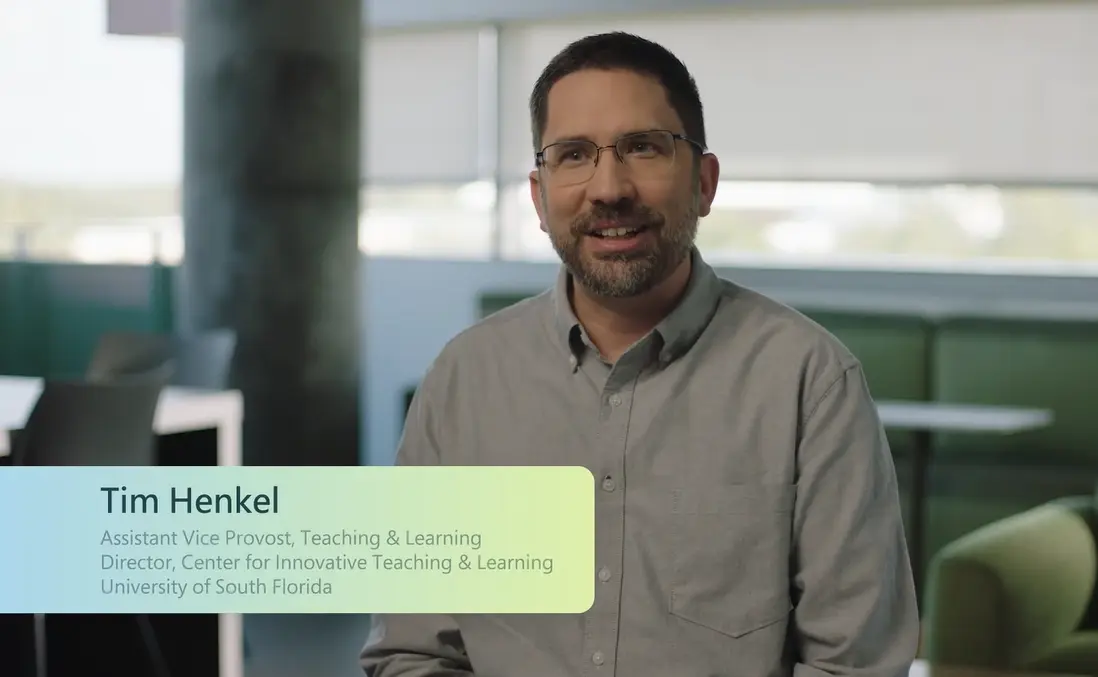
One USF faculty member put it plainly: Copilot integrates with everything already sitting in OneDrive—Excel files, PowerPoints, Word documents. Need to summarize a 40-page research paper before a committee meeting? Done in seconds. Need to query five different spreadsheets to answer a budget question? No problem.
But here’s where it gets interesting. The real benefit isn’t just speed—it’s cognitive offloading. When you’re not burning mental energy on administrative tedium, you can actually focus on what matters:
- Building new research projects that could change your field
- Developing meaningful relationships with students who need mentorship
- Actually thinking about teaching instead of just managing it
- Having the headspace for creative problem-solving
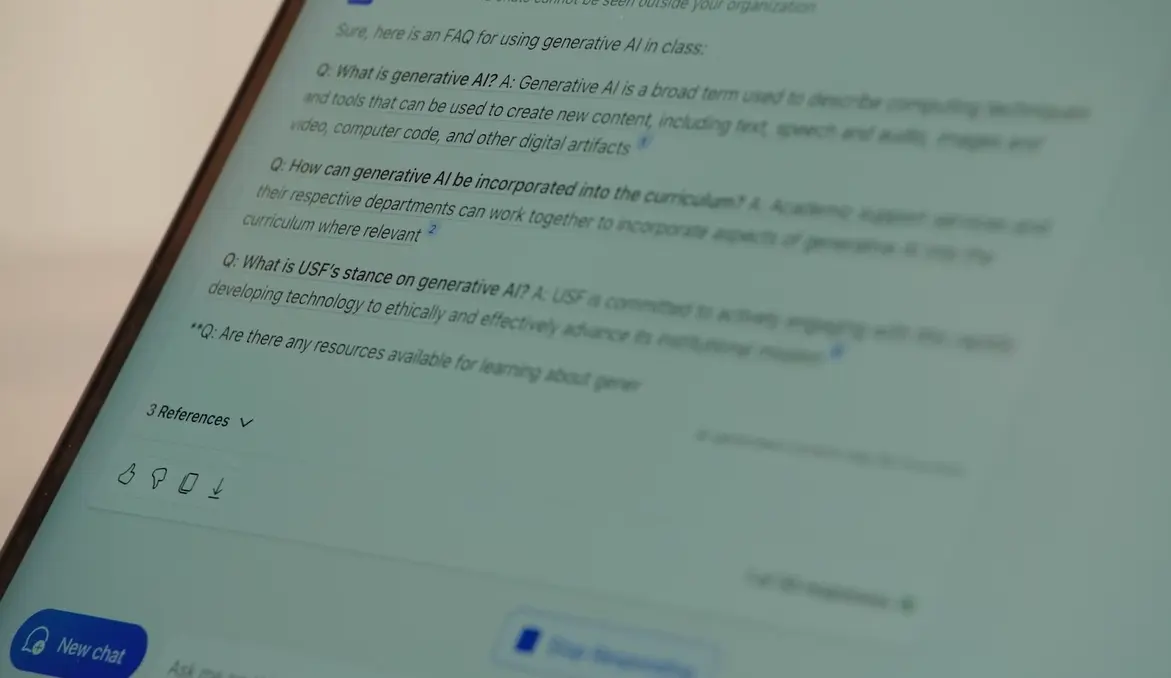
One professor noted that communications alone—emails, meeting notes, collaborative documents—used to consume hours each week. With Copilot handling the heavy lifting on drafting, summarizing, and organizing, those hours got reallocated to what they were actually hired to do: research and teach.
Students Getting Smarter (and Faster) with AI
Now, about those students. The ones actually paying tuition and trying to figure out why their Python code won’t run at 2 AM before a statistics assignment is due.
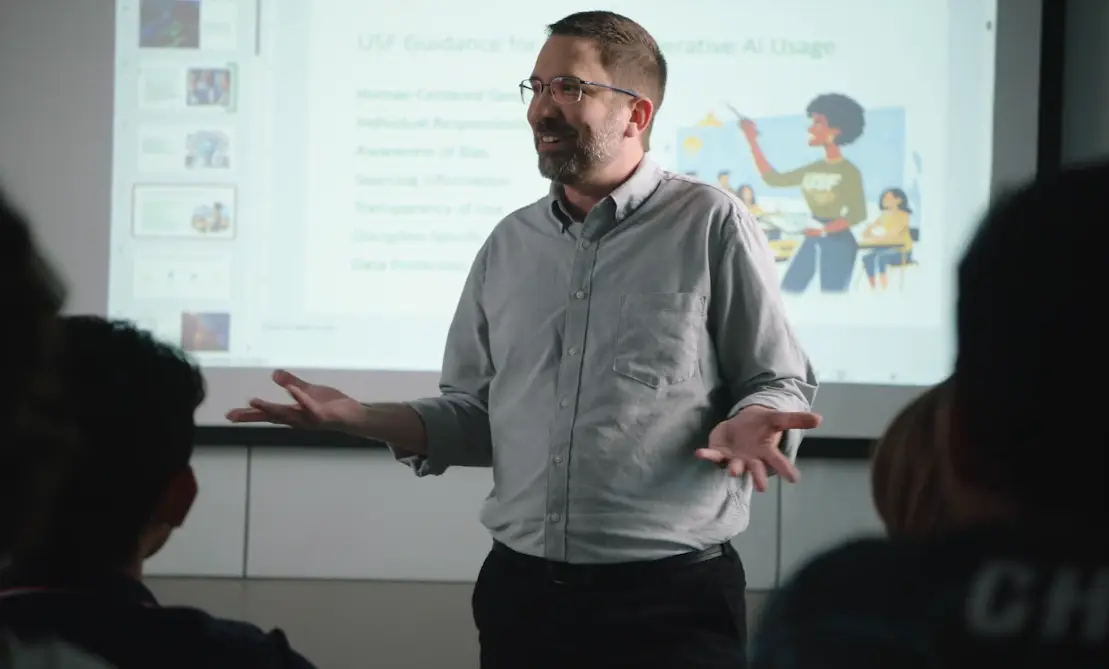
Something fascinating happened when USF students got access to Copilot. Faculty started noticing they were getting fewer emails. Not because students cared less, but because they could debug code faster on their own.
Think about what that means. A student hits an error in their statistics program. In the old world, they’d either:
- Spend an hour googling and still get nowhere
- Email the professor and wait 12-24 hours for a response
- Give up and turn in buggy code
With Copilot? They get instant feedback, learn from the explanation, and move forward. The professor’s inbox stays manageable, and—more importantly—students develop problem-solving independence instead of learned helplessness.
This isn’t about AI replacing critical thinking. It’s about removing friction from the learning process so students can actually get to the critical thinking part faster.
OnlineExamMaker: The Assessment Partner for AI-Ready Classrooms
Of course, as universities embrace AI tools like Copilot, a new challenge emerges: How do you assess learning in an AI-augmented world?
This is where platforms like OnlineExamMaker become essential partners in the higher education AI ecosystem. While Copilot helps students learn and faculty teach more efficiently, OnlineExamMaker helps educators ensure that assessment keeps pace with these new learning modalities.
What Makes OnlineExamMaker a Natural Fit?
For teachers navigating the same AI-first landscape that USF is pioneering, OnlineExamMaker offers several critical capabilities:
- AI-powered question generation: Just as Copilot helps faculty save time on administrative tasks, OnlineExamMaker can generate diverse question types from course materials, freeing educators to focus on higher-order assessment design.
- Adaptive testing: In an environment where students are developing skills at different paces (partly thanks to AI assistance), adaptive assessments ensure each learner is appropriately challenged.
- Automated grading with detailed feedback: While Copilot helps students debug code, OnlineExamMaker can provide instant, comprehensive feedback on assessments—creating the same kind of immediate learning loop.
- Plagiarism and AI detection: As AI becomes more prevalent in student work, having assessment tools that can identify inappropriate AI use becomes crucial for academic integrity.
The parallel is striking: USF uses Copilot to accelerate learning and research; educators using OnlineExamMaker can accelerate assessment design and delivery while maintaining rigor. Both tools share a common philosophy—technology should handle the mechanical so humans can focus on the meaningful.
Create Your Next Quiz/Exam with OnlineExamMaker
Building an AI-Augmented Assessment Strategy
Smart educators are already thinking about how tools like OnlineExamMaker fit into an AI-aware teaching practice:
| Assessment Challenge | Traditional Approach | OnlineExamMaker Solution |
|---|---|---|
| Creating varied question banks | Manual writing (hours per exam) | AI generation with human review (minutes per exam) |
| Grading coding assignments | Line-by-line manual review | Automated testing with customizable rubrics |
| Providing timely feedback | Delayed (days to weeks) | Instant with detailed explanations |
| Tracking learning progress | Manual spreadsheet aggregation | Real-time analytics dashboards |
The key insight? Just as USF recognized that faculty needed data protection to use AI confidently, educators need assessment tools that maintain academic integrity while embracing AI’s capabilities. OnlineExamMaker threads that needle—using AI to enhance assessment without compromising educational standards.
Copilot as a Catalyst for Culture Change
Technology adoption in higher education is usually glacial. Committee meetings about committee meetings. Pilot programs that pilot for five years. Risk aversion masquerading as academic rigor.
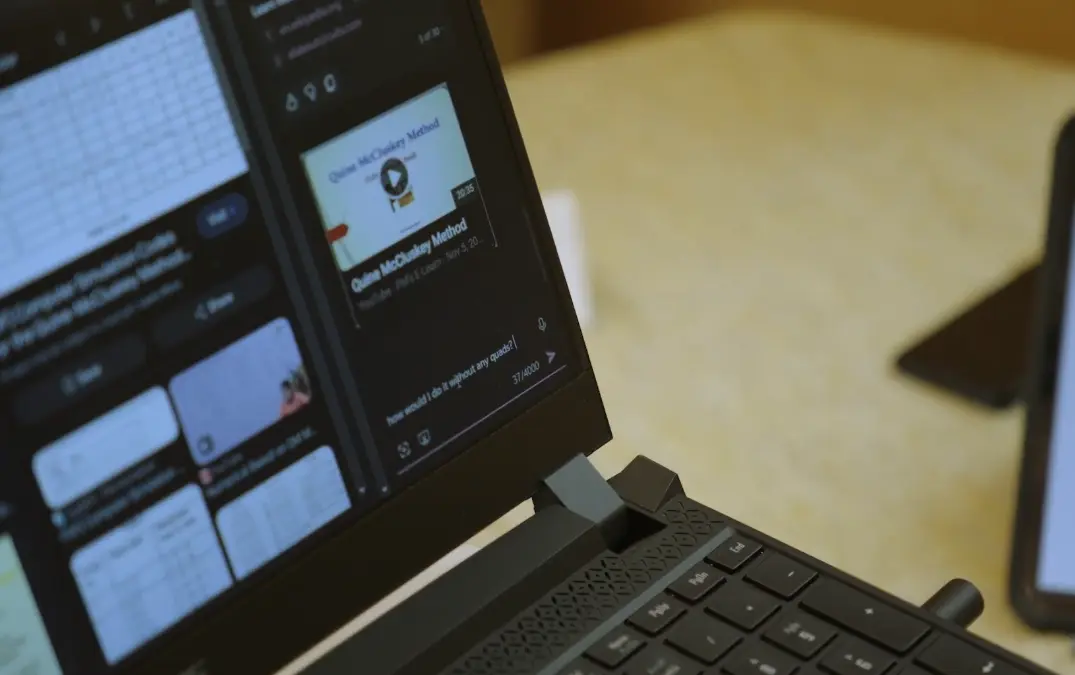
But something different happened at USF. Copilot didn’t just improve workflows—it changed the culture. Faculty started experimenting. IT departments began building help desk bots. Researchers found new ways to collaborate. The university went from “Should we use AI?” to “What else can we do with this?”
That shift—from fear to experimentation—might be the most important outcome of all. Because in higher education, the institutions that thrive won’t be the ones with the fanciest technology. They’ll be the ones that foster a culture where people feel empowered to try new things.
The Democratization of Technology in Higher Education
Here’s the most exciting part of USF’s story: Copilot is making technologists out of people who never thought of themselves as technical.
The English professor who can now query datasets without learning SQL. The biology researcher who can build presentation decks in minutes instead of hours. The administrator who can analyze enrollment trends without calling IT.
This is the real disruption in higher education—not replacing people with machines, but empowering people with capabilities they never had before. When you combine digital tools with human creativity, insight, and expertise, you don’t just maintain relevance. You redefine what’s possible.
One USF leader summed it up perfectly: generative AI is an “absolute game changer.” Not because it makes humans obsolete, but because it makes humans more capable. In a landscape where universities face enrollment challenges, funding pressures, and questions about relevance, that’s exactly the kind of accelerator higher education needs.
The future of higher education won’t be determined by whether institutions adopt AI—that’s inevitable. It’ll be determined by how thoughtfully they implement it, how securely they protect data, and how creatively they empower their people. USF’s experience with Microsoft Copilot offers a blueprint: start with security, focus on real productivity gains, support both faculty and students, and build a culture of experimentation.
That’s not just transformation. That’s preparation for a future where the best universities won’t be the ones with the most resources—they’ll be the ones that multiply human potential with intelligent tools. And when you’re dealing with 55,000 students counting on you to prepare them for careers that don’t exist yet? That kind of acceleration isn’t just nice to have.
