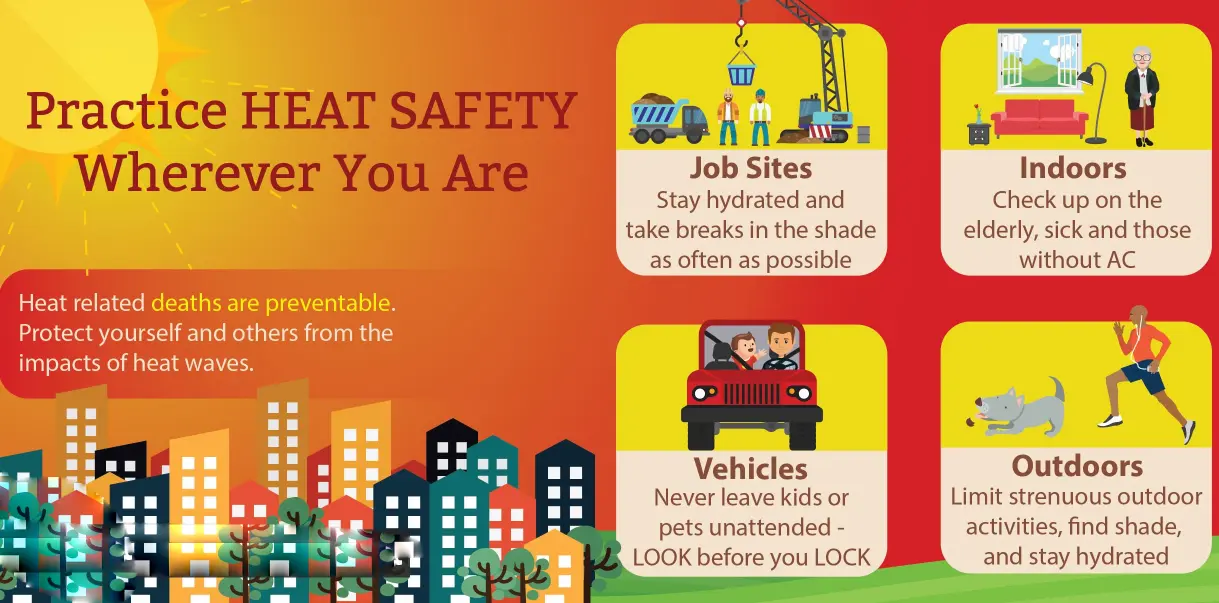
As temperatures soar during hot weather, prioritizing safety is essential to prevent heat-related illnesses. Stay hydrated by drinking plenty of water throughout the day, even if you don’t feel thirsty, and avoid caffeinated or alcoholic beverages that can dehydrate you. Seek shade or air-conditioned environments, especially between 10 a.m. and 4 p.m., when the sun is at its strongest. Wear lightweight, loose-fitting clothing in light colors, along with a wide-brimmed hat and sunglasses for added protection. Apply a broad-spectrum sunscreen with at least SPF 30 every two hours if outdoors. Be vigilant for signs of heat exhaustion, such as heavy sweating, weakness, dizziness, or nausea, and move to a cooler area immediately if these symptoms appear. Never leave children, pets, or vulnerable individuals in parked vehicles, as the interior can heat up rapidly. By taking these precautions, you can enjoy the summer while keeping yourself and others safe from the risks of extreme heat.
Table of Contents
- Part 1: Create An Amazing Hot Weather Safety Quiz Using AI Instantly in OnlineExamMaker
- Part 2: 20 Hot Weather Safety Quiz Questions & Answers
- Part 3: AI Question Generator – Automatically Create Questions for Your Next Assessment
Part 1: Create An Amazing Hot Weather Safety Quiz Using AI Instantly in OnlineExamMaker
Nowadays more and more people create Hot Weather Safety quizzes using AI technologies, OnlineExamMaker a powerful AI-based quiz making tool that can save you time and efforts. The software makes it simple to design and launch interactive quizzes, assessments, and surveys. With the Question Editor, you can create multiple-choice, open-ended, matching, sequencing and many other types of questions for your tests, exams and inventories. You are allowed to enhance quizzes with multimedia elements like images, audio, and video to make them more interactive and visually appealing.
Recommended features for you:
● Prevent cheating by randomizing questions or changing the order of questions, so learners don’t get the same set of questions each time.
● Automatically generates detailed reports—individual scores, question report, and group performance.
● Simply copy a few lines of codes, and add them to a web page, you can present your online quiz in your website, blog, or landing page.
● Offers question analysis to evaluate question performance and reliability, helping instructors optimize their training plan.
Automatically generate questions using AI
Part 2: 20 Hot Weather Safety Quiz Questions & Answers
or
Question 1: What is the primary way to prevent dehydration during hot weather?
A. Drinking caffeinated beverages
B. Drinking water regularly throughout the day
C. Eating heavy meals
D. Limiting fluid intake to meals
Answer: B
Explanation: Drinking water regularly helps maintain hydration levels, as the body loses fluids faster in hot conditions, reducing the risk of dehydration.
Question 2: Which symptom is most commonly associated with heat exhaustion?
A. Chills and shivering
B. Heavy sweating and dizziness
C. Dry skin and confusion
D. Rapid breathing without sweating
Answer: B
Explanation: Heavy sweating and dizziness are key signs of heat exhaustion, indicating the body is overheating and needs cooling and rehydration.
Question 3: What type of clothing is best for hot weather to reduce heat absorption?
A. Dark, tight-fitting clothes
B. Light-colored, loose-fitting clothes
C. Synthetic, waterproof materials
D. Multiple layers of clothing
Answer: B
Explanation: Light-colored, loose-fitting clothes reflect sunlight and allow air circulation, helping to keep the body cooler in high temperatures.
Question 4: How often should you apply sunscreen when outdoors in hot weather?
A. Once in the morning
B. Every 2 hours or after swimming
C. Only if you’re sweating heavily
D. At the end of the day
Answer: B
Explanation: Reapplying sunscreen every 2 hours or after swimming protects the skin from UV rays, preventing sunburn and reducing the risk of skin damage.
Question 5: What is the recommended action if someone shows signs of heat stroke?
A. Give them a cold drink and let them rest
B. Call emergency services immediately
C. Cover them with a blanket
D. Encourage them to exercise more
Answer: B
Explanation: Heat stroke is a medical emergency that can be life-threatening, so calling emergency services immediately ensures professional help to cool the body and prevent organ damage.
Question 6: Which group of people is most vulnerable to heat-related illnesses?
A. Young adults in good health
B. Elderly people and young children
C. Athletes during winter sports
D. People living in cold climates
Answer: B
Explanation: Elderly people and young children have a harder time regulating body temperature, making them more susceptible to heat-related issues in hot weather.
Question 7: What should you do to stay safe during the hottest part of the day?
A. Engage in strenuous outdoor activities
B. Stay indoors or in shaded areas
C. Wear heavy protective gear
D. Drink alcohol to cool down
Answer: B
Explanation: Staying indoors or in shaded areas during peak heat hours (usually midday) minimizes exposure to extreme temperatures and reduces the risk of overheating.
Question 8: How much water should an adult drink daily in hot weather?
A. Less than 1 liter
B. At least 2-3 liters, depending on activity
C. Only when feeling thirsty
D. No more than 1 liter to avoid frequent bathroom breaks
Answer: B
Explanation: In hot weather, adults need at least 2-3 liters of water daily to compensate for increased fluid loss through sweat, especially with physical activity.
Question 9: What is a sign that you might be suffering from heat cramps?
A. Severe headache and vomiting
B. Muscle pains or spasms after exercise
C. Blurred vision and hearing loss
D. Excessive urination
Answer: B
Explanation: Heat cramps often present as muscle pains or spasms due to electrolyte loss from sweating, and they require rest and hydration to resolve.
Question 10: Why is it important to avoid alcohol in hot weather?
A. It provides extra energy
B. It can lead to dehydration
C. It helps regulate body temperature
D. It has no effect on the body
Answer: B
Explanation: Alcohol acts as a diuretic, increasing urine production and leading to dehydration, which worsens the effects of hot weather on the body.
Question 11: What is the best way to cool down quickly if you’re overheating?
A. Take a hot shower
B. Use a fan or apply cool, wet cloths
C. Drink hot beverages
D. Exercise more to build tolerance
Answer: B
Explanation: Using a fan or applying cool, wet cloths helps lower body temperature effectively, aiding in the prevention of heat-related illnesses.
Question 12: Which factor increases the risk of heat illness in hot weather?
A. High humidity levels
B. Low physical activity
C. Cold winds
D. Eating cold foods
Answer: A
Explanation: High humidity prevents sweat from evaporating, making it harder for the body to cool itself, which heightens the risk of heat-related problems.
Question 13: How can you protect your eyes from the sun in hot weather?
A. Wear regular glasses
B. Use sunglasses with UV protection
C. Avoid going outside
D. Rub your eyes frequently
Answer: B
Explanation: Sunglasses with UV protection shield the eyes from harmful rays, reducing the risk of conditions like cataracts and eye strain in bright, hot conditions.
Question 14: What should you include in a hot weather emergency kit?
A. Extra blankets
B. Bottled water and electrolyte drinks
C. Heavy snacks
D. Warm clothing
Answer: B
Explanation: Bottled water and electrolyte drinks help maintain hydration and replace lost salts, essential for preventing dehydration during heat waves.
Question 15: Is it safe to leave children or pets in a parked car on a hot day?
A. Yes, if the windows are slightly open
B. No, it can lead to rapid overheating
C. Yes, for short periods
D. Only if it’s shaded
Answer: B
Explanation: Parked cars heat up quickly, even with windows open, leading to dangerous conditions that can cause heat stroke in children or pets.
Question 16: What role does acclimatization play in hot weather safety?
A. It makes you more sensitive to heat
B. It helps your body adapt over time
C. It has no effect
D. It increases sweat production immediately
Answer: B
Explanation: Acclimatization allows the body to adjust to hot conditions gradually, improving sweat efficiency and reducing the risk of illness with repeated exposure.
Question 17: How does eating certain foods help in hot weather?
A. Heavy, fatty foods for energy
B. Light, fresh fruits and vegetables for hydration
C. Spicy foods to induce sweating
D. Fried foods for quick calories
Answer: B
Explanation: Light, fresh fruits and vegetables contain high water content, aiding hydration and providing nutrients without adding to the body’s heat load.
Question 18: What is the first step if you suspect heat exhaustion in someone?
A. Ignore it and let them continue activities
B. Move them to a cooler place and have them rest
C. Give them medication
D. Encourage more physical exertion
Answer: B
Explanation: Moving to a cooler place and resting helps lower body temperature and prevents progression to more severe conditions like heat stroke.
Question 19: Why should you monitor urine color in hot weather?
A. Dark urine indicates good hydration
B. Light urine shows proper hydration levels
C. It has no relation to heat safety
D. Dark urine means you need more caffeine
Answer: B
Explanation: Light-colored urine is a sign of adequate hydration, while dark urine suggests dehydration, which is a key risk in hot weather.
Question 20: What is a long-term strategy for hot weather safety?
A. Relying on air conditioning only
B. Building shade structures and planting trees
C. Avoiding all outdoor activities
D. Increasing indoor heating
Answer: B
Explanation: Building shade structures and planting trees provides natural cooling and reduces ambient temperatures, promoting safer environments during hot periods.
or
Part 3: AI Question Generator – Automatically Create Questions for Your Next Assessment
Automatically generate questions using AI