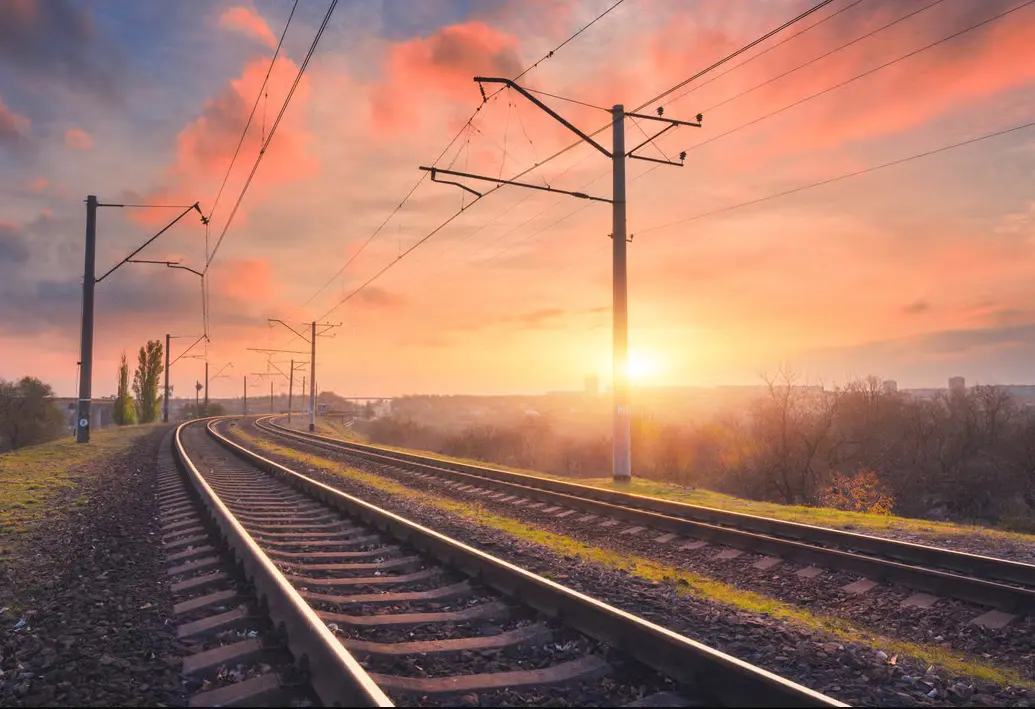
Railways, a marvel of engineering and innovation, form the backbone of global transportation networks. Stretching across vast landscapes, they consist of interconnected tracks laid on steel rails, powered by locomotives that pull or push trains at speeds ranging from leisurely regional journeys to high-velocity express services. Originating in the early 19th century with the advent of steam engines, railways revolutionized trade, travel, and urbanization by enabling the efficient movement of goods and people over long distances. Today, modern railways incorporate electric and diesel systems, high-speed lines like Japan’s Shinkansen or Europe’s Eurostar, and advanced safety features such as automated signaling and magnetic levitation technology. They play a crucial role in reducing road congestion, lowering carbon emissions, and fostering economic growth, connecting remote areas to bustling cities and linking continents through intricate networks that symbolize progress and connectivity.
Table of Contents
- Part 1: OnlineExamMaker AI Quiz Maker – Make A Free Quiz in Minutes
- Part 2: 20 Railways Quiz Questions & Answers
- Part 3: Try OnlineExamMaker AI Question Generator to Create Quiz Questions
Part 1: OnlineExamMaker AI Quiz Maker – Make A Free Quiz in Minutes
What’s the best way to create a Railways quiz online? OnlineExamMaker is the best AI quiz making software for you. No coding, and no design skills required. If you don’t have the time to create your online quiz from scratch, you are able to use OnlineExamMaker AI Question Generator to create question automatically, then add them into your online assessment. What is more, the platform leverages AI proctoring and AI grading features to streamline the process while ensuring exam integrity.
Key features of OnlineExamMaker:
● Create up to 10 question types, including multiple-choice, true/false, fill-in-the-blank, matching, short answer, and essay questions.
● Build and store questions in a centralized portal, tagged by categories and keywords for easy reuse and organization.
● Automatically scores multiple-choice, true/false, and even open-ended/audio responses using AI, reducing manual work.
● Create certificates with personalized company logo, certificate title, description, date, candidate’s name, marks and signature.
Automatically generate questions using AI
Part 2: 20 Railways Quiz Questions & Answers
or
1. Question: What is the standard gauge width for most railway tracks worldwide?
Options:
A. 1,000 mm
B. 1,435 mm
C. 1,676 mm
D. 1,067 mm
Answer: B
Explanation: The standard gauge, also known as the Stephenson gauge, is 1,435 mm, which was established by George Stephenson and is used by about 60% of the world’s railways for compatibility and efficiency.
2. Question: Who is credited with inventing the first practical steam locomotive?
Options:
A. James Watt
B. George Stephenson
C. Richard Trevithick
D. Isambard Kingdom Brunel
Answer: C
Explanation: Richard Trevithick built the first working steam locomotive in 1804, which demonstrated the potential for steam power in rail transport, leading to further developments.
3. Question: What does the term “gauge” refer to in railways?
Options:
A. The speed of the train
B. The distance between the two rails
C. The height of the train
D. The type of fuel used
Answer: B
Explanation: Gauge is the distance between the inner sides of the two parallel rails, which affects the stability, capacity, and compatibility of railway systems.
4. Question: Which country has the largest railway network by total track length?
Options:
A. United States
B. China
C. India
D. Russia
Answer: D
Explanation: Russia has the largest railway network, exceeding 85,000 km, due to its vast geography and historical expansion across continents.
5. Question: What is the primary function of a pantograph on an electric train?
Options:
A. To collect electricity from overhead wires
B. To control the train’s speed
C. To connect the cars
D. To apply brakes
Answer: A
Explanation: A pantograph is a device on the roof of electric trains that collects electric current from overhead wires, converting it to power the train’s motors.
6. Question: In which year was the first passenger railway line opened?
Options:
A. 1804
B. 1825
C. 1830
D. 1850
Answer: B
Explanation: The Stockton and Darlington Railway in England, opened in 1825, was the first public railway to use steam locomotives for passenger transport.
7. Question: What is the purpose of ballasts in railway tracks?
Options:
A. To decorate the tracks
B. To provide drainage and support
C. To increase train speed
D. To signal trains
Answer: B
Explanation: Ballasts, typically made of crushed stone, help distribute the load of the train, provide drainage, and maintain the track’s alignment and stability.
8. Question: Which type of railway crossing is safest for high-speed trains?
Options:
A. Level crossing
B. Grade-separated crossing
C. At-grade crossing
D. Unguarded crossing
Answer: B
Explanation: Grade-separated crossings, such as bridges or underpasses, eliminate the risk of collisions with road vehicles, making them ideal for high-speed railways.
9. Question: What is the Trans-Siberian Railway primarily known for?
Options:
A. Being the shortest railway
B. Connecting Europe and Asia
C. Only carrying freight
D. Using solar power
Answer: B
Explanation: The Trans-Siberian Railway is the longest railway line in the world, spanning over 9,000 km and connecting Moscow in Europe to Vladivostok in Asia.
10. Question: How does a magnetic levitation (maglev) train achieve movement?
Options:
A. By using steam engines
B. Through magnetic repulsion to float above tracks
C. By burning coal
D. With traditional wheels on rails
Answer: B
Explanation: Maglev trains use electromagnetic forces to levitate and propel the train, reducing friction and allowing for higher speeds.
11. Question: What is the main advantage of double-track railways over single-track?
Options:
A. Reduces construction costs
B. Allows trains to travel in both directions simultaneously
C. Makes the track narrower
D. Increases ticket prices
Answer: B
Explanation: Double-track railways enable bidirectional traffic, improving efficiency, reducing delays, and increasing the capacity of the rail line.
12. Question: Which material is most commonly used for modern railway tracks?
Options:
A. Wood
B. Steel
C. Concrete
D. Plastic
Answer: B
Explanation: Steel is durable, strong, and provides a smooth surface for wheels, making it the standard material for rails in most railway systems.
13. Question: What does the acronym “HSR” stand for in the context of railways?
Options:
A. High-Speed Rail
B. Heavy Steel Rail
C. Historic Steam Railway
D. Hybrid Signal Route
Answer: A
Explanation: HSR refers to High-Speed Rail, which are trains designed to operate at speeds exceeding 200 km/h, revolutionizing long-distance travel.
14. Question: Why are railway signals important?
Options:
A. To control the train’s music system
B. To indicate track conditions and prevent accidents
C. To sell tickets
D. To clean the tracks
Answer: B
Explanation: Signals provide visual or electronic instructions to train operators about track availability, speed limits, and potential hazards, ensuring safe operations.
15. Question: Which famous railway tunnel connects France and England?
Options:
A. Gotthard Tunnel
B. Channel Tunnel
C. Seikan Tunnel
D. Simplon Tunnel
Answer: B
Explanation: The Channel Tunnel, also known as the Chunnel, links Folkestone in England to Coquelles in France, facilitating high-speed rail travel under the English Channel.
16. Question: What is the role of a dispatcher in railway operations?
Options:
A. To drive the trains
B. To manage train schedules and movements
C. To repair tracks
D. To design locomotives
Answer: B
Explanation: Dispatchers coordinate train movements, handle delays, and ensure that trains run on schedule while maintaining safety protocols.
17. Question: How do automatic train control systems improve safety?
Options:
A. By allowing faster speeds without limits
B. By automatically applying brakes if needed
C. By reducing the number of staff
D. By ignoring weather conditions
Answer: B
Explanation: Automatic train control systems monitor speed, signals, and obstacles, automatically intervening to apply brakes or alert operators to prevent accidents.
18. Question: What is a “deadhead” train in railway terminology?
Options:
A. A train carrying passengers only
B. A train moving without passengers or cargo for repositioning
C. A broken-down train
D. A high-speed express train
Answer: B
Explanation: A deadhead train is one that operates empty, often to position locomotives or cars for future service, optimizing operational efficiency.
19. Question: Which energy source is most common for modern passenger trains?
Options:
A. Coal
B. Electricity
C. Gasoline
D. Wind power
Answer: B
Explanation: Electricity is widely used for passenger trains due to its efficiency, lower emissions, and ability to power high-speed and urban rail systems.
20. Question: What is the primary cause of derailments in railways?
Options:
A. Excessive speed
B. Human error or track defects
C. Bright sunlight
D. Loud noises
Answer: B
Explanation: Derailments are most often caused by factors like worn tracks, improper maintenance, or operator mistakes, highlighting the need for regular inspections and training.
or
Part 3: Try OnlineExamMaker AI Question Generator to Create Quiz Questions
Automatically generate questions using AI