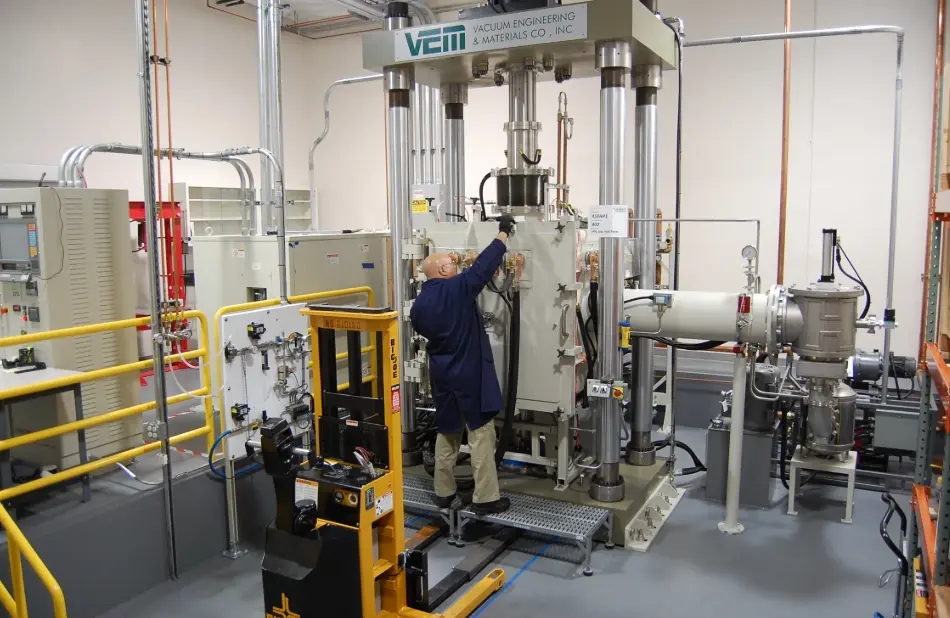
Vacuum Engineering is a specialized field that focuses on the creation, maintenance, and application of vacuum environments, where pressure is significantly reduced to remove air and other gases. This discipline plays a critical role in industries such as semiconductor manufacturing, where it ensures contamination-free processes; aerospace, for simulating space conditions; and scientific research, enabling precise experiments in particle physics and material science. Key technologies include vacuum pumps, chambers, gauges, and seals, which are designed to achieve and control ultra-low pressures while minimizing energy consumption and ensuring safety. By integrating principles from mechanical, electrical, and materials engineering, vacuum systems enable innovations in areas like thin-film deposition, freeze-drying, and electron microscopy, driving advancements in technology and industry.
Table of Contents
- Part 1: Create A Vacuum Engineering Quiz in Minutes Using AI with OnlineExamMaker
- Part 2: 20 Vacuum Engineering Quiz Questions & Answers
- Part 3: Automatically Generate Quiz Questions Using AI Question Generator
Part 1: Create A Vacuum Engineering Quiz in Minutes Using AI with OnlineExamMaker
Are you looking for an online assessment to test the Vacuum Engineering skills of your learners? OnlineExamMaker uses artificial intelligence to help quiz organizers to create, manage, and analyze exams or tests automatically. Apart from AI features, OnlineExamMaker advanced security features such as full-screen lockdown browser, online webcam proctoring, and face ID recognition.
Recommended features for you:
● Includes a safe exam browser (lockdown mode), webcam and screen recording, live monitoring, and chat oversight to prevent cheating.
● Enhances assessments with interactive experience by embedding video, audio, image into quizzes and multimedia feedback.
● Once the exam ends, the exam scores, question reports, ranking and other analytics data can be exported to your device in Excel file format.
● Offers question analysis to evaluate question performance and reliability, helping instructors optimize their training plan.
Automatically generate questions using AI
Part 2: 20 Vacuum Engineering Quiz Questions & Answers
or
1. Question: What is the primary function of a vacuum pump in a vacuum system?
A. To increase pressure
B. To remove gases and create a low-pressure environment
C. To measure vacuum levels
D. To store gases
Answer: B
Explanation: A vacuum pump works by removing gas molecules from a sealed volume, thereby reducing the pressure and creating a vacuum, which is essential for various industrial and scientific applications.
2. Question: Which type of vacuum pump is commonly used for achieving high vacuum levels?
A. Rotary vane pump
B. Diffusion pump
C. Centrifugal pump
D. Diaphragm pump
Answer: B
Explanation: Diffusion pumps use high-speed jets of vapor to remove gas molecules, making them suitable for high vacuum applications, typically below 10^-3 torr.
3. Question: What is the mean free path in a vacuum system?
A. The average distance a gas molecule travels between collisions
B. The total length of the vacuum chamber
C. The pressure inside the system
D. The speed of gas molecules
Answer: A
Explanation: The mean free path is the average distance traveled by a gas molecule before colliding with another, which increases as pressure decreases, crucial for understanding gas behavior in vacuums.
4. Question: Which gas law is most relevant to vacuum engineering?
A. Charles’s law
B. Boyle’s law
C. Avogadro’s law
D. Gay-Lussac’s law
Answer: B
Explanation: Boyle’s law states that the pressure of a gas is inversely proportional to its volume at constant temperature, which is fundamental for designing vacuum systems where volume changes affect pressure.
5. Question: What does a Pirani gauge measure?
A. Ultra-high vacuum
B. Low vacuum pressures
C. Temperature of gases
D. Flow rate of gases
Answer: B
Explanation: A Pirani gauge measures low to medium vacuum pressures by detecting the thermal conductivity of the gas, which changes with pressure.
6. Question: In vacuum engineering, what is the typical unit for expressing very low pressures?
A. Atmosphere
B. Pascal
C. Torr
D. Bar
Answer: C
Explanation: Torr is commonly used in vacuum engineering for expressing pressures in the range of 10^-3 to 10^-6 torr, as it is derived from millimeters of mercury and is intuitive for vacuum measurements.
7. Question: Which pump is oil-free and suitable for clean vacuum applications?
A. Rotary pump
B. Scroll pump
C. Diffusion pump
D. Liquid ring pump
Answer: B
Explanation: Scroll pumps are dry, oil-free pumps that provide a clean vacuum, making them ideal for applications like semiconductor manufacturing where contamination must be minimized.
8. Question: What is the purpose of a baffle in a vacuum system?
A. To increase gas flow
B. To prevent oil backstreaming from pumps
C. To measure pressure
D. To heat the chamber
Answer: B
Explanation: A baffle acts as a barrier to stop oil vapors or contaminants from the pump from entering the main vacuum chamber, maintaining system cleanliness.
9. Question: Which factor primarily determines the ultimate pressure in a vacuum system?
A. Pump size
B. Gas type
C. Leak rate
D. Temperature
Answer: C
Explanation: The leak rate affects how quickly gas enters the system, directly impacting the ability to achieve and maintain low ultimate pressures.
10. Question: What is a turbomolecular pump?
A. A pump that uses rotating blades to compress gas
B. A pump that uses diffusion of oil vapors
C. A pump that relies on adsorption
D. A pump that uses cryogenic cooling
Answer: A
Explanation: A turbomolecular pump uses high-speed rotating blades to impart momentum to gas molecules, effectively pumping them out and achieving high vacuum levels.
11. Question: In high vacuum systems, why is outgassing important?
A. It increases pressure
B. It releases trapped gases from materials
C. It cools the system
D. It measures flow
Answer: B
Explanation: Outgassing is the release of gases adsorbed on surfaces or trapped in materials, which can contaminate or prevent achieving the desired vacuum level.
12. Question: Which material is commonly used for vacuum chamber construction due to its low outgassing?
A. Stainless steel
B. Rubber
C. Plastic
D. Wood
Answer: A
Explanation: Stainless steel has low outgassing properties and high strength, making it ideal for vacuum chambers to maintain integrity under low-pressure conditions.
13. Question: What is the role of a cold trap in a vacuum system?
A. To warm the gases
B. To condense and remove vapors
C. To increase pressure
D. To filter solids
Answer: B
Explanation: A cold trap uses cryogenic temperatures to condense and trap vapors, preventing them from reaching the pump and protecting the system.
14. Question: How does altitude affect vacuum systems?
A. It has no effect
B. It reduces the base pressure
C. It increases the base pressure
D. It only affects pumps
Answer: C
Explanation: At higher altitudes, the atmospheric pressure is lower, which can make it easier to achieve a vacuum but may require adjustments as the base pressure is already reduced.
15. Question: What is the Knudsen number in vacuum engineering?
A. A measure of gas flow regime
B. A type of pump
C. A pressure unit
D. A gauge type
Answer: A
Explanation: The Knudsen number compares the mean free path of gas molecules to a characteristic length, helping determine whether the flow is viscous, transitional, or molecular.
16. Question: Which application commonly uses ultra-high vacuum?
A. Automotive engines
B. Semiconductor manufacturing
C. Water pumps
D. Air conditioning
Answer: B
Explanation: Ultra-high vacuum is required in semiconductor manufacturing to prevent contamination and ensure precise deposition of materials on wafers.
17. Question: What causes virtual leaks in a vacuum system?
A. External air entry
B. Trapped gases in dead volumes
C. Pump failure
D. High temperature
Answer: B
Explanation: Virtual leaks occur when gases are trapped in inaccessible areas, slowly releasing and mimicking real leaks, which can hinder achieving stable vacuum.
18. Question: How does a capacitance manometer work?
A. By measuring thermal conductivity
B. By detecting diaphragm deflection
C. By ionizing gas
D. By compressing gas
Answer: B
Explanation: A capacitance manometer measures pressure by the deflection of a diaphragm, which changes the capacitance, allowing accurate measurement across a wide range.
19. Question: What is the main advantage of a cryopump?
A. It is inexpensive
B. It provides oil-free operation
C. It requires no maintenance
D. It is portable
Answer: B
Explanation: Cryopumps use extreme cold to capture gases, offering oil-free and contamination-free operation, which is beneficial for sensitive applications.
20. Question: In vacuum engineering, what is bake-out?
A. Heating the system to remove contaminants
B. Cooling the pump
C. Measuring leaks
D. Adding gases
Answer: A
Explanation: Bake-out involves heating the vacuum system to high temperatures to drive off adsorbed gases and water vapor, improving the ultimate vacuum level.
or
Part 3: Automatically generate quiz questions using OnlineExamMaker AI Question Generator
Automatically generate questions using AI