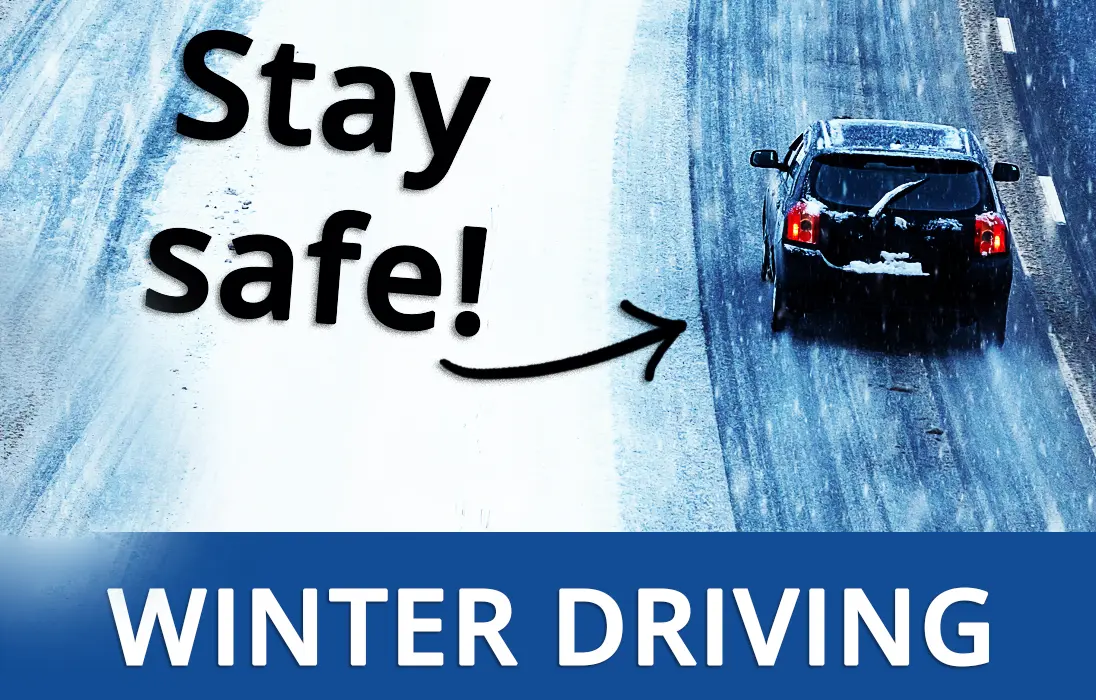
Winter driving safety requires careful preparation and cautious behavior to navigate hazardous conditions like snow, ice, and reduced visibility. Start by ensuring your vehicle is ready: check tires for adequate tread and proper inflation, maintain a full tank of gas, and equip your car with an emergency kit including blankets, a flashlight, and sand for traction. Before heading out, clear all snow and ice from windows, mirrors, and lights to maintain clear sightlines.
When driving, reduce speed and increase following distance—aim for at least 10 seconds behind the vehicle ahead in slippery conditions. Avoid sudden acceleration, braking, or turns, as these can cause skids. If you encounter a skid, remain calm, steer in the direction you want the vehicle to go, and ease off the accelerator. Use low gears on hills to prevent loss of control, and if conditions worsen, pull over safely and wait out the storm.
Always wear your seatbelt, and dress warmly in layers in case you become stranded. Stay informed about weather forecasts and road conditions via apps or radio updates, and consider alternative transportation if driving seems too risky. Remember, the goal is to arrive safely, so patience and preparedness are your best allies on winter roads.
Table of Contents
- Part 1: Create An Amazing Winter Driving Safety Quiz Using AI Instantly in OnlineExamMaker
- Part 2: 20 Winter Driving Safety Quiz Questions & Answers
- Part 3: AI Question Generator – Automatically Create Questions for Your Next Assessment
Part 1: Create An Amazing Winter Driving Safety Quiz Using AI Instantly in OnlineExamMaker
The quickest way to assess the Winter Driving Safety knowledge of candidates is using an AI assessment platform like OnlineExamMaker. With OnlineExamMaker AI Question Generator, you are able to input content—like text, documents, or topics—and then automatically generate questions in various formats (multiple-choice, true/false, short answer). Its AI Exam Grader can automatically grade the exam and generate insightful reports after your candidate submit the assessment.
Overview of its key assessment-related features:
● Create up to 10 question types, including multiple-choice, true/false, fill-in-the-blank, matching, short answer, and essay questions.
● Automatically generates detailed reports—individual scores, question report, and group performance.
● Instantly scores objective questions and subjective answers use rubric-based scoring for consistency.
● API and SSO help trainers integrate OnlineExamMaker with Google Classroom, Microsoft Teams, CRM and more.
Automatically generate questions using AI
Part 2: 20 Winter Driving Safety Quiz Questions & Answers
or
1. What is the primary reason for using winter tires in snowy conditions?
A. They improve fuel efficiency.
B. They provide better traction on snow and ice.
C. They reduce the weight of the vehicle.
D. They enhance the car’s acceleration.
Answer: B
Explanation: Winter tires have a special tread design and rubber compound that grips snow and ice better, reducing the risk of skidding and improving vehicle control.
2. When driving in heavy snow, what should you do if your vehicle starts to skid?
A. Slam on the brakes immediately.
B. Steer in the direction you want the vehicle to go.
C. Accelerate to gain speed.
D. Turn off the engine.
Answer: B
Explanation: Steering in the direction of the skid helps regain control by aligning the wheels with the slide, allowing the tires to regain traction.
3. What is the recommended following distance in winter conditions compared to dry roads?
A. The same as on dry roads.
B. At least double the distance.
C. Half the distance for better visibility.
D. No change is needed.
Answer: B
Explanation: Increasing the following distance to at least double (e.g., 4-6 seconds instead of 2-3) gives you more time to react to sudden stops or slides on slippery surfaces.
4. Why should you avoid using cruise control on snowy or icy roads?
A. It increases fuel consumption.
B. It can cause the vehicle to accelerate unexpectedly.
C. It may prevent you from feeling when the wheels lose traction.
D. It makes the radio louder.
Answer: C
Explanation: Cruise control maintains a set speed without driver input, which can mask the sensation of skidding; manual control allows for quicker adjustments to changing road conditions.
5. What should you do before starting a trip in winter weather?
A. Check the oil level only.
B. Inspect tires, brakes, lights, and battery.
C. Fill up the gas tank halfway.
D. Ignore the weather forecast.
Answer: B
Explanation: A pre-trip inspection ensures that critical components like tires for traction, brakes for stopping, lights for visibility, and battery for starting are in good condition to handle winter hazards.
6. How does black ice typically form on roads?
A. From heavy snowfall.
B. When water freezes on the road surface.
C. From melted snow refreezing.
D. Both B and C.
Answer: D
Explanation: Black ice forms when moisture from rain, melting snow, or fog freezes on the pavement, creating a nearly invisible slippery layer that can cause loss of control.
7. What is the best way to warm up your vehicle in cold weather?
A. Let it idle for 20-30 minutes.
B. Start the engine and drive immediately.
C. Idle for 1-2 minutes and then drive.
D. Don’t warm it up at all.
Answer: C
Explanation: Idling for just 1-2 minutes allows the engine to warm up efficiently without wasting fuel or contributing to unnecessary emissions, after which driving helps warm the rest of the system.
8. Why is it important to clear all snow from your vehicle’s roof before driving?
A. To improve gas mileage.
B. To prevent snow from sliding onto the windshield or other vehicles.
C. To make the car look cleaner.
D. It doesn’t matter.
Answer: B
Explanation: Snow on the roof can slide forward onto the windshield, blocking your view, or blow onto following vehicles, creating hazards for other drivers.
9. In winter, what type of clothing should you wear while driving in case you get stranded?
A. Light summer clothes for comfort.
B. Layers of warm clothing and gloves.
C. Shorts and a t-shirt.
D. Formal attire.
Answer: B
Explanation: Layering warm clothing helps retain body heat if you’re stuck in a snowstorm, preventing hypothermia while you wait for help.
10. What should you do if you encounter a steep hill covered in snow?
A. Speed up to maintain momentum.
B. Shift to a lower gear and proceed slowly.
C. Brake continuously while ascending.
D. Turn around immediately.
Answer: B
Explanation: Using a lower gear provides more engine power and control, reducing the risk of spinning wheels or losing traction on the incline.
11. How can you improve visibility when driving in a snowstorm?
A. Turn off your headlights.
B. Use your high beams to see further.
C. Keep headlights on low beam and clear windows regularly.
D. Roll down the windows for fresh air.
Answer: C
Explanation: Low beams reduce glare from falling snow, while regularly clearing windows and mirrors ensures you can see the road and other vehicles clearly.
12. What is the risk of driving through deep snow or water?
A. It improves tire grip.
B. It can cause hydroplaning or stall the engine.
C. It makes the ride smoother.
D. It has no risks.
Answer: B
Explanation: Deep snow or water can lead to hydroplaning, where tires lose contact with the road, or water entering the engine, causing it to stall and potentially leading to further complications.
13. Why should you carry an emergency kit in your vehicle during winter?
A. To save space in the trunk.
B. To have tools for fixing a flat tire only.
C. To prepare for breakdowns, such as blankets, food, and a flashlight.
D. It’s not necessary.
Answer: C
Explanation: An emergency kit with items like blankets, non-perishable food, a flashlight, and jumper cables can help you survive and signal for help if stranded in cold weather.
14. What is the effect of cold temperatures on your vehicle’s battery?
A. It improves battery life.
B. It can weaken the battery and make starting harder.
C. It has no effect.
D. It charges the battery automatically.
Answer: B
Explanation: Cold weather slows down the chemical reactions in the battery, reducing its power output and increasing the likelihood of failure when starting the engine.
15. When should you use your defroster in winter?
A. Only when the windows are completely frozen.
B. As soon as you start driving to prevent fogging.
C. Never, to save energy.
D. Only on the windshield.
Answer: B
Explanation: Using the defroster early clears condensation and ice from windows, ensuring clear visibility from the start of your drive and preventing accidents.
16. What is the safest speed to drive in snowy conditions?
A. The posted speed limit.
B. As fast as possible to get through quickly.
C. Slower than the speed limit, adjusted for road conditions.
D. Twice the speed limit for efficiency.
Answer: C
Explanation: Reducing speed allows for better reaction time and control on slippery roads, helping to avoid skids and collisions.
17. How should you brake on icy roads?
A. Pump the brakes repeatedly.
B. Use steady, firm pressure if you have anti-lock brakes.
C. Slam on the brakes to stop quickly.
D. Don’t brake at all.
Answer: B
Explanation: With anti-lock brakes, applying steady pressure allows the system to pulse the brakes, preventing wheel lockup and maintaining steering control on ice.
18. What should you do if your windshield wipers are icing over?
A. Turn them off and drive carefully.
B. Pull over and de-ice them safely.
C. Increase the wiper speed.
D. Ignore it and continue driving.
Answer: B
Explanation: Iced wipers can obstruct your view; pulling over to safely remove ice ensures clear visibility before continuing.
19. Why is it important to check your antifreeze levels in winter?
A. To make the engine run faster.
B. To prevent the cooling system from freezing and causing damage.
C. To improve tire pressure.
D. It doesn’t affect driving.
Answer: B
Explanation: Antifreeze lowers the freezing point of the coolant, protecting the engine from damage if temperatures drop below freezing.
20. What is the best practice for merging onto a highway in winter?
A. Accelerate quickly to match traffic speed.
B. Match the speed of traffic gradually while checking for ice.
C. Slow down before merging.
D. Don’t merge at all.
Answer: B
Explanation: Gradually matching traffic speed while being cautious of icy patches allows for safer merging without sudden maneuvers that could lead to loss of control.
or
Part 3: AI Question Generator – Automatically Create Questions for Your Next Assessment
Automatically generate questions using AI