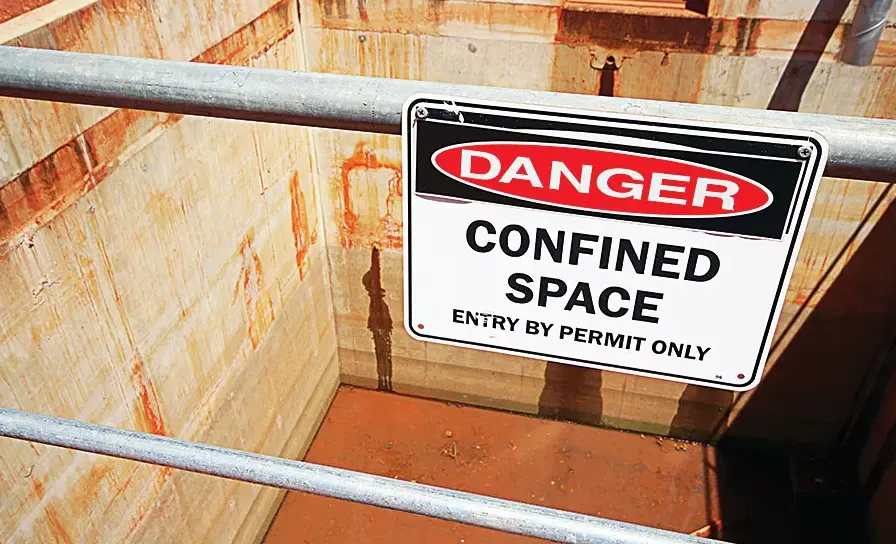
Confined Space Safety refers to the protocols and practices designed to protect workers from the hazards associated with entering, working in, or exiting confined spaces. These spaces, such as tanks, silos, sewers, or storage bins, are not designed for continuous occupancy and often have limited openings for entry and exit, poor ventilation, and potential atmospheric dangers.
Key hazards include oxygen deficiency or enrichment, toxic gases, flammable atmospheres, engulfment by loose materials, and physical risks like falls or entrapment. To mitigate these, safety measures must be implemented, including:
– Conducting a thorough risk assessment before entry.
– Testing the atmosphere for oxygen levels, toxic substances, and flammability using calibrated gas detectors.
– Ensuring proper ventilation to maintain safe air quality.
– Using personal protective equipment (PPE) such as respirators, harnesses, and hard hats.
– Establishing a permit-to-work system that requires authorization, standby personnel, and emergency rescue plans.
– Training workers on hazard recognition, safe entry procedures, and emergency response.
Compliance with regulations like OSHA standards in the U.S. or equivalent guidelines elsewhere is essential to prevent accidents, injuries, and fatalities. Effective confined space safety programs save lives by prioritizing preparation, monitoring, and communication.
Table of Contents
- Part 1: OnlineExamMaker AI Quiz Generator – The Easiest Way to Make Quizzes Online
- Part 2: 20 Confined Space Safety Quiz Questions & Answers
- Part 3: AI Question Generator – Automatically Create Questions for Your Next Assessment
Part 1: OnlineExamMaker AI Quiz Generator – The Easiest Way to Make Quizzes Online
When it comes to ease of creating a Confined Space Safety skills assessment, OnlineExamMaker is one of the best AI-powered quiz making software for your institutions or businesses. With its AI Question Generator, just upload a document or input keywords about your assessment topic, you can generate high-quality quiz questions on any topic, difficulty level, and format.
What you will like:
● AI Question Generator to help you save time in creating quiz questions automatically.
● Share your online exam with audiences on social platforms like Facebook, Twitter, Reddit and more.
● Display the feedback for correct or incorrect answers instantly after a question is answered.
● Create a lead generation form to collect an exam taker’s information, such as email, mobile phone, work title, company profile and so on.
Automatically generate questions using AI
Part 2: 20 Confined Space Safety Quiz Questions & Answers
or
1. Question: What is the primary definition of a confined space?
Options:
A. A space large enough for an employee to enter and perform work
B. A space that has limited means of entry or exit and is not designed for continuous occupancy
C. A space that is always hazardous due to toxic gases
D. A space that is open to the atmosphere and well-ventilated
Answer: B
Explanation: A confined space is defined as having limited entry/exit and not being intended for continuous occupancy, which includes potential hazards like poor ventilation or entrapment risks.
2. Question: Which of the following is NOT a common hazard in confined spaces?
Options:
A. Oxygen deficiency
B. Engulfment
C. Excessive noise levels
D. Fire hazards from flammable vapors
Answer: C
Explanation: Excessive noise levels are not a primary confined space hazard; common ones include oxygen deficiency, engulfment, and fire risks, which directly relate to the space’s atmosphere and structure.
3. Question: What is the first step before entering a confined space?
Options:
A. Obtain a confined space entry permit
B. Turn on all equipment inside
C. Enter quickly to assess conditions
D. Remove all personal protective equipment
Answer: A
Explanation: Obtaining a confined space entry permit ensures that hazards have been identified, atmospheric tests are conducted, and safety measures are in place before entry.
4. Question: Which gas is most commonly tested for in confined spaces to check for oxygen levels?
Options:
A. Carbon monoxide
B. Oxygen
C. Methane
D. Hydrogen sulfide
Answer: B
Explanation: Oxygen levels must be tested first in confined spaces because low or high levels can cause immediate health risks, making it a priority before testing for other gases.
5. Question: What does the term “lockout/tagout” refer to in confined space safety?
Options:
A. Securing energy sources to prevent accidental startup
B. Locking the entry door after workers leave
C. Tagging equipment as safe for use
D. Outfitting workers with tags for identification
Answer: A
Explanation: Lockout/tagout procedures isolate energy sources to prevent equipment from starting unexpectedly, reducing the risk of injury during confined space entry.
6. Question: Who is responsible for monitoring the atmosphere inside a confined space?
Options:
A. The attendant outside the space
B. The entry supervisor only
C. Any worker entering the space
D. The facility manager
Answer: A
Explanation: The attendant is stationed outside the confined space to continuously monitor conditions and the status of entrants, ensuring timely response to emergencies.
7. Question: What is the acceptable range for oxygen levels in a confined space?
Options:
A. 19.5% to 23.5%
B. 10% to 15%
C. 25% to 30%
D. 5% to 10%
Answer: A
Explanation: The safe oxygen level range is 19.5% to 23.5% to prevent hypoxia or oxygen toxicity, as levels outside this can impair breathing or cause explosions.
8. Question: Which personal protective equipment (PPE) is essential for confined space entry?
Options:
A. Hard hat and safety glasses
B. Self-contained breathing apparatus (SCBA) if needed
C. Steel-toed boots only
D. Gloves and earplugs
Answer: B
Explanation: An SCBA is crucial for respiratory protection in environments with hazardous atmospheres, ensuring workers have an independent air supply.
9. Question: What should be done if a confined space entrant feels dizzy?
Options:
A. Continue working and report later
B. Exit the space immediately
C. Ignore it if the dizziness is mild
D. Wait for the attendant’s permission to leave
Answer: B
Explanation: Any sign of dizziness could indicate exposure to hazards like low oxygen, so immediate evacuation is required to prevent serious injury or death.
10. Question: How often should atmospheric testing be conducted in a confined space?
Options:
A. Only before entry
B. Continuously during occupancy
C. Once a day
D. After the work is completed
Answer: B
Explanation: Continuous monitoring is necessary because conditions in confined spaces can change rapidly due to factors like ventilation or ongoing work.
11. Question: What is the role of a confined space entry permit?
Options:
A. To document the entry and hazards
B. To grant permanent access to the space
C. To list the workers’ names only
D. To approve the use of tools inside
Answer: A
Explanation: The permit serves as a checklist to document hazards, tests, and procedures, ensuring all safety requirements are met before and during entry.
12. Question: Which rescue method is recommended for confined spaces?
Options:
A. Self-rescue by the entrant
B. External rescue by trained personnel
C. Entry by untrained bystanders
D. Waiting for emergency services
Answer: B
Explanation: Trained external rescuers should handle confined space rescues to minimize risks, as entrants may be incapacitated and untrained individuals could create more hazards.
13. Question: What is engulfment in the context of confined spaces?
Options:
A. Being surrounded by a liquid or loose material
B. Exposure to high temperatures
C. Slipping on wet surfaces
D. Electrical shocks from equipment
Answer: A
Explanation: Engulfment occurs when a person is trapped or buried by materials like grain or sand, which can lead to suffocation if not prevented.
14. Question: Why is ventilation important in confined spaces?
Options:
A. To reduce atmospheric hazards like toxic gases
B. To increase lighting inside
C. To make the space more comfortable
D. To speed up work processes
Answer: A
Explanation: Proper ventilation helps control hazards by removing contaminants and maintaining safe oxygen levels, preventing health risks.
15. Question: What training is required for confined space workers?
Options:
A. Hazard recognition and emergency procedures
B. Basic first aid only
C. Equipment maintenance skills
D. General workplace safety
Answer: A
Explanation: Workers must be trained on specific confined space hazards, entry procedures, and emergency responses to ensure they can work safely.
16. Question: Which factor can cause a confined space to become immediately dangerous to life and health (IDLH)?
Options:
A. High concentrations of hydrogen sulfide
B. Adequate lighting
C. Fresh air circulation
D. Low noise levels
Answer: A
Explanation: IDLH conditions, like high levels of toxic gases, can cause irreversible health effects or death, making immediate evacuation necessary.
17. Question: What is the “buddy system” in confined space entry?
Options:
A. Having two workers enter together for mutual aid
B. Assigning a single worker to monitor from outside
C. Working alone with radio communication
D. Rotating workers every hour
Answer: A
Explanation: The buddy system ensures that workers can assist each other in emergencies, providing an extra layer of safety inside the confined space.
18. Question: How should a confined space be isolated before entry?
Options:
A. By blocking all potential energy sources
B. By opening all doors and windows
C. By turning on machinery inside
D. By reducing the number of workers
Answer: A
Explanation: Isolation prevents accidental activation of equipment or release of hazards, such as by locking out valves or electrical sources.
19. Question: What is the purpose of a confined space attendant?
Options:
A. To monitor entrants and initiate rescue if needed
B. To perform work inside the space
C. To handle administrative paperwork
D. To provide tools to workers
Answer: A
Explanation: The attendant’s role is to watch for hazards, maintain communication, and coordinate rescue efforts without entering the space.
20. Question: Which regulation governs confined space safety in the United States?
Options:
A. OSHA 29 CFR 1910.146
B. EPA guidelines
C. ISO standards
D. FDA regulations
Answer: A
Explanation: OSHA 29 CFR 1910.146 specifically outlines the requirements for permit-required confined spaces, including entry procedures and training.
or
Part 3: AI Question Generator – Automatically Create Questions for Your Next Assessment
Automatically generate questions using AI