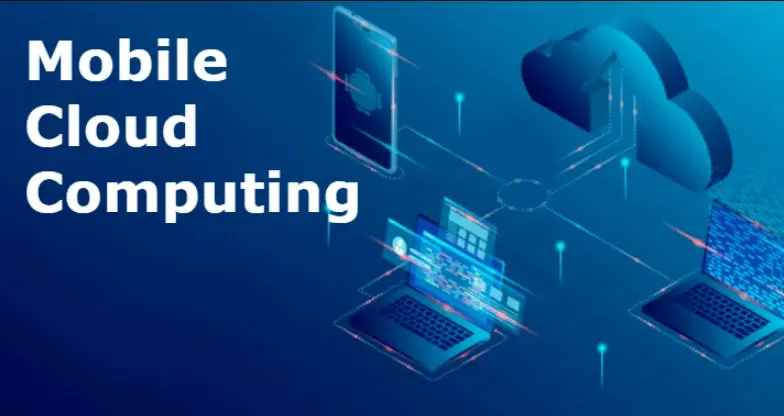
Mobile Cloud Computing (MCC) is an innovative paradigm that integrates mobile computing with cloud computing technologies, allowing mobile devices to leverage remote cloud resources for enhanced performance and functionality. By offloading data storage, processing, and applications to the cloud, MCC addresses limitations such as limited battery life, processing power, and memory on smartphones and tablets.
At its core, MCC operates through a client-server architecture where mobile devices act as clients, connecting via the internet to cloud servers. This enables seamless access to scalable resources, including virtual machines, databases, and storage, without the need for local hardware upgrades. For instance, tasks like image recognition or complex data analysis can be executed in the cloud, returning results to the mobile device quickly and efficiently.
Key benefits of MCC include:
– Cost Efficiency: Users avoid investing in expensive hardware, as cloud services operate on a pay-as-you-go model.
– Improved Performance: Offloading intensive tasks extends battery life and speeds up operations, enhancing user experience.
– Scalability and Flexibility: Applications can scale dynamically to handle varying workloads, supporting everything from personal apps to enterprise solutions.
– Data Accessibility: Centralized cloud storage allows users to access files and data from any device, promoting collaboration and mobility.
Applications of MCC span various sectors:
– Healthcare: Remote patient monitoring apps that store and analyze data in the cloud for real-time diagnostics.
– Education: E-learning platforms delivering interactive content via cloud-based resources.
– Business: Mobile CRM systems that sync data across devices for on-the-go decision-making.
– Entertainment: Streaming services like video-on-demand, where content is processed and delivered from the cloud.
However, MCC faces challenges such as:
– Security and Privacy: Risks of data breaches during transmission and storage in the cloud.
– Network Dependency: Reliance on stable internet connectivity, which can be unreliable in remote areas.
– Latency Issues: Potential delays in data transfer, affecting real-time applications.
– Regulatory Compliance: Adhering to data protection laws like GDPR in cross-border cloud operations.
As mobile technology advances, MCC is poised for growth, driven by 5G networks, edge computing integrations, and the rise of IoT devices. This evolution promises even greater efficiency, making MCC a cornerstone of modern digital infrastructure.
Table of Contents
- Part 1: Create An Amazing Mobile Cloud Computing Quiz Using AI Instantly in OnlineExamMaker
- Part 2: 20 Mobile Cloud Computing Quiz Questions & Answers
- Part 3: Try OnlineExamMaker AI Question Generator to Create Quiz Questions
Part 1: Create An Amazing Mobile Cloud Computing Quiz Using AI Instantly in OnlineExamMaker
Nowadays more and more people create Mobile Cloud Computing quizzes using AI technologies, OnlineExamMaker a powerful AI-based quiz making tool that can save you time and efforts. The software makes it simple to design and launch interactive quizzes, assessments, and surveys. With the Question Editor, you can create multiple-choice, open-ended, matching, sequencing and many other types of questions for your tests, exams and inventories. You are allowed to enhance quizzes with multimedia elements like images, audio, and video to make them more interactive and visually appealing.
Recommended features for you:
● Prevent cheating by randomizing questions or changing the order of questions, so learners don’t get the same set of questions each time.
● Automatically generates detailed reports—individual scores, question report, and group performance.
● Simply copy a few lines of codes, and add them to a web page, you can present your online quiz in your website, blog, or landing page.
● Offers question analysis to evaluate question performance and reliability, helping instructors optimize their training plan.
Automatically generate questions using AI
Part 2: 20 Mobile Cloud Computing Quiz Questions & Answers
or
1. Question: What is Mobile Cloud Computing?
A. A computing model where mobile devices perform all computations locally.
B. A paradigm that offloads computation from mobile devices to cloud servers.
C. A type of cloud computing exclusive to desktop environments.
D. A network that connects only mobile devices without cloud involvement.
Answer: B
Explanation: Mobile Cloud Computing extends cloud computing by enabling mobile devices to leverage remote cloud resources for processing and storage, reducing the burden on local hardware.
2. Question: Which of the following is a primary advantage of Mobile Cloud Computing?
A. Increased battery consumption on mobile devices.
B. Enhanced scalability and flexibility for applications.
C. Limited access to real-time data.
D. Higher dependency on local storage.
Answer: B
Explanation: Mobile Cloud Computing allows applications to scale dynamically using cloud resources, making it easier to handle varying workloads without upgrading mobile hardware.
3. Question: In Mobile Cloud Computing architecture, what role does the cloud play?
A. It acts solely as a data backup service.
B. It provides processing power, storage, and services to mobile devices.
C. It replaces the need for mobile networks entirely.
D. It is used only for entertainment applications.
Answer: B
Explanation: The cloud in Mobile Cloud Computing offers on-demand resources like computation and storage, enabling mobile devices to perform complex tasks efficiently.
4. Question: What is a common challenge in Mobile Cloud Computing related to security?
A. Overabundance of local data encryption.
B. Data breaches during transmission between mobile devices and the cloud.
C. Excessive speed of data processing.
D. Limited user authentication requirements.
Answer: B
Explanation: Data transmitted over networks in Mobile Cloud Computing is vulnerable to interception, making secure transmission protocols essential to prevent breaches.
5. Question: How does Mobile Cloud Computing improve energy efficiency on mobile devices?
A. By increasing the device’s processing load.
B. By offloading computationally intensive tasks to the cloud.
C. By requiring constant device updates.
D. By minimizing network usage.
Answer: B
Explanation: Offloading tasks to the cloud reduces the computational demands on mobile devices, thereby conserving battery life.
6. Question: Which technology is often integrated with Mobile Cloud Computing for real-time data processing?
A. Fog computing.
B. Traditional mainframe systems.
C. Wired networking only.
D. Isolated local databases.
Answer: A
Explanation: Fog computing works alongside Mobile Cloud Computing to process data closer to the edge, reducing latency for time-sensitive applications.
7. Question: What is the main difference between Mobile Cloud Computing and traditional cloud computing?
A. Traditional cloud computing is mobile-only.
B. Mobile Cloud Computing specifically addresses mobility and resource constraints of devices.
C. There is no difference; they are the same.
D. Traditional cloud computing uses no networks.
Answer: B
Explanation: Mobile Cloud Computing adapts cloud services to the limitations of mobile devices, such as battery life and connectivity, which traditional cloud computing does not prioritize.
8. Question: In Mobile Cloud Computing, what does “offloading” refer to?
A. Transferring data from the cloud back to the device.
B. Shifting computational tasks from the mobile device to the cloud.
C. Storing all data locally on the device.
D. Increasing device memory usage.
Answer: B
Explanation: Offloading allows mobile devices to send intensive tasks to the cloud for execution, freeing up resources and improving performance.
9. Question: Which of the following is an example of a Mobile Cloud Computing application?
A. A simple calculator app on a phone.
B. A cloud-based navigation app like Google Maps.
C. A device that operates offline completely.
D. A local file storage system.
Answer: B
Explanation: Apps like Google Maps use cloud resources for real-time data updates, traffic analysis, and mapping, exemplifying Mobile Cloud Computing.
10. Question: Why is latency a critical factor in Mobile Cloud Computing?
A. It speeds up local processing.
B. It can delay responses in time-sensitive mobile applications.
C. It reduces the need for cloud resources.
D. It enhances battery life directly.
Answer: B
Explanation: High latency in Mobile Cloud Computing can affect user experience in applications requiring immediate feedback, such as augmented reality or gaming.
11. Question: What is the role of APIs in Mobile Cloud Computing?
A. They are not used in cloud environments.
B. They enable communication between mobile apps and cloud services.
C. They only handle device hardware.
D. They limit data access.
Answer: B
Explanation: APIs facilitate seamless integration, allowing mobile applications to interact with cloud-based resources for data exchange and functionality.
12. Question: How does Mobile Cloud Computing support collaborative applications?
A. By isolating users from each other.
B. By enabling real-time data sharing via cloud servers.
C. By requiring physical device connections.
D. By minimizing internet usage.
Answer: B
Explanation: Cloud servers in Mobile Cloud Computing allow multiple users to access and update shared data simultaneously, enhancing collaboration.
13. Question: Which factor primarily drives the adoption of Mobile Cloud Computing?
A. High costs of local storage.
B. The need for ubiquitous access to resources.
C. Decreased mobile device capabilities.
D. Avoidance of internet connectivity.
Answer: B
Explanation: Mobile Cloud Computing provides anytime, anywhere access to powerful resources, which is essential for modern mobile users.
14. Question: In Mobile Cloud Computing, what is virtualization?
A. A process that makes devices physical only.
B. The creation of virtual resources on the cloud for mobile use.
C. Storing data without any abstraction.
D. Limiting access to hardware.
Answer: B
Explanation: Virtualization in Mobile Cloud Computing allows multiple virtual instances to run on cloud hardware, optimizing resource allocation for mobile applications.
15. Question: What potential issue arises from data synchronization in Mobile Cloud Computing?
A. Perfect data matching every time.
B. Conflicts due to simultaneous updates from multiple devices.
C. No need for updates.
D. Faster local processing.
Answer: B
Explanation: Synchronization can lead to data conflicts if changes are made on different devices before syncing, requiring conflict resolution mechanisms.
16. Question: How does Mobile Cloud Computing enhance mobile gaming?
A. By restricting graphics to basic levels.
B. By offloading complex rendering to the cloud for better performance.
C. By eliminating online multiplayer options.
D. By increasing device lag.
Answer: B
Explanation: Cloud resources handle intensive graphics and computations, allowing mobile games to deliver high-quality experiences without straining device hardware.
17. Question: What is a key benefit of using edge computing in Mobile Cloud Computing?
A. Centralizing all data in one location.
B. Reducing latency by processing data nearer to the user.
C. Eliminating the need for clouds.
D. Increasing data transmission costs.
Answer: B
Explanation: Edge computing processes data at the network edge, complementing Mobile Cloud Computing by minimizing delays in applications like IoT.
18. Question: Which protocol is commonly used for secure communication in Mobile Cloud Computing?
A. HTTP without encryption.
B. SSL/TLS for encrypted data transfer.
C. Unsecured Wi-Fi only.
D. Direct device-to-device links.
Answer: B
Explanation: SSL/TLS ensures that data exchanged between mobile devices and the cloud is encrypted, protecting against unauthorized access.
19. Question: How does Mobile Cloud Computing address resource constraints on mobile devices?
A. By ignoring device limitations.
B. By leveraging cloud resources to supplement device capabilities.
C. By reducing app functionality.
D. By increasing on-device storage needs.
Answer: B
Explanation: It uses the cloud to provide additional processing and storage, overcoming limitations like CPU power and memory in mobile devices.
20. Question: What is the impact of 5G networks on Mobile Cloud Computing?
A. It slows down data transfer rates.
B. It enables faster and more reliable connections for cloud interactions.
C. It eliminates the need for mobile devices.
D. It increases latency significantly.
Answer: B
Explanation: 5G provides high-speed, low-latency connectivity, enhancing the performance and efficiency of Mobile Cloud Computing applications.
or
Part 3: Try OnlineExamMaker AI Question Generator to Create Quiz Questions
Automatically generate questions using AI