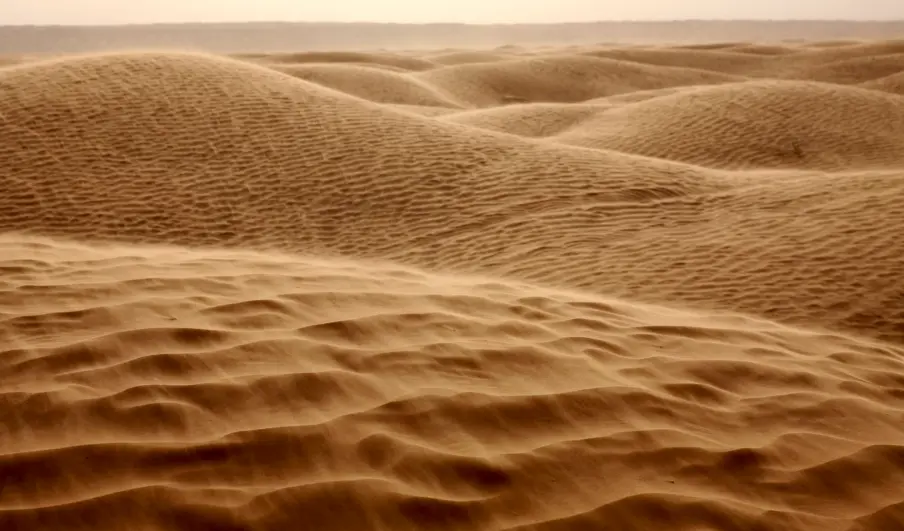
Sand is a naturally occurring granular material composed of finely divided rock and mineral particles, typically ranging from 0.0625 to 2 millimeters in size. It forms through the weathering and erosion of larger rocks, often carried by wind, water, or ice. Sand is abundant in environments like deserts, beaches, riverbeds, and dunes, and its composition varies based on location—common types include silica sand (primarily quartz), coral sand, and gypsum sand.
This versatile material plays a vital role in various industries. In construction, it is a key ingredient in concrete, mortar, and asphalt, providing strength and stability. It is also essential for manufacturing glass, where high-purity silica sand is melted at high temperatures. Additionally, sand is used in water filtration systems, as an abrasive in sandblasting, and in recreational activities like golf courses and playgrounds.
Globally, sand extraction is a major industry, but it faces challenges such as environmental degradation from unsustainable mining practices. Efforts to promote sustainable sources, like recycled glass sand, are increasingly important to balance demand with ecological preservation.
Table of Contents
- Part 1: Create A Sand Quiz in Minutes Using AI with OnlineExamMaker
- Part 2: 20 Sand Quiz Questions & Answers
- Part 3: Automatically Generate Quiz Questions Using AI Question Generator
Part 1: Create A Sand Quiz in Minutes Using AI with OnlineExamMaker
Are you looking for an online assessment to test the Sand skills of your learners? OnlineExamMaker uses artificial intelligence to help quiz organizers to create, manage, and analyze exams or tests automatically. Apart from AI features, OnlineExamMaker advanced security features such as full-screen lockdown browser, online webcam proctoring, and face ID recognition.
Recommended features for you:
● Includes a safe exam browser (lockdown mode), webcam and screen recording, live monitoring, and chat oversight to prevent cheating.
● Enhances assessments with interactive experience by embedding video, audio, image into quizzes and multimedia feedback.
● Once the exam ends, the exam scores, question reports, ranking and other analytics data can be exported to your device in Excel file format.
● Offers question analysis to evaluate question performance and reliability, helping instructors optimize their training plan.
Automatically generate questions using AI
Part 2: 20 Sand Quiz Questions & Answers
or
1. Question: What is the capital city of France?
Options:
A) London
B) Paris
C) Berlin
D) Madrid
Answer: B) Paris
Explanation: Paris is the capital and largest city of France, known for landmarks like the Eiffel Tower.
2. Question: Which planet is known as the Red Planet?
Options:
A) Earth
B) Mars
C) Jupiter
D) Venus
Answer: B) Mars
Explanation: Mars is called the Red Planet due to its reddish appearance caused by iron oxide on its surface.
3. Question: Who wrote the play “Romeo and Juliet”?
Options:
A) Charles Dickens
B) William Shakespeare
C) Jane Austen
D) Mark Twain
Answer: B) William Shakespeare
Explanation: William Shakespeare is the English playwright who authored “Romeo and Juliet,” a famous tragedy about young lovers.
4. Question: What is the chemical symbol for water?
Options:
A) CO2
B) H2O
C) O2
D) NaCl
Answer: B) H2O
Explanation: Water’s chemical formula is H2O, representing two hydrogen atoms and one oxygen atom bonded together.
5. Question: In which year did the United States declare independence?
Options:
A) 1776
B) 1789
C) 1812
D) 1492
Answer: A) 1776
Explanation: The United States declared independence from Britain on July 4, 1776, with the signing of the Declaration of Independence.
6. Question: What is the largest ocean on Earth?
Options:
A) Atlantic Ocean
B) Indian Ocean
C) Pacific Ocean
D) Arctic Ocean
Answer: C) Pacific Ocean
Explanation: The Pacific Ocean is the largest and deepest ocean, covering more than 30% of the Earth’s surface.
7. Question: Who painted the Mona Lisa?
Options:
A) Vincent van Gogh
B) Leonardo da Vinci
C) Pablo Picasso
D) Michelangelo
Answer: B) Leonardo da Vinci
Explanation: Leonardo da Vinci created the Mona Lisa, an iconic portrait housed in the Louvre Museum in Paris.
8. Question: What does DNA stand for?
Options:
A) Deoxyribonucleic Acid
B) Deoxyribose Nucleic Acid
C) Digital Network Access
D) Direct Neural Association
Answer: A) Deoxyribonucleic Acid
Explanation: DNA stands for Deoxyribonucleic Acid, which carries genetic instructions for the development and functioning of living organisms.
9. Question: Which element has the atomic number 1?
Options:
A) Helium
B) Hydrogen
C) Carbon
D) Oxygen
Answer: B) Hydrogen
Explanation: Hydrogen is the first element on the periodic table with an atomic number of 1, consisting of one proton.
10. Question: What is the main language spoken in Brazil?
Options:
A) Spanish
B) Portuguese
C) English
D) French
Answer: B) Portuguese
Explanation: Portuguese is the official language of Brazil, spoken by the majority of its population due to its colonial history.
11. Question: Who was the first President of the United States?
Options:
A) Thomas Jefferson
B) Abraham Lincoln
C) George Washington
D) John Adams
Answer: C) George Washington
Explanation: George Washington served as the first President of the United States from 1789 to 1797.
12. Question: What is the hardest natural substance on Earth?
Options:
A) Gold
B) Diamond
C) Iron
D) Quartz
Answer: B) Diamond
Explanation: Diamond is the hardest known natural material, composed of carbon atoms arranged in a crystal structure.
13. Question: In which country is the Great Wall located?
Options:
A) India
B) China
C) Japan
D) Russia
Answer: B) China
Explanation: The Great Wall is an ancient series of fortifications built in China to protect against invasions.
14. Question: What is the boiling point of water at sea level?
Options:
A) 90°C
B) 100°C
C) 110°C
D) 212°F
Answer: B) 100°C
Explanation: Water boils at 100 degrees Celsius (or 212 degrees Fahrenheit) at sea level under standard atmospheric pressure.
15. Question: Who developed the theory of relativity?
Options:
A) Isaac Newton
B) Albert Einstein
C) Galileo Galilei
D) Nikola Tesla
Answer: B) Albert Einstein
Explanation: Albert Einstein formulated the theory of relativity, which revolutionized modern physics.
16. Question: What is the currency of Japan?
Options:
A) Yuan
B) Yen
C) Euro
D) Dollar
Answer: B) Yen
Explanation: The official currency of Japan is the Japanese Yen, symbolized as JPY.
17. Question: Which gas do plants absorb from the atmosphere?
Options:
A) Oxygen
B) Carbon dioxide
C) Nitrogen
D) Hydrogen
Answer: B) Carbon dioxide
Explanation: Plants absorb carbon dioxide during photosynthesis to produce energy and release oxygen.
18. Question: What is the largest planet in our solar system?
Options:
A) Earth
B) Saturn
C) Jupiter
D) Neptune
Answer: C) Jupiter
Explanation: Jupiter is the largest planet by mass and volume, with a diameter of about 143,000 kilometers.
19. Question: Who wrote “Pride and Prejudice”?
Options:
A) Emily Brontë
B) Jane Austen
C) Virginia Woolf
D) Charlotte Brontë
Answer: B) Jane Austen
Explanation: Jane Austen is the author of “Pride and Prejudice,” a novel exploring themes of love and social class.
20. Question: What is the speed of light in a vacuum?
Options:
A) 300,000 km/s
B) 150,000 km/s
C) 299,792 km/s
D) 400,000 km/s
Answer: C) 299,792 km/s
Explanation: The speed of light in a vacuum is approximately 299,792 kilometers per second, a fundamental constant in physics.
or
Part 3: Automatically generate quiz questions using OnlineExamMaker AI Question Generator
Automatically generate questions using AI