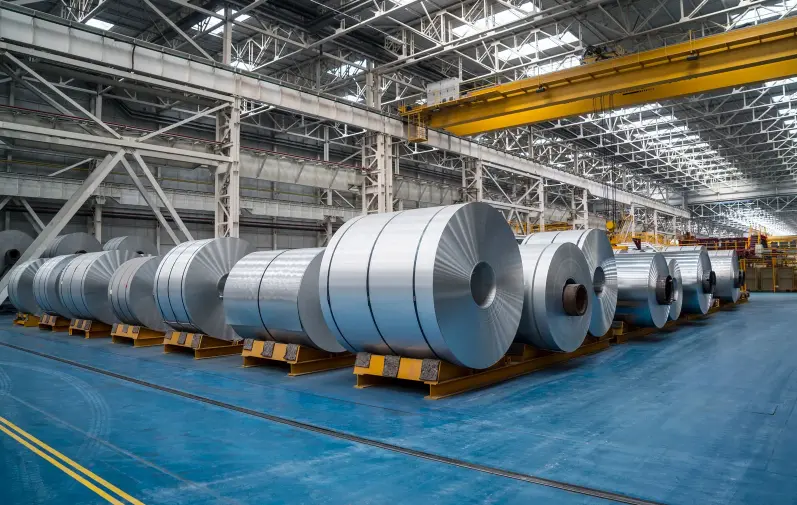
The aluminum industry is a vital sector of the global economy, encompassing the extraction, processing, and manufacturing of aluminum, one of the most abundant and versatile metals on Earth. It begins with the mining of bauxite ore, primarily in countries like Australia, Guinea, and Brazil, which is then refined into alumina through the Bayer process. This alumina is subsequently smelted using the Hall-Héroult process in large electrolytic cells, producing primary aluminum that is lightweight, corrosion-resistant, and highly recyclable.
The industry plays a crucial role in various applications, from aerospace and automotive components to construction materials, packaging, and electrical wiring. For instance, aluminum’s use in beverage cans and vehicle frames contributes to energy efficiency and sustainability efforts. Globally, the sector is driven by demand for eco-friendly materials, with recycling rates exceeding 75% in many regions, reducing the need for virgin production.
Major players include companies like Alcoa, Rio Tinto, and Chalco, operating in a market influenced by fluctuating raw material prices, energy costs, and environmental regulations. Innovations in production techniques, such as inert anode technology, aim to lower carbon emissions, positioning the aluminum industry as a key player in the transition to a greener economy. Despite challenges like high energy consumption and waste management, its growth is projected to continue, fueled by urbanization and technological advancements.
Table of Contents
- Part 1: OnlineExamMaker AI Quiz Maker – Make A Free Quiz in Minutes
- Part 2: 20 Aluminum Industry Quiz Questions & Answers
- Part 3: Try OnlineExamMaker AI Question Generator to Create Quiz Questions
Part 1: OnlineExamMaker AI Quiz Maker – Make A Free Quiz in Minutes
What’s the best way to create a Aluminum Industry quiz online? OnlineExamMaker is the best AI quiz making software for you. No coding, and no design skills required. If you don’t have the time to create your online quiz from scratch, you are able to use OnlineExamMaker AI Question Generator to create question automatically, then add them into your online assessment. What is more, the platform leverages AI proctoring and AI grading features to streamline the process while ensuring exam integrity.
Key features of OnlineExamMaker:
● Create up to 10 question types, including multiple-choice, true/false, fill-in-the-blank, matching, short answer, and essay questions.
● Build and store questions in a centralized portal, tagged by categories and keywords for easy reuse and organization.
● Automatically scores multiple-choice, true/false, and even open-ended/audio responses using AI, reducing manual work.
● Create certificates with personalized company logo, certificate title, description, date, candidate’s name, marks and signature.
Automatically generate questions using AI
Part 2: 20 Aluminum Industry Quiz Questions & Answers
or
1. What is the primary ore used in aluminum production?
A) Hematite
B) Bauxite
C) Galena
D) Magnetite
Answer: B) Bauxite
Explanation: Bauxite is the main ore for aluminum extraction because it contains high levels of aluminum hydroxide minerals, which are processed via the Bayer process to produce alumina.
2. Which process is used to extract alumina from bauxite?
A) Smelting
B) Electrolysis
C) Bayer process
D) Refining
Answer: C) Bayer process
Explanation: The Bayer process involves dissolving bauxite in sodium hydroxide to separate alumina from impurities, making it the standard method for alumina production.
3. What is the main alloying element added to aluminum to improve its strength?
A) Copper
B) Iron
C) Silicon
D) Zinc
Answer: A) Copper
Explanation: Copper is commonly added to aluminum to form alloys like 2000 series, which enhance strength and are used in aerospace applications.
4. In which year was the Hall-Héroult process for aluminum smelting invented?
A) 1886
B) 1900
C) 1856
D) 1920
Answer: A) 1886
Explanation: The Hall-Héroult process, invented in 1886, revolutionized aluminum production by using electrolysis to reduce alumina to pure aluminum, making it commercially viable.
5. What is the most common form of aluminum corrosion?
A) Rusting
B) Pitting
C) Galvanic corrosion
D) Stress corrosion cracking
Answer: B) Pitting
Explanation: Pitting is the most prevalent corrosion type in aluminum due to its protective oxide layer breaking down in certain environments, leading to localized damage.
6. Which country is the largest producer of bauxite in the world?
A) Australia
B) China
C) Brazil
D) Guinea
Answer: A) Australia
Explanation: Australia leads in bauxite production, accounting for a significant portion of global supply, primarily from mines in Western Australia.
7. What is the primary environmental concern associated with aluminum production?
A) Water pollution
B) Greenhouse gas emissions
C) Soil erosion
D) Noise pollution
Answer: B) Greenhouse gas emissions
Explanation: Aluminum smelting requires high energy, often from fossil fuels, resulting in substantial CO2 emissions, a key environmental issue in the industry.
8. Which aluminum alloy series is commonly used in beverage cans?
A) 1000 series
B) 3000 series
C) 5000 series
D) 6000 series
Answer: B) 3000 series
Explanation: The 3000 series, such as 3004 alloy, is favored for beverage cans due to its good formability, strength, and resistance to corrosion.
9. What is the melting point of pure aluminum?
A) 660°C
B) 1085°C
C) 1538°C
D) 1450°C
Answer: A) 660°C
Explanation: Pure aluminum has a melting point of approximately 660°C, which is relatively low compared to other metals, aiding in its casting processes.
10. Which factor primarily drives the demand for aluminum in the automotive industry?
A) Weight reduction
B) Cost savings
C) Aesthetic appeal
D) Electrical conductivity
Answer: A) Weight reduction
Explanation: Aluminum’s lightweight properties help reduce vehicle weight, improving fuel efficiency and meeting emissions standards.
11. What is the role of cryolite in the Hall-Héroult process?
A) As a reducing agent
B) As a solvent for alumina
C) As a catalyst
D) As an impurity remover
Answer: B) As a solvent for alumina
Explanation: Cryolite lowers the melting point of alumina in the electrolytic cell, allowing the process to operate at feasible temperatures.
12. Which organization sets standards for aluminum alloys?
A) ISO
B) ASTM
C) AA (Aluminum Association)
D) IEC
Answer: C) AA (Aluminum Association)
Explanation: The Aluminum Association establishes the numbering system and standards for aluminum alloys, ensuring global consistency.
13. What percentage of recycled aluminum is used in new production?
A) 25%
B) 50%
C) 75%
D) 90%
Answer: C) 75%
Explanation: About 75% of aluminum ever produced is still in use due to its high recyclability, with recycled aluminum making up a large portion of current production.
14. Which property makes aluminum ideal for electrical transmission lines?
A) High density
B) Low conductivity
C) High strength-to-weight ratio
D) Excellent conductivity
Answer: D) Excellent conductivity
Explanation: Aluminum has high electrical conductivity, second only to copper, and is widely used in power lines for its cost-effectiveness and lightweight nature.
15. What is the main byproduct of the Bayer process?
A) Red mud
B) Slag
C) Ash
D) Residue
Answer: A) Red mud
Explanation: Red mud is the waste generated from the Bayer process, containing iron oxide and other residues, posing environmental challenges.
16. Which aluminum product is commonly used in construction for windows and doors?
A) Extrusions
B) Sheets
C) Foils
D) Ingots
Answer: A) Extrusions
Explanation: Aluminum extrusions are shaped into profiles for windows and doors, offering durability, corrosion resistance, and ease of fabrication.
17. What is the global recycling rate for aluminum cans?
A) 20%
B) 45%
C) 69%
D) 85%
Answer: C) 69%
Explanation: The global recycling rate for aluminum cans is approximately 69%, driven by effective collection programs and the material’s infinite recyclability.
18. Which element is added to aluminum to create heat-treatable alloys?
A) Magnesium
B) Copper
C) Silicon
D) All of the above
Answer: D) All of the above
Explanation: Elements like magnesium, copper, and silicon can be added to aluminum to make it heat-treatable, improving its mechanical properties through precipitation hardening.
19. What is the primary use of aluminum in the aerospace industry?
A) Fuselages
B) Engines
C) Wheels
D) Interiors
Answer: A) Fuselages
Explanation: Aluminum is extensively used in aircraft fuselages due to its high strength-to-weight ratio, which enhances fuel efficiency and performance.
20. How does anodizing benefit aluminum products?
A) Increases weight
B) Improves corrosion resistance
C) Reduces conductivity
D) Lowers melting point
Answer: B) Improves corrosion resistance
Explanation: Anodizing forms a thick oxide layer on aluminum, enhancing its resistance to corrosion and wear, while also allowing for coloring.
or
Part 3: Try OnlineExamMaker AI Question Generator to Create Quiz Questions
Automatically generate questions using AI