Planetary science is the interdisciplinary field that studies the formation, evolution, and characteristics of planets, moons, asteroids, comets, and other celestial bodies within our solar system and beyond. It draws from astronomy, geology, atmospheric science, and physics to understand how these objects originated from the early solar nebula about 4.6 billion years ago.
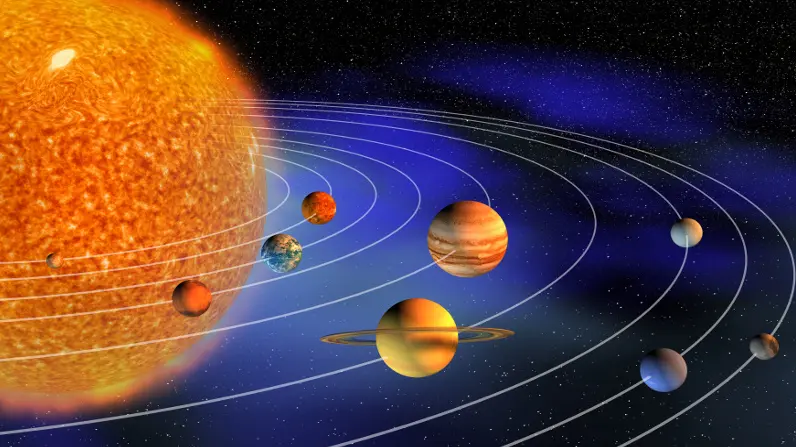
The solar system consists of eight planets: Mercury, Venus, Earth, Mars, Jupiter, Saturn, Uranus, and Neptune. These are categorized into terrestrial planets (rocky and closer to the Sun) and gas giants (largely composed of hydrogen and helium, with rings and numerous moons). Dwarf planets like Pluto and Ceres, along with thousands of asteroids in the asteroid belt and comets from the Kuiper Belt and Oort Cloud, add to the diversity.
Key processes in planetary science include planetary formation through accretion and differentiation, where dust and gas coalesce into protoplanets that develop layers like cores and atmospheres. Volcanism, tectonics, and impacts shape planetary surfaces, as seen on Earth’s plate movements, Mars’ ancient volcanoes, and the Moon’s craters.
Exploration relies on remote sensing via telescopes, such as the Hubble Space Telescope or the James Webb Space Telescope, which observe planetary atmospheres and compositions. Space missions, like NASA’s Voyager probes, Cassini-Huygens, and the Mars rovers, provide in-situ data through flybys, orbiters, landers, and sample returns.
Major discoveries include the detection of exoplanets—planets orbiting other stars—via methods like the transit and radial velocity techniques, revealing over 5,000 confirmed worlds. Evidence of past liquid water on Mars suggests potential habitability, while studies of Jupiter’s moon Europa indicate subsurface oceans that could harbor life.
Current research focuses on climate dynamics, such as Venus’ runaway greenhouse effect, and comparative planetology, which helps understand Earth’s systems by contrasting them with other worlds. Future missions, like the Europa Clipper and the Artemis program, aim to explore icy moons and return humans to the Moon, advancing our knowledge of planetary habitability and resources.
Table of Contents
- Part 1: Create An Amazing Planetary Science Quiz Using AI Instantly in OnlineExamMaker
- Part 2: 20 Planetary Science Quiz Questions & Answers
- Part 3: Try OnlineExamMaker AI Question Generator to Create Quiz Questions
Part 1: Create An Amazing Planetary Science Quiz Using AI Instantly in OnlineExamMaker
Nowadays more and more people create Planetary Science quizzes using AI technologies, OnlineExamMaker a powerful AI-based quiz making tool that can save you time and efforts. The software makes it simple to design and launch interactive quizzes, assessments, and surveys. With the Question Editor, you can create multiple-choice, open-ended, matching, sequencing and many other types of questions for your tests, exams and inventories. You are allowed to enhance quizzes with multimedia elements like images, audio, and video to make them more interactive and visually appealing.
Recommended features for you:
● Prevent cheating by randomizing questions or changing the order of questions, so learners don’t get the same set of questions each time.
● Automatically generates detailed reports—individual scores, question report, and group performance.
● Simply copy a few lines of codes, and add them to a web page, you can present your online quiz in your website, blog, or landing page.
● Offers question analysis to evaluate question performance and reliability, helping instructors optimize their training plan.
Automatically generate questions using AI
Part 2: 20 Planetary Science Quiz Questions & Answers
or
1. Question: What is the largest planet in our solar system?
A. Earth
B. Jupiter
C. Saturn
D. Mars
Answer: B
Explanation: Jupiter is the largest planet, with a diameter of about 143,000 kilometers, due to its composition of mostly hydrogen and helium gases.
2. Question: Which planet is known for its prominent rings?
A. Uranus
B. Neptune
C. Saturn
D. Venus
Answer: C
Explanation: Saturn’s rings are made of ice particles, rock, and dust, and are the most visible and extensive in the solar system.
3. Question: What is the primary component of Mars’ atmosphere?
A. Oxygen
B. Nitrogen
C. Carbon dioxide
D. Hydrogen
Answer: C
Explanation: Mars’ atmosphere is about 95% carbon dioxide, which contributes to its thin and cold conditions.
4. Question: Which moon of Jupiter is known for its volcanic activity?
A. Europa
B. Ganymede
C. Io
D. Callisto
Answer: C
Explanation: Io has over 400 active volcanoes due to tidal heating from Jupiter’s gravity, making it the most volcanically active body in the solar system.
5. Question: What process is responsible for the formation of the solar system?
A. Supernova explosion
B. Nebular hypothesis
C. Big Bang theory
D. Plate tectonics
Answer: B
Explanation: The nebular hypothesis describes how a rotating cloud of gas and dust collapsed to form the Sun and planets.
6. Question: Which planet has the longest day?
A. Earth
B. Venus
C. Mercury
D. Jupiter
Answer: B
Explanation: Venus has a day that lasts about 243 Earth days due to its slow rotation, which is longer than its orbital period around the Sun.
7. Question: What is the main reason for the greenhouse effect on Venus?
A. Thick atmosphere of carbon dioxide
B. Proximity to the Sun
C. Lack of magnetic field
D. High rotation speed
Answer: A
Explanation: Venus’ thick carbon dioxide atmosphere traps heat, leading to surface temperatures hot enough to melt lead.
8. Question: Which asteroid belt is located between Mars and Jupiter?
A. Kuiper Belt
B. Oort Cloud
C. Main Asteroid Belt
D. Trojan Asteroids
Answer: C
Explanation: The Main Asteroid Belt contains millions of asteroids, remnants from the early solar system, orbiting between Mars and Jupiter.
9. Question: What type of planet is Earth classified as?
A. Gas giant
B. Ice giant
C. Terrestrial planet
D. Dwarf planet
Answer: C
Explanation: Earth is a terrestrial planet, characterized by a solid rocky surface, in contrast to gas or ice giants.
10. Question: Which probe first visited Pluto?
A. Voyager 1
B. New Horizons
C. Cassini
D. Spirit Rover
Answer: B
Explanation: New Horizons flew by Pluto in 2015, providing the first close-up images and data about its surface and atmosphere.
11. Question: What causes the auroras on planets like Earth and Jupiter?
A. Solar winds interacting with magnetic fields
B. Volcanic eruptions
C. Meteor impacts
D. Atmospheric pressure changes
Answer: A
Explanation: Solar winds carry charged particles that interact with a planet’s magnetic field, exciting gases in the atmosphere to produce auroras.
12. Question: Which planet has retrograde rotation?
A. Earth
B. Venus
C. Mars
D. Saturn
Answer: B
Explanation: Venus rotates clockwise on its axis, opposite to most planets, likely due to a past collision or tidal forces.
13. Question: What is the composition of most comets?
A. Rock and metal
B. Ice, dust, and rocky material
C. Gas and hydrogen
D. Liquid water and minerals
Answer: B
Explanation: Comets are made of ice, dust, and rocky particles, which form a coma and tail when they approach the Sun.
14. Question: Which moon of Saturn has a subsurface ocean?
A. Titan
B. Enceladus
C. Rhea
D. Hyperion
Answer: B
Explanation: Enceladus has geysers of water vapor and ice, indicating a global subsurface ocean beneath its icy crust.
15. Question: What is the term for a celestial body that orbits the Sun and is massive enough to be round but has not cleared its orbit?
A. Planet
B. Comet
C. Dwarf planet
D. Asteroid
Answer: C
Explanation: Dwarf planets like Pluto meet these criteria, as defined by the International Astronomical Union.
16. Question: Which planet’s atmosphere is primarily hydrogen and helium?
A. Earth
B. Jupiter
C. Mercury
D. Venus
Answer: B
Explanation: Jupiter’s atmosphere is mostly hydrogen and helium, similar to the Sun, making it a gas giant.
17. Question: What geological feature is common on Mars due to ancient water flows?
A. Canyons
B. Volcanoes
C. Craters
D. All of the above
Answer: D
Explanation: Mars has canyons like Valles Marineris, volcanoes like Olympus Mons, and craters, many formed or shaped by past water activity.
18. Question: Which exoplanet detection method looks for dips in a star’s brightness?
A. Radial velocity
B. Transit method
C. Direct imaging
D. Gravitational microlensing
Answer: B
Explanation: The transit method detects exoplanets by observing the periodic dimming of a star’s light as a planet passes in front of it.
19. Question: What is the primary cause of erosion on Earth’s moon?
A. Wind and water
B. Micrometeorite impacts
C. Volcanic activity
D. Plate tectonics
Answer: B
Explanation: The Moon lacks an atmosphere, so micrometeorite impacts are the main force shaping its surface over time.
20. Question: Which planet has the strongest magnetic field?
A. Earth
B. Jupiter
C. Saturn
D. Uranus
Answer: B
Explanation: Jupiter’s magnetic field is the strongest in the solar system, generated by its rapid rotation and metallic hydrogen interior.
or
Part 3: Try OnlineExamMaker AI Question Generator to Create Quiz Questions
Automatically generate questions using AI