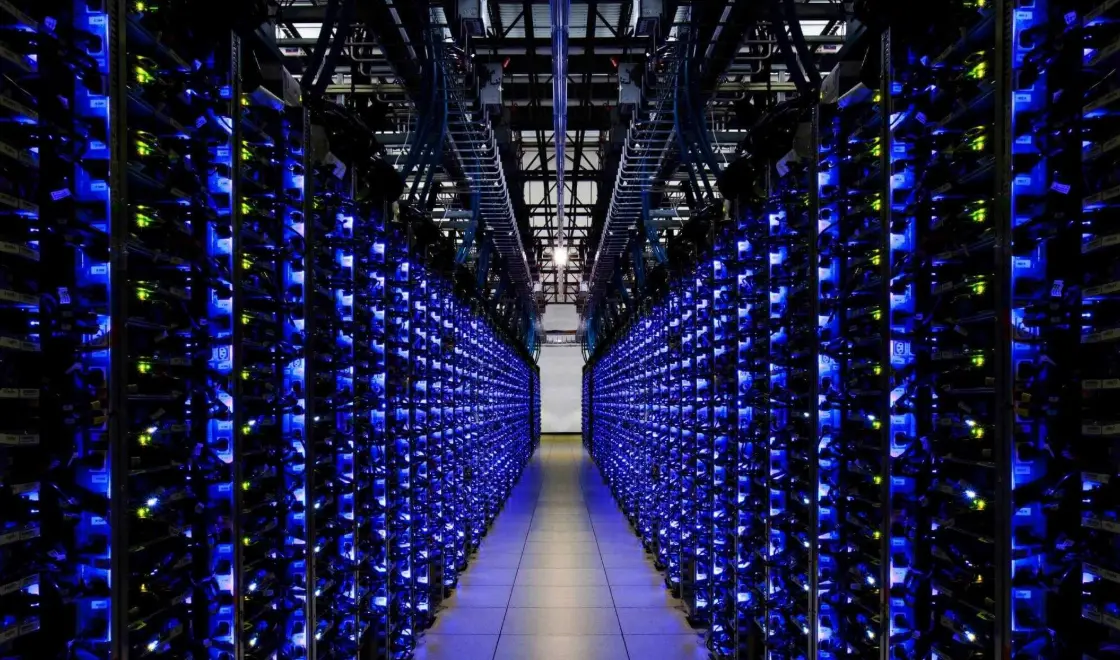
A data center is a specialized facility designed to house computer systems, servers, storage devices, and networking equipment, supporting the storage, processing, and management of data for organizations.
Key Components
– Servers: Handle computing tasks, processing data, and running applications.
– Storage Systems: Include hard drives, SSDs, and NAS/SAN setups for data retention and retrieval.
– Networking Infrastructure: Comprises switches, routers, and firewalls to ensure data transmission and connectivity.
– Power and Cooling Systems: UPS, generators, and HVAC units to maintain uninterrupted operation and optimal temperatures.
– Security Measures: Physical barriers, surveillance, firewalls, and access controls to protect against threats.
Importance
Data centers are critical for enabling cloud computing, big data analytics, e-commerce, and remote services. They provide high availability, scalability, and reliability, supporting global digital infrastructure and business continuity.
Types of Data Centers
– Enterprise Data Centers: Owned and operated by a single organization for internal use.
– Colocation Data Centers: Shared facilities where businesses rent space and resources.
– Cloud Data Centers: Managed by providers like AWS, Azure, or Google Cloud, offering on-demand services.
– Edge Data Centers: Located closer to end-users for reduced latency in IoT and real-time applications.
Challenges and Trends
– Energy Efficiency: Rising concerns over power consumption lead to adoption of green technologies like renewable energy and advanced cooling.
– Security Risks: Increasing cyber threats necessitate robust encryption, multi-factor authentication, and compliance with standards like GDPR.
– Scalability and Automation: The growth of AI and big data drives the need for modular designs and automated management tools.
– Sustainability: Focus on reducing carbon footprints through efficient designs and circular economy practices.
This overview highlights the foundational role of data centers in modern IT ecosystems, evolving to meet demands for speed, security, and environmental responsibility.
Table of Contents
- Part 1: OnlineExamMaker AI Quiz Generator – The Easiest Way to Make Quizzes Online
- Part 2: 20 Data Centers Quiz Questions & Answers
- Part 3: Try OnlineExamMaker AI Question Generator to Create Quiz Questions
Part 1: OnlineExamMaker AI Quiz Generator – The Easiest Way to Make Quizzes Online
Are you looking for an online assessment to test the Data Centers skills of your learners? OnlineExamMaker uses artificial intelligence to help quiz organizers to create, manage, and analyze exams or tests automatically. Apart from AI features, OnlineExamMaker advanced security features such as full-screen lockdown browser, online webcam proctoring, and face ID recognition.
Take a product tour of OnlineExamMaker:
● Includes a safe exam browser (lockdown mode), webcam and screen recording, live monitoring, and chat oversight to prevent cheating.
● AI Exam Grader for efficiently grading quizzes and assignments, offering inline comments, automatic scoring, and “fudge points” for manual adjustments.
● Embed quizzes on websites, blogs, or share via email, social media (Facebook, Twitter), or direct links.
● Handles large-scale testing (thousands of exams/semester) without internet dependency, backed by cloud infrastructure.
Automatically generate questions using AI
Part 2: 20 Data Centers Quiz Questions & Answers
or
1. Question: What is the primary purpose of a data center?
A) Storing office furniture
B) Housing computer systems and networking equipment
C) Manufacturing software
D) Generating electricity
Answer: B
Explanation: A data center is a facility designed to house computer systems, servers, and networking equipment to process, store, and manage data securely and efficiently.
2. Question: Which of the following is a key component of a data center’s infrastructure?
A) Coffee machines
B) Cooling systems
C) Decorative lighting
D) Employee lounges
Answer: B
Explanation: Cooling systems are essential in data centers to prevent overheating of servers and equipment, maintaining optimal operating temperatures.
3. Question: What does Tier I classification mean for a data center?
A) Fully redundant with multiple power sources
B) Basic facility with a single path for power and cooling
C) Advanced with 99.999% uptime
D) Cloud-based only
Answer: B
Explanation: Tier I data centers have a single path for power and cooling, offering no redundancy, which means they are susceptible to disruptions.
4. Question: Which technology is commonly used for virtualizing servers in data centers?
A) Mechanical hard drives
B) Virtualization software like VMware
C) Basic routers
D) Printers
Answer: B
Explanation: Virtualization software such as VMware allows multiple operating systems to run on a single physical server, optimizing resource use in data centers.
5. Question: What is the main benefit of using uninterruptible power supplies (UPS) in a data center?
A) Increasing internet speed
B) Providing backup power during outages
C) Enhancing employee morale
D) Reducing storage capacity
Answer: B
Explanation: UPS systems ensure continuous power to critical equipment during electrical failures, preventing data loss and downtime.
6. Question: In a data center, what does RAID stand for and why is it important?
A) Random Access Information Device; for faster printing
B) Redundant Array of Independent Disks; for data redundancy and performance
C) Rapid Application Interface Design; for software development
D) Remote Access Identification Device; for security
Answer: B
Explanation: RAID combines multiple disks into a single unit for improved data reliability, fault tolerance, and performance, which is crucial for data center storage.
7. Question: Which factor is most critical for data center security?
A) Attractive interior design
B) Multi-factor authentication
C) Comfortable seating
D) Open access policies
Answer: B
Explanation: Multi-factor authentication adds layers of security by requiring multiple verification methods, protecting sensitive data from unauthorized access.
8. Question: What is a colocation data center?
A) A facility where companies build their own servers
B) A shared space where multiple organizations house their equipment
C) A personal home office setup
D) A cloud-only environment
Answer: B
Explanation: Colocation data centers provide shared infrastructure for renting space, power, and cooling, allowing organizations to maintain control over their hardware.
9. Question: Why are fire suppression systems important in data centers?
A) To control room temperature
B) To extinguish fires without damaging equipment
C) To provide lighting
D) To enhance network speed
Answer: B
Explanation: Fire suppression systems, like those using inert gases, quickly put out fires while minimizing damage to sensitive electronic equipment.
10. Question: What is the role of a network switch in a data center?
A) Storing data files
B) Connecting devices on a local network
C) Generating power
D) Cooling servers
Answer: B
Explanation: Network switches manage data traffic between devices, enabling efficient communication and connectivity within the data center.
11. Question: Which metric measures a data center’s energy efficiency?
A) CPU speed
B) Power Usage Effectiveness (PUE)
C) Storage capacity
D) Employee count
Answer: B
Explanation: PUE calculates the ratio of total energy used by the data center to the energy delivered to IT equipment, helping assess and improve efficiency.
12. Question: What is the purpose of a hot aisle/cold aisle configuration in data centers?
A) To organize employee workstations
B) To separate hot exhaust air from cool intake air for better cooling
C) To store extra hardware
D) To decorate the facility
Answer: B
Explanation: This layout directs cool air to the front of servers and hot air to the back, improving cooling efficiency and reducing energy costs.
13. Question: In cloud computing, what is a hypervisor?
A) A type of server hardware
B) Software that creates and runs virtual machines
C) A network cable
D) A cooling fan
Answer: B
Explanation: A hypervisor manages virtual machines on a host system, allowing multiple operating environments to share physical resources in data centers.
14. Question: Why is redundancy important in data centers?
A) To reduce costs
B) To ensure continuous operation during failures
C) To limit access
D) To increase energy use
Answer: B
Explanation: Redundancy, such as backup power or duplicate systems, minimizes downtime and maintains availability of services.
15. Question: What type of storage is commonly used in modern data centers for speed?
A) Magnetic tapes
B) Solid-state drives (SSDs)
C) Floppy disks
D) CD-ROMs
Answer: B
Explanation: SSDs provide faster access times and lower latency compared to traditional hard drives, making them ideal for high-performance data center applications.
16. Question: What is the significance of ISO 27001 in data centers?
A) It certifies energy efficiency
B) It provides a standard for information security management
C) It regulates employee training
D) It measures network speed
Answer: B
Explanation: ISO 27001 is an international standard that outlines requirements for an information security management system, ensuring data protection in data centers.
17. Question: How does load balancing contribute to data center operations?
A) By distributing network traffic across servers
B) By increasing power consumption
C) By storing data offline
D) By cooling individual racks
Answer: A
Explanation: Load balancing evenly distributes workloads across servers, preventing any single server from being overwhelmed and improving overall performance.
18. Question: What is the primary advantage of edge data centers?
A) Centralized location for all data
B) Reduced latency by being closer to users
C) Higher energy costs
D) Limited scalability
Answer: B
Explanation: Edge data centers are located near end-users, minimizing data travel distance and reducing latency for real-time applications.
19. Question: Why are data centers often located in specific geographic areas?
A) For aesthetic reasons
B) To access reliable power, cooling, and connectivity
C) To be near shopping centers
D) To maximize employee commute times
Answer: B
Explanation: Strategic locations ensure access to essential resources like stable electricity, water for cooling, and high-speed internet, supporting uninterrupted operations.
20. Question: What is the impact of high-density computing in data centers?
A) It reduces the need for space
B) It increases power and cooling demands
C) It slows down data processing
D) It eliminates the need for security
Answer: B
Explanation: High-density computing packs more servers into less space, leading to greater heat generation and requiring advanced power and cooling solutions.
or
Part 3: Try OnlineExamMaker AI Question Generator to Create Quiz Questions
Automatically generate questions using AI