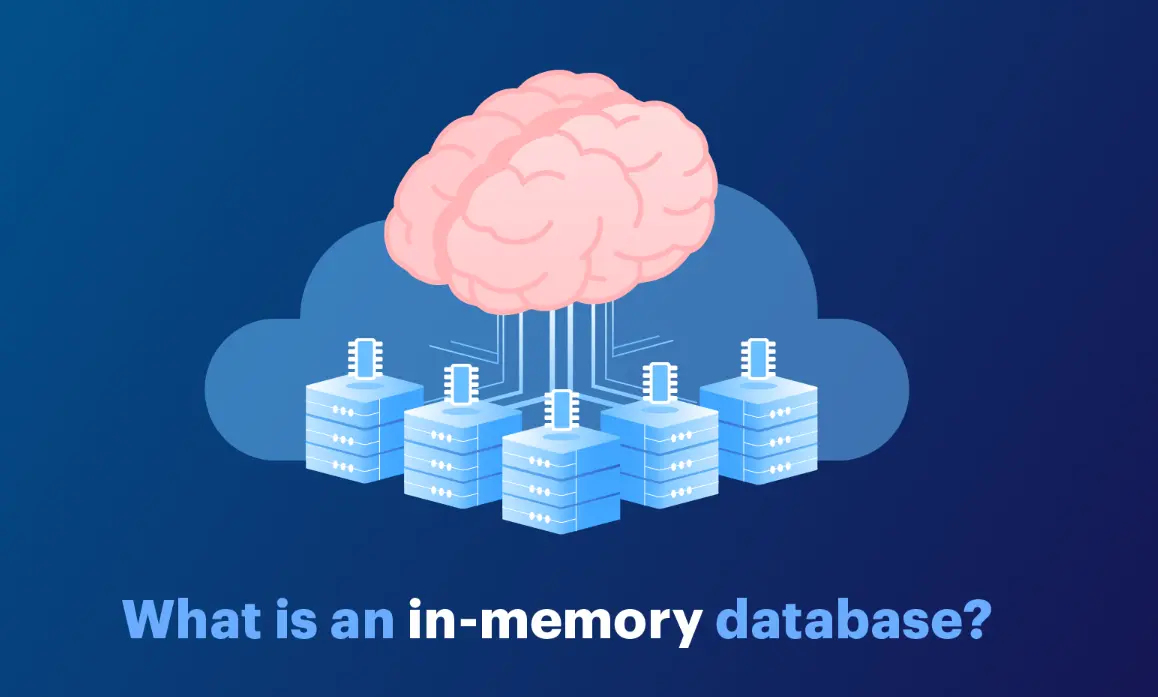
An In-Memory Database (IMDB) is a type of database management system that primarily stores and manages data in the computer’s main memory (RAM) rather than on traditional disk storage. This design enables rapid data access and processing, making it ideal for applications requiring real-time performance.
Key features include:
– High Speed: Data retrieval is significantly faster since it bypasses disk I/O operations, often achieving sub-millisecond response times.
– Volatility: Data is loaded into memory at startup and can be lost if the system crashes or loses power, though many systems incorporate persistence mechanisms like snapshots or logging.
– Scalability: IMDBs can handle large volumes of data by utilizing distributed architectures, allowing seamless scaling across multiple nodes.
– Data Structures: They often support advanced in-memory data structures such as hashes, lists, and sets, enabling complex queries and operations.
Advantages:
– Enhanced performance for read-heavy workloads, analytics, and transactional processing.
– Reduced latency, which is crucial for applications like financial trading, gaming, and IoT.
– Efficient for caching and temporary data storage, improving overall system efficiency.
Disadvantages:
– Higher costs due to reliance on expensive RAM.
– Limited by memory capacity, which can restrict the amount of data stored.
– Potential data loss risks, necessitating robust backup strategies.
Common use cases:
– Real-time analytics and business intelligence.
– High-frequency trading and fraud detection.
– Session management in web applications.
– Caching layers in microservices architectures.
Popular examples include Redis, Memcached, SAP HANA, and Apache Ignite, each offering specialized features for different enterprise needs. As data demands grow, IMDBs continue to evolve, integrating with hybrid storage solutions for greater reliability and flexibility.
Table of Contents
- Part 1: OnlineExamMaker AI Quiz Maker – Make A Free Quiz in Minutes
- Part 2: 20 In-Memory Database Quiz Questions & Answers
- Part 3: Try OnlineExamMaker AI Question Generator to Create Quiz Questions
Part 1: OnlineExamMaker AI Quiz Maker – Make A Free Quiz in Minutes
Still spend a lot of time in editing questions for your next In-Memory Database assessment? OnlineExamMaker is an AI quiz maker that leverages artificial intelligence to help users create quizzes, tests, and assessments quickly and efficiently. You can start by inputting a topic or specific details into the OnlineExamMaker AI Question Generator, and the AI will generate a set of questions almost instantly. It also offers the option to include answer explanations, which can be short or detailed, helping learners understand their mistakes.
What you may like:
● Automatic grading and insightful reports. Real-time results and interactive feedback for quiz-takers.
● The exams are automatically graded with the results instantly, so that teachers can save time and effort in grading.
● LockDown Browser to restrict browser activity during quizzes to prevent students searching answers on search engines or other software.
● Create certificates with personalized company logo, certificate title, description, date, candidate’s name, marks and signature.
Automatically generate questions using AI
Part 2: 20 In-Memory Database Quiz Questions & Answers
or
Question 1:
What is an In-Memory Database?
A) A database that stores data on disk drives
B) A database that stores data primarily in RAM
C) A database that uses network storage exclusively
D) A database designed for offline data processing
Answer: B
Explanation: In-Memory Databases store data in random access memory (RAM) for faster read and write operations, unlike traditional databases that rely on slower disk storage.
Question 2:
Which of the following is a key advantage of In-Memory Databases?
A) Lower cost due to minimal hardware requirements
B) Reduced data latency and faster query responses
C) Better suitability for long-term data archiving
D) Automatic handling of large-scale disk writes
Answer: B
Explanation: In-Memory Databases provide near-zero latency by keeping data in RAM, enabling rapid access and processing compared to disk-based systems.
Question 3:
What is a primary disadvantage of In-Memory Databases?
A) High data redundancy
B) Volatility of data in case of power failure
C) Overly complex query languages
D) Incompatibility with modern programming languages
Answer: B
Explanation: Since data is stored in RAM, it can be lost if there’s a power outage or system crash, necessitating mechanisms like snapshots or replication for persistence.
Question 4:
Which database system is an example of an In-Memory Database?
A) MySQL
B) Redis
C) Oracle
D) PostgreSQL
Answer: B
Explanation: Redis is designed as an In-Memory Data Store, using RAM for storage to handle high-throughput applications like caching and real-time analytics.
Question 5:
In what scenario are In-Memory Databases most commonly used?
A) Storing historical transaction logs
B) Real-time analytics and high-speed transactions
C) Backup and recovery operations
D) Long-term archival of unstructured data
Answer: B
Explanation: Their speed makes In-Memory Databases ideal for applications requiring immediate data access, such as financial trading or online gaming.
Question 6:
How does an In-Memory Database typically handle data persistence?
A) It automatically writes to disk in real-time
B) It relies solely on RAM without any persistence
C) It uses periodic snapshots or write-ahead logs
D) It deletes data after every transaction
Answer: C
Explanation: To mitigate data loss from volatility, In-Memory Databases often employ techniques like snapshots or logging to persist data to disk at intervals.
Question 7:
What impact does RAM capacity have on In-Memory Databases?
A) It has no effect on performance
B) It limits the amount of data that can be stored
C) It increases the need for disk storage
D) It slows down query execution
Answer: B
Explanation: The size of available RAM directly constrains the dataset size in In-Memory Databases, as all data must fit into memory for optimal performance.
Question 8:
Which of the following is true about data consistency in In-Memory Databases?
A) They always ensure strong consistency without effort
B) They may use eventual consistency for better performance
C) Consistency is impossible due to RAM volatility
D) They rely on external networks for consistency
Answer: B
Explanation: Many In-Memory Databases, like Cassandra, prioritize availability and partition tolerance by using eventual consistency, trading off immediate accuracy for speed.
Question 9:
How do In-Memory Databases compare to traditional disk-based databases in terms of speed?
A) They are generally slower due to memory constraints
B) They offer similar speeds with added reliability
C) They provide significantly faster access times
D) They are only faster for write operations
Answer: C
Explanation: By avoiding disk I/O, In-Memory Databases achieve microsecond-level access, making them much faster for read and write operations than disk-based counterparts.
Question 10:
What is a common use case for In-Memory Databases in e-commerce?
A) Storing customer shipping addresses permanently
B) Handling session management and shopping carts
C) Generating annual sales reports
D) Managing physical inventory counts
Answer: B
Explanation: In-Memory Databases excel in managing transient data like user sessions, which require quick access and updates in real-time e-commerce environments.
Question 11:
Which factor primarily drives the cost of implementing an In-Memory Database?
A) The cost of software licenses
B) The expense of high-capacity RAM
C) Ongoing disk maintenance fees
D) Network bandwidth requirements
Answer: B
Explanation: The need for large amounts of RAM to store data increases hardware costs, making In-Memory Databases more expensive than disk-based options.
Question 12:
In a distributed In-Memory Database, how is data typically shared across nodes?
A) Through direct disk transfers
B) Using replication and sharding techniques
C) By converting data to external storage
D) Via sequential file processing
Answer: B
Explanation: Distributed In-Memory Databases use replication for redundancy and sharding to partition data across nodes, ensuring scalability and fault tolerance.
Question 13:
What role does caching play in In-Memory Databases?
A) It replaces the need for the database entirely
B) It stores frequently accessed data in RAM for quick retrieval
C) It slows down data access for security
D) It is irrelevant in In-Memory systems
Answer: B
Explanation: Caching in In-Memory Databases keeps hot data in RAM, reducing latency for repeated queries and enhancing overall system performance.
Question 14:
Why might an In-Memory Database be unsuitable for big data applications?
A) It handles big data more efficiently than others
B) RAM limitations can make it impractical for massive datasets
C) It lacks support for data analytics
D) It requires too much processing power
Answer: B
Explanation: For extremely large datasets that exceed available RAM, In-Memory Databases may not be feasible, as data must fit entirely in memory.
Question 15:
Which programming language is commonly associated with In-Memory Databases like Redis?
A) Java
B) C (for core implementations)
C) Python
D) SQL
Answer: B
Explanation: Many In-Memory Databases, including Redis, are built using C for performance reasons, though they support various client libraries in other languages.
Question 16:
How do In-Memory Databases manage concurrency?
A) They do not support multiple users
B) Using locks, transactions, or optimistic concurrency control
C) By disabling all write operations
D) Through external hardware synchronization
Answer: B
Explanation: To handle simultaneous access, In-Memory Databases employ mechanisms like row-level locking or multi-version concurrency control to maintain data integrity.
Question 17:
What is the primary benefit of using In-Memory Databases in mobile applications?
A) Reduced battery consumption
B) Faster data synchronization and offline access
C) Simplified user interface design
D) Automatic cloud integration
Answer: B
Explanation: In mobile apps, In-Memory Databases enable quick local data handling, improving responsiveness and supporting offline functionality.
Question 18:
In terms of ACID properties, how do In-Memory Databases typically perform?
A) They fully support all ACID properties without issues
B) They may sacrifice durability for speed
C) They ignore atomicity entirely
D) They enhance consistency over traditional databases
Answer: B
Explanation: While they can maintain atomicity, consistency, and isolation, In-Memory Databases often compromise on durability due to the transient nature of RAM.
Question 19:
Which technology is often combined with In-Memory Databases for hybrid storage solutions?
A) Solid-state drives (SSDs)
B) Traditional hard disk drives (HDDs)
C) Cloud-based object storage
D) Optical media
Answer: A
Explanation: SSDs are frequently used alongside In-Memory Databases to provide a balance of speed and persistence, bridging the gap between RAM and slower storage.
Question 20:
What future trend is likely to influence the evolution of In-Memory Databases?
A) A shift towards disk-only storage
B) Integration with AI for predictive caching
C) Reduced focus on real-time processing
D) Elimination of RAM usage
Answer: B
Explanation: As AI advances, In-Memory Databases are expected to incorporate machine learning for smarter data caching and predictive analytics, enhancing efficiency.
or
Part 3: Try OnlineExamMaker AI Question Generator to Create Quiz Questions
Automatically generate questions using AI