Machine tools are essential power-driven devices used in manufacturing to shape, cut, drill, grind, and form metals and other rigid materials with high precision. They play a pivotal role in industries such as automotive, aerospace, electronics, and construction, enabling the production of complex components.
History
The origins of machine tools trace back to the Industrial Revolution in the 18th century. Early innovations, like the lathe developed by Henry Maudslay in the early 1800s, revolutionized production by introducing interchangeable parts. Over time, advancements in automation, such as numerical control (NC) in the mid-20th century and computer numerical control (CNC) in the 1970s, have made machine tools faster, more accurate, and versatile.
Types of Machine Tools
Machine tools can be categorized based on their primary functions:
– Lathes: Used for turning operations, where material is rotated against a cutting tool to create cylindrical shapes.
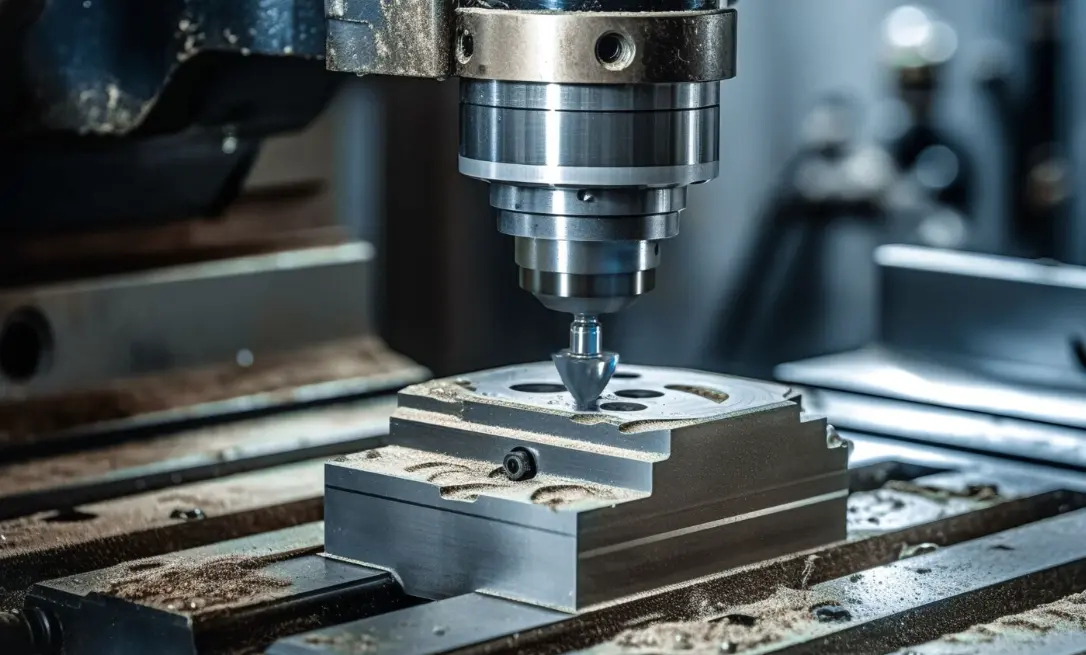
– Milling Machines: Employ rotating cutters to remove material from a workpiece, ideal for creating flat surfaces, slots, and complex geometries.
– Drilling Machines: Designed to create holes in materials using drill bits, available in benchtop, radial, or CNC variants.
– Grinding Machines: Utilize abrasive wheels for finishing surfaces to achieve high precision and smoothness.
– Planers and Shapers: Reciprocate a cutting tool over a stationary workpiece to produce flat or contoured surfaces.
– Advanced Tools: Include CNC machines, EDM (Electrical Discharge Machining), and laser cutters, which integrate computer controls for automated operations.
Applications
Machine tools are indispensable in various sectors:
– Manufacturing: Producing engine parts, gears, and tools for assembly lines.
– Aerospace: Crafting aircraft components that require tight tolerances.
– Automotive: Machining engine blocks, transmissions, and body parts.
– Medical and Electronics: Creating precise instruments, circuit boards, and implants.
Key Features and Benefits
Modern machine tools offer:
– Precision and Efficiency: Capable of tolerances as fine as micrometers, reducing waste and errors.
– Automation: Integration with software allows for programmable operations, minimizing human intervention.
– Versatility: Adaptable to a wide range of materials, from metals like steel and aluminum to composites and plastics.
– Safety and Productivity: Features like automatic tool changers and safety guards enhance workplace efficiency and reduce risks.
In summary, machine tools drive industrial progress by enabling mass production, innovation, and economic growth, making them a cornerstone of global manufacturing.
Table of Contents
- Part 1: OnlineExamMaker AI Quiz Generator – The Easiest Way to Make Quizzes Online
- Part 2: 20 Machine Tools Quiz Questions & Answers
- Part 3: AI Question Generator – Automatically Create Questions for Your Next Assessment
Part 1: OnlineExamMaker AI Quiz Generator – The Easiest Way to Make Quizzes Online
Are you looking for an online assessment to test the Machine Tools skills of your learners? OnlineExamMaker uses artificial intelligence to help quiz organizers to create, manage, and analyze exams or tests automatically. Apart from AI features, OnlineExamMaker advanced security features such as full-screen lockdown browser, online webcam proctoring, and face ID recognition.
Take a product tour of OnlineExamMaker:
● Includes a safe exam browser (lockdown mode), webcam and screen recording, live monitoring, and chat oversight to prevent cheating.
● AI Exam Grader for efficiently grading quizzes and assignments, offering inline comments, automatic scoring, and “fudge points” for manual adjustments.
● Embed quizzes on websites, blogs, or share via email, social media (Facebook, Twitter), or direct links.
● Handles large-scale testing (thousands of exams/semester) without internet dependency, backed by cloud infrastructure.
Automatically generate questions using AI
Part 2: 20 Machine Tools Quiz Questions & Answers
or
Question 1:
What is the primary function of a lathe machine?
A. To shape metal by removing material using a rotating workpiece
B. To drill holes in metal sheets
C. To grind surfaces to a fine finish
D. To cut gears using a milling process
Answer: A
Explanation: A lathe machine rotates the workpiece against a cutting tool to perform operations like turning, facing, and threading, allowing for cylindrical shapes.
Question 2:
Which machine tool is used for removing material by rotating a multi-point cutting tool?
A. Milling machine
B. Lathe machine
C. Drilling machine
D. Grinding machine
Answer: A
Explanation: A milling machine uses a rotating cutter with multiple edges to remove material from a stationary workpiece, creating flat surfaces, slots, or complex shapes.
Question 3:
What is the purpose of a chuck in a lathe machine?
A. To hold the workpiece securely
B. To provide power to the cutting tool
C. To measure the workpiece dimensions
D. To cool the cutting tool
Answer: A
Explanation: A chuck grips and centers the workpiece on the lathe’s spindle, ensuring stability during rotation for accurate machining.
Question 4:
In a drilling machine, what does the term “feed” refer to?
A. The rate at which the drill bit advances into the material
B. The speed of the drill bit’s rotation
C. The type of coolant used
D. The material of the drill bit
Answer: A
Explanation: Feed in a drilling machine is the axial movement of the drill bit into the workpiece, which affects the hole’s quality and drilling efficiency.
Question 5:
Which type of milling cutter is best for creating slots or keyways?
A. Slab mill
B. End mill
C. Face mill
D. Fly cutter
Answer: B
Explanation: An end mill has cutting teeth on the end and sides, making it ideal for plunging into material and creating precise slots or pockets.
Question 6:
What is the main advantage of using a CNC machine tool over a manual one?
A. Automated precision and repeatability
B. Lower cost of operation
C. Simpler setup process
D. Reduced need for skilled operators
Answer: A
Explanation: CNC machines use computer controls for accurate, repeatable movements, reducing human error and allowing for complex designs.
Question 7:
Which machine tool is specifically designed for creating internal threads?
A. Tapping machine
B. Lathe machine
C. Shaper machine
D. Planer machine
Answer: A
Explanation: A tapping machine cuts internal threads in holes using a tap, which is essential for fasteners like bolts and screws.
Question 8:
What does the term “RPM” stand for in machine tools?
A. Revolutions per minute
B. Rate of material removal
C. Rotational power mechanism
D. Rapid positioning mode
Answer: A
Explanation: RPM measures the speed of rotation of the spindle or cutter, which is critical for determining cutting efficiency and tool life.
Question 9:
In grinding machines, what is the function of the abrasive wheel?
A. To remove material by abrasion
B. To hold the workpiece
C. To provide lubrication
D. To measure surface finish
Answer: A
Explanation: The abrasive wheel on a grinding machine consists of hard particles that wear away material from the workpiece to achieve a smooth surface.
Question 10:
Which safety feature is essential when operating a milling machine?
A. Emergency stop button
B. Automatic feed system
C. High-speed spindle
D. Coolant reservoir
Answer: A
Explanation: An emergency stop button allows immediate halting of the machine in case of an accident, preventing injuries from moving parts.
Question 11:
What is the primary use of a shaper machine?
A. To produce flat surfaces using a reciprocating cutting tool
B. To drill precise holes
C. To turn cylindrical parts
D. To mill complex contours
Answer: A
Explanation: A shaper machine moves a single-point cutting tool back and forth to create straight, flat, or angular surfaces on a workpiece.
Question 12:
In a drilling machine, what factor primarily affects the hole’s diameter?
A. The size of the drill bit
B. The feed rate
C. The coolant type
D. The workpiece material
Answer: A
Explanation: The diameter of the hole is determined by the drill bit’s size, as it directly corresponds to the cutting tool’s dimensions.
Question 13:
Which type of lathe is used for very large workpieces?
A. Vertical lathe
B. Engine lathe
C. Turret lathe
D. Bench lathe
Answer: A
Explanation: A vertical lathe holds the workpiece vertically, making it suitable for heavy and oversized parts that are difficult to handle horizontally.
Question 14:
What is the role of coolant in machine tools?
A. To reduce heat and friction during cutting
B. To increase cutting speed
C. To measure tool wear
D. To align the workpiece
Answer: A
Explanation: Coolant lubricates the cutting area, dissipates heat, and flushes away chips, preventing tool damage and improving surface quality.
Question 15:
Which machine tool uses a rotating abrasive belt for finishing?
A. Belt sander
B. Lathe machine
C. Milling machine
D. Drilling machine
Answer: A
Explanation: A belt sander employs a continuous abrasive belt to smooth and finish surfaces, commonly used for wood or metal.
Question 16:
What is a key characteristic of a universal milling machine?
A. It can perform both horizontal and vertical milling
B. It is only for small workpieces
C. It requires manual operation only
D. It lacks a spindle
Answer: A
Explanation: A universal milling machine has a swiveling table, allowing it to handle both horizontal and vertical milling operations flexibly.
Question 17:
In gear cutting, what process uses a form cutter?
A. Shaping
B. Hobbing
C. Broaching
D. Grinding
Answer: A
Explanation: Gear shaping uses a form cutter that matches the gear tooth profile, generating teeth by a reciprocating motion.
Question 18:
What does “tool offset” mean in CNC machine tools?
A. Adjusting the tool’s position for accurate machining
B. Changing the tool material
C. Increasing the feed rate
D. Reducing spindle speed
Answer: A
Explanation: Tool offset in CNC compensates for the tool’s length and diameter, ensuring precise cuts relative to the programmed path.
Question 19:
Which factor determines the selection of cutting speed in machine tools?
A. Material of the workpiece and tool
B. Operator experience
C. Machine age
D. Room temperature
Answer: A
Explanation: Cutting speed is chosen based on the hardness and properties of both the workpiece and cutting tool to optimize performance and longevity.
Question 20:
What is the main purpose of a tool post on a lathe?
A. To hold and position the cutting tool
B. To secure the workpiece
C. To control the lathe’s speed
D. To apply coolant
Answer: A
Explanation: The tool post on a lathe securely mounts the cutting tool and allows for quick adjustments to different angles and positions.
or
Part 3: AI Question Generator – Automatically Create Questions for Your Next Assessment
Automatically generate questions using AI