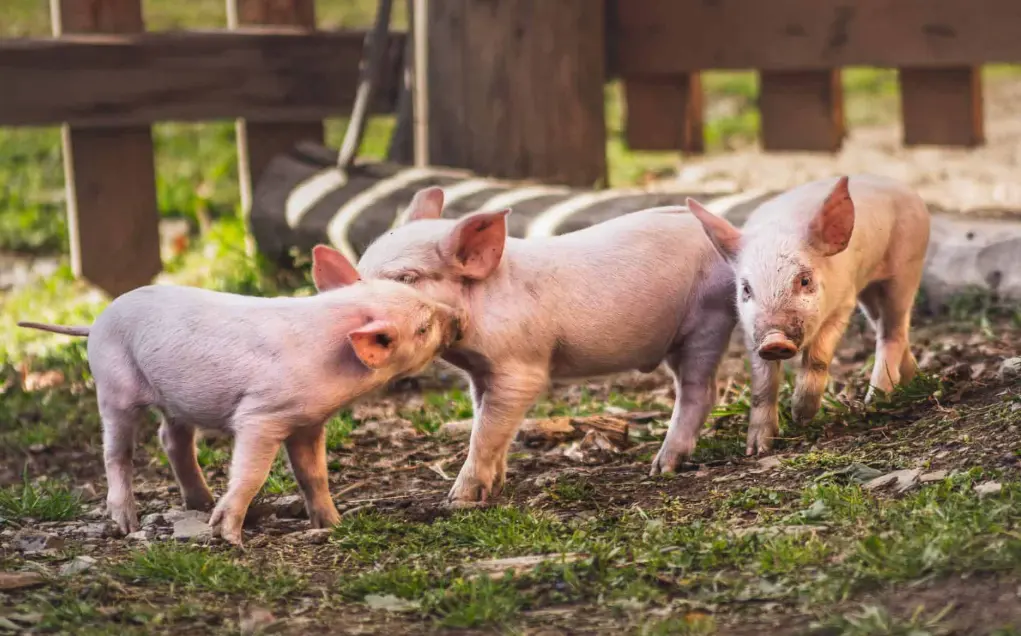
Pig farming, also known as swine production, is the agricultural practice of raising domestic pigs (Sus scrofa domesticus) for meat, known as pork, as well as for by-products like leather, gelatin, and pharmaceuticals. It is one of the most efficient livestock sectors globally, with pigs converting feed into protein more rapidly than many other animals.
Key aspects include:
– Breeds and Selection: Common breeds vary by region, such as Yorkshire, Duroc, and Landrace, chosen for traits like growth rate, feed efficiency, and meat quality. Hybrid breeds are often used for commercial production to enhance productivity.
– Housing and Management: Pigs are typically housed in controlled environments like barns or free-range systems. Intensive farming uses climate-controlled facilities to optimize growth, while extensive methods allow outdoor foraging. Key practices involve proper ventilation, waste management, and biosecurity to prevent diseases.
– Feeding and Nutrition: A balanced diet of grains, proteins, vitamins, and minerals is essential. Pigs are fed formulated rations tailored to their growth stages—sow feed for breeding, creep feed for piglets, and finisher feed for market-ready hogs. Efficient feeding minimizes waste and environmental impact.
– Breeding and Reproduction: Sows (female pigs) are bred using natural mating or artificial insemination. Gestation lasts about 114 days, with litters averaging 8-12 piglets. Farrowing (birthing) management is critical to reduce mortality rates.
– Health and Disease Control: Vaccinations, regular health checks, and hygiene protocols are vital to combat diseases like swine flu, African swine fever, and parasites. Antibiotics are used judiciously to prevent resistance.
– Economic and Environmental Factors: Pig farming is a major contributor to global meat production, providing affordable protein and supporting rural economies. However, it faces challenges like high feed costs, manure pollution, and ethical concerns over animal welfare. Sustainable practices, such as waste recycling and reduced antibiotic use, are increasingly adopted.
Globally, China leads in production, followed by the EU and the US. The industry continues to evolve with technological advancements like automated feeding systems and genetic improvements, making it a vital part of modern agriculture.
Table of Contents
- Part 1: Create An Amazing Pig Farming Quiz Using AI Instantly in OnlineExamMaker
- Part 2: 20 Pig Farming Quiz Questions & Answers
- Part 3: Automatically Generate Quiz Questions Using AI Question Generator
Part 1: Create An Amazing Pig Farming Quiz Using AI Instantly in OnlineExamMaker
The quickest way to assess the Pig Farming knowledge of candidates is using an AI assessment platform like OnlineExamMaker. With OnlineExamMaker AI Question Generator, you are able to input content—like text, documents, or topics—and then automatically generate questions in various formats (multiple-choice, true/false, short answer). Its AI Exam Grader can automatically grade the exam and generate insightful reports after your candidate submit the assessment.
Overview of its key assessment-related features:
● Create up to 10 question types, including multiple-choice, true/false, fill-in-the-blank, matching, short answer, and essay questions.
● Automatically generates detailed reports—individual scores, question report, and group performance.
● Instantly scores objective questions and subjective answers use rubric-based scoring for consistency.
● API and SSO help trainers integrate OnlineExamMaker with Google Classroom, Microsoft Teams, CRM and more.
Automatically generate questions using AI
Part 2: 20 Pig Farming Quiz Questions & Answers
or
1. Question: What is the primary purpose of farrowing crates in pig farming?
Options:
A. To house adult pigs for feeding
B. To protect piglets from being crushed by the sow
C. To store feed and supplies
D. To separate sick pigs from healthy ones
Correct Answer: B
Explanation: Farrowing crates are designed to confine the sow, preventing her from accidentally lying on and injuring her piglets, thus improving survival rates.
2. Question: Which breed of pig is commonly known for its excellent meat quality and is often used in commercial crossbreeding?
Options:
A. Duroc
B. Yorkshire
C. Hampshire
D. Berkshire
Correct Answer: A
Explanation: The Duroc breed is valued for its fast growth, good feed efficiency, and high-quality meat, making it a popular choice for crossbreeding in commercial pig farming.
3. Question: What is the ideal protein content in the diet of growing pigs?
Options:
A. 10-15%
B. 16-18%
C. 20-25%
D. 5-10%
Correct Answer: B
Explanation: Growing pigs require 16-18% protein in their diet to support muscle development and overall growth without wasting resources on excess protein.
4. Question: How often should water be provided to pigs to maintain optimal health?
Options:
A. Once a day
B. Every other day
C. Constant access
D. Twice a week
Correct Answer: C
Explanation: Pigs need constant access to clean water to prevent dehydration, support digestion, and ensure proper growth and production.
5. Question: What disease is commonly prevented by vaccinating pigs against at an early age?
Options:
A. Foot-and-mouth disease
B. Mycoplasma pneumonia
C. Ringworm
D. Tapeworms
Correct Answer: B
Explanation: Mycoplasma pneumonia is a respiratory disease that can severely affect pig herds, and vaccination early in life helps build immunity and reduce outbreaks.
6. Question: Which factor is most important when selecting a site for a pig farm?
Options:
A. Proximity to a river
B. Good drainage and access to clean water
C. High elevation
D. Dense vegetation
Correct Answer: B
Explanation: Good drainage prevents waterlogging and disease spread, while access to clean water ensures hygiene and animal health in pig farming.
7. Question: What is the typical gestation period for a sow?
Options:
A. 90 days
B. 114 days
C. 150 days
D. 60 days
Correct Answer: B
Explanation: The average gestation period for a sow is about 114 days, allowing farmers to plan breeding and farrowing schedules effectively.
8. Question: Which feed ingredient is a common source of energy for pigs?
Options:
A. Soybean meal
B. Corn
C. Fish meal
D. Alfalfa
Correct Answer: B
Explanation: Corn is a high-energy grain that provides the necessary carbohydrates for pigs’ growth and maintenance, making it a staple in pig diets.
9. Question: What is the recommended floor space per pig in a finishing pen?
Options:
A. 0.5 square meters
B. 1.0 square meter
C. 0.2 square meters
D. 2.0 square meters
Correct Answer: B
Explanation: Providing at least 1.0 square meter per pig in a finishing pen reduces stress, prevents aggression, and promotes healthy growth rates.
10. Question: Which practice helps in reducing ammonia levels in pig housing?
Options:
A. Frequent manure removal
B. Increasing ventilation
C. Overfeeding pigs
D. Using untreated bedding
Correct Answer: A
Explanation: Frequent manure removal minimizes the buildup of ammonia from urine and feces, improving air quality and reducing respiratory issues in pigs.
11. Question: What is the primary sign of heat in a female pig?
Options:
A. Increased aggression
B. Standing still when pressure is applied to the back
C. Loss of appetite
D. Excessive sleeping
Correct Answer: B
Explanation: A sow in heat will exhibit the “standing reflex,” standing immobile when pressure is applied, which is a key indicator for successful breeding.
12. Question: Which mineral deficiency can lead to poor bone development in pigs?
Options:
A. Calcium
B. Iron
C. Sodium
D. Potassium
Correct Answer: A
Explanation: Calcium deficiency can cause rickets or weak bones in pigs, as it is essential for skeletal growth and development.
13. Question: What is the best method for weaning piglets?
Options:
A. Abrupt separation at 2 weeks
B. Gradual reduction of sow’s milk over 3-4 weeks
C. Keeping them with the sow indefinitely
D. Weaning at birth
Correct Answer: B
Explanation: Gradual weaning reduces stress and digestive issues, allowing piglets to transition smoothly to solid feed around 3-4 weeks.
14. Question: Which parasite is commonly controlled using dewormers in pig farms?
Options:
A. Ascaris worms
B. Fleas
C. Ticks
D. Mosquitoes
Correct Answer: A
Explanation: Ascaris worms are internal parasites that affect pig growth and health, and regular deworming is a standard practice to control them.
15. Question: What temperature range is suitable for weaned piglets?
Options:
A. 10-15°C
B. 25-30°C
C. 18-22°C
D. 5-10°C
Correct Answer: C
Explanation: Weaned piglets thrive in 18-22°C to maintain their body temperature and reduce stress, as they are more vulnerable to cold.
16. Question: Which breeding system involves mating unrelated pigs to produce hybrids?
Options:
A. Inbreeding
B. Line breeding
C. Crossbreeding
D. Purebreeding
Correct Answer: C
Explanation: Crossbreeding combines traits from different breeds, resulting in hybrid vigor that improves growth rates and disease resistance in pigs.
17. Question: What is the main benefit of using slatted floors in pig pens?
Options:
A. Easier cleaning and manure management
B. Better insulation for warmth
C. Increased space for pigs
D. Reduced feeding costs
Correct Answer: A
Explanation: Slatted floors allow manure to fall through, making it easier to clean and manage waste, which helps prevent disease and maintain hygiene.
18. Question: Which vitamin is crucial for preventing anemia in young pigs?
Options:
A. Vitamin D
B. Vitamin B12
C. Vitamin C
D. Vitamin E
Correct Answer: B
Explanation: Vitamin B12 is essential for red blood cell production, and its deficiency can lead to anemia in young pigs, affecting their overall health.
19. Question: What is the average litter size for a healthy sow?
Options:
A. 5-7 piglets
B. 8-12 piglets
C. 13-15 piglets
D. 2-4 piglets
Correct Answer: B
Explanation: A healthy sow typically produces 8-12 piglets per litter, which is a key factor in the productivity and profitability of pig farming.
20. Question: Which management practice is essential for biosecurity in pig farms?
Options:
A. Allowing visitors without restrictions
B. Isolating new pigs before introducing them to the herd
C. Sharing equipment with other farms
D. Using the same feed for all animals
Correct Answer: B
Explanation: Isolating new pigs helps prevent the introduction of diseases, maintaining the overall health and biosecurity of the existing herd.
or
Part 3: Automatically generate quiz questions using OnlineExamMaker AI Question Generator
Automatically generate questions using AI