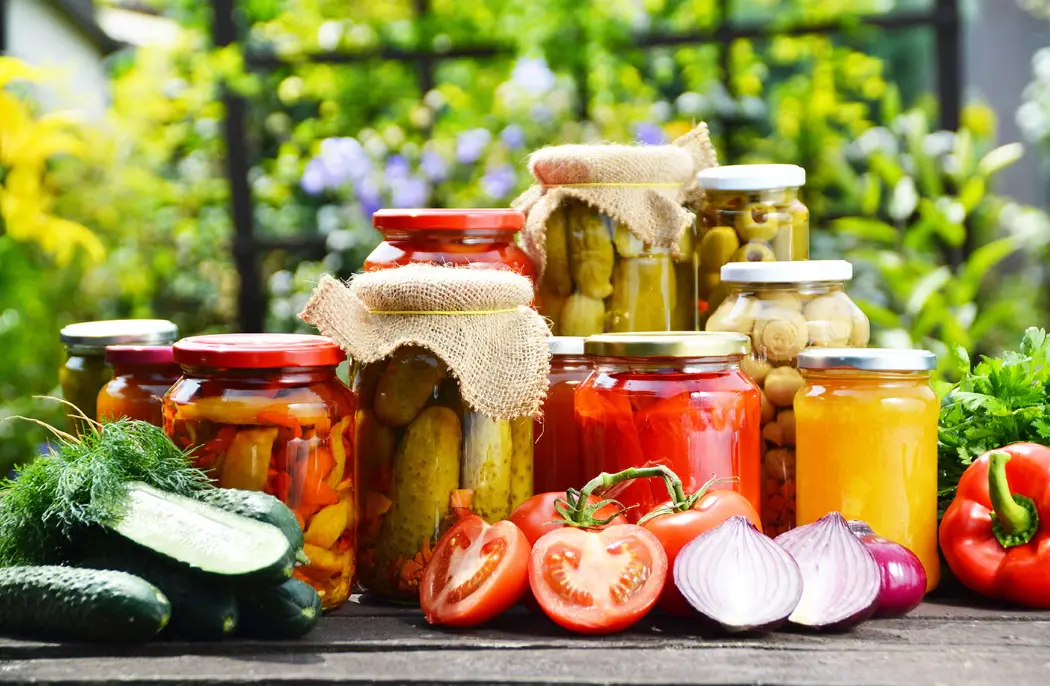
Preserved foods are items that have been treated through various methods to extend their shelf life and prevent spoilage, allowing for safer storage and consumption over time. This practice dates back to ancient civilizations, where techniques like salting, drying, and smoking were used to preserve meat, fish, and produce for survival during scarcity.
Common preservation methods include:
– Canning: Involves sealing food in airtight containers after heating to kill bacteria, as seen in canned fruits, vegetables, and soups.
– Freezing: Lowers the temperature to halt microbial growth, preserving items like frozen berries, meats, and ready-meals.
– Drying: Removes moisture to inhibit bacterial activity, resulting in products such as dried fruits, jerky, and herbs.
– Fermentation: Uses beneficial bacteria to create an acidic environment, producing foods like yogurt, sauerkraut, and kimchi.
– Pickling: Submerges food in brine or vinegar, commonly used for cucumbers, onions, and eggs.
– Salting and Smoking: Applies salt or smoke to draw out moisture and add flavor, preserving meats like bacon and ham.
The benefits of preserved foods include reduced food waste, enhanced nutritional availability year-round, convenience for travel and storage, and economic advantages for both producers and consumers. However, it’s important to choose high-quality preserved options to minimize additives and ensure safety. Today, advancements in technology continue to improve preservation techniques, making them integral to global food systems.
Table of Contents
- Part 1: Best AI Quiz Making Software for Creating A Preserved Food Quiz
- Part 2: 20 Preserved Food Quiz Questions & Answers
- Part 3: AI Question Generator – Automatically Create Questions for Your Next Assessment
Part 1: Best AI Quiz Making Software for Creating A Preserved Food Quiz
Nowadays more and more people create Preserved Food quizzes using AI technologies, OnlineExamMaker a powerful AI-based quiz making tool that can save you time and efforts. The software makes it simple to design and launch interactive quizzes, assessments, and surveys. With the Question Editor, you can create multiple-choice, open-ended, matching, sequencing and many other types of questions for your tests, exams and inventories. You are allowed to enhance quizzes with multimedia elements like images, audio, and video to make them more interactive and visually appealing.
Take a product tour of OnlineExamMaker:
● Create a question pool through the question bank and specify how many questions you want to be randomly selected among these questions.
● Build and store questions in a centralized portal, tagged by categories and keywords for easy reuse and organization.
● Simply copy a few lines of codes, and add them to a web page, you can present your online quiz in your website, blog, or landing page.
● Randomize questions or change the order of questions to ensure exam takers don’t get the same set of questions each time.
Automatically generate questions using AI
Part 2: 20 Preserved Food Quiz Questions & Answers
or
1. What is the primary purpose of food preservation?
A. To enhance flavor
B. To extend shelf life
C. To increase nutritional value
D. To change the color of food
Answer: B
Explanation: Food preservation techniques are mainly used to prevent spoilage by inhibiting the growth of microorganisms, thereby extending the shelf life of food.
2. Which method involves heating food in airtight containers to kill bacteria?
A. Freezing
B. Canning
C. Drying
D. Salting
Answer: B
Explanation: Canning uses high temperatures to sterilize food and seal it in containers, preventing bacterial growth and ensuring long-term preservation.
3. What is a common preserved food made by fermenting cabbage?
A. Jam
B. Sauerkraut
C. Pickles
D. Jerky
Answer: B
Explanation: Sauerkraut is created through lactic acid fermentation of cabbage, which preserves it by creating an acidic environment that inhibits harmful bacteria.
4. Which preservation technique removes moisture from food to prevent microbial growth?
A. Smoking
B. Drying
C. Pickling
D. Freezing
Answer: B
Explanation: Drying reduces the water content in food, making it inhospitable for microorganisms that require moisture to survive.
5. What role does salt play in preserving food like bacon?
A. It adds sweetness
B. It draws out moisture
C. It adds color
D. It increases temperature
Answer: B
Explanation: Salt preserves food by osmosis, drawing out moisture from cells and creating an environment where bacteria cannot thrive.
6. Which preserved food is typically made by immersing fruits in sugar syrup?
A. Canned vegetables
B. Jam
C. Dried fruits
D. Frozen meat
Answer: B
Explanation: Jam is preserved by cooking fruits with sugar, which acts as a preservative by binding water and preventing microbial growth.
7. What is the main risk associated with improperly preserved canned food?
A. Loss of flavor
B. Botulism poisoning
C. Excessive sweetness
D. Color fading
Answer: B
Explanation: Improper canning can allow Clostridium botulinum to grow in low-oxygen environments, producing a toxin that causes botulism.
8. Which method preserves food by lowering its temperature below freezing?
A. Canning
B. Freezing
C. Smoking
D. Fermenting
Answer: B
Explanation: Freezing slows down the activity of enzymes and microorganisms, preserving food by keeping it at temperatures below 0°C.
9. What is pickling primarily achieved with?
A. Vinegar or brine
B. High heat
C. Direct sunlight
D. Freezing agents
Answer: A
Explanation: Pickling uses acidic solutions like vinegar or brine to create an environment that inhibits the growth of spoilage-causing bacteria.
10. Which preserved food is often made from smoked and dried meat?
A. Yogurt
B. Jerky
C. Cheese
D. Bread
Answer: B
Explanation: Jerky is preserved through a combination of drying and smoking, which removes moisture and adds antimicrobial compounds from smoke.
11. How does smoking preserve food?
A. By adding moisture
B. By depositing antimicrobial compounds
C. By increasing pH levels
D. By freezing the surface
Answer: B
Explanation: Smoking coats food with phenols and other chemicals from smoke, which inhibit bacterial growth and help preserve it.
12. What is a key benefit of vacuum-sealing for food preservation?
A. It speeds up fermentation
B. It removes oxygen to prevent oxidation
C. It adds nutrients
D. It changes the food’s texture immediately
Answer: B
Explanation: Vacuum-sealing eliminates air, reducing exposure to oxygen that can cause spoilage through oxidation or microbial activity.
13. Which preservation method involves using sugar to inhibit microbial growth?
A. Salting
B. Canning
C. Jamming
D. Freezing
Answer: C
Explanation: In jam-making, high sugar concentrations create an osmotic environment that dehydrates microbes, preventing their growth.
14. What historical technique was used to preserve fish by salting and drying?
A. Canning
B. Stockfish preparation
C. Freezing
D. Pasteurization
Answer: B
Explanation: Stockfish is preserved by salting and air-drying, a traditional method that removes moisture and adds salt to inhibit bacteria.
15. Why is pasteurization considered a form of preservation?
A. It adds preservatives
B. It kills harmful microorganisms
C. It freezes the product
D. It dries the food
Answer: B
Explanation: Pasteurization heats food to a specific temperature to destroy pathogens without significantly affecting the food’s quality, extending its shelf life.
16. Which preserved food is made by culturing milk with bacteria?
A. Jam
B. Yogurt
C. Jerky
D. Pickles
Answer: B
Explanation: Yogurt is preserved through fermentation, where beneficial bacteria produce lactic acid, lowering pH and preventing spoilage.
17. What does dehydration do to fruits for preservation?
A. Increases water content
B. Removes water to halt microbial activity
C. Adds acids
D. Freezes the cells
Answer: B
Explanation: Dehydration reduces the moisture in fruits, making it difficult for microorganisms to grow and multiply.
18. In food preservation, what is the purpose of adding sulfites?
A. To enhance color
B. To prevent browning and microbial growth
C. To sweeten the food
D. To add protein
Answer: B
Explanation: Sulfites act as antioxidants and preservatives, inhibiting enzymatic browning and the growth of molds and bacteria in foods like dried fruits.
19. Which method is best for long-term preservation of meat in ancient times?
A. Refrigeration
B. Curing with salt
C. Boiling
D. Microwaving
Answer: B
Explanation: Curing meat with salt draws out moisture and creates a hostile environment for bacteria, allowing for long-term storage without refrigeration.
20. What is the primary way fermentation preserves food?
A. By adding heat
B. By producing acids that lower pH
C. By freezing the contents
D. By removing all moisture
Answer: B
Explanation: Fermentation produces organic acids, like lactic acid, which lower the pH of food, making it acidic and inhospitable to spoilage organisms.
or
Part 3: AI Question Generator – Automatically Create Questions for Your Next Assessment
Automatically generate questions using AI