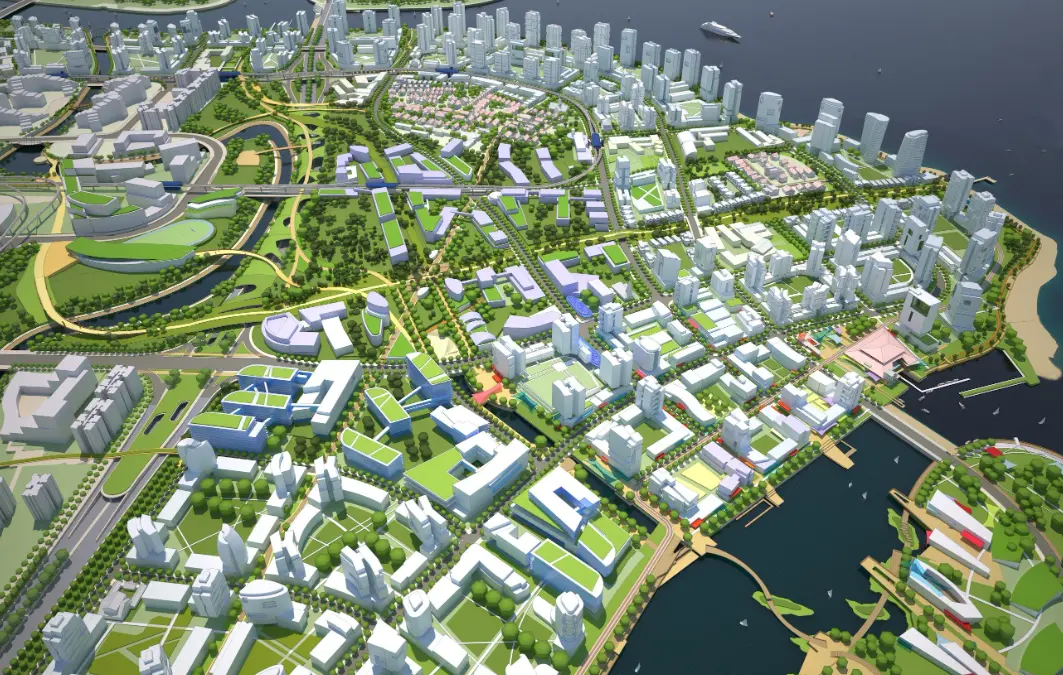
Urban Engineering is a multidisciplinary field within civil engineering that focuses on the planning, design, construction, and management of infrastructure in urban environments. It addresses the complex challenges of modern cities by integrating elements of transportation, water resources, waste management, energy systems, and environmental sustainability.
Key Areas of Urban Engineering:
– Transportation Systems: Designing roads, bridges, public transit, and traffic management to improve mobility and reduce congestion. This includes smart traffic signals, bike lanes, and integrated public transport networks.
– Water and Sanitation Infrastructure: Developing systems for water supply, wastewater treatment, and stormwater management to ensure clean water access and prevent flooding. Urban engineers design pipelines, treatment plants, and drainage systems to support growing populations.
– Urban Planning and Land Use: Collaborating with planners to optimize land development, zoning, and green spaces. This involves creating sustainable communities that balance residential, commercial, and industrial needs while minimizing environmental impact.
– Energy and Utilities: Implementing efficient energy distribution, renewable sources (e.g., solar and wind integration), and utility networks to power cities. Engineers focus on reducing carbon footprints and enhancing resilience against outages.
– Waste Management and Environmental Protection: Designing systems for solid waste collection, recycling, and hazardous material handling. This includes pollution control measures and strategies for mitigating urban heat islands and air quality issues.
Importance and Applications:
Urban Engineering plays a critical role in fostering sustainable, livable cities. It tackles issues like rapid urbanization, climate change, and population growth by promoting innovative solutions such as green buildings, resilient infrastructure, and smart city technologies. For instance, in cities like Singapore or New York, urban engineers have transformed transportation and water systems to handle millions of residents efficiently.
Historical Context:
The roots of urban engineering trace back to ancient civilizations, such as the Romans with their aqueducts and road networks. In the 19th and 20th centuries, it evolved with industrialization, leading to modern sewage systems and urban renewal projects. Today, it incorporates digital tools like GIS (Geographic Information Systems) and AI for data-driven decision-making.
Future Trends:
Emerging trends include the adoption of smart cities, where IoT (Internet of Things) devices monitor and optimize urban functions in real-time. Sustainability efforts, such as net-zero energy districts and resilient designs against natural disasters, are becoming priorities. Urban engineering will continue to evolve with advancements in automation, big data, and collaborative urban policies to create equitable and adaptable metropolises.
Table of Contents
- Part 1: Create An Amazing Urban Engineering Quiz Using AI Instantly in OnlineExamMaker
- Part 2: 20 Urban Engineering Quiz Questions & Answers
- Part 3: Try OnlineExamMaker AI Question Generator to Create Quiz Questions
Part 1: Create An Amazing Urban Engineering Quiz Using AI Instantly in OnlineExamMaker
Nowadays more and more people create Urban Engineering quizzes using AI technologies, OnlineExamMaker a powerful AI-based quiz making tool that can save you time and efforts. The software makes it simple to design and launch interactive quizzes, assessments, and surveys. With the Question Editor, you can create multiple-choice, open-ended, matching, sequencing and many other types of questions for your tests, exams and inventories. You are allowed to enhance quizzes with multimedia elements like images, audio, and video to make them more interactive and visually appealing.
Recommended features for you:
● Prevent cheating by randomizing questions or changing the order of questions, so learners don’t get the same set of questions each time.
● Automatically generates detailed reports—individual scores, question report, and group performance.
● Simply copy a few lines of codes, and add them to a web page, you can present your online quiz in your website, blog, or landing page.
● Offers question analysis to evaluate question performance and reliability, helping instructors optimize their training plan.
Automatically generate questions using AI
Part 2: 20 Urban Engineering Quiz Questions & Answers
or
1. Question: What is the primary objective of urban engineering?
A) To maximize rural development
B) To design and manage infrastructure in urban areas
C) To focus solely on agricultural systems
D) To eliminate all public transportation
Answer: B
Explanation: Urban engineering aims to plan, design, and maintain infrastructure such as roads, water systems, and buildings to support efficient and sustainable city living.
2. Question: Which factor is most critical in urban traffic management?
A) Increasing vehicle speed limits
B) Reducing the number of traffic signals
C) Implementing intelligent transportation systems
D) Eliminating pedestrian crossings
Answer: C
Explanation: Intelligent transportation systems use technology to monitor and control traffic flow, reducing congestion and improving safety in urban areas.
3. Question: In urban planning, what does “zoning” refer to?
A) Dividing land for specific uses like residential or commercial
B) Building only high-rise structures
C) Ignoring environmental impacts
D) Focusing on rural land use
Answer: A
Explanation: Zoning regulates how land is used in urban areas to promote organized development and prevent incompatible land uses.
4. Question: What is a key benefit of green infrastructure in cities?
A) It increases pollution levels
B) It helps manage stormwater and improves air quality
C) It requires more concrete usage
D) It reduces public parks
Answer: B
Explanation: Green infrastructure, such as parks and rain gardens, absorbs rainwater, filters pollutants, and enhances urban environmental health.
5. Question: Which transportation mode is most sustainable for reducing urban congestion?
A) Private cars
B) Public transit systems like buses and trains
C) Helicopters
D) Motorcycles only
Answer: B
Explanation: Public transit reduces the number of vehicles on the road, lowering emissions and easing traffic in densely populated areas.
6. Question: What is the main purpose of a master plan in urban engineering?
A) To guide short-term construction only
B) To provide a long-term vision for city development
C) To focus on demolishing old buildings
D) To ignore community input
Answer: B
Explanation: A master plan outlines comprehensive strategies for growth, including land use, transportation, and services, to ensure sustainable urban development.
7. Question: How does urban sprawl impact the environment?
A) It decreases habitat loss
B) It leads to increased deforestation and higher energy consumption
C) It improves water quality
D) It reduces road construction
Answer: B
Explanation: Urban sprawl expands cities outward, causing habitat destruction, higher carbon emissions from longer commutes, and strain on resources.
8. Question: In urban water management, what is the role of a combined sewer system?
A) To separate stormwater from wastewater
B) To collect both stormwater and sewage in one system
C) To eliminate the need for treatment plants
D) To focus only on irrigation
Answer: B
Explanation: A combined sewer system handles both wastewater and rainwater, which can lead to overflows during heavy rains but is common in older urban areas.
9. Question: What is “smart growth” in urban engineering?
A) Rapid expansion without planning
B) Compact, mixed-use development to minimize sprawl
C) Ignoring technological advancements
D) Building only industrial zones
Answer: B
Explanation: Smart growth promotes efficient land use, walkable neighborhoods, and preservation of open spaces to create sustainable urban environments.
10. Question: Which material is commonly used for sustainable urban pavements?
A) Asphalt only
B) Permeable concrete
C) Unreinforced steel
D) Pure glass
Answer: B
Explanation: Permeable concrete allows water to infiltrate, reducing runoff and supporting groundwater recharge in urban settings.
11. Question: How do bike lanes contribute to urban engineering?
A) They increase car dependency
B) They promote alternative transportation and reduce emissions
C) They eliminate pedestrian paths
D) They require more parking spaces
Answer: B
Explanation: Bike lanes encourage cycling, which lowers traffic congestion and supports healthier, more environmentally friendly cities.
12. Question: What is the primary challenge of waste management in urban areas?
A) Overabundance of recycling programs
B) Handling increasing volumes of solid waste efficiently
C) Reducing the need for landfills
D) Exporting waste to rural areas
Answer: B
Explanation: Urban areas generate high waste volumes, making efficient collection, treatment, and disposal essential to prevent pollution and health risks.
13. Question: In urban design, what does “transit-oriented development” mean?
A) Building away from public transport
B) Creating dense communities around transit hubs
C) Focusing on car-centric layouts
D) Ignoring housing needs
Answer: B
Explanation: Transit-oriented development places residential and commercial areas near public transport to reduce car use and foster vibrant communities.
14. Question: Which technology is key for smart city infrastructure?
A) IoT sensors for monitoring utilities
B) Manual record-keeping systems
C) Paper-based traffic plans
D) Non-digital energy grids
Answer: A
Explanation: IoT sensors collect real-time data on traffic, energy, and waste, enabling efficient management and optimization in smart cities.
15. Question: How does urban heat island effect impact cities?
A) It cools urban areas
B) It raises temperatures due to concrete and lack of greenery
C) It increases rainfall
D) It lowers energy demands
Answer: B
Explanation: The urban heat island effect occurs when cities absorb and retain heat, leading to higher temperatures that can exacerbate health and environmental issues.
16. Question: What is the purpose of floodplains in urban engineering?
A) To build high-density housing
B) To allow natural water overflow and reduce flood risks
C) To pave over rivers
D) To ignore water management
Answer: B
Explanation: Preserving floodplains helps absorb excess water during floods, protecting urban areas from damage and supporting ecosystems.
17. Question: In urban infrastructure, what does “resilience” refer to?
A) Making cities more fragile to disasters
B) Designing systems to withstand and recover from events like earthquakes
C) Building without safety standards
D) Focusing on aesthetic appeal only
Answer: B
Explanation: Resilient urban infrastructure incorporates features that minimize damage and enable quick recovery from natural or man-made disasters.
18. Question: Which factor is essential for effective urban public space design?
A) Excluding community access
B) Incorporating accessibility for all users, including the disabled
C) Limiting green areas
D) Prioritizing only vehicular traffic
Answer: B
Explanation: Inclusive design ensures public spaces are usable by everyone, promoting social equity and community engagement in urban areas.
19. Question: What role do building codes play in urban engineering?
A) They encourage unsafe construction
B) They set standards for safety, energy efficiency, and sustainability
C) They prohibit all new developments
D) They focus only on historical preservation
Answer: B
Explanation: Building codes regulate construction to ensure structures are safe, energy-efficient, and environmentally responsible in urban settings.
20. Question: How does renewable energy integration benefit urban areas?
A) It increases fossil fuel dependency
B) It reduces greenhouse gas emissions and promotes energy independence
C) It requires more land for non-renewable sources
D) It complicates grid management
Answer: B
Explanation: Integrating sources like solar and wind into urban grids lowers emissions, cuts costs, and supports long-term sustainability in cities.
or
Part 3: Try OnlineExamMaker AI Question Generator to Create Quiz Questions
Automatically generate questions using AI