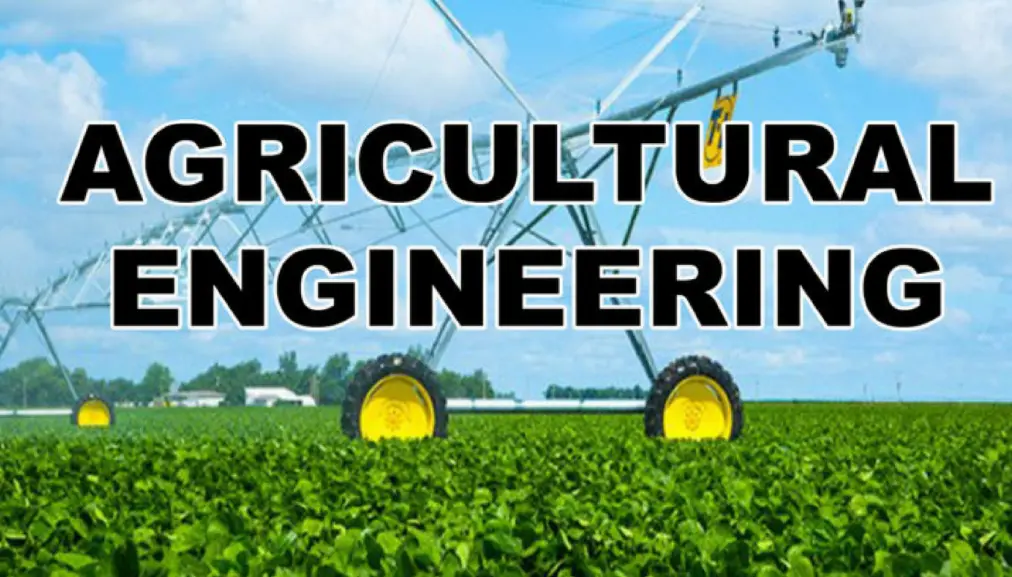
Agricultural Engineering is a multidisciplinary field that applies engineering principles and technology to enhance agricultural practices, improve efficiency, and promote sustainability in food production systems. It encompasses the design, development, and management of machinery, structures, and processes related to farming, livestock, and natural resources.
Key areas include:
– Farm Machinery and Mechanization: Designing and optimizing equipment such as tractors, harvesters, and automated systems to reduce labor, increase productivity, and minimize waste.
– Irrigation and Water Management: Developing systems for efficient water use, including drip irrigation, sprinklers, and drainage, to conserve resources and support crop growth in varying climates.
– Soil and Water Conservation: Engineering solutions for erosion control, soil fertility enhancement, and watershed management to prevent environmental degradation and ensure long-term land usability.
– Post-Harvest Technology: Creating methods for processing, storage, and transportation of agricultural products to reduce losses, maintain quality, and extend shelf life.
– Bioenergy and Renewable Resources: Innovating in biofuels, biomass conversion, and waste management to promote sustainable energy sources from agricultural byproducts.
This field plays a crucial role in addressing global challenges like food security, climate change, and resource scarcity. By integrating advancements in automation, precision agriculture (e.g., GPS-guided tools and drones), and biotechnology, Agricultural Engineering helps farmers achieve higher yields while minimizing environmental impact. Future trends focus on smart farming, AI integration, and climate-resilient technologies to support a growing world population.
Table of Contents
- Part 1: Create A Agricultural Engineering Quiz in Minutes Using AI with OnlineExamMaker
- Part 2: 20 Agricultural Engineering Quiz Questions & Answers
- Part 3: Try OnlineExamMaker AI Question Generator to Create Quiz Questions
Part 1: Create A Agricultural Engineering Quiz in Minutes Using AI with OnlineExamMaker
When it comes to ease of creating a Agricultural Engineering skills assessment, OnlineExamMaker is one of the best AI-powered quiz making software for your institutions or businesses. With its AI Question Generator, just upload a document or input keywords about your assessment topic, you can generate high-quality quiz questions on any topic, difficulty level, and format.
Overview of its key assessment-related features:
● AI Question Generator to help you save time in creating quiz questions automatically.
● Share your online exam with audiences on social platforms like Facebook, Twitter, Reddit and more.
● Instantly scores objective questions and subjective answers use rubric-based scoring for consistency.
● Simply copy and insert a few lines of embed codes to display your online exams on your website or WordPress blog.
Automatically generate questions using AI
Part 2: 20 Agricultural Engineering Quiz Questions & Answers
or
1. Question: What is the primary function of a tractor in modern agriculture?
Options:
A. To provide irrigation to crops
B. To transport harvested goods
C. To pull or power agricultural implements
D. To store seeds and fertilizers
Answer: C
Explanation: Tractors are designed to provide mechanical power for pulling plows, tillers, and other equipment, enhancing efficiency in tasks like plowing and planting.
2. Question: Which irrigation method delivers water directly to the root zone of plants to minimize evaporation?
Options:
A. Flood irrigation
B. Sprinkler irrigation
C. Drip irrigation
D. Furrow irrigation
Answer: C
Explanation: Drip irrigation uses pipes or tubes to supply water slowly to the soil, reducing water loss and improving nutrient uptake by plants.
3. Question: What does GPS technology enable in precision agriculture?
Options:
A. Manual planting of seeds
B. Accurate mapping and variable rate application of inputs
C. Storing large quantities of grain
D. Generating electricity for farms
Answer: B
Explanation: GPS allows for precise location data, helping in automated guidance of machinery for tasks like fertilizer application, which optimizes resource use and reduces waste.
4. Question: Which factor is most responsible for soil erosion in agricultural fields?
Options:
A. Excessive vegetation cover
B. Wind and water action on unprotected soil
C. High organic matter content
D. Regular crop rotation
Answer: B
Explanation: Wind and water can remove topsoil when it’s exposed, leading to erosion; practices like contour farming help mitigate this by protecting the soil surface.
5. Question: What is the main purpose of a combine harvester?
Options:
A. To plant seeds in rows
B. To harvest, thresh, and clean grain in one operation
C. To irrigate fields automatically
D. To apply pesticides evenly
Answer: B
Explanation: A combine harvester integrates cutting, threshing, and separating processes, allowing for efficient harvesting of crops like wheat and corn.
6. Question: Which renewable energy source is commonly used in agricultural pumping systems?
Options:
A. Coal-powered generators
B. Solar panels
C. Nuclear reactors
D. Fossil fuel engines
Answer: B
Explanation: Solar panels convert sunlight into electricity, providing a sustainable option for powering irrigation pumps and reducing dependency on non-renewable sources.
7. Question: What technique is used to conserve water in arid regions through controlled flooding?
Options:
A. Drip irrigation
B. Basin irrigation
C. Sprinkler systems
D. Rainwater harvesting
Answer: B
Explanation: Basin irrigation involves flooding fields in basins to allow water to infiltrate slowly, conserving water by matching application to soil absorption rates.
8. Question: Which engineering practice helps in reducing pest damage while minimizing chemical use?
Options:
A. Integrated pest management (IPM)
B. Monoculture farming
C. Excessive tillage
D. Flood irrigation
Answer: A
Explanation: IPM combines biological, cultural, and chemical methods to control pests, promoting sustainable agriculture by reducing environmental impact.
9. Question: What is the key advantage of using greenhouses in agriculture?
Options:
A. They increase soil erosion
B. They control the microclimate for optimal plant growth
C. They require more water than open fields
D. They promote weed growth
Answer: B
Explanation: Greenhouses maintain temperature, humidity, and light, allowing for year-round production and protection from external weather conditions.
10. Question: How does farm mechanization primarily benefit small-scale farmers?
Options:
A. By increasing labor costs
B. By reducing the time and effort required for tasks
C. By decreasing crop yields
D. By eliminating the need for irrigation
Answer: B
Explanation: Mechanization introduces machines like tractors and planters, which automate repetitive tasks, thereby boosting productivity and reducing manual labor.
11. Question: Which factor determines the efficiency of an irrigation system?
Options:
A. The color of the pipes
B. The uniformity of water distribution
C. The size of the farm animals
D. The type of soil insects
Answer: B
Explanation: Uniform water distribution ensures that crops receive adequate moisture without waste, making the system more efficient in terms of water use.
12. Question: What method is used for long-term storage of grains to prevent spoilage?
Options:
A. Open-air piling
B. Silo storage with controlled atmosphere
C. Direct soil burial
D. Water immersion
Answer: B
Explanation: Silos maintain low oxygen and humidity levels, preventing mold and insect infestation, which extends the shelf life of stored grains.
13. Question: Which soil tillage practice minimizes soil disturbance?
Options:
A. Deep plowing
B. No-till farming
C. Frequent harrowing
D. Moldboard plowing
Answer: B
Explanation: No-till farming leaves crop residues on the surface, reducing erosion and preserving soil structure while maintaining fertility.
14. Question: What is a primary use of agricultural drones?
Options:
A. To harvest crops manually
B. To monitor crop health and apply fertilizers precisely
C. To generate electricity
D. To build farm structures
Answer: B
Explanation: Drones equipped with sensors can survey fields for issues like nutrient deficiencies, enabling targeted interventions that save resources.
15. Question: Which biofuel is derived from agricultural waste for use in machinery?
Options:
A. Gasoline
B. Biodiesel from plant oils
C. Natural gas
D. Coal
Answer: B
Explanation: Biodiesel, made from sources like soybean oil or waste vegetable oil, serves as a renewable alternative fuel for tractors and other equipment.
16. Question: What is the goal of watershed management in agriculture?
Options:
A. To increase flooding
B. To conserve water and prevent soil erosion in river basins
C. To promote deforestation
D. To reduce crop diversity
Answer: B
Explanation: Watershed management involves techniques like terracing and afforestation to protect water sources and maintain soil health in agricultural areas.
17. Question: Which tool in precision farming measures soil moisture levels?
Options:
A. A simple thermometer
B. A soil sensor probe
C. A hand weeder
D. A seed drill
Answer: B
Explanation: Soil sensor probes provide real-time data on moisture, helping farmers irrigate only when necessary, thus optimizing water usage.
18. Question: What process is involved in post-harvest handling of fruits to extend shelf life?
Options:
A. Immediate planting
B. Refrigeration and controlled ripening
C. Exposing to direct sunlight
D. Mixing with soil
Answer: B
Explanation: Refrigeration slows down ripening and decay, while controlled environments prevent spoilage, ensuring fruits remain fresh during transport and storage.
19. Question: Which sustainable practice reduces chemical inputs in agriculture?
Options:
A. Organic farming
B. Intensive monoculture
C. Excessive pesticide use
D. Deforestation for expansion
Answer: A
Explanation: Organic farming relies on natural methods like composting and biological controls, minimizing synthetic chemicals and promoting environmental health.
20. Question: What structure is commonly used to control erosion on slopes?
Options:
A. Contour bunds
B. Open ditches
C. Flat plains
D. Deep wells
Answer: A
Explanation: Contour bunds are earthen embankments built along slopes to trap water and sediment, preventing runoff and soil loss in hilly agricultural lands.
or
Part 3: Try OnlineExamMaker AI Question Generator to Create Quiz Questions
Automatically generate questions using AI