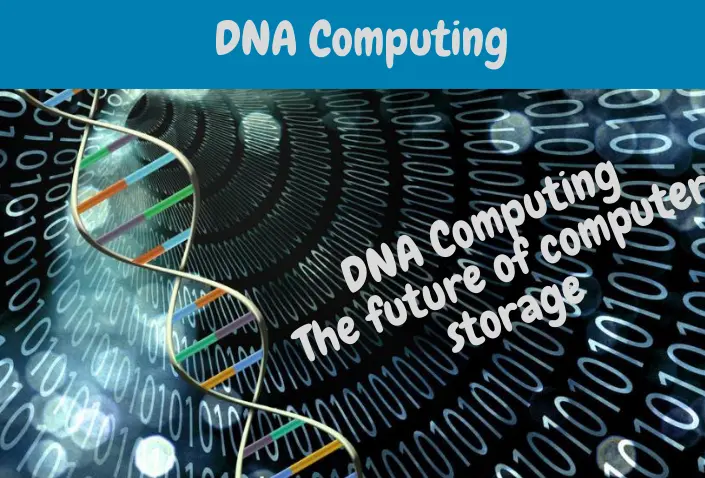
DNA computing is an innovative interdisciplinary field that leverages the molecular properties of DNA to perform computational tasks, offering a potential alternative to traditional silicon-based computing. First conceptualized in 1994 by Leonard Adleman, who demonstrated its feasibility by solving a Hamiltonian path problem using DNA strands, this approach mimics biological processes to process information.
At its core, DNA computing operates by encoding data into nucleotide sequences (A, T, C, and G). These sequences are manipulated through biochemical reactions, such as hybridization, ligation, and polymerase chain reactions, to represent and solve complex problems. For instance, a problem can be broken down into DNA molecules that are mixed in a test tube; the correct solution emerges as the surviving strands after selective processes like gel electrophoresis.
One of the key advantages of DNA computing is its massive parallelism. A single DNA molecule can store enormous amounts of data—up to 1 petabyte per cubic centimeter—and perform billions of operations simultaneously, far surpassing the speed of conventional computers for certain algorithms. It also consumes less energy and operates at the nanoscale, making it ideal for applications in cryptography, database searching, and optimization problems.
However, DNA computing faces significant challenges. It is currently slow for real-time processing, as biochemical reactions take hours or days, and error rates from mutations or incomplete reactions can compromise accuracy. Additionally, the high cost of synthesis and sequencing, along with the need for specialized lab equipment, limits its practicality.
Despite these hurdles, DNA computing has promising applications. It is being explored in drug discovery, where it can model protein folding; in nanotechnology for building self-assembling structures; and in secure data storage, as DNA is highly durable and can last for thousands of years. Ongoing research aims to integrate DNA computing with quantum systems and improve error correction, potentially revolutionizing fields like bioinformatics and artificial intelligence.
In summary, DNA computing represents a paradigm shift in information processing, blending biology and technology to tackle problems that are computationally intensive for traditional methods.
Table of Contents
- Part 1: OnlineExamMaker AI Quiz Maker – Make A Free Quiz in Minutes
- Part 2: 20 Dna Computing Quiz Questions & Answers
- Part 3: OnlineExamMaker AI Question Generator: Generate Questions for Any Topic
Part 1: OnlineExamMaker AI Quiz Maker – Make A Free Quiz in Minutes
What’s the best way to create a Dna Computing quiz online? OnlineExamMaker is the best AI quiz making software for you. No coding, and no design skills required. If you don’t have the time to create your online quiz from scratch, you are able to use OnlineExamMaker AI Question Generator to create question automatically, then add them into your online assessment. What is more, the platform leverages AI proctoring and AI grading features to streamline the process while ensuring exam integrity.
Key features of OnlineExamMaker:
● Create up to 10 question types, including multiple-choice, true/false, fill-in-the-blank, matching, short answer, and essay questions.
● Build and store questions in a centralized portal, tagged by categories and keywords for easy reuse and organization.
● Automatically scores multiple-choice, true/false, and even open-ended/audio responses using AI, reducing manual work.
● Create certificates with personalized company logo, certificate title, description, date, candidate’s name, marks and signature.
Automatically generate questions using AI
Part 2: 20 Dna Computing Quiz Questions & Answers
or
1. Question: What is DNA computing?
A) A method using electronic circuits to mimic DNA structures
B) A computational paradigm that uses DNA molecules to perform calculations
C) A software algorithm based on genetic algorithms
D) A type of quantum computing involving DNA qubits
Answer: B
Explanation: DNA computing leverages the biochemical properties of DNA strands to solve complex problems, such as optimization, by encoding data into nucleotide sequences and using molecular reactions.
2. Question: Who is credited with the first practical demonstration of DNA computing?
A) Alan Turing
B) Leonard Adleman
C) Richard Feynman
D) John von Neumann
Answer: B
Explanation: Leonard Adleman demonstrated DNA computing in 1994 by solving a small instance of the traveling salesman problem using DNA strands, marking a milestone in molecular computing.
3. Question: In DNA computing, how is information typically encoded?
A) Using binary digits in silicon chips
B) By the sequence of nucleotides (A, T, C, G) in DNA strands
C) Through electrical signals in neural networks
D) Via protein folding patterns
Answer: B
Explanation: DNA computing encodes data using the four nucleotide bases—adenine (A), thymine (T), cytosine (C), and guanine (G)—to represent binary or other data forms, allowing parallel processing at the molecular level.
4. Question: What role do enzymes play in DNA computing?
A) They generate electricity for computations
B) They cut, join, or replicate DNA strands to perform operations
C) They convert DNA into quantum states
D) They store data in memory cells
Answer: B
Explanation: Enzymes like restriction enzymes and polymerases manipulate DNA strands by cutting, ligating, or amplifying them, enabling the execution of computational steps such as selection and combination.
5. Question: Which problem was famously solved using DNA computing by Leonard Adleman?
A) Sorting algorithms
B) The Hamiltonian path problem (related to traveling salesman)
C) Prime number factorization
D) Matrix multiplication
Answer: B
Explanation: Adleman used DNA to solve a seven-city instance of the Hamiltonian path problem, demonstrating how DNA can explore multiple solutions simultaneously through biochemical reactions.
6. Question: What is a key advantage of DNA computing over traditional computing?
A) Faster clock speeds
B) Massive parallelism due to billions of DNA strands processing simultaneously
C) Lower energy consumption in electronic devices
D) Easier integration with quantum systems
Answer: B
Explanation: DNA computing can perform an enormous number of operations in parallel because each DNA molecule can represent a potential solution, making it efficient for problems like combinatorial searches.
7. Question: In DNA computing, what process is used to separate correct solutions from incorrect ones?
A) Electrical filtering
B) Gel electrophoresis
C) Quantum entanglement
D) Laser scanning
Answer: B
Explanation: Gel electrophoresis separates DNA fragments based on size and charge, allowing researchers to isolate strands that represent valid solutions in a computation.
8. Question: What limits the scalability of DNA computing?
A) High error rates in DNA synthesis and reactions
B) Overheating of processors
C) Incompatibility with software
D) Excessive speed
Answer: A
Explanation: DNA computing faces challenges from errors in biochemical processes, such as incorrect base pairing or incomplete reactions, which can lead to inaccurate results in larger computations.
9. Question: How does DNA computing handle logical operations like AND or OR?
A) Through digital logic gates in microchips
B) By using DNA hybridization and strand displacement
C) Via software simulations
D) With protein-based switches
Answer: B
Explanation: Logical operations in DNA computing are performed by designing DNA sequences that hybridize or displace based on complementary bases, mimicking Boolean logic through molecular interactions.
10. Question: What is the primary storage mechanism in DNA computing?
A) Hard drives
B) The sequence of DNA bases
C) RAM modules
D) Optical disks
Answer: B
Explanation: Information is stored in the linear sequence of nucleotides in DNA strands, which can hold vast amounts of data in a compact form, such as in a single test tube.
11. Question: Which application of DNA computing involves cryptography?
A) Breaking encryption codes using DNA strands
B) Generating random keys via DNA sequencing
C) Solving Sudoku puzzles
D) All of the above
Answer: D
Explanation: DNA computing can be applied to cryptography for tasks like key generation, code breaking, and secure data storage, leveraging its parallel processing for complex cryptographic problems.
12. Question: In DNA computing, what is “strand displacement”?
A) A method to align DNA on a chip
B) A technique where one DNA strand replaces another in a double helix
C) A way to erase data from DNA
D) A process for converting DNA to RNA
Answer: B
Explanation: Strand displacement is a key reaction in DNA computing that allows for dynamic operations, such as in DNA circuits, by enabling one strand to invade and displace another, facilitating computation.
13. Question: Why is DNA computing considered environmentally friendly?
A) It uses renewable energy sources
B) It operates at room temperature with minimal energy input
C) It reduces electronic waste
D) All of the above
Answer: D
Explanation: DNA computing requires low energy, operates in aqueous solutions at ambient temperatures, and avoids the production of electronic waste, making it a sustainable alternative to traditional computing.
14. Question: What is the theoretical capacity of DNA for data storage?
A) 1 byte per molecule
B) Up to 1 exabyte per cubic centimeter
C) Limited to kilobytes
D) Equivalent to a standard USB drive
Answer: B
Explanation: DNA’s dense packing allows for enormous storage capacity, with estimates of up to 1 exabyte (1 billion gigabytes) per cubic centimeter, far surpassing current digital storage technologies.
15. Question: How does error correction work in DNA computing?
A) Using redundant DNA sequences
B) Applying software algorithms post-computation
C) Both A and B
D) It does not require error correction
Answer: C
Explanation: Error correction in DNA computing involves redundant encoding in DNA strands to detect and fix errors, combined with computational algorithms to verify results after biochemical processes.
16. Question: What type of problems are best suited for DNA computing?
A) Sequential tasks like video rendering
B) Combinatorial optimization problems, such as the knapsack problem
C) Real-time gaming
D) Database queries
Answer: B
Explanation: DNA computing excels at NP-complete problems that require exploring vast search spaces, as its parallel nature allows simultaneous evaluation of multiple possibilities.
17. Question: In DNA computing, what is a “DNA library”?
A) A collection of books on genetics
B) A set of pre-synthesized DNA strands representing possible solutions
C) A software database
D) A laboratory tool for sequencing
Answer: B
Explanation: A DNA library is a mixture of synthetic DNA strands that encode all potential inputs or solutions to a problem, enabling parallel processing in experiments.
18. Question: What challenges DNA computing in practical implementation?
A) High costs of DNA synthesis
B) Slow processing compared to CPUs
C) Both A and B
D) None, it is fully practical
Answer: C
Explanation: DNA computing faces hurdles like the expense of synthesizing and sequencing DNA, as well as slower overall processing times due to laboratory steps, despite its theoretical advantages.
19. Question: How has DNA computing influenced modern biotechnology?
A) By improving gene editing techniques
B) Through advancements in synthetic biology and bio-inspired algorithms
C) By enabling faster drug discovery
D) All of the above
Answer: D
Explanation: DNA computing has inspired innovations in fields like synthetic biology, where it aids in designing complex genetic circuits, and in drug discovery by modeling molecular interactions.
20. Question: What is the future potential of DNA computing?
A) Replacing all electronic computers
B) Solving previously intractable problems in medicine and AI
C) Becoming obsolete quickly
D) Limited to academic research
Answer: B
Explanation: DNA computing holds promise for addressing complex issues in areas like personalized medicine, AI optimization, and climate modeling, though it may complement rather than replace traditional computing.
or
Part 3: OnlineExamMaker AI Question Generator: Generate Questions for Any Topic
Automatically generate questions using AI