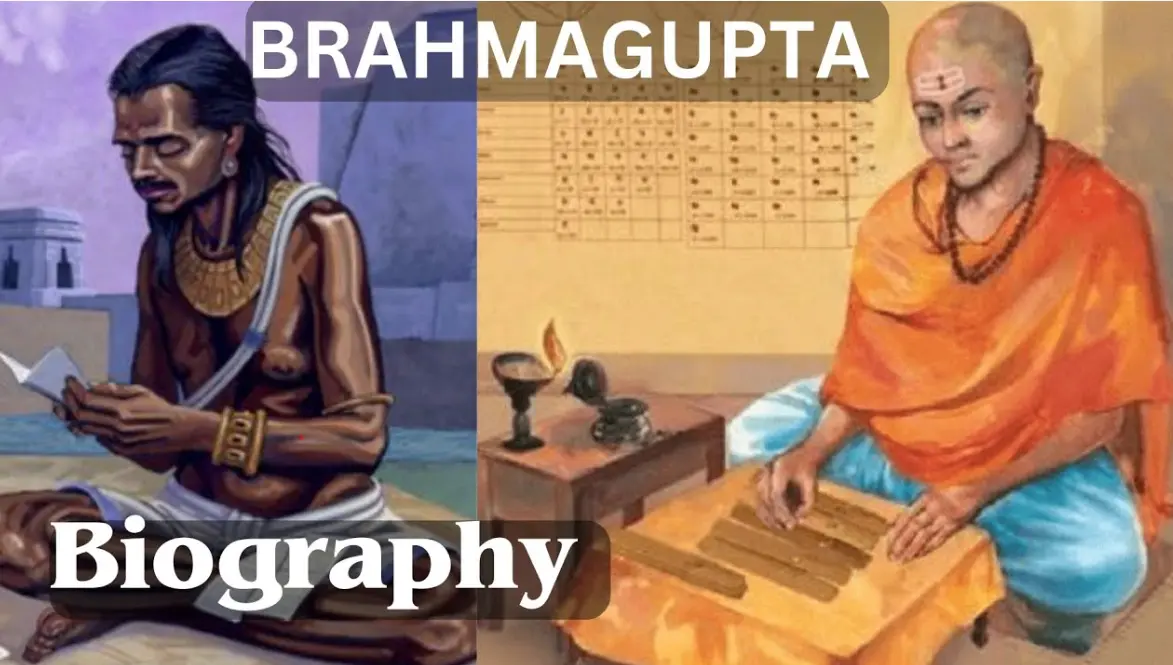
Brahmagupta (c. 598–668 AD) was an eminent Indian mathematician and astronomer from Bhilmal, in present-day Rajasthan. He is best known for his influential text, the *Brahmasphutasiddhanta* (628 AD), which advanced the fields of arithmetic, algebra, and astronomy. In mathematics, Brahmagupta introduced rules for operations with zero, negative numbers, and quadratic equations, and he formulated the Brahmagupta formula for calculating the area of a cyclic quadrilateral. He also contributed to trigonometry and the study of planetary motions, correcting earlier astronomical models and providing accurate methods for eclipse predictions. His work bridged ancient Indian knowledge with later Islamic and European mathematics, solidifying his legacy as a pioneer in the history of science.
Table of Contents
- Part 1: Best AI Quiz Making Software for Creating A Brahmagupta Quiz
- Part 2: 20 Brahmagupta Quiz Questions & Answers
- Part 3: Save Time and Energy: Generate Quiz Questions with AI Technology
Part 1: Best AI Quiz Making Software for Creating A Brahmagupta Quiz
Nowadays more and more people create Brahmagupta quizzes using AI technologies, OnlineExamMaker a powerful AI-based quiz making tool that can save you time and efforts. The software makes it simple to design and launch interactive quizzes, assessments, and surveys. With the Question Editor, you can create multiple-choice, open-ended, matching, sequencing and many other types of questions for your tests, exams and inventories. You are allowed to enhance quizzes with multimedia elements like images, audio, and video to make them more interactive and visually appealing.
Take a product tour of OnlineExamMaker:
● Create a question pool through the question bank and specify how many questions you want to be randomly selected among these questions.
● Build and store questions in a centralized portal, tagged by categories and keywords for easy reuse and organization.
● Simply copy a few lines of codes, and add them to a web page, you can present your online quiz in your website, blog, or landing page.
● Randomize questions or change the order of questions to ensure exam takers don’t get the same set of questions each time.
Automatically generate questions using AI
Part 2: 20 Brahmagupta Quiz Questions & Answers
or
1. Question: Who was Brahmagupta?
A) An ancient Greek philosopher
B) An Indian mathematician and astronomer
C) A Roman engineer
D) A Chinese inventor
Answer: B
Explanation: Brahmagupta was a 7th-century Indian mathematician and astronomer known for his contributions to arithmetic, algebra, and astronomy in his work Brahmasphuta Siddhanta.
2. Question: In which century did Brahmagupta live?
A) 5th century CE
B) 7th century CE
C) 9th century CE
D) 11th century CE
Answer: B
Explanation: Brahmagupta lived in the 7th century CE, as indicated by his major work, Brahmasphuta Siddhanta, written in 628 CE.
3. Question: What is Brahmagupta’s formula for the area of a cyclic quadrilateral?
A) √[s(s-a)(s-b)(s-c)]
B) √[(s-a)(s-b)(s-c)(s-d)]
C) πr²
D) (a + b + c)/2
Answer: B
Explanation: Brahmagupta’s formula for the area of a cyclic quadrilateral is √[(s-a)(s-b)(s-c)(s-d)], where s is the semiperimeter and a, b, c, d are the sides.
4. Question: Which text is Brahmagupta most famous for writing?
A) Aryabhatiya
B) Brahmasphuta Siddhanta
C) Surya Siddhanta
D) Lilavati
Answer: B
Explanation: Brahmagupta’s Brahmasphuta Siddhanta is a key astronomical and mathematical treatise that expanded on earlier works and introduced new concepts.
5. Question: What did Brahmagupta contribute to the concept of zero?
A) He invented it
B) He used it as a number in equations
C) He rejected its use
D) He only mentioned it in astronomy
Answer: B
Explanation: Brahmagupta was one of the first to use zero as a number in mathematical operations, including in his rules for addition and subtraction.
6. Question: Brahmagupta’s work included rules for solving which type of equations?
A) Linear equations
B) Quadratic equations
C) Cubic equations
D) Differential equations
Answer: B
Explanation: Brahmagupta provided methods for solving quadratic equations, including the use of negative roots, in his mathematical texts.
7. Question: What is the Brahmagupta–Fibonacci identity?
A) A formula for summing series
B) An identity for the product of two sums of squares
C) A rule for pi
D) A method for calendar calculation
Answer: B
Explanation: The Brahmagupta–Fibonacci identity expresses the product of two sums of two squares as a sum of two squares, linking his work to later mathematics.
8. Question: In Brahmagupta’s time, what system of numeration did he use?
A) Roman numerals
B) Decimal system
C) Binary system
D) Egyptian hieroglyphs
Answer: B
Explanation: Brahmagupta used the decimal system, including place value and zero, which was prevalent in Indian mathematics.
9. Question: Brahmagupta described the earth as what shape?
A) Flat
B) Spherical
C) Cubical
D) Irregular
Answer: B
Explanation: In his astronomical works, Brahmagupta described the earth as a sphere, aligning with ancient Indian cosmological views.
10. Question: Which of the following is a contribution of Brahmagupta to algebra?
A) The concept of infinity
B) Rules for negative numbers
C) Matrix operations
D) Vector analysis
Answer: B
Explanation: Brahmagupta provided rules for operations with negative numbers, treating debts as negative quantities in his algebraic framework.
11. Question: What did Brahmagupta say about the sum of two equal quantities?
A) It equals zero
B) It equals twice the quantity
C) It equals the square root
D) It equals one
Answer: B
Explanation: Brahmagupta stated that the sum of two equal quantities is twice that quantity, as part of his basic arithmetic rules.
12. Question: Brahmagupta’s work influenced which later mathematician?
A) Euclid
B) Fibonacci
C) Newton
D) Galileo
Answer: B
Explanation: Fibonacci was influenced by Brahmagupta’s ideas, particularly through Arabic translations, which helped spread Indian mathematics to Europe.
13. Question: In Brahmagupta’s formula for cyclic quadrilaterals, what does ‘s’ represent?
A) The perimeter
B) The semiperimeter
C) The area
D) The diagonal
Answer: B
Explanation: In Brahmagupta’s formula, ‘s’ is the semiperimeter, calculated as (a + b + c + d)/2 for sides a, b, c, and d.
14. Question: Brahmagupta calculated the length of what astronomical feature?
A) The solar year
B) The diameter of the moon
C) The speed of light
D) The orbit of Mars
Answer: A
Explanation: Brahmagupta provided calculations for the length of the solar year, estimating it at about 365 days, 6 hours, and 12 minutes.
15. Question: What operation did Brahmagupta describe for zero?
A) Division by zero
B) Addition and subtraction with zero
C) Multiplication by infinity
D) Logarithms of zero
Answer: B
Explanation: Brahmagupta described rules for addition and subtraction involving zero, such as any number plus zero equals the number.
16. Question: Brahmagupta’s Brahmasphuta Siddhanta includes chapters on?
A) Poetry and literature
B) Astronomy and mathematics
C) Medicine and biology
D) Philosophy and ethics
Answer: B
Explanation: The text covers topics in astronomy, such as planetary motions, and mathematics, including algebra and geometry.
17. Question: How did Brahmagupta handle square roots in his work?
A) He avoided them
B) He used them in quadratic solutions
C) He only used integers
D) He invented a new root symbol
Answer: B
Explanation: Brahmagupta incorporated square roots in solving quadratic equations and finding areas, as seen in his formulas.
18. Question: What is one of Brahmagupta’s contributions to trigonometry?
A) Sine tables
B) Interpolation formulas
C) The law of sines
D) Tangent functions
Answer: B
Explanation: Brahmagupta developed interpolation formulas for sine values, aiding in astronomical calculations.
19. Question: Brahmagupta’s work on negative numbers included treating them as?
A) Errors
B) Positive equivalents
C) Debts or deficiencies
D) Fractions
Answer: C
Explanation: He conceptualized negative numbers as debts or deficiencies, allowing for practical applications in accounting and mathematics.
20. Question: Which ancient civilization’s mathematics influenced Brahmagupta?
A) Greek
B) Babylonian
C) Egyptian
D) Earlier Indian
Answer: D
Explanation: Brahmagupta built upon earlier Indian mathematical traditions, refining and expanding concepts from texts like the Aryabhatiya.
or
Part 3: Save Time and Energy: Generate Quiz Questions with AI Technology
Automatically generate questions using AI