Automotive safety encompasses the measures and technologies designed to protect vehicle occupants, pedestrians, and other road users from harm during vehicle operation. It integrates engineering, regulatory standards, and human factors to minimize risks associated with driving.
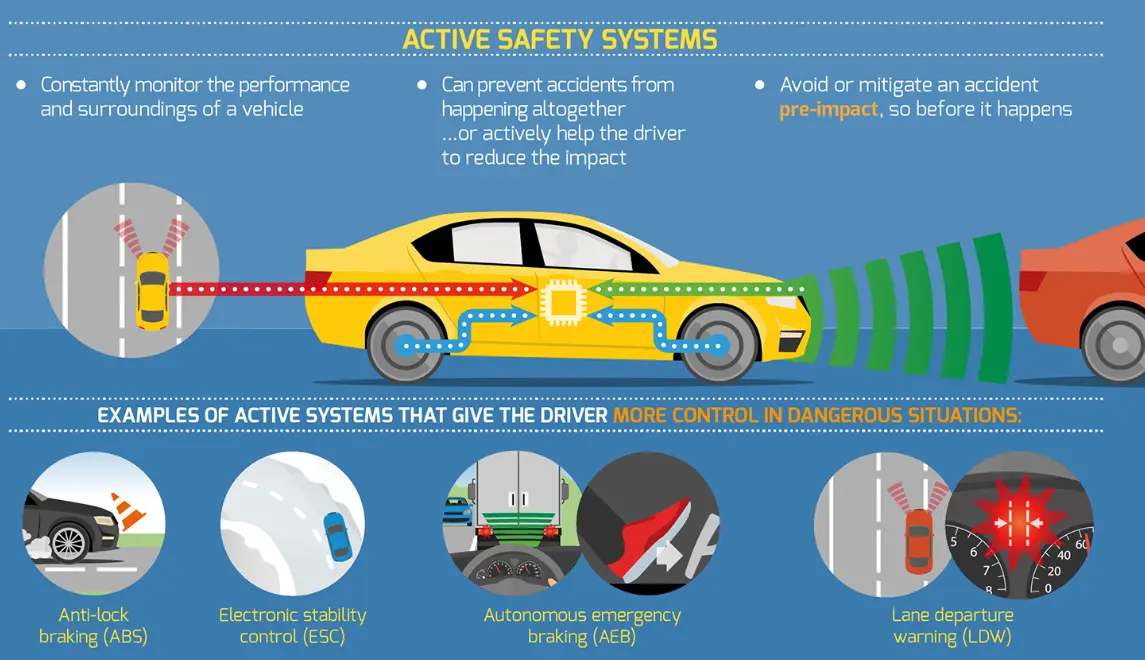
Key components include passive safety features, such as airbags, seat belts, and crumple zones, which activate during a crash to reduce injury severity. Active safety systems, like anti-lock braking systems (ABS), electronic stability control (ESC), and traction control, help prevent accidents by maintaining vehicle stability and avoiding collisions.
Regulations play a crucial role, with organizations like the National Highway Traffic Safety Administration (NHTSA) in the U.S. and the European New Car Assessment Programme (Euro NCAP) setting standards for vehicle testing and crashworthiness. These ensure manufacturers incorporate safety innovations, such as advanced driver-assistance systems (ADAS) including lane departure warnings and automatic emergency braking.
Modern advancements, driven by technologies like artificial intelligence and sensors, are enhancing safety through features in autonomous vehicles. These include adaptive cruise control and collision avoidance systems, which aim to reduce human error—the leading cause of accidents. Overall, automotive safety continues to evolve, with a focus on reducing global road fatalities and promoting sustainable, safer mobility.
Table of Contents
- Part 1: OnlineExamMaker AI Quiz Generator – The Easiest Way to Make Quizzes Online
- Part 2: 20 Automotive Safety Quiz Questions & Answers
- Part 3: Save Time and Energy: Generate Quiz Questions with AI Technology
Part 1: OnlineExamMaker AI Quiz Generator – The Easiest Way to Make Quizzes Online
When it comes to ease of creating a Automotive Safety skills assessment, OnlineExamMaker is one of the best AI-powered quiz making software for your institutions or businesses. With its AI Question Generator, just upload a document or input keywords about your assessment topic, you can generate high-quality quiz questions on any topic, difficulty level, and format.
What you will like:
● AI Question Generator to help you save time in creating quiz questions automatically.
● Share your online exam with audiences on social platforms like Facebook, Twitter, Reddit and more.
● Display the feedback for correct or incorrect answers instantly after a question is answered.
● Create a lead generation form to collect an exam taker’s information, such as email, mobile phone, work title, company profile and so on.
Automatically generate questions using AI
Part 2: 20 Automotive Safety Quiz Questions & Answers
or
1. What is the primary purpose of a seat belt in a vehicle?
A) To keep the driver comfortable
B) To prevent the occupant from being thrown forward during a crash
C) To reduce fuel consumption
D) To improve the vehicle’s speed
Answer: B
Explanation: Seat belts restrain occupants and distribute crash forces, reducing the risk of ejection and serious injury in collisions.
2. Which of the following is a key factor in defensive driving?
A) Driving at the maximum speed limit
B) Anticipating potential hazards and adjusting speed accordingly
C) Following the vehicle in front as closely as possible
D) Using headphones while driving
Answer: B
Explanation: Defensive driving involves being aware of surroundings and making proactive decisions to avoid accidents, such as slowing down for potential risks.
3. What does ABS stand for in the context of vehicle braking systems?
A) Automatic Brake System
B) Anti-lock Braking System
C) Advanced Brake Safety
D) All Brake Stops
Answer: B
Explanation: ABS prevents wheels from locking during braking, allowing the driver to maintain steering control and avoid skidding on slippery surfaces.
4. Why should drivers maintain a safe following distance?
A) To save fuel
B) To allow time to react and stop if the vehicle ahead brakes suddenly
C) To increase highway speed
D) To reduce wind resistance
Answer: B
Explanation: A safe following distance, often called the “two-second rule,” helps prevent rear-end collisions by giving drivers enough time to respond to sudden stops.
5. What is the main risk associated with distracted driving?
A) Increased fuel efficiency
B) Reduced reaction time and higher chance of accidents
C) Improved navigation skills
D) Less fatigue for the driver
Answer: B
Explanation: Distracted driving, such as using a phone, diverts attention from the road, leading to delayed reactions and a higher likelihood of crashes.
6. How should a driver respond if their vehicle starts to skid?
A) Slam on the brakes immediately
B) Steer in the direction of the skid and avoid hard braking
C) Accelerate to regain control
D) Turn the steering wheel sharply in the opposite direction
Answer: B
Explanation: Steering into the skid helps align the tires with the direction of travel, allowing the driver to regain control without causing further loss of traction.
7. What is the recommended action if you suspect a tire blowout while driving?
A) Speed up to maintain momentum
B) Grip the steering wheel firmly and gradually slow down
C) Swerve to the nearest lane
D) Release the steering wheel
Answer: B
Explanation: A firm grip on the steering wheel and gradual braking help maintain control and safely bring the vehicle to a stop without causing a spinout.
8. Why are child safety seats important for young passengers?
A) They make the child more comfortable
B) They reduce the risk of injury in a crash by securing the child properly
C) They allow the child to see out the window better
D) They help the child sleep during trips
Answer: B
Explanation: Child safety seats are designed to fit a child’s body and restrain them during a collision, significantly lowering the chances of severe injury or death.
9. What should drivers do when approaching a yellow traffic light?
A) Speed up to make it through
B) Slow down and prepare to stop if safe
C) Ignore it and proceed as normal
D) Turn off their headlights
Answer: B
Explanation: A yellow light indicates the signal is about to turn red, so drivers should slow down and stop if possible to avoid entering the intersection unsafely.
10. Which system in a vehicle helps detect and prevent collisions?
A) Cruise control
B) Collision avoidance system
C) Air conditioning
D) Power steering
Answer: B
Explanation: Collision avoidance systems use sensors to detect potential crashes and can automatically apply brakes or alert the driver, enhancing overall safety.
11. What is the effect of driving under the influence of alcohol?
A) Improved coordination and faster reactions
B) Impaired judgment, slower reflexes, and increased accident risk
C) Better visibility at night
D) Reduced need for seat belts
Answer: B
Explanation: Alcohol affects the central nervous system, leading to poor decision-making, delayed reactions, and a higher probability of accidents.
12. Why is regular vehicle maintenance important for safety?
A) It improves the vehicle’s appearance
B) It ensures brakes, tires, and lights function properly to prevent failures
C) It increases the resale value only
D) It reduces the need for insurance
Answer: B
Explanation: Maintenance checks help identify issues like worn brakes or bald tires, which could lead to accidents if not addressed.
13. What does the term “blind spot” refer to in driving?
A) Areas around the vehicle not visible in mirrors
B) The driver’s eyesight issues
C) Overly bright headlights from oncoming traffic
D) Foggy weather conditions
Answer: A
Explanation: Blind spots are zones where other vehicles or objects may not be seen, so drivers must check them by shoulder glances before changing lanes.
14. How can drivers reduce the risk of rollover accidents?
A) By driving faster on curves
B) By avoiding sudden maneuvers and maintaining proper tire pressure
C) By overloading the vehicle
D) By turning off traction control
Answer: B
Explanation: Sudden turns or low tire pressure can cause rollovers, so smooth driving and regular checks help maintain stability.
15. What is the purpose of a vehicle’s airbag?
A) To provide extra seating
B) To cushion occupants during a frontal collision
C) To improve engine performance
D) To enhance audio quality
Answer: B
Explanation: Airbags deploy rapidly in crashes to protect the head and chest, working with seat belts to minimize injury impact.
16. Why should drivers use their turn signals?
A) To indicate a change in direction for other road users
B) To save battery life
C) To make the vehicle look more modern
D) To reduce wind noise
Answer: A
Explanation: Turn signals communicate intentions to other drivers, helping prevent accidents by allowing everyone to anticipate movements.
17. What is hydroplaning, and how can it be avoided?
A) A fun driving technique; it can’t be avoided
B) When tires lose contact with the road due to water; avoid by reducing speed in rain
C) An engine overheating issue
D) A type of fuel efficiency problem
Answer: B
Explanation: Hydroplaning occurs on wet roads, and slowing down allows tires to maintain grip, reducing the risk of skidding.
18. Which safety feature helps prevent theft in vehicles?
A) Engine oil
B) Immobilizer system
C) Windshield wipers
D) Spare tire
Answer: B
Explanation: An immobilizer prevents the engine from starting without the correct key, deterring thieves and enhancing vehicle security.
19. What should be done if a vehicle’s brakes fail?
A) Pump the brakes repeatedly and shift to a lower gear
B) Accelerate to build momentum
C) Turn off the engine immediately
D) Open the doors for air resistance
Answer: A
Explanation: Pumping the brakes may build pressure in the system, and downshifting helps slow the vehicle using the engine, allowing a safe stop.
20. Why is it important to check mirrors frequently while driving?
A) To admire the vehicle’s design
B) To monitor traffic around the vehicle and make safe decisions
C) To adjust the radio
D) To check the time
Answer: B
Explanation: Frequent mirror checks help drivers stay aware of surrounding vehicles, cyclists, and pedestrians, reducing the risk of collisions.
or
Part 3: Save Time and Energy: Generate Quiz Questions with AI Technology
Automatically generate questions using AI