Excel tables are structured ranges of data that provide powerful tools for organization, analysis, and visualization. Here’s a breakdown:
#Key Features:
– Dynamic Range: Tables automatically expand or contract as data is added or removed, eliminating the need for manual adjustments.
– Sorting and Filtering: Easily sort data alphabetically, numerically, or by custom criteria, and apply filters to focus on specific subsets.
– Built-in Formulas: Use structured references like [TableName][ColumnName] for formulas, which update automatically when data changes.
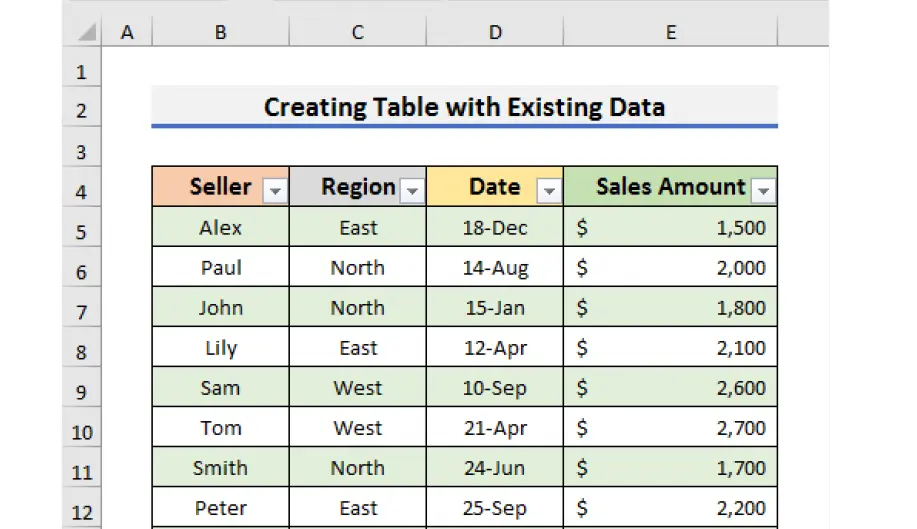
– Formatting Options: Apply consistent styles with banded rows, headers, and total rows for quick summaries (e.g., SUM, AVERAGE).
– Data Validation: Restrict input to specific types or values to maintain data integrity.
– Slicers and Timelines: For PivotTables linked to tables, use slicers for interactive filtering and timelines for date-based data.
#How to Create a Table:
1. Select your data range.
2. Go to the “Insert” tab and click “Table.”
3. Check options like “My table has headers” if applicable.
4. Customize via the “Table Design” tab.
#Benefits:
– Efficiency: Streamlines data management and reduces errors in large datasets.
– Collaboration: Makes sharing and updating data easier in team environments.
– Integration: Seamlessly works with PivotTables, charts, and external data sources.
#Best Practices:
– Use meaningful column headers for clarity.
– Avoid blank rows or columns within the table to prevent formatting issues.
– Leverage table features for dashboards and reports to enhance data-driven decisions.
This overview highlights how Excel tables transform raw data into actionable insights.
Table of Contents
- Part 1: OnlineExamMaker – Generate and Share Excel Tables Quiz with AI Automatically
- Part 2: 20 Excel Tables Quiz Questions & Answers
- Part 3: OnlineExamMaker AI Question Generator: Generate Questions for Any Topic
Part 1: OnlineExamMaker – Generate and Share Excel Tables Quiz with AI Automatically
The quickest way to assess the Excel Tables knowledge of candidates is using an AI assessment platform like OnlineExamMaker. With OnlineExamMaker AI Question Generator, you are able to input content—like text, documents, or topics—and then automatically generate questions in various formats (multiple-choice, true/false, short answer). Its AI Exam Grader can automatically grade the exam and generate insightful reports after your candidate submit the assessment.
What you will like:
● Create a question pool through the question bank and specify how many questions you want to be randomly selected among these questions.
● Allow the quiz taker to answer by uploading video or a Word document, adding an image, and recording an audio file.
● Display the feedback for correct or incorrect answers instantly after a question is answered.
● Create a lead generation form to collect an exam taker’s information, such as email, mobile phone, work title, company profile and so on.
Automatically generate questions using AI
Part 2: 20 Excel Tables Quiz Questions & Answers
or
1. What is the primary function of the “Format as Table” feature in Excel?
A. To create charts
B. To organize data into a structured table with built-in tools
C. To perform advanced calculations
D. To insert images
Answer: B
Explanation: The “Format as Table” feature converts a range of cells into a dynamic table that includes automatic formatting, sorting, filtering, and structured references, making data management easier.
2. How can you convert a range of data into an Excel table?
A. By using the SUM function
B. By selecting the range and going to Insert > Table
C. By applying conditional formatting
D. By freezing panes
Answer: B
Explanation: Selecting a range and navigating to Insert > Table prompts Excel to convert the data into a table, which adds features like auto-filtering and banded rows for better data handling.
3. What happens when you add a new row to an Excel table?
A. The table shrinks
B. Formulas in the table automatically expand to include the new row
C. The table deletes the new row
D. Only the formatting changes
Answer: B
Explanation: Excel tables are dynamic, so adding a new row extends any formulas or formatting in the table columns to the new row, maintaining consistency in data analysis.
4. Which keyboard shortcut can be used to create a table from selected data?
A. Ctrl + T
B. Ctrl + S
C. Alt + F1
D. Ctrl + Z
Answer: A
Explanation: Pressing Ctrl + T while a range is selected opens the Create Table dialog, allowing quick conversion of data into a table with Excel’s built-in features.
5. In an Excel table, what does the header row typically include?
A. Only numbers
B. Column names for easy reference
C. Random text
D. Chart titles
Answer: B
Explanation: The header row in an Excel table contains column labels, which Excel uses for structured references in formulas and for sorting/filtering purposes.
6. How do you remove duplicates from an Excel table?
A. By using the Filter button
B. By going to Data > Remove Duplicates
C. By deleting rows manually
D. By applying bold formatting
Answer: B
Explanation: The Remove Duplicates feature under the Data tab scans the table and deletes rows with identical values in selected columns, helping to clean data efficiently.
7. What is a structured reference in an Excel table?
A. A formula that references cells outside the table
B. A way to reference table elements using table names and column headers
C. A chart reference
D. A cell style
Answer: B
Explanation: Structured references use table and column names (e.g., Table1[Column1]) in formulas, making them more readable and less error-prone than traditional cell references.
8. Which feature allows you to filter data in an Excel table quickly?
A. The Sort button
B. The AutoSum button
C. The Filter dropdown arrows in the header row
D. The Freeze Panes option
Answer: C
Explanation: Filter dropdown arrows appear in the header row of an Excel table, enabling users to filter data based on criteria like values, colors, or custom rules.
9. How can you add a total row to an Excel table?
A. By manually inserting a row and adding formulas
B. By enabling the Total Row option in the Table Design tab
C. By using the SUM function alone
D. By converting the table to a chart
Answer: B
Explanation: In the Table Design tab, checking the Total Row box adds a row at the bottom with summary functions like SUM or AVERAGE for each column.
10. What is the benefit of using banded rows in an Excel table?
A. It makes the table wider
B. It alternates row colors for better readability
C. It adds extra columns
D. It hides data
Answer: B
Explanation: Banded rows apply alternating shades to rows, reducing eye strain and making it easier to read and track data across the table.
11. How do you resize an Excel table?
A. By dragging the resize handle at the bottom-right corner
B. By deleting rows and columns
C. By using the Zoom feature
D. By applying text wrapping
Answer: A
Explanation: Dragging the resize handle adjusts the table’s boundaries to include or exclude rows and columns, automatically updating the table’s range.
12. What does the Slicer feature do in an Excel table?
A. It slices images in the table
B. It provides a visual way to filter data connected to PivotTables or tables
C. It cuts text in cells
D. It resizes the table
Answer: B
Explanation: Slicers are interactive buttons that filter data in tables or PivotTables, allowing users to quickly select and view specific subsets of data.
13. In an Excel table, how are formulas typically handled when the table expands?
A. They are deleted
B. They automatically copy to new rows
C. They remain static
D. They convert to text
Answer: B
Explanation: Formulas in Excel tables use structured references that expand automatically when rows are added, ensuring consistent calculations across the dataset.
14. How can you sort data in an Excel table?
A. By using the Sort button in the Data tab
B. By clicking the header row arrows and selecting Sort
C. Both A and B
D. Neither A nor B
Answer: C
Explanation: You can sort data via the Sort button in the Data tab or directly from the header row dropdowns, both of which organize data in ascending or descending order.
15. What is the purpose of the Table Styles gallery in Excel?
A. To change font sizes
B. To apply pre-designed formats to tables for visual appeal
C. To add borders only
D. To insert formulas
Answer: B
Explanation: The Table Styles gallery offers various predefined formats that enhance the appearance of tables with colors, borders, and shading.
16. How do you reference an entire column in an Excel table formula?
A. Using the column letter, like A:A
B. Using the table name and column header, like Table1[Column1]
C. By typing the row numbers
D. By using absolute references only
Answer: B
Explanation: Structured references like Table1[Column1] allow you to reference an entire column dynamically, which adjusts if the table changes.
17. What happens if you copy and paste data into an Excel table?
A. The table format is lost
B. The pasted data adopts the table’s formatting and features
C. The table converts to a range
D. Nothing changes
Answer: B
Explanation: When pasting data into an Excel table, it automatically applies the table’s formatting, formulas, and dynamic features to the new data.
18. How can you convert an Excel table back to a normal range?
A. By deleting the table
B. By going to Table Design > Convert to Range
C. By clearing all formats
D. By hiding the table
Answer: B
Explanation: The Convert to Range option in the Table Design tab removes the table structure, turning it into a standard range while retaining the data and formatting.
19. What is conditional formatting useful for in an Excel table?
A. To change cell colors based on rules
B. To add text to cells
C. To merge cells
D. To insert rows
Answer: A
Explanation: Conditional formatting highlights cells in a table based on criteria, such as values above a threshold, making data trends easier to spot.
20. Why might you use an Excel table for data analysis?
A. It limits data entry
B. It provides automatic features like sorting, filtering, and dynamic ranges
C. It reduces file size
D. It only works with numbers
Answer: B
Explanation: Excel tables offer built-in tools for sorting, filtering, and expanding ranges, which streamline data analysis and improve accuracy in reports.
or
Part 3: OnlineExamMaker AI Question Generator: Generate Questions for Any Topic
Automatically generate questions using AI