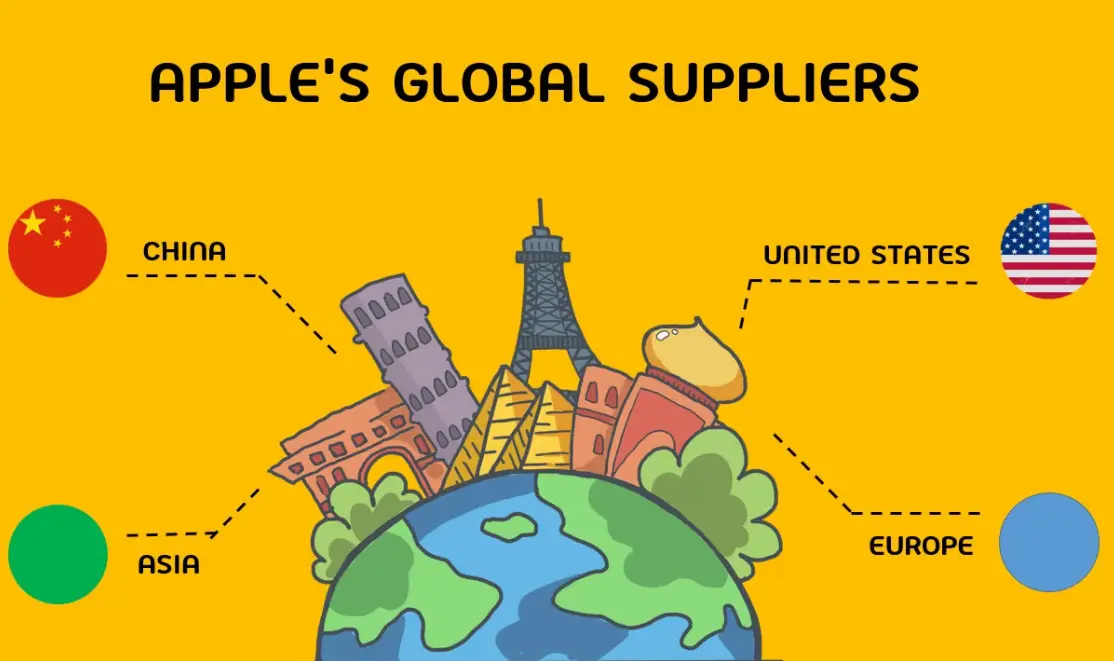
Apple’s supply chain is a highly integrated, global network designed for efficiency, innovation, and secrecy, supporting the production of devices like iPhones, iPads, and Macs. It involves over 200 key suppliers across more than 40 countries, with the majority of manufacturing concentrated in Asia, particularly China, Taiwan, and South Korea.
At its core, Apple maintains a vertical integration strategy, controlling design, software, and user experience while outsourcing hardware assembly to contract manufacturers such as Foxconn (Hon Hai Precision Industry) and Pegatron. These partners handle final assembly in massive facilities, like those in Zhengzhou, China, where millions of units are produced annually. Critical components, including semiconductors and displays, come from specialized suppliers like TSMC for chips, Samsung for OLED screens, and LG for batteries.
The supply chain emphasizes speed and flexibility, utilizing just-in-time inventory systems to minimize costs and reduce waste. Logistics are managed through partnerships with companies like FedEx and DHL, ensuring rapid global distribution from hubs in China to warehouses worldwide. Apple also prioritizes sustainability, aiming for 100% renewable energy in its operations and requiring suppliers to adhere to strict environmental standards, such as reducing carbon emissions and eliminating hazardous materials.
In recent years, Apple has diversified its supply chain to mitigate risks, including geopolitical tensions and pandemics. This includes increasing production in India, Vietnam, and the United States, with facilities like the one in Karnataka, India, assembling iPhones. The company conducts regular audits to enforce labor standards, addressing issues like fair wages and worker safety through its Supplier Code of Conduct.
Overall, Apple’s supply chain exemplifies a balance of technological prowess, ethical responsibility, and strategic agility, enabling the company to launch products swiftly while maintaining high quality and profitability.
Table of Contents
- Part 1: OnlineExamMaker AI Quiz Generator – The Easiest Way to Make Quizzes Online
- Part 2: 20 Apple Supply Chain Quiz Questions & Answers
- Part 3: Save Time and Energy: Generate Quiz Questions with AI Technology
Part 1: OnlineExamMaker AI Quiz Generator – The Easiest Way to Make Quizzes Online
When it comes to ease of creating a Apple Supply Chain skills assessment, OnlineExamMaker is one of the best AI-powered quiz making software for your institutions or businesses. With its AI Question Generator, just upload a document or input keywords about your assessment topic, you can generate high-quality quiz questions on any topic, difficulty level, and format.
What you will like:
● AI Question Generator to help you save time in creating quiz questions automatically.
● Share your online exam with audiences on social platforms like Facebook, Twitter, Reddit and more.
● Display the feedback for correct or incorrect answers instantly after a question is answered.
● Create a lead generation form to collect an exam taker’s information, such as email, mobile phone, work title, company profile and so on.
Automatically generate questions using AI
Part 2: 20 Apple Supply Chain Quiz Questions & Answers
or
1. Question: Which company is Apple’s largest manufacturing partner for assembling iPhones?
A) Samsung
B) Foxconn
C) Intel
D) Pegatron
Answer: B) Foxconn
Explanation: Foxconn, also known as Hon Hai Precision Industry, is responsible for assembling the majority of Apple’s iPhones due to its vast production capabilities in China.
2. Question: In which country is the majority of Apple’s iPhone production located?
A) United States
B) India
C) China
D) Vietnam
Answer: C) China
Explanation: China hosts most of Apple’s supply chain operations, including final assembly, because of its established manufacturing infrastructure and cost efficiencies.
3. Question: What is the primary role of TSMC in Apple’s supply chain?
A) Assembling devices
B) Manufacturing displays
C) Producing processors
D) Handling logistics
Answer: C) Producing processors
Explanation: TSMC (Taiwan Semiconductor Manufacturing Company) fabricates the custom A-series chips used in iPhones and iPads, making it a critical supplier for Apple’s hardware.
4. Question: Which mineral, often sourced from conflict regions, is a key component in Apple’s products?
A) Gold
B) Tin
C) Tantalum
D) All of the above
Answer: D) All of the above
Explanation: Apple sources gold, tin, and tantalum for components like circuits and batteries, and has programs to ensure these are conflict-free to avoid supporting unethical mining.
5. Question: How does Apple manage its supply chain to reduce environmental impact?
A) By increasing plastic use
B) Through recycling programs and renewable energy
C) By outsourcing to high-emission factories
D) By minimizing supplier audits
Answer: B) Through recycling programs and renewable energy
Explanation: Apple implements initiatives like using recycled materials and powering facilities with renewable energy to lower its carbon footprint across the supply chain.
6. Question: What event in 2010 highlighted labor issues in Apple’s supply chain?
A) Factory explosions
B) Foxconn worker suicides
C) Supply shortages
D) Data breaches
Answer: B) Foxconn worker suicides
Explanation: A series of suicides at Foxconn factories in China brought attention to poor working conditions, prompting Apple to push for better labor standards.
7. Question: Which strategy does Apple use to maintain supply chain secrecy?
A) Open-sourcing designs
B) Compartmentalizing information among suppliers
C) Publicizing prototypes
D) Sharing blueprints freely
Answer: B) Compartmentalizing information among suppliers
Explanation: Apple divides tasks among suppliers so that no single entity has full knowledge of a product, helping to prevent leaks and protect intellectual property.
8. Question: What is Apple’s approach to diversifying its supply chain away from China?
A) Increasing production only in China
B) Shifting some manufacturing to India and Vietnam
C) Halting all international operations
D) Focusing solely on U.S. production
Answer: B) Shifting some manufacturing to India and Vietnam
Explanation: Due to geopolitical risks, Apple has expanded production to countries like India and Vietnam to reduce dependency on a single region.
9. Question: How does Apple ensure supplier compliance with labor laws?
A) By ignoring audits
B) Through regular audits and the Supplier Code of Conduct
C) By allowing unlimited overtime
D) By reducing oversight
Answer: B) Through regular audits and the Supplier Code of Conduct
Explanation: Apple conducts frequent audits and enforces its Supplier Code of Conduct to ensure partners adhere to fair labor practices and ethical standards.
10. Question: What technology does Apple use to track its supply chain logistics?
A) Paper-based tracking
B) Advanced AI and RFID systems
C) Manual spreadsheets
D) Outsourced tracking services
Answer: B) Advanced AI and RFID systems
Explanation: Apple employs AI-driven analytics and RFID (Radio-Frequency Identification) to monitor inventory and shipments in real-time for efficiency.
11. Question: Which factor has influenced Apple’s supply chain during global events like the COVID-19 pandemic?
A) Increased demand without changes
B) Disruptions in component sourcing and factory shutdowns
C) No significant impact
D) Reduced consumer interest
Answer: B) Disruptions in component sourcing and factory shutdowns
Explanation: The pandemic caused delays in Apple’s supply chain due to factory closures in Asia, leading to product shortages and delays.
12. Question: What is the main benefit of Apple’s just-in-time inventory system?
A) High storage costs
B) Reduced waste and faster response to demand
C) Overproduction of stock
D) Slower delivery times
Answer: B) Reduced waste and faster response to demand
Explanation: Apple’s just-in-time approach minimizes excess inventory, cutting costs and allowing quick adjustments to market demands.
13. Question: How does Apple source rare earth elements for its devices?
A) Exclusively from domestic mines
B) From a global network, including recycled sources
C) Only from Africa
D) By avoiding them altogether
Answer: B) From a global network, including recycled sources
Explanation: Apple sources rare earth elements from various countries and increasingly from recycled materials to promote sustainability.
14. Question: What role do Apple’s design teams play in the supply chain?
A) They handle final assembly
B) They collaborate with suppliers to ensure feasible production
C) They focus only on marketing
D) They avoid supplier interactions
Answer: B) They collaborate with suppliers to ensure feasible production
Explanation: Apple’s design teams work closely with suppliers early in the process to make sure designs can be manufactured efficiently.
15. Question: Which company supplies the majority of displays for Apple’s iPhones?
A) LG Display
B) Samsung Display
C) Sharp
D) All of the above, depending on the model
Answer: D) All of the above, depending on the model
Explanation: Apple diversifies its display suppliers, using companies like LG, Samsung, and Sharp based on specific device requirements.
16. Question: How has Apple addressed water usage in its supply chain?
A) By increasing water-intensive processes
B) Through water conservation initiatives in factories
C) By ignoring environmental regulations
D) By relying on bottled water for operations
Answer: B) Through water conservation initiatives in factories
Explanation: Apple implements programs to reduce water use in manufacturing, aiming for zero water impact in its supply chain.
17. Question: What is a key challenge in Apple’s global supply chain?
A) Overabundance of raw materials
B) Tariffs and trade wars affecting imports
C) Excess factory capacity
D) Minimal competition from suppliers
Answer: B) Tariffs and trade wars affecting imports
Explanation: Trade tensions, such as those between the U.S. and China, have imposed tariffs that increase costs and disrupt Apple’s supply chain.
18. Question: How does Apple promote innovation in its supply chain?
A) By sticking to traditional methods
B) Through partnerships for advanced materials and automation
C) By reducing R&D investments
D) By limiting supplier collaborations
Answer: B) Through partnerships for advanced materials and automation
Explanation: Apple collaborates with suppliers to develop new technologies, like foldable screens or efficient batteries, enhancing product innovation.
19. Question: What percentage of Apple’s suppliers must meet its environmental standards?
A) 0%
B) 50%
C) 100%
D) Only new suppliers
Answer: C) 100%
Explanation: Apple requires all suppliers to comply with its strict environmental standards as part of its commitment to sustainability.
20. Question: How does Apple handle supply chain disruptions from natural disasters?
A) By not preparing contingency plans
B) Through diversified locations and backup suppliers
C) By halting production entirely
D) By relying on a single source
Answer: B) Through diversified locations and backup suppliers
Explanation: Apple maintains multiple manufacturing sites and alternative suppliers to mitigate risks from events like earthquakes or floods.
or
Part 3: Save Time and Energy: Generate Quiz Questions with AI Technology
Automatically generate questions using AI