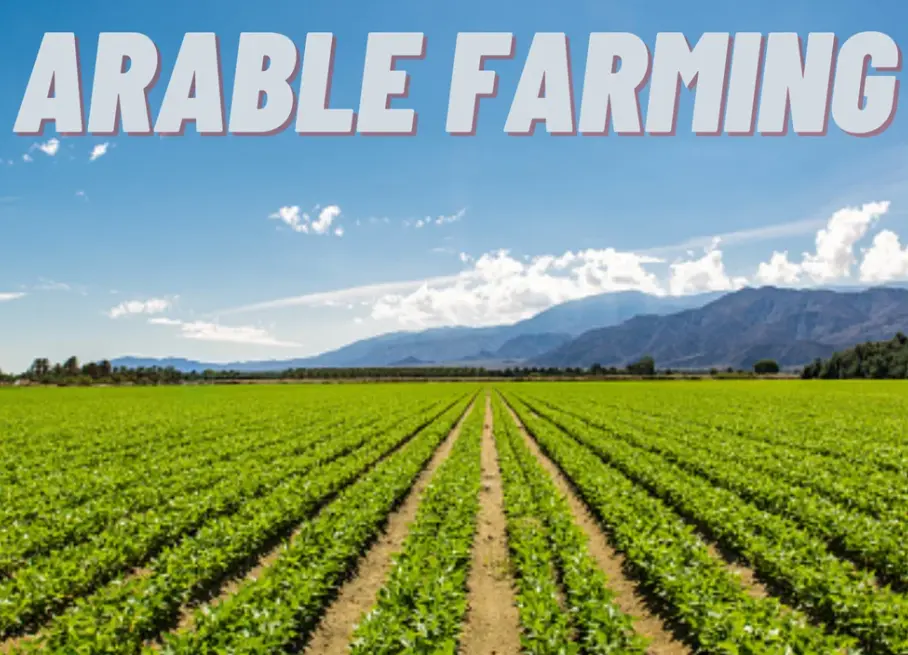
Arable farming, also known as crop farming, involves the cultivation of crops on plowed or arable land. This practice focuses on growing annual plants such as grains (e.g., wheat, rice, and corn), vegetables, and oilseeds for food, feed, and industrial purposes. Farmers prepare the soil through processes like tilling, planting, fertilizing, and harvesting, often using modern machinery to maximize yields. It plays a vital role in global agriculture by supporting food production, economic stability, and sustainable land use.
Table of Contents
- Part 1: OnlineExamMaker – Generate and Share Arable Farming Quiz with AI Automatically
- Part 2: 20 Arable Farming Quiz Questions & Answers
- Part 3: Try OnlineExamMaker AI Question Generator to Create Quiz Questions
Part 1: OnlineExamMaker – Generate and Share Arable Farming Quiz with AI Automatically
The quickest way to assess the Arable Farming knowledge of candidates is using an AI assessment platform like OnlineExamMaker. With OnlineExamMaker AI Question Generator, you are able to input content—like text, documents, or topics—and then automatically generate questions in various formats (multiple-choice, true/false, short answer). Its AI Exam Grader can automatically grade the exam and generate insightful reports after your candidate submit the assessment.
What you will like:
● Create a question pool through the question bank and specify how many questions you want to be randomly selected among these questions.
● Allow the quiz taker to answer by uploading video or a Word document, adding an image, and recording an audio file.
● Display the feedback for correct or incorrect answers instantly after a question is answered.
● Create a lead generation form to collect an exam taker’s information, such as email, mobile phone, work title, company profile and so on.
Automatically generate questions using AI
Part 2: 20 Arable Farming Quiz Questions & Answers
or
1. What is arable farming primarily focused on?
A) Raising livestock
B) Growing crops on plowed land
C) Fishing in rivers
D) Forestry management
Answer: B
Explanation: Arable farming involves the cultivation of crops on land that is suitable for plowing, distinguishing it from pastoral farming which focuses on animals.
2. Which crop rotation method helps in maintaining soil fertility?
A) Monoculture
B) Continuous wheat planting
C) Crop rotation with legumes
D) Over-irrigation
Answer: C
Explanation: Crop rotation with legumes, such as beans or peas, adds nitrogen to the soil through root nodules, reducing the need for synthetic fertilizers and preventing soil depletion.
3. What is the main purpose of tilling in arable farming?
A) To compact the soil
B) To aerate and mix the soil for better root growth
C) To increase water runoff
D) To introduce pests
Answer: B
Explanation: Tilling breaks up compacted soil, improves aeration, and incorporates organic matter, which enhances root penetration and nutrient availability for crops.
4. Which factor is most critical for selecting arable land?
A) Proximity to urban areas
B) Soil type and fertility
C) High elevation
D) Rocky terrain
Answer: B
Explanation: Soil type and fertility determine the land’s ability to support crop growth, as arable farming requires nutrient-rich, well-drained soils for optimal yields.
5. What is the role of herbicides in arable farming?
A) To promote weed growth
B) To control unwanted plants that compete with crops
C) To fertilize the soil
D) To attract insects
Answer: B
Explanation: Herbicides are used to eliminate weeds that compete with crops for resources like water and nutrients, thereby improving crop health and yield.
6. Which practice helps prevent soil erosion in arable fields?
A) Deforestation
B) Contour plowing
C) Overgrazing
D) Deep plowing on slopes
Answer: B
Explanation: Contour plowing follows the natural contours of the land, reducing water runoff and soil loss by creating barriers that slow down water flow on slopes.
7. What is intercropping in arable farming?
A) Growing a single crop repeatedly
B) Planting two or more crops together in the same field
C) Rotating crops annually
D) Leaving fields fallow
Answer: B
Explanation: Intercropping involves growing multiple crops simultaneously in the same area, which can maximize land use, reduce pests, and improve soil health through diversity.
8. Why is irrigation important in arable farming?
A) To increase soil salinity
B) To provide water for crop growth in dry areas
C) To cool the soil
D) To promote flooding
Answer: B
Explanation: Irrigation supplies water to crops in regions with insufficient rainfall, ensuring consistent growth and preventing drought-related yield losses.
9. Which nutrient is most commonly deficient in arable soils and requires fertilization?
A) Nitrogen
B) Oxygen
C) Carbon
D) Hydrogen
Answer: A
Explanation: Nitrogen is essential for plant growth and is often depleted in soils, so fertilizers like ammonium nitrate are used to replenish it and support healthy crop development.
10. What is the primary benefit of using cover crops in arable farming?
A) To shade out all other plants
B) To protect and enrich the soil between main crops
C) To increase pest populations
D) To reduce crop yields
Answer: B
Explanation: Cover crops, such as clover or rye, prevent erosion, suppress weeds, and add organic matter to the soil when they decompose, improving fertility for subsequent crops.
11. How does arable farming differ from horticulture?
A) Arable farming focuses on large-scale field crops, while horticulture involves smaller-scale fruits and vegetables
B) They are the same practice
C) Arable farming is only for animals
D) Horticulture requires no soil
Answer: A
Explanation: Arable farming emphasizes staple crops like wheat on extensive lands, whereas horticulture deals with intensive cultivation of high-value plants like fruits and flowers.
12. What is the impact of climate change on arable farming?
A) It has no effect
B) It can alter growing seasons and increase pest pressures
C) It improves soil quality
D) It eliminates the need for irrigation
Answer: B
Explanation: Climate change can lead to unpredictable weather patterns, shorter growing seasons in some areas, and more frequent pest outbreaks, challenging arable farmers to adapt their practices.
13. Which tool is commonly used for harvesting in arable farming?
A) Combine harvester
B) Fishing net
C) Axe
D) Shovel
Answer: A
Explanation: A combine harvester efficiently cuts, threshes, and cleans grain crops, making it essential for large-scale arable operations to maximize efficiency and reduce labor.
14. What causes soil salinization in arable areas?
A) Excessive rainfall
B) Over-irrigation with poor drainage
C) Adding organic compost
D) Crop rotation
Answer: B
Explanation: Over-irrigation can lead to salt accumulation in the soil due to evaporation, which harms crop roots and reduces fertility if not managed with proper drainage systems.
15. Why is crop diversification important in arable farming?
A) To rely on a single crop for income
B) To reduce risks from pests, diseases, and market fluctuations
C) To deplete soil nutrients faster
D) To increase water usage
Answer: B
Explanation: Diversifying crops minimizes the impact of specific pests or diseases and provides economic stability by not depending on one crop’s success in the market.
16. What is no-till farming in arable systems?
A) Plowing the soil multiple times
B) Planting crops without disturbing the soil
C) Using heavy machinery to till deeply
D) Rotating crops frequently
Answer: B
Explanation: No-till farming involves seeding directly into untilled soil, which preserves soil structure, reduces erosion, and maintains organic matter for sustainable practices.
17. Which pest management strategy is common in arable farming?
A) Integrated pest management (IPM)
B) Ignoring pests entirely
C) Planting the same crop every year
D) Flooding fields
Answer: A
Explanation: Integrated pest management combines biological, cultural, and chemical methods to control pests effectively while minimizing environmental harm and chemical use.
18. How does arable farming contribute to food security?
A) By producing non-edible crops only
B) By supplying staple foods like grains to feed populations
C) By focusing on luxury exports
D) By reducing agricultural output
Answer: B
Explanation: Arable farming produces high volumes of essential crops such as rice, wheat, and corn, which are fundamental to global food supplies and security.
19. What is the effect of pH on arable soil?
A) It has no impact on plant growth
B) Incorrect pH can limit nutrient availability to plants
C) Higher pH always improves yields
D) pH only affects water retention
Answer: B
Explanation: Soil pH influences the solubility of nutrients; for example, acidic soils may lock up essential elements like phosphorus, affecting crop growth and requiring lime amendments.
20. Why is sustainable arable farming important?
A) To maximize short-term profits
B) To conserve resources and maintain long-term productivity
C) To increase chemical use
D) To expand farmland indefinitely
Answer: B
Explanation: Sustainable practices in arable farming, such as reducing inputs and protecting biodiversity, ensure that soil and water resources remain viable for future generations.
or
Part 3: Try OnlineExamMaker AI Question Generator to Create Quiz Questions
Automatically generate questions using AI