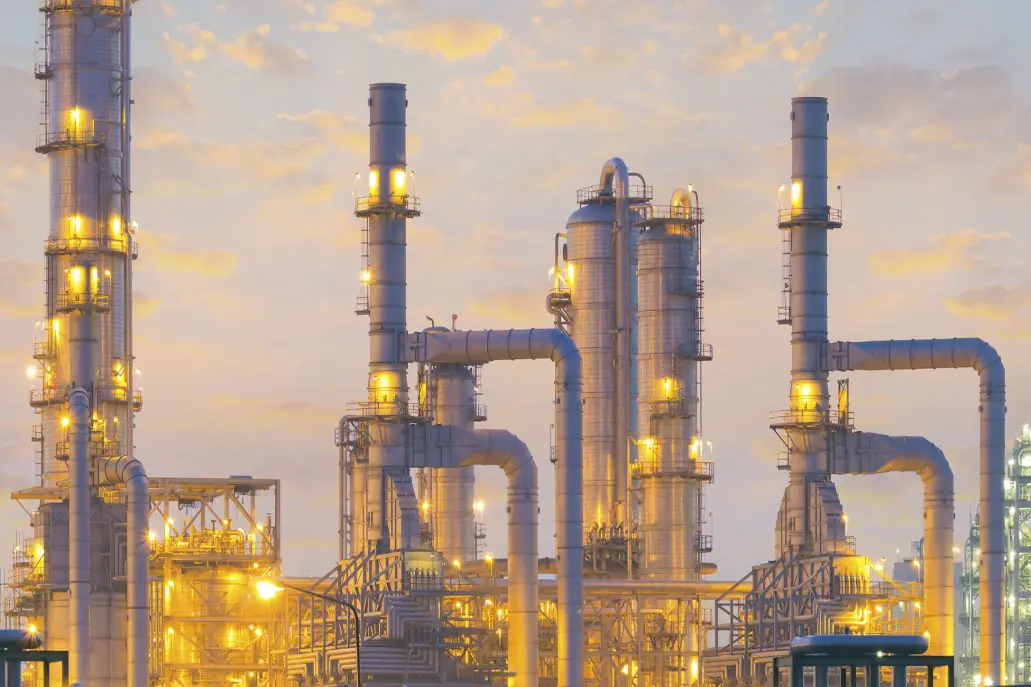
The chemical industry is a cornerstone of the global economy, encompassing the production, distribution, and application of a wide range of substances derived from raw materials like petroleum, natural gas, minerals, and biomass. It plays a pivotal role in manufacturing sectors such as agriculture, pharmaceuticals, plastics, textiles, and electronics, contributing to everyday products like fertilizers, medicines, detergents, and synthetic materials.
Key segments include:
– Basic Chemicals: These form the foundation, including commodities like ethylene, propylene, and ammonia, primarily used as building blocks for other products. Production is often large-scale and cost-driven, with major hubs in regions like the Middle East, China, and the United States.
– Specialty Chemicals: Tailored for specific applications, these include adhesives, dyes, coatings, and electronic chemicals. They command higher margins due to their customized nature and are driven by innovation and R&D.
– Agrochemicals and Pharmaceuticals: This sector focuses on crop protection agents, fertilizers, and active pharmaceutical ingredients (APIs), addressing global food security and healthcare needs.
Globally, the industry generated approximately $5 trillion in revenue in 2023, with Asia-Pacific leading production, accounting for over 50% of output, followed by North America and Europe. Major players include companies like BASF, Dow Chemical, Sinopec, and ExxonMobil, which invest heavily in sustainability and digital technologies to enhance efficiency.
Challenges include volatile raw material prices, stringent environmental regulations (e.g., REACH in Europe), and the push for greener alternatives amid climate change concerns. The industry is shifting toward sustainable practices, such as bio-based chemicals and circular economy models, to reduce carbon footprints and waste.
Looking ahead, growth is projected at 3-4% annually through 2030, driven by demand in emerging markets, advancements in green chemistry, and the rise of electric vehicles and renewable energy, which require new materials like lithium-ion batteries and advanced polymers. Digitalization, including AI and automation, is transforming operations for better safety and productivity.
Table of Contents
- Part 1: Best AI Quiz Making Software for Creating A Chemicals Industry Quiz
- Part 2: 20 Chemicals Industry Quiz Questions & Answers
- Part 3: OnlineExamMaker AI Question Generator: Generate Questions for Any Topic
Part 1: Best AI Quiz Making Software for Creating A Chemicals Industry Quiz
OnlineExamMaker is a powerful AI-powered assessment platform to create auto-grading Chemicals Industry skills assessments. It’s designed for educators, trainers, businesses, and anyone looking to generate engaging quizzes without spending hours crafting questions manually. The AI Question Generator feature allows you to input a topic or specific details, and it generates a variety of question types automatically.
Top features for assessment organizers:
● Combines AI webcam monitoring to capture cheating activities during online exam.
● Enhances assessments with interactive experience by embedding video, audio, image into quizzes and multimedia feedback.
● Once the exam ends, the exam scores, question reports, ranking and other analytics data can be exported to your device in Excel file format.
● API and SSO help trainers integrate OnlineExamMaker with Google Classroom, Microsoft Teams, CRM and more.
Automatically generate questions using AI
Part 2: 20 Chemicals Industry Quiz Questions & Answers
or
1. Question: What is the primary raw material used in the Haber-Bosch process for ammonia production?
Options:
A) Nitrogen and hydrogen
B) Carbon dioxide and water
C) Oxygen and methane
D) Sulfur and chlorine
Answer: A
Explanation: The Haber-Bosch process combines nitrogen from the air and hydrogen, typically derived from natural gas, to produce ammonia under high pressure and temperature.
2. Question: Which chemical is commonly used as a catalyst in the Contact Process for sulfuric acid production?
Options:
A) Vanadium pentoxide
B) Iron oxide
C) Platinum
D) Nickel
Answer: A
Explanation: Vanadium pentoxide acts as a catalyst to convert sulfur dioxide to sulfur trioxide in the Contact Process, improving efficiency and yield.
3. Question: What is the main environmental concern associated with chlorofluorocarbons (CFCs) in the chemicals industry?
Options:
A) Ozone layer depletion
B) Acid rain formation
C) Global warming
D) Water pollution
Answer: A
Explanation: CFCs break down ozone molecules in the stratosphere, leading to ozone layer depletion and increased UV radiation exposure.
4. Question: In polymer chemistry, what type of polymerization involves the linking of monomers with the elimination of a small molecule like water?
Options:
A) Condensation polymerization
B) Addition polymerization
C) Radical polymerization
D) Ionic polymerization
Answer: A
Explanation: Condensation polymerization forms polymers by joining monomers and releasing by-products such as water, as seen in the production of nylon or polyester.
5. Question: Which safety standard is most commonly referenced for handling hazardous chemicals in industrial settings?
Options:
A) Globally Harmonized System (GHS)
B) ISO 9001
C) OSHA regulations
D) REACH directives
Answer: C
Explanation: OSHA regulations in the United States provide specific guidelines for safe handling, storage, and disposal of hazardous chemicals to prevent workplace accidents.
6. Question: What is the chemical formula for ethylene, a key building block in the petrochemical industry?
Options:
A) C2H4
B) C2H6
C) C3H6
D) C4H8
Answer: A
Explanation: Ethylene (C2H4) is an unsaturated hydrocarbon used to produce plastics like polyethylene through polymerization processes.
7. Question: Which process is primarily used to separate crude oil into its components in the chemicals industry?
Options:
A) Fractional distillation
B) Cracking
C) Reforming
D) Alkylation
Answer: A
Explanation: Fractional distillation heats crude oil and separates it into fractions based on boiling points, such as gasoline and kerosene, for further processing.
8. Question: What is the primary use of sodium hydroxide in the chemicals industry?
Options:
A) In the production of soaps and detergents
B) As a fertilizer
C) In dye manufacturing
D) As a fuel additive
Answer: A
Explanation: Sodium hydroxide (NaOH) is a strong base used in saponification reactions to produce soaps and in various neutralization processes.
9. Question: In the production of nitric acid, what is the key intermediate compound formed?
Options:
A) Nitrogen dioxide
B) Ammonia
C) Nitric oxide
D) Nitrous oxide
Answer: A
Explanation: Nitrogen dioxide (NO2) is an essential intermediate in the Ostwald process, where it reacts with water to form nitric acid.
10. Question: Which type of plastic is derived from the monomer styrene?
Options:
A) Polystyrene
B) Polyethylene
C) Polyvinyl chloride
D) Polypropylene
Answer: A
Explanation: Polystyrene is produced through the polymerization of styrene monomers, commonly used in packaging and insulation materials.
11. Question: What is the main advantage of using biotechnology in the chemicals industry?
Options:
A) Reduced environmental impact
B) Lower production costs
C) Increased toxicity
D) Faster reaction times
Answer: A
Explanation: Biotechnology, such as in bio-based chemicals, often results in greener processes with lower emissions and waste compared to traditional methods.
12. Question: Which chemical is most commonly used as a bleaching agent in the paper industry?
Options:
A) Chlorine dioxide
B) Sodium chloride
C) Hydrogen peroxide
D) Sulfuric acid
Answer: A
Explanation: Chlorine dioxide is effective for bleaching pulp without producing harmful chlorinated by-products, making it a preferred choice.
13. Question: In chemical engineering, what does the term “yield” refer to?
Options:
A) The amount of desired product obtained from a reaction
B) The speed of the chemical reaction
C) The energy required for the process
D) The purity of the raw materials
Answer: A
Explanation: Yield measures the efficiency of a chemical reaction by quantifying the amount of useful product relative to the theoretical maximum.
14. Question: What is the primary feedstock for producing methanol?
Options:
A) Natural gas
B) Crude oil
C) Coal
D) Biomass
Answer: A
Explanation: Natural gas, primarily methane, is reformed to produce synthesis gas, which is then converted to methanol in industrial processes.
15. Question: Which regulation governs the registration, evaluation, and authorization of chemicals in the European Union?
Options:
A) REACH
B) EPA standards
C) ISO 14001
D) FDA guidelines
Answer: A
Explanation: REACH ensures that chemicals manufactured or imported into the EU are safe for human health and the environment through systematic assessment.
16. Question: What is the role of antioxidants in the chemicals industry?
Options:
A) To prevent oxidation and extend product shelf life
B) To accelerate chemical reactions
C) To increase acidity
D) To enhance color
Answer: A
Explanation: Antioxidants inhibit oxidation processes in materials like plastics and fuels, preventing degradation and maintaining quality.
17. Question: Which process is used to convert ethanol into ethylene in the chemicals industry?
Options:
A) Dehydration
B) Hydration
C) Oxidation
D) Reduction
Answer: A
Explanation: Dehydration removes water from ethanol, producing ethylene, which is a key step in bio-based chemical production.
18. Question: What is the chemical name for the compound commonly known as baking soda?
Options:
A) Sodium bicarbonate
B) Sodium carbonate
C) Potassium hydroxide
D) Calcium chloride
Answer: A
Explanation: Sodium bicarbonate (NaHCO3) is widely used in the chemicals industry for applications like pH regulation and as a leavening agent.
19. Question: In the production of pharmaceuticals, what is the purpose of crystallization?
Options:
A) To purify and separate compounds
B) To mix ingredients
C) To increase solubility
D) To speed up reactions
Answer: A
Explanation: Crystallization allows for the isolation and purification of active pharmaceutical ingredients by forming solid crystals from a solution.
20. Question: Which element is essential for the production of fertilizers like urea?
Options:
A) Nitrogen
B) Phosphorus
C) Potassium
D) Sulfur
Answer: A
Explanation: Nitrogen is a key component in urea, derived from ammonia, making it vital for enhancing soil fertility and plant growth.
or
Part 3: OnlineExamMaker AI Question Generator: Generate Questions for Any Topic
Automatically generate questions using AI