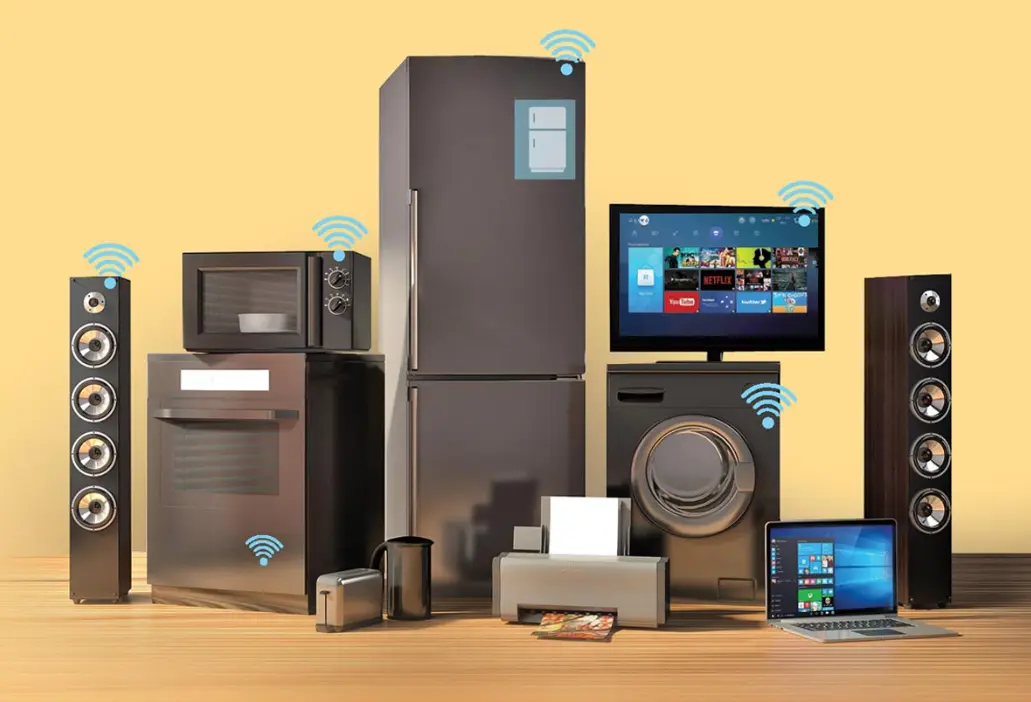
Consumer electronics refer to a diverse array of electronic devices designed for personal and household use, enhancing everyday life through technology. This category includes smartphones, laptops, tablets, televisions, gaming consoles, audio equipment like speakers and headphones, and home appliances such as smart refrigerators, vacuum cleaners, and wearable devices like fitness trackers. These products are characterized by their user-friendly interfaces, portability, and integration with digital ecosystems, making them essential for communication, entertainment, productivity, and smart home automation. Driven by innovation, consumer electronics continue to evolve with features like high-resolution displays, wireless connectivity, AI capabilities, and energy efficiency, catering to the growing demands of a connected world.
Table of Contents
- Part 1: OnlineExamMaker AI Quiz Maker – Make A Free Quiz in Minutes
- Part 2: 20 Consumer Electronics Quiz Questions & Answers
- Part 3: Save Time and Energy: Generate Quiz Questions with AI Technology
Part 1: OnlineExamMaker AI Quiz Maker – Make A Free Quiz in Minutes
Still spend a lot of time in editing questions for your next Consumer Electronics assessment? OnlineExamMaker is an AI quiz maker that leverages artificial intelligence to help users create quizzes, tests, and assessments quickly and efficiently. You can start by inputting a topic or specific details into the OnlineExamMaker AI Question Generator, and the AI will generate a set of questions almost instantly. It also offers the option to include answer explanations, which can be short or detailed, helping learners understand their mistakes.
What you may like:
● Automatic grading and insightful reports. Real-time results and interactive feedback for quiz-takers.
● The exams are automatically graded with the results instantly, so that teachers can save time and effort in grading.
● LockDown Browser to restrict browser activity during quizzes to prevent students searching answers on search engines or other software.
● Create certificates with personalized company logo, certificate title, description, date, candidate’s name, marks and signature.
Automatically generate questions using AI
Part 2: 20 Consumer Electronics Quiz Questions & Answers
or
1. Question: What is the primary function of a CPU in a consumer electronics device like a smartphone?
A. Storing data
B. Processing data
C. Displaying images
D. Charging the battery
Answer: B
Explanation: The CPU, or Central Processing Unit, handles the execution of instructions and processes data, making it essential for the device’s performance.
2. Question: Which technology is commonly used in modern LCD TVs to improve color and contrast?
A. OLED
B. LED backlighting
C. Plasma
D. CRT
Answer: B
Explanation: LED backlighting enhances the brightness, color accuracy, and energy efficiency of LCD TVs by using light-emitting diodes as the light source.
3. Question: What does RAM stand for in the context of consumer electronics?
A. Random Access Memory
B. Read Access Memory
C. Rapid Application Module
D. Remote Access Memory
Answer: A
Explanation: RAM, or Random Access Memory, is a type of computer memory that allows data to be read and written quickly, enabling smooth multitasking in devices like computers and smartphones.
4. Question: Which wireless standard is used for short-range communication in devices like wireless earbuds?
A. Wi-Fi
B. Bluetooth
C. NFC
D. 5G
Answer: B
Explanation: Bluetooth is designed for short-range, low-power wireless connections, making it ideal for devices like earbuds to pair with phones without cables.
5. Question: What is the main advantage of OLED screens over traditional LCD screens?
A. Lower cost
B. Better battery life in devices
C. Individual pixel lighting for deeper blacks
D. Higher resolution
Answer: C
Explanation: OLED screens allow each pixel to emit its own light, resulting in true blacks and infinite contrast ratios, which LCD screens cannot achieve as effectively.
6. Question: In smart home systems, what does IoT stand for?
A. Internet of Things
B. Integrated Operating Technology
C. Intelligent Online Tools
D. Internal Output Transmission
Answer: A
Explanation: IoT, or Internet of Things, refers to the network of interconnected devices that communicate over the internet, enabling automation in smart homes.
7. Question: Which component in a laptop is primarily responsible for graphics rendering?
A. Hard drive
B. GPU
C. CPU
D. RAM
Answer: B
Explanation: The GPU, or Graphics Processing Unit, is specialized for rendering images, videos, and graphics-intensive tasks, improving visual performance in laptops.
8. Question: What is the typical purpose of a USB-C port in consumer electronics?
A. To connect to printers only
B. For high-speed data transfer and charging
C. To play audio files
D. For wireless connections
Answer: B
Explanation: USB-C ports support reversible plug orientation, faster data transfer rates, and higher power delivery, making them versatile for charging and connecting devices.
9. Question: Which brand is known for producing the iPhone series?
A. Samsung
B. Apple
C. Google
D. Sony
Answer: B
Explanation: Apple designs and manufactures the iPhone, which integrates hardware and software for a seamless user experience in consumer electronics.
10. Question: What does HDMI stand for in the context of TVs and monitors?
A. High-Definition Media Interface
B. High-Density Multimedia Input
C. High-Definition Multimedia Interface
D. High-Digital Media Interface
Answer: C
Explanation: HDMI, or High-Definition Multimedia Interface, is a standard for transmitting high-quality audio and video signals between devices like TVs and gaming consoles.
11. Question: Why are lithium-ion batteries commonly used in smartphones?
A. They are cheaper to produce
B. They have high energy density and recharge quickly
C. They last longer without charging
D. They are environmentally friendly
Answer: B
Explanation: Lithium-ion batteries offer a high energy density, allowing them to store more power in a smaller size, and they support fast charging, which is ideal for portable devices.
12. Question: What is the role of a modem in a smart TV?
A. To process video signals
B. To connect to the internet
C. To store apps
D. To enhance sound quality
Answer: B
Explanation: A modem enables the smart TV to access the internet by modulating and demodulating signals, allowing streaming and online features.
13. Question: Which feature in digital cameras helps reduce blur from hand movements?
A. Auto-focus
B. Image stabilization
C. Zoom lens
D. Flash
Answer: B
Explanation: Image stabilization technology compensates for camera shake, resulting in sharper photos and videos, especially in low-light conditions.
14. Question: What is the primary benefit of 4K resolution in televisions?
A. Faster internet speed
B. Higher pixel density for sharper images
C. Longer battery life
D. Better sound quality
Answer: B
Explanation: 4K resolution provides four times the pixels of Full HD, delivering more detailed and clearer visuals on TVs and monitors.
15. Question: In wearables like fitness trackers, what does GPS provide?
A. Heart rate monitoring
B. Location tracking
C. Music storage
D. Call functionality
Answer: B
Explanation: GPS, or Global Positioning System, allows wearables to track the user’s location accurately for activities like running or hiking.
16. Question: What type of storage is typically found in modern SSDs used in laptops?
A. Magnetic disks
B. Flash memory
C. Optical drives
D. Tape drives
Answer: B
Explanation: SSDs use flash memory, which is non-volatile and provides faster read/write speeds compared to traditional hard drives.
17. Question: Which audio format is lossless and commonly used in high-quality headphones?
A. MP3
B. FLAC
C. AAC
D. WAV
Answer: B
Explanation: FLAC, or Free Lossless Audio Codec, compresses audio files without losing quality, making it popular for high-fidelity listening on headphones.
18. Question: What is the main function of a router in a home network setup?
A. To print documents
B. To manage and direct data traffic between devices
C. To charge devices
D. To play media files
Answer: B
Explanation: A router connects multiple devices to a network and directs data packets, enabling internet access and communication in consumer electronics setups.
19. Question: Why are quantum dots used in some QLED TVs?
A. To improve Wi-Fi connectivity
B. To enhance color accuracy and brightness
C. To reduce the TV’s weight
D. To add more ports
Answer: B
Explanation: Quantum dots in QLED TVs produce purer colors and higher brightness levels by emitting light at specific wavelengths.
20. Question: What does the term “refresh rate” refer to in monitors and TVs?
A. The number of colors displayed
B. The speed at which the screen updates images per second
C. The storage capacity
D. The audio output quality
Answer: B
Explanation: Refresh rate measures how many times per second the screen refreshes its image, affecting smoothness in motion, especially for gaming and videos.
or
Part 3: Save Time and Energy: Generate Quiz Questions with AI Technology
Automatically generate questions using AI