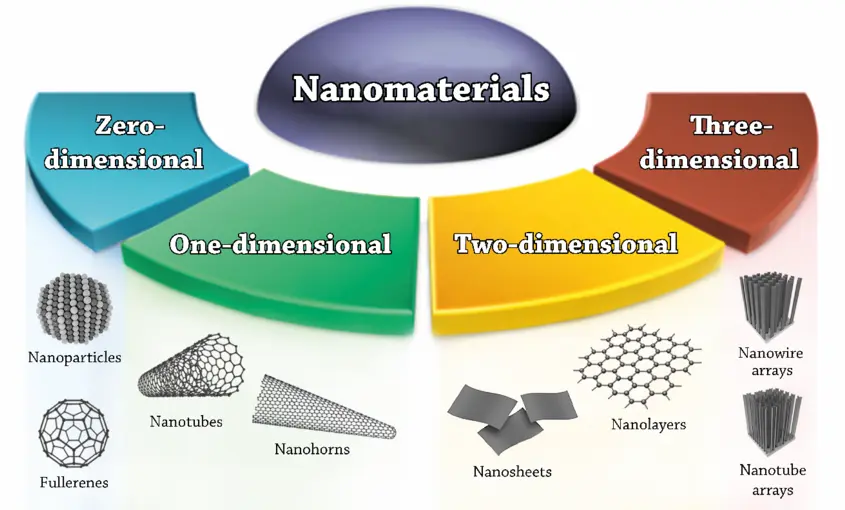
Nanomaterials are materials engineered at the nanoscale, typically ranging from 1 to 100 nanometers, where their properties differ significantly from their bulk counterparts due to quantum effects and increased surface area. These include nanoparticles, nanotubes, nanowires, and nanocomposites, which exhibit enhanced strength, conductivity, reactivity, and optical properties. Applications span medicine for targeted drug delivery and imaging, electronics for faster and smaller devices, energy for efficient solar cells and batteries, and environmental science for pollution remediation and water purification. Their development has revolutionized industries by enabling innovative solutions to complex challenges.
Table of Contents
- Part 1: OnlineExamMaker AI quiz generator – S][ave time and efforts
- Part 2: 20 Nanomaterials Quiz Questions & Answers
- Part 3: Automatically Generate Quiz Questions Using AI Question Generator
Part 1: OnlineExamMaker AI quiz generator – S][ave time and efforts
Still spend a lot of time in editing questions for your next Nanomaterials assessment? OnlineExamMaker is an AI quiz maker that leverages artificial intelligence to help users create quizzes, tests, and assessments quickly and efficiently. You can start by inputting a topic or specific details into the OnlineExamMaker AI Question Generator, and the AI will generate a set of questions almost instantly. It also offers the option to include answer explanations, which can be short or detailed, helping learners understand their mistakes.
What you may like:
● Automatic grading and insightful reports. Real-time results and interactive feedback for quiz-takers.
● The exams are automatically graded with the results instantly, so that teachers can save time and effort in grading.
● LockDown Browser to restrict browser activity during quizzes to prevent students searching answers on search engines or other software.
● OnlineExamMaker API offers private access for developers to extract your exam data back into your system automatically.
Automatically generate questions using AI
Part 2: 20 Nanomaterials Quiz Questions & Answers
or
1. What is the primary defining characteristic of nanomaterials?
A) They are made from organic materials.
B) They have at least one dimension in the nanoscale (1-100 nm).
C) They are always visible to the naked eye.
D) They conduct electricity poorly.
Answer: B
Explanation: Nanomaterials are defined by having one or more dimensions in the range of 1 to 100 nanometers, which leads to unique physical and chemical properties due to quantum effects.
2. Which of the following is an example of a carbon-based nanomaterial?
A) Silver nanoparticles.
B) Carbon nanotubes.
C) Quantum dots.
D) Gold nanowires.
Answer: B
Explanation: Carbon nanotubes are cylindrical structures made of carbon atoms, exhibiting exceptional strength and electrical conductivity, making them a key carbon-based nanomaterial.
3. What property makes quantum dots useful in displays?
A) Their ability to store large amounts of data.
B) Their size-dependent tunable bandgap, leading to vibrant colors.
C) Their high thermal conductivity.
D) Their resistance to chemical reactions.
Answer: B
Explanation: Quantum dots emit light at specific wavelengths based on their size, allowing for precise color control in applications like LED screens and medical imaging.
4. Which synthesis method involves the bottom-up approach for nanomaterials?
A) Ball milling.
B) Chemical vapor deposition (CVD).
C) Mechanical exfoliation.
D) Lithography.
Answer: B
Explanation: CVD builds nanomaterials atom by atom from gaseous precursors, representing a bottom-up method that allows for precise control over structure and composition.
5. What is the main advantage of using nanomaterials in drug delivery?
A) They increase the size of drug molecules.
B) They enable targeted delivery with reduced side effects.
C) They make drugs more soluble in water.
D) They eliminate the need for dosage control.
Answer: B
Explanation: Nanomaterials like liposomes or nanoparticles can encapsulate drugs and target specific cells, improving efficacy and minimizing harm to healthy tissues.
6. Which nanomaterial is commonly used in sunscreens for UV protection?
A) Titanium dioxide nanoparticles.
B) Graphene.
C) Fullerenes.
D) Nanowires.
Answer: A
Explanation: Titanium dioxide nanoparticles absorb and scatter UV radiation effectively while being transparent on the skin, making them ideal for sunscreen formulations.
7. What effect is responsible for the unique optical properties of gold nanoparticles?
A) Superconductivity.
B) Surface plasmon resonance.
C) Piezoelectricity.
D) Ferromagnetism.
Answer: B
Explanation: Surface plasmon resonance causes gold nanoparticles to absorb and scatter light at specific wavelengths, resulting in colors like red or blue depending on size and shape.
8. In nanomaterials, why does surface area to volume ratio increase as size decreases?
A) It allows for better electrical insulation.
B) Smaller particles have more atoms on the surface relative to the interior.
C) It reduces the material’s density.
D) It enhances magnetic properties.
Answer: B
Explanation: As particle size shrinks to the nanoscale, a greater proportion of atoms are on the surface, increasing reactivity and catalytic potential.
9. Which application of nanomaterials involves energy storage?
A) Water purification.
B) Lithium-ion batteries with nanostructured electrodes.
C) Textile manufacturing.
D) Food packaging.
Answer: B
Explanation: Nanostructured materials in batteries, such as silicon nanowires, improve capacity and charging speed by providing more surface area for ion storage.
10. What is a potential risk associated with nanomaterials?
A) They are always biodegradable.
B) Exposure may lead to toxicity or environmental harm.
C) They enhance global warming.
D) They cause immediate allergic reactions in all users.
Answer: B
Explanation: Nanomaterials can enter biological systems and cause issues like oxidative stress or bioaccumulation, necessitating careful safety assessments.
11. Which scientist is often credited with predicting the field of nanotechnology?
A) Albert Einstein.
B) Richard Feynman.
C) Marie Curie.
D) James Watson.
Answer: B
Explanation: In his 1959 talk “There’s Plenty of Room at the Bottom,” Richard Feynman envisioned manipulating matter at the atomic scale, laying the foundation for nanotechnology.
12. What is the primary use of fullerenes in medicine?
A) As structural materials in buildings.
B) For drug delivery and antioxidant properties.
C) In computer processors.
D) For water filtration.
Answer: B
Explanation: Fullerenes, like C60, can carry drugs to targeted sites and act as free radical scavengers, aiding in treatments for diseases such as cancer.
13. How do nanomaterials enhance catalytic processes?
A) By increasing the weight of the catalyst.
B) By providing more active sites due to high surface area.
C) By reducing the temperature required for reactions.
D) By making catalysts insoluble.
Answer: B
Explanation: The high surface area of nanomaterials exposes more catalytic sites, improving efficiency in reactions like those in automotive exhaust systems.
14. Which nanomaterial is known for its exceptional strength and flexibility?
A) Zinc oxide nanoparticles.
B) Graphene.
C) Iron oxide.
D) Silica nanoparticles.
Answer: B
Explanation: Graphene, a single layer of carbon atoms, has a tensile strength 200 times greater than steel and can be bent without breaking.
15. In electronics, what role do nanowires play?
A) They increase device weight.
B) They enable miniaturization and faster signal transmission.
C) They generate heat.
D) They block electrical currents.
Answer: B
Explanation: Nanowires allow for the creation of smaller, more efficient transistors and circuits, advancing technologies like flexible electronics.
16. What is the sol-gel method primarily used for?
A) Creating large-scale metal structures.
B) Synthesizing nanomaterials like aerogels and thin films.
C) Storing energy.
D) Purifying air.
Answer: B
Explanation: The sol-gel process involves turning a solution into a gel and then a solid, enabling the production of nanomaterials with controlled porosity and composition.
17. Why are magnetic nanoparticles useful in MRI imaging?
A) They produce X-rays.
B) They enhance contrast by aligning with magnetic fields.
C) They block light waves.
D) They increase radiation exposure.
Answer: B
Explanation: Magnetic nanoparticles, such as iron oxide, improve MRI image clarity by interacting with the body’s magnetic fields, aiding in diagnostics.
18. Which factor contributes to the quantum confinement effect in nanomaterials?
A) Large particle size.
B) The restriction of electron movement in small dimensions.
C) High temperature.
D) Exposure to light.
Answer: B
Explanation: In nanomaterials, electrons are confined to small spaces, altering their energy levels and leading to properties like altered bandgaps.
19. What is a common application of nanomaterials in environmental remediation?
A) Increasing pollution levels.
B) Using zero-valent iron nanoparticles to break down contaminants.
C) Blocking water flow.
D) Enhancing acid rain.
Answer: B
Explanation: Zero-valent iron nanoparticles can reduce or degrade pollutants like chlorinated solvents in groundwater through redox reactions.
20. How do dendrimers function in targeted therapy?
A) By dissolving in acids.
B) As nanoscale carriers that deliver drugs to specific sites.
C) By generating electricity.
D) As barriers in construction.
Answer: B
Explanation: Dendrimers are branched polymers that can encapsulate and release drugs precisely, improving treatment outcomes in areas like cancer therapy.
or
Part 3: Automatically generate quiz questions using OnlineExamMaker AI Question Generator
Automatically generate questions using AI