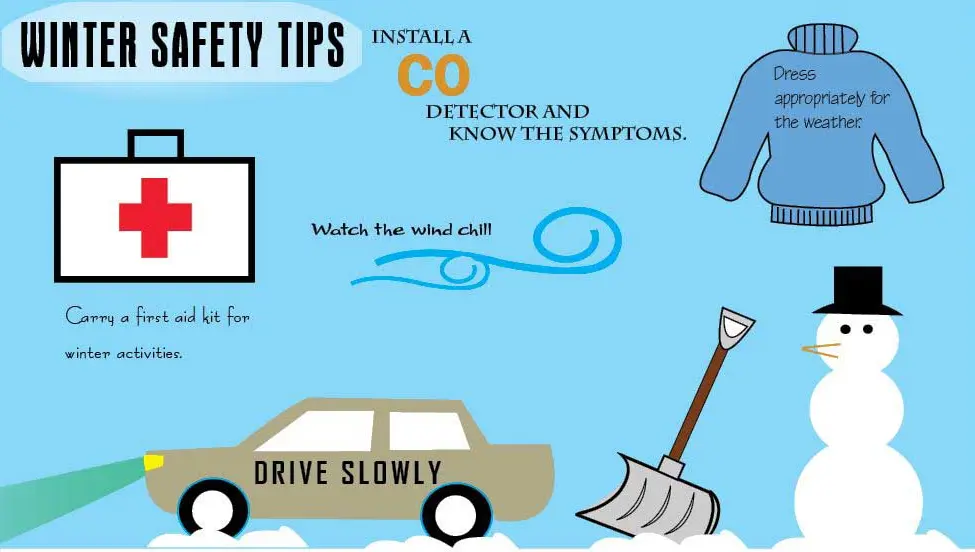
Winter safety involves preparing for cold weather hazards to protect health and prevent accidents. Dress in layers with moisture-wicking base layers, insulating middle layers, and a windproof outer layer, always including a hat, gloves, and insulated boots to retain body heat and avoid frostbite or hypothermia. Clear snow and ice from walkways and driveways to reduce slip risks, and use salt or sand for better traction. When driving, equip your vehicle with winter tires, keep an emergency kit including blankets, flashlight, and food, and drive slowly on slippery roads while maintaining a safe following distance. Indoors, ensure heating systems are maintained to prevent fires, use carbon monoxide detectors, and stay hydrated to combat dry air. For outdoor activities, check weather forecasts, take breaks to warm up, and recognize signs of cold-related illnesses like shivering or confusion—seek shelter immediately if needed. Prioritizing these measures helps ensure a safe and enjoyable winter season.
Table of Contents
- Part 1: Best AI Quiz Making Software for Creating A Winter Safety Quiz
- Part 2: 20 Winter Safety Quiz Questions & Answers
- Part 3: AI Question Generator – Automatically Create Questions for Your Next Assessment
Part 1: Best AI Quiz Making Software for Creating A Winter Safety Quiz
OnlineExamMaker is a powerful AI-powered assessment platform to create auto-grading Winter Safety skills assessments. It’s designed for educators, trainers, businesses, and anyone looking to generate engaging quizzes without spending hours crafting questions manually. The AI Question Generator feature allows you to input a topic or specific details, and it generates a variety of question types automatically.
Top features for assessment organizers:
● Combines AI webcam monitoring to capture cheating activities during online exam.
● Enhances assessments with interactive experience by embedding video, audio, image into quizzes and multimedia feedback.
● Once the exam ends, the exam scores, question reports, ranking and other analytics data can be exported to your device in Excel file format.
● API and SSO help trainers integrate OnlineExamMaker with Google Classroom, Microsoft Teams, CRM and more.
Automatically generate questions using AI
Part 2: 20 Winter Safety Quiz Questions & Answers
or
1. What is the best way to dress to prevent hypothermia in cold weather?
A. Wear light clothing to stay agile
B. Layer clothing with a waterproof outer layer
C. Wear only one thick layer
D. Avoid hats and gloves
Answer: B
Explanation: Layering clothing traps body heat and a waterproof outer layer protects against wind and moisture, reducing the risk of hypothermia.
2. Which footwear is safest for walking on icy surfaces?
A. Smooth-soled shoes
B. High heels
C. Boots with good traction
D. Sandals
Answer: C
Explanation: Boots with good traction, like those with rubber soles, provide better grip on ice, preventing slips and falls.
3. What should you do if you encounter black ice while driving?
A. Accelerate to get through it quickly
B. Brake hard to stop
C. Steer gently and reduce speed
D. Turn on your high beams
Answer: C
Explanation: Steering gently and reducing speed helps maintain control on black ice, as sudden braking can cause skidding.
4. How often should you check your car’s battery in winter?
A. Once a year
B. Every few months
C. Only when it’s cold
D. Never, as it’s not necessary
Answer: B
Explanation: Cold weather can weaken batteries, so checking every few months ensures it holds a charge and prevents breakdowns.
5. What is a sign of frostbite?
A. Increased sweating
B. Numbness and a white or bluish skin color
C. Fever
D. Rapid heartbeat
Answer: B
Explanation: Frostbite causes numbness and changes in skin color due to freezing, and early recognition allows for prompt warming.
6. Which heating device is safest to use indoors during a winter power outage?
A. A portable gasoline generator
B. A battery-powered heater
C. A fireplace with proper ventilation
D. An open flame from a candle
Answer: C
Explanation: A fireplace with proper ventilation reduces the risk of carbon monoxide poisoning, unlike generators or open flames.
7. What should you include in a winter emergency car kit?
A. Sunscreen and sunglasses
B. Blankets, flashlight, and snacks
C. Beach towels
D. Gardening tools
Answer: B
Explanation: Items like blankets and flashlights provide warmth, light, and sustenance if stranded, essential for survival in cold conditions.
8. How can you prevent pipes from freezing in your home?
A. Turn up the thermostat
B. Open windows to let cold air in
C. Insulate pipes and let faucets drip
D. Drain all water from pipes
Answer: C
Explanation: Insulating pipes and allowing a slow drip keeps water moving, preventing it from freezing and causing bursts.
9. What is the recommended way to shovel snow?
A. Lift heavy loads quickly
B. Use proper form and take breaks
C. Shovel in the heat of the day
D. Shovel without warming up
Answer: B
Explanation: Using proper form and taking breaks reduces strain on the back and heart, lowering the risk of injury.
10. Why should you avoid walking alone on frozen lakes?
A. It might be crowded
B. The ice could crack, leading to falls into cold water
C. It’s too windy
D. Wildlife might be present
Answer: B
Explanation: Frozen lakes can have thin spots that break, causing hypothermia or drowning, so it’s unsafe without proper checks.
11. What type of fuel should you use in a snow blower?
A. Any gasoline
B. Fresh, unleaded gasoline
C. Diesel only
D. Water mixed with oil
Answer: B
Explanation: Fresh, unleaded gasoline prevents engine issues and reduces fire risks, as old fuel can degrade and cause malfunctions.
12. How should you warm up after being exposed to extreme cold?
A. Use a hot bath immediately
B. Warm up gradually with warm (not hot) water or blankets
C. Drink cold beverages
D. Exercise vigorously
Answer: B
Explanation: Gradual warming prevents further tissue damage, as sudden heat can cause rebound effects in cases of frostbite.
13. What is the best practice for clearing snow from your roof?
A. Climb up and push it off quickly
B. Use a roof rake from the ground
C. Ignore it until it melts
D. Add more weight to the roof
Answer: B
Explanation: Using a roof rake from the ground safely removes heavy snow, preventing roof collapse without risking falls.
14. Which animal should you be cautious of during winter hikes?
A. Butterflies
B. Bears that are hibernating but might wake
C. Fish in frozen lakes
D. Birds
Answer: B
Explanation: Hibernating bears can become aggressive if disturbed, so maintaining distance is key for safety on winter trails.
15. What should you do if a winter storm warning is issued?
A. Go outside to experience it
B. Stock up on supplies and stay indoors
C. Plan a road trip
D. Turn off all heaters
Answer: B
Explanation: Stocking up and staying indoors minimizes exposure to dangers like high winds, low visibility, and extreme cold.
16. How can you safely use a space heater?
A. Place it near curtains for extra warmth
B. Keep it at least 3 feet from flammable items
C. Leave it on unattended overnight
D. Cover it with a blanket
Answer: B
Explanation: Maintaining distance from flammable items prevents fires, as space heaters are a common cause of winter house fires.
17. What is the primary risk of carbon monoxide in winter?
A. It causes allergies
B. It’s odorless and can lead to poisoning from faulty heaters
C. It makes rooms too warm
D. It attracts insects
Answer: B
Explanation: Carbon monoxide is deadly and undetectable without alarms, often from improper use of heating devices.
18. Why is it important to stay hydrated in winter?
A. To feel colder
B. Dry air can lead to dehydration, affecting health
C. To gain weight
D. To avoid sweating
Answer: B
Explanation: Cold weather and indoor heating dry out the air, leading to dehydration, which can exacerbate cold-related illnesses.
19. What should you do if you get lost in a snowstorm?
A. Keep moving to stay warm
B. Find shelter and stay put if possible
C. Remove your coat to signal for help
D. Drink melted snow immediately
Answer: B
Explanation: Staying put conserves energy and makes it easier for rescuers to find you, rather than wandering and risking exhaustion.
20. How can you protect your eyes in bright winter sun?
A. Wear regular glasses
B. Use sunglasses with UV protection
C. Stare directly at the sun
D. Avoid going outside
Answer: B
Explanation: Snow reflects UV rays, increasing eye strain and snow blindness risk, so UV-protected sunglasses are essential.
or
Part 3: AI Question Generator – Automatically Create Questions for Your Next Assessment
Automatically generate questions using AI