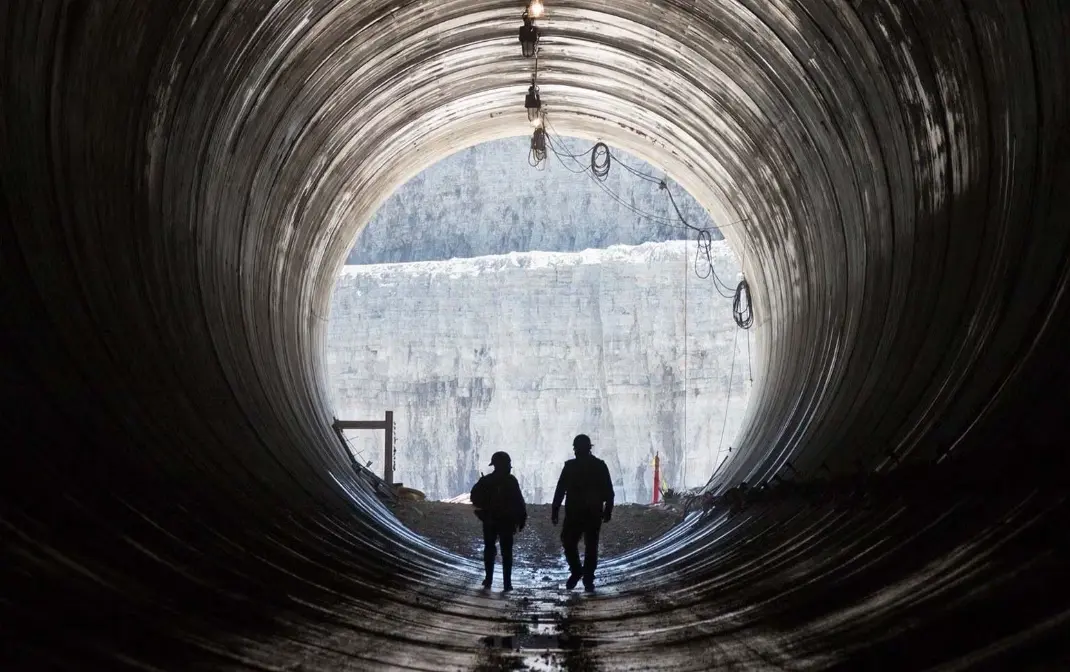
Tunnels are enigmatic passages carved through the earth, mountains, or even beneath the sea, serving as vital arteries for modern transportation, ancient secrets, and natural wonders. Imagine descending into a dimly lit corridor of concrete and steel, where the air hums with the echo of distant traffic or the rhythmic drip of water from ancient rock formations. These engineered marvels, such as the Channel Tunnel linking England and France, pierce barriers with precision, allowing trains to glide effortlessly between nations. Natural tunnels, like those formed by lava flows in volcanic regions or eroded by relentless rivers, reveal the Earth’s raw beauty, with walls adorned in glistening minerals and shadows dancing in the flicker of a flashlight. Whether it’s the claustrophobic thrill of a mine shaft or the expansive void of a subway system, tunnels symbolize human ingenuity and the unyielding quest to connect worlds, often hidden from the sun’s gaze yet pulsing with life and history.
Table of Contents
- Part 1: Best AI Quiz Making Software for Creating A Tunnels Quiz
- Part 2: 20 Tunnels Quiz Questions & Answers
- Part 3: Try OnlineExamMaker AI Question Generator to Create Quiz Questions
Part 1: Best AI Quiz Making Software for Creating A Tunnels Quiz
Nowadays more and more people create Tunnels quizzes using AI technologies, OnlineExamMaker a powerful AI-based quiz making tool that can save you time and efforts. The software makes it simple to design and launch interactive quizzes, assessments, and surveys. With the Question Editor, you can create multiple-choice, open-ended, matching, sequencing and many other types of questions for your tests, exams and inventories. You are allowed to enhance quizzes with multimedia elements like images, audio, and video to make them more interactive and visually appealing.
Take a product tour of OnlineExamMaker:
● Create a question pool through the question bank and specify how many questions you want to be randomly selected among these questions.
● Build and store questions in a centralized portal, tagged by categories and keywords for easy reuse and organization.
● Simply copy a few lines of codes, and add them to a web page, you can present your online quiz in your website, blog, or landing page.
● Randomize questions or change the order of questions to ensure exam takers don’t get the same set of questions each time.
Automatically generate questions using AI
Part 2: 20 Tunnels Quiz Questions & Answers
or
1. Question: What is a tunnel?
Options:
A. An underground passage for vehicles or pedestrians
B. A bridge over a river
C. A tall building
D. A type of boat
Answer: A
Explanation: A tunnel is an underground or underwater passage constructed for various purposes, such as transportation, providing a safe and efficient route.
2. Question: Which type of tunnel is primarily used for trains?
Options:
A. Road tunnel
B. Rail tunnel
C. Water tunnel
D. Pedestrian tunnel
Answer: B
Explanation: Rail tunnels are specifically designed to accommodate trains, ensuring safe passage through mountains, under rivers, or in urban areas.
3. Question: What is the Channel Tunnel?
Options:
A. A tunnel under the English Channel connecting the UK and France
B. A tunnel in the United States
C. A mountain tunnel in Switzerland
D. An ancient Roman tunnel
Answer: A
Explanation: The Channel Tunnel, also known as the Eurotunnel, is an undersea rail tunnel linking Folkestone in the UK to Coquelles in France, facilitating high-speed travel.
4. Question: Which method is commonly used for constructing shallow tunnels?
Options:
A. Cut and cover
B. Boring machine
C. Immersed tube
D. Drilling and blasting
Answer: A
Explanation: The cut and cover method involves excavating a trench, building the tunnel structure, and then covering it, making it suitable for tunnels near the surface.
5. Question: What is the primary purpose of ventilation in tunnels?
Options:
A. To remove exhaust fumes and provide fresh air
B. To light the tunnel
C. To strengthen the walls
D. To reduce noise
Answer: A
Explanation: Ventilation systems in tunnels help maintain air quality by expelling pollutants from vehicles and supplying fresh air, ensuring safety for users.
6. Question: Which is the longest railway tunnel in the world?
Options:
A. Gotthard Base Tunnel
B. Seikan Tunnel
C. Channel Tunnel
D. Simplon Tunnel
Answer: A
Explanation: The Gotthard Base Tunnel in Switzerland, at over 57 km long, is the longest railway tunnel, allowing for high-speed trains through the Alps.
7. Question: What type of tunnel is built underwater using pre-fabricated sections?
Options:
A. Immersed tube tunnel
B. Bored tunnel
C. Cut and cover tunnel
D. Mountain tunnel
Answer: A
Explanation: Immersed tube tunnels are constructed by sinking pre-built sections into a dredged trench on the seabed, commonly used for undersea crossings.
8. Question: Why are tunnels often lined with concrete or steel?
Options:
A. To provide structural support and prevent collapse
B. To make them colorful
C. To increase speed limits
D. To add decorations
Answer: A
Explanation: Lining materials like concrete or steel reinforce the tunnel walls, manage water pressure, and ensure long-term stability against geological forces.
9. Question: Which ancient civilization is known for building early tunnels?
Options:
A. The Romans
B. The Egyptians
C. The Greeks
D. The Mayans
Answer: A
Explanation: The Romans constructed aqueduct tunnels and drainage systems, showcasing advanced engineering that influenced modern tunnel building.
10. Question: What is a key environmental concern with tunnel construction?
Options:
A. Disruption to wildlife habitats
B. Increasing road traffic
C. Adding more bridges
D. Building taller skyscrapers
Answer: A
Explanation: Tunnel projects can disturb ecosystems, leading to habitat loss for animals, which requires mitigation measures like rerouting or ecological restoration.
11. Question: What does a tunnel boring machine (TBM) do?
Options:
A. Excavates tunnels through hard rock or soil
B. Builds bridges
C. Lays railway tracks
D. Designs tunnel maps
Answer: A
Explanation: A TBM is a specialized machine that drills and removes material to create tunnels, minimizing surface disruption and improving efficiency.
12. Question: Which tunnel connects Japan to its surrounding islands?
Options:
A. Seikan Tunnel
B. Channel Tunnel
C. Holland Tunnel
D. Lincoln Tunnel
Answer: A
Explanation: The Seikan Tunnel links the Japanese islands of Honshu and Hokkaido, serving as an undersea railway tunnel.
13. Question: What is the main advantage of twin-tube tunnels?
Options:
A. Separating traffic in opposite directions for safety
B. Reducing construction costs
C. Making tunnels shorter
D. Adding more exits
Answer: A
Explanation: Twin-tube tunnels have separate bores for each direction of traffic, reducing the risk of head-on collisions and improving flow.
14. Question: How do tunnels help in urban areas?
Options:
A. By reducing surface congestion and pollution
B. By increasing building space
C. By creating parks
D. By adding rivers
Answer: A
Explanation: Urban tunnels alleviate traffic jams by providing underground routes, which also help in lowering emissions from vehicles on the surface.
15. Question: What material is often used for waterproofing tunnels?
Options:
A. Membranes or liners
B. Wood panels
C. Glass walls
D. Metal chains
Answer: A
Explanation: Waterproof membranes or liners are applied to tunnel interiors to prevent water infiltration, especially in areas with high groundwater.
16. Question: Which tunnel is famous for connecting New York and New Jersey?
Options:
A. Holland Tunnel
B. Gotthard Tunnel
C. Eurotunnel
D. Big Dig Tunnel
Answer: A
Explanation: The Holland Tunnel is a vehicular tunnel under the Hudson River, linking Manhattan in New York to Jersey City in New Jersey.
17. Question: What is the role of emergency exits in tunnels?
Options:
A. To provide safe evacuation during incidents
B. To allow more vehicles to enter
C. To store equipment
D. To display signs
Answer: A
Explanation: Emergency exits in tunnels are designed for quick and safe escape in case of fires, accidents, or other hazards.
18. Question: Why are some tunnels built with multiple levels?
Options:
A. To handle different types of traffic, like cars and trains
B. To make them taller
C. To add shops inside
D. To reduce lighting needs
Answer: A
Explanation: Multi-level tunnels accommodate various transportation modes, optimizing space and efficiency in densely populated areas.
19. Question: What geological factor must be considered when planning a tunnel?
Options:
A. The type of rock or soil stability
B. The color of the landscape
C. The nearby weather patterns
D. The local festivals
Answer: A
Explanation: Geological stability, such as rock hardness and soil composition, is crucial to ensure the tunnel’s structural integrity and safety.
20. Question: How do modern tunnels incorporate smart technology?
Options:
A. Through sensors for traffic monitoring and automated systems
B. By using paper maps
C. With manual lighting
D. Through painted walls
Answer: A
Explanation: Smart technology in tunnels includes sensors, cameras, and AI for real-time monitoring of traffic, air quality, and security, enhancing safety and efficiency.
or
Part 3: Try OnlineExamMaker AI Question Generator to Create Quiz Questions
Automatically generate questions using AI