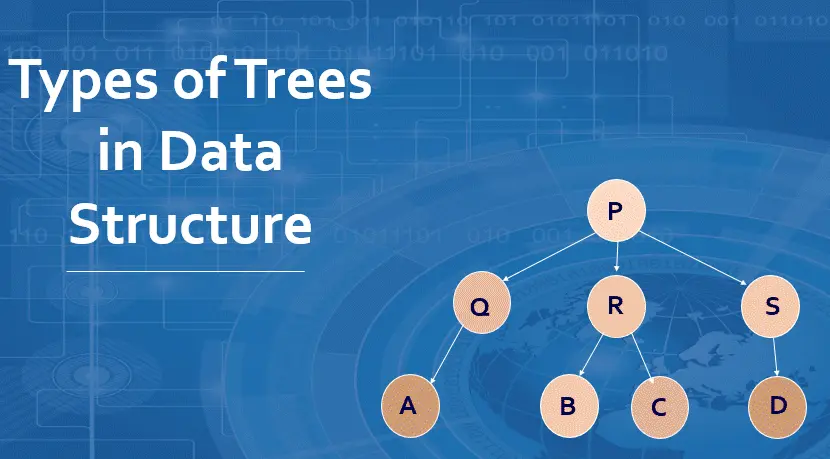
A tree is a hierarchical data structure in computer science that organizes data in a non-linear fashion, consisting of nodes connected by edges. At the top is a root node, from which child nodes branch out, forming parent-child relationships. Each node can have zero or more children, but there are no cycles, ensuring a clear hierarchy. Trees are widely used for efficient data storage and retrieval, such as in file systems, decision-making algorithms, and organizational charts. Key properties include a single path between any two nodes and various traversal methods like depth-first search (DFS) or breadth-first search (BFS). Common types include binary trees, where each node has at most two children, and balanced trees like AVL or red-black trees, which maintain efficient search times.
Table of Contents
- Part 1: OnlineExamMaker AI Quiz Maker – Make A Free Quiz in Minutes
- Part 2: 20 Tree Data Structure Quiz Questions & Answers
- Part 3: AI Question Generator – Automatically Create Questions for Your Next Assessment
Part 1: OnlineExamMaker AI Quiz Maker – Make A Free Quiz in Minutes
What’s the best way to create a Tree Data Structure quiz online? OnlineExamMaker is the best AI quiz making software for you. No coding, and no design skills required. If you don’t have the time to create your online quiz from scratch, you are able to use OnlineExamMaker AI Question Generator to create question automatically, then add them into your online assessment. What is more, the platform leverages AI proctoring and AI grading features to streamline the process while ensuring exam integrity.
Key features of OnlineExamMaker:
● Create up to 10 question types, including multiple-choice, true/false, fill-in-the-blank, matching, short answer, and essay questions.
● Build and store questions in a centralized portal, tagged by categories and keywords for easy reuse and organization.
● Automatically scores multiple-choice, true/false, and even open-ended/audio responses using AI, reducing manual work.
● Create certificates with personalized company logo, certificate title, description, date, candidate’s name, marks and signature.
Automatically generate questions using AI
Part 2: 20 Tree Data Structure Quiz Questions & Answers
or
1. Question: What is a tree in data structures?
Options:
A. A linear data structure like an array
B. A hierarchical structure with nodes and edges
C. A type of graph with cycles
D. A sequential list of elements
Answer: B
Explanation: A tree is a hierarchical data structure where nodes are connected by edges, with no cycles, starting from a root node.
2. Question: In a binary tree, what is the maximum number of children a node can have?
Options:
A. 1
B. 2
C. 3
D. Unlimited
Answer: B
Explanation: A binary tree is defined such that each node has at most two children, referred to as the left child and the right child.
3. Question: Which of the following is true for a full binary tree?
Options:
A. Every node has exactly two children except leaves
B. Every level is completely filled
C. It is always balanced
D. Nodes can have any number of children
Answer: A
Explanation: In a full binary tree, every node has either 0 or 2 children, meaning no node has only one child.
4. Question: What is the time complexity of searching in a balanced binary search tree?
Options:
A. O(1)
B. O(n)
C. O(log n)
D. O(n log n)
Answer: C
Explanation: In a balanced binary search tree, the height is logarithmic, so search operations take O(log n) time.
5. Question: In a binary search tree, where is a new node inserted?
Options:
A. At the root
B. At the leftmost leaf
C. In a position that maintains the BST property
D. At the rightmost leaf
Answer: C
Explanation: A new node is inserted in the first available spot that keeps the binary search tree property: left subtree values less than the node, right subtree values greater.
6. Question: Which traversal method visits the root node first?
Options:
A. In-order
B. Post-order
C. Pre-order
D. Level-order
Answer: C
Explanation: In pre-order traversal, the root is visited first, followed by the left subtree and then the right subtree.
7. Question: What is the minimum number of nodes in a full binary tree of height 3?
Options:
A. 4
B. 7
C. 15
D. 31
Answer: B
Explanation: A full binary tree of height h has 2^(h+1) – 1 nodes, so for height 3, it has 2^4 – 1 = 15 nodes minimum, but the question implies a complete structure starting from 1.
8. Question: In an AVL tree, what is the balance factor of a node?
Options:
A. Height of left subtree minus height of right subtree
B. Number of nodes in left subtree
C. Depth of the node
D. Total number of children
Answer: A
Explanation: The balance factor is defined as the height of the left subtree minus the height of the right subtree, and it must be -1, 0, or 1 for the tree to be balanced.
9. Question: Which of the following trees is always balanced?
Options:
A. Binary tree
B. Binary search tree
C. AVL tree
D. Red-black tree
Answer: C or D
Explanation: Both AVL and red-black trees are self-balancing, but AVL is strictly balanced with a balance factor of at most 1.
10. Question: What does in-order traversal of a binary search tree produce?
Options:
A. Sorted order of elements
B. Pre-order sequence
C. Post-order sequence
D. Random order
Answer: A
Explanation: In-order traversal of a BST visits nodes in ascending order: left subtree, root, right subtree.
11. Question: How many edges are there in a tree with n nodes?
Options:
A. n
B. n-1
C. n+1
D. 2n
Answer: B
Explanation: A tree with n nodes has exactly n-1 edges, as it is a connected acyclic graph.
12. Question: In a complete binary tree, where is the last element stored?
Options:
A. At the root
B. In the leftmost position of the last level
C. In the rightmost position of the last level
D. Anywhere in the tree
Answer: C
Explanation: In a complete binary tree, nodes are filled from left to right, so the last element is in the rightmost position of the last level.
13. Question: What is the worst-case time complexity for deleting a node in a binary search tree?
Options:
A. O(1)
B. O(log n) for balanced trees
C. O(n)
D. O(n log n)
Answer: C
Explanation: In the worst case, if the tree is skewed, deletion can take O(n) time as you may have to traverse the entire tree.
14. Question: Which of the following is not a type of binary tree traversal?
Options:
A. Depth-first
B. Breadth-first
C. Height-first
D. In-order
Answer: C
Explanation: Common traversals include depth-first (pre-order, in-order, post-order) and breadth-first (level-order), but height-first is not a standard traversal method.
15. Question: In a binary tree, what is the maximum number of nodes at level k?
Options:
A. 2^k
B. 2^(k-1)
C. k
D. k^2
Answer: A
Explanation: In a binary tree, the maximum number of nodes at level k (starting from 0) is 2^k.
16. Question: What operation is performed to maintain balance in a red-black tree?
Options:
A. Rotation
B. Swapping
C. Deletion
D. Insertion only
Answer: A
Explanation: Red-black trees use rotations and recoloring to maintain balance after insertions and deletions.
17. Question: In a tree, what is the root node?
Options:
A. The node with no parent
B. The leaf node
C. The node with the most children
D. The deepest node
Answer: A
Explanation: The root node is the topmost node in the tree, with no parent node.
18. Question: What is the primary advantage of a threaded binary tree?
Options:
A. Faster insertion
B. Efficient traversal without recursion
C. Automatic balancing
D. Reduced storage
Answer: B
Explanation: Threaded binary trees add threads (pointers) to link nodes for inorder traversal, making it more efficient without a stack.
19. Question: In a binary heap, what property is maintained?
Options:
A. All levels are fully filled
B. Heap property (parent greater than children for max-heap)
C. Nodes are in sorted order
D. It is always balanced
Answer: B
Explanation: A binary heap maintains the heap property, where for every node, the value is greater than or equal to its children’s values in a max-heap.
20. Question: How does the height of a tree affect search efficiency in a BST?
Options:
A. Taller trees are faster
B. Shorter trees lead to faster searches
C. Height does not matter
D. Only affects insertion
Answer: B
Explanation: In a BST, a shorter height (as in balanced trees) reduces the number of comparisons needed, leading to faster search times.
or
Part 3: AI Question Generator – Automatically Create Questions for Your Next Assessment
Automatically generate questions using AI