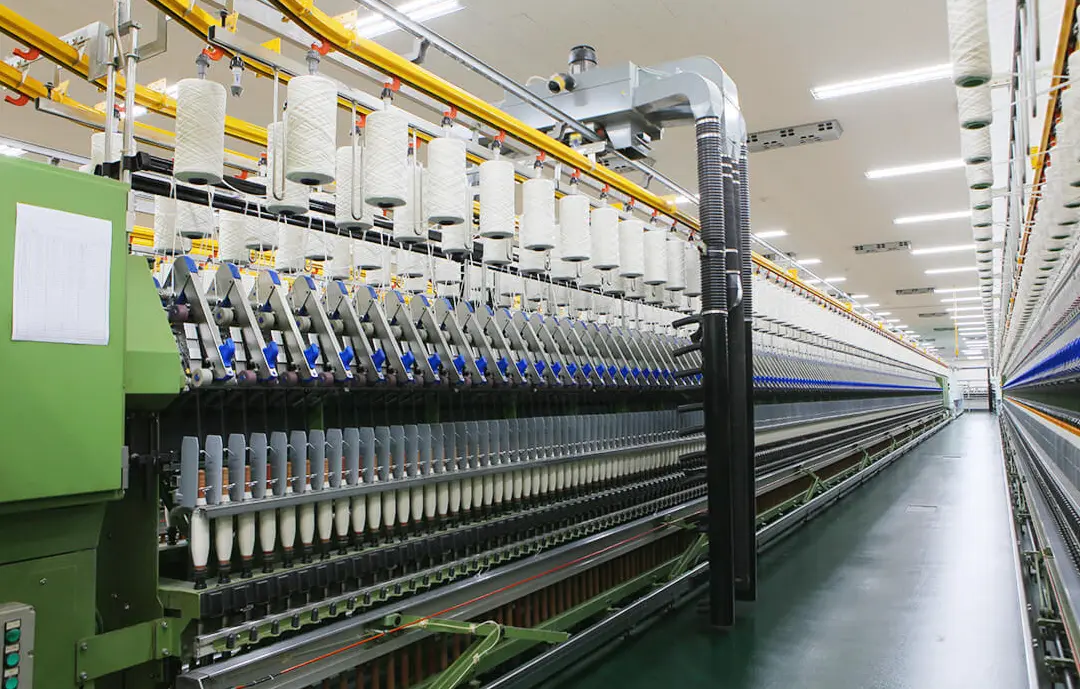
Textile spinning is the intricate process of transforming raw fibers, such as cotton, wool, or synthetic materials, into strong, continuous yarns ready for weaving or knitting. It begins with preparing the fibers by cleaning, carding, and aligning them to remove impurities and ensure uniformity. Through drafting, the fibers are gently stretched and thinned into a roving, then twisted under tension to bind them together, creating a cohesive thread that withstands pulling and wear. This essential technique, dating back to ancient civilizations, employs modern machinery like ring frames or open-end spinners to achieve high speeds and efficiency, resulting in yarns that vary in texture, strength, and fineness for diverse applications—from soft apparel fabrics to robust industrial ropes. The art of spinning not only preserves the natural qualities of the fibers but also innovates with blends and treatments to enhance durability, elasticity, and aesthetic appeal in the final textile products.
Table of Contents
- Part 1: Create A Textile Spinning Quiz in Minutes Using AI with OnlineExamMaker
- Part 2: 20 Textile Spinning Quiz Questions & Answers
- Part 3: Save Time and Energy: Generate Quiz Questions with AI Technology
Part 1: Create A Textile Spinning Quiz in Minutes Using AI with OnlineExamMaker
Are you looking for an online assessment to test the Textile Spinning skills of your learners? OnlineExamMaker uses artificial intelligence to help quiz organizers to create, manage, and analyze exams or tests automatically. Apart from AI features, OnlineExamMaker advanced security features such as full-screen lockdown browser, online webcam proctoring, and face ID recognition.
Recommended features for you:
● Includes a safe exam browser (lockdown mode), webcam and screen recording, live monitoring, and chat oversight to prevent cheating.
● Enhances assessments with interactive experience by embedding video, audio, image into quizzes and multimedia feedback.
● Once the exam ends, the exam scores, question reports, ranking and other analytics data can be exported to your device in Excel file format.
● Offers question analysis to evaluate question performance and reliability, helping instructors optimize their training plan.
Automatically generate questions using AI
Part 2: 20 Textile Spinning Quiz Questions & Answers
or
1. What is the primary function of a carding machine in textile spinning?
A) To weave yarn into fabric
B) To align and clean fibers
C) To dye raw fibers
D) To wind yarn onto bobbins
Answer: B
Explanation: The carding machine disentangles, cleans, and aligns fibers to form a sliver, which is essential for removing impurities and preparing fibers for further processing.
2. Which type of spinning system uses a rotating rotor to produce yarn?
A) Ring spinning
B) Open-end spinning
C) Air-jet spinning
D) Wet spinning
Answer: B
Explanation: Open-end spinning employs a rotor that collects and twists fibers directly into yarn, making it faster and more efficient for medium-quality yarns compared to traditional methods.
3. What does the term “drafting” refer to in textile spinning?
A) Adding moisture to fibers
B) Attenuating and aligning fibers to make them longer and thinner
C) Removing short fibers from the mix
D) Applying twist to yarn
Answer: B
Explanation: Drafting involves drawing out fibers to reduce their thickness while maintaining alignment, which is a key step in processes like drawing and roving to achieve uniform yarn.
4. In ring spinning, what role does the traveler play?
A) It holds the spindle in place
B) It guides and twists the yarn as it is wound onto the bobbin
C) It feeds fibers into the machine
D) It controls the speed of the ring
Answer: B
Explanation: The traveler moves around the ring, facilitating the twisting of fibers into yarn and guiding it onto the bobbin, which helps in creating the necessary tension and structure.
5. Which fiber is most commonly used in natural textile spinning?
A) Polyester
B) Cotton
C) Nylon
D) Acrylic
Answer: B
Explanation: Cotton is a natural fiber widely used due to its availability, comfort, and ease of spinning into yarns for various textiles, unlike synthetic fibers which require different processing.
6. What is the purpose of the roving frame in spinning?
A) To spin final yarn
B) To convert sliver into a finer, twisted roving
C) To card raw fibers
D) To package the finished product
Answer: B
Explanation: The roving frame attenuates and adds slight twist to the sliver, producing roving that is suitable for the final spinning process, ensuring better control and uniformity.
7. How is yarn count typically measured in the English system?
A) By weight per unit length
B) By length per unit weight
C) By diameter of the yarn
D) By the number of twists per inch
Answer: B
Explanation: Yarn count in the English system is defined as the number of 840-yard hanks per pound, indicating fineness based on length per unit weight for consistency in production.
8. What causes “uneven yarn” as a defect in spinning?
A) Perfect alignment of fibers
B) Irregular fiber feeding or drafting issues
C) Excessive moisture in fibers
D) High twisting speed
Answer: B
Explanation: Uneven yarn results from inconsistencies in fiber feeding or drafting, leading to variations in thickness that affect the quality and appearance of the final fabric.
9. Which spinning method is known for producing stronger yarns with higher twist?
A) Open-end spinning
B) Ring spinning
C) Friction spinning
D) Electrostatic spinning
Answer: B
Explanation: Ring spinning produces yarns with high twist and strength due to the continuous twisting action around the ring, making it ideal for high-quality applications like apparel.
10. What is the main advantage of air-jet spinning over ring spinning?
A) Higher yarn strength
B) Lower production speed
C) Greater energy efficiency and speed
D) Better fiber alignment
Answer: C
Explanation: Air-jet spinning uses high-speed air to twist fibers, allowing for faster production and lower energy use compared to ring spinning, though it may sacrifice some yarn quality.
11. In textile spinning, what does “comber noil” refer to?
A) The main combed sliver
B) Short fibers removed during combing
C) The final spun yarn
D) Waste from carding
Answer: B
Explanation: Comber noil consists of short fibers extracted during the combing process, which are typically recycled or discarded, improving the quality of the remaining long fibers.
12. Which factor primarily affects the twist level in spun yarn?
A) Fiber length
B) Spindle speed
C) Humidity in the mill
D) Type of dye used
Answer: B
Explanation: Spindle speed directly influences the amount of twist inserted into the yarn, with higher speeds resulting in more twists per inch for better strength and cohesion.
13. What is the role of the drawing frame in spinning?
A) To add color to fibers
B) To blend and parallelize fibers for uniformity
C) To wind yarn onto cones
D) To remove moisture
Answer: B
Explanation: The drawing frame combines and straightens slivers from multiple carding machines, ensuring even fiber distribution and reducing irregularities before roving.
14. Which synthetic fiber is commonly spun using the melt spinning method?
A) Cotton
B) Wool
C) Polyester
D) Silk
Answer: C
Explanation: Polyester is melted and extruded through spinnerets in melt spinning, allowing for efficient production of continuous filaments used in various textile applications.
15. How does humidity affect the spinning process?
A) It has no effect
B) It can cause fibers to break easily
C) It helps in reducing static electricity and improving fiber cohesion
D) It increases yarn thickness
Answer: C
Explanation: Proper humidity levels reduce static charges on fibers, making them easier to handle and spin without breakage, thus maintaining process efficiency.
16. What is a key characteristic of core-spun yarns?
A) They are made entirely of one fiber
B) They have a core of one material wrapped with another
C) They are always untwisted
D) They are used only for weaving
Answer: B
Explanation: Core-spun yarns feature a central core fiber (e.g., elastane) surrounded by an outer layer, providing enhanced strength, elasticity, and functionality in fabrics.
17. In spinning, what does “blow room” processing involve?
A) Final yarn packaging
B) Initial cleaning and opening of fibers
C) Dyeing of yarns
D) Weaving preparation
Answer: B
Explanation: The blow room is the first stage where raw fibers are opened, cleaned, and blended to remove impurities, setting the foundation for subsequent spinning processes.
18. Which spinning technique is best for producing fancy yarns with effects?
A) Ring spinning
B) Hollow spindle spinning
C) Open-end spinning
D) Wet spinning
Answer: B
Explanation: Hollow spindle spinning allows for the incorporation of effects like slubs or neps by feeding additional fibers through the spindle, creating textured yarns for decorative uses.
19. What is the primary cause of “end breaks” in spinning machines?
A) Excessive fiber lubrication
B) Inconsistent tension or weak spots in yarn
C) High humidity levels
D) Over-twisting
Answer: B
Explanation: End breaks occur due to uneven tension or weak fiber areas, disrupting the continuous spinning process and requiring immediate machine adjustments.
20. How does the speed frame contribute to yarn production?
A) By finalizing the weaving
B) By converting roving into yarn with precise twist
C) By cleaning fibers
D) By packaging the product
Answer: B
Explanation: The speed frame takes roving and applies the necessary twist and attenuation to produce the final yarn, ensuring it meets strength and quality standards for end-use.
or
Part 3: Save Time and Energy: Generate Quiz Questions with AI Technology
Automatically generate questions using AI