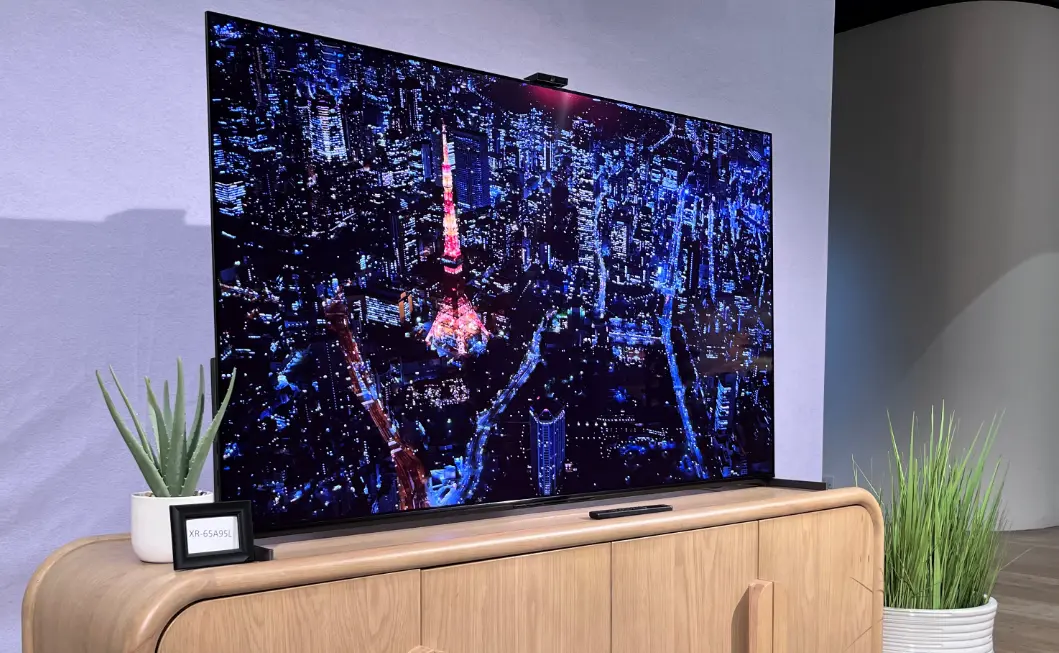
Televisions, often referred to as TVs, are electronic devices that receive and display broadcast signals to deliver visual and audio content. Invented in the early 20th century, they have evolved from bulky cathode ray tube (CRT) models to sleek, flat-screen options like LCD, LED, and OLED displays. These devices provide entertainment through movies, shows, and games; news and information via live broadcasts; and educational programming for learning. Modern smart TVs connect to the internet, enabling streaming from platforms like Netflix or YouTube, and often include features such as high-definition resolution, voice control, and built-in apps. With sizes ranging from compact 24-inch models for bedrooms to expansive 85-inch screens for living rooms, televisions remain a central fixture in homes, blending technology with everyday life.
Table of Contents
- Part 1:
- Part 2: 20 Televisions Quiz Questions & Answers
- Part 3: Save Time and Energy: Generate Quiz Questions with AI Technology
Part 1: OnlineExamMaker AI Quiz Maker – Make A Free Quiz in Minutes
What’s the best way to create a Televisions quiz online? OnlineExamMaker is the best AI quiz making software for you. No coding, and no design skills required. If you don’t have the time to create your online quiz from scratch, you are able to use OnlineExamMaker AI Question Generator to create question automatically, then add them into your online assessment. What is more, the platform leverages AI proctoring and AI grading features to streamline the process while ensuring exam integrity.
Key features of OnlineExamMaker:
● Create up to 10 question types, including multiple-choice, true/false, fill-in-the-blank, matching, short answer, and essay questions.
● Build and store questions in a centralized portal, tagged by categories and keywords for easy reuse and organization.
● Automatically scores multiple-choice, true/false, and even open-ended/audio responses using AI, reducing manual work.
● Create certificates with personalized company logo, certificate title, description, date, candidate’s name, marks and signature.
Automatically generate questions using AI
Part 2: 20 Televisions Quiz Questions & Answers
or
1. Question: What year was the first mechanical television demonstrated by John Logie Baird?
Options: A) 1926
B) 1936
C) 1946
D) 1956
Answer: A) 1926
Explanation: John Logie Baird demonstrated the first mechanical television in 1926, marking a key milestone in television history.
2. Question: Which type of television screen technology uses organic compounds to emit light?
Options: A) LCD
B) LED
C) OLED
D) Plasma
Answer: C) OLED
Explanation: OLED screens use organic compounds that emit light when an electric current is applied, allowing for better contrast and flexibility compared to other technologies.
3. Question: What does the acronym “HD” stand for in the context of televisions?
Options: A) High Definition
B) High Display
C) Horizontal Dots
D) High Density
Answer: A) High Definition
Explanation: HD stands for High Definition, which refers to video resolutions higher than standard definition, offering clearer and more detailed images.
4. Question: Which television standard was primarily used in North America for analog broadcasting?
Options: A) PAL
B) SECAM
C) NTSC
D) ATSC
Answer: C) NTSC
Explanation: NTSC (National Television System Committee) was the analog television standard used in North America, operating at 30 frames per second.
5. Question: What is the typical refresh rate for most modern televisions?
Options: A) 24 Hz
B) 60 Hz
C) 120 Hz
D) 240 Hz
Answer: B) 60 Hz
Explanation: Most modern televisions have a standard refresh rate of 60 Hz, which means they refresh the image 60 times per second for smooth motion.
6. Question: Which inventor is credited with developing the first electronic television system?
Options: A) Thomas Edison
B) Philo Farnsworth
C) Nikola Tesla
D) Guglielmo Marconi
Answer: B) Philo Farnsworth
Explanation: Philo Farnsworth invented the first fully electronic television system in 1927, using the image dissector tube.
7. Question: What aspect ratio is commonly used for modern widescreen televisions?
Options: A) 4:3
B) 16:9
C) 1:1
D) 21:9
Answer: B) 16:9
Explanation: The 16:9 aspect ratio is standard for widescreen televisions, providing a wider field of view that matches most movies and digital content.
8. Question: Which technology allows televisions to connect to the internet for streaming services?
Options: A) HDMI
B) Smart TV
C) VGA
D) Composite
Answer: B) Smart TV
Explanation: Smart TV technology enables televisions to access the internet, allowing users to stream content from services like Netflix or YouTube.
9. Question: When was color television broadcasting first introduced in the United States?
Options: A) 1941
B) 1953
C) 1965
D) 1978
Answer: B) 1953
Explanation: Color television broadcasting began in the United States in 1953 with the FCC approving the NTSC color standard.
10. Question: What is the primary difference between LCD and LED televisions?
Options: A) LED uses backlighting
B) LCD is always backlit
C) They are the same technology
D) LED has better resolution
Answer: A) LED uses backlighting
Explanation: LED televisions are a type of LCD that use LED backlighting for improved energy efficiency and contrast, while traditional LCDs often use fluorescent lamps.
11. Question: Which resolution is higher than 1080p but lower than 8K?
Options: A) 720p
B) 4K
C) 2K
D) 1080i
Answer: B) 4K
Explanation: 4K resolution (3840×2160 pixels) is higher than 1080p (1920×1080 pixels) and offers four times the detail, but it is lower than 8K resolution.
12. Question: What does HDR stand for in television features?
Options: A) High Dynamic Range
B) High Definition Resolution
C) High Data Rate
D) High Display Ratio
Answer: A) High Dynamic Range
Explanation: HDR (High Dynamic Range) enhances the contrast and color accuracy on televisions, making images appear more vivid and lifelike.
13. Question: Which type of television connection is used for high-quality audio and video?
Options: A) RCA
B) HDMI
C) Coaxial
D) VGA
Answer: B) HDMI
Explanation: HDMI (High-Definition Multimedia Interface) transmits high-quality uncompressed audio and video signals between devices like Blu-ray players and televisions.
14. Question: When did the transition from analog to digital television broadcasting occur in most countries?
Options: A) 1990s
B) 2000s
C) 2010s
D) 2020s
Answer: C) 2010s
Explanation: The shift to digital television broadcasting happened primarily in the 2010s, improving signal quality and efficiency worldwide.
15. Question: What is the main advantage of QLED televisions over standard LED TVs?
Options: A) Lower cost
B) Enhanced quantum dot color accuracy
C) Faster refresh rates
D) Smaller size
Answer: B) Enhanced quantum dot color accuracy
Explanation: QLED uses quantum dots to produce more vibrant and accurate colors compared to traditional LED televisions.
16. Question: Which feature on televisions helps reduce motion blur during fast scenes?
Options: A) Black Frame Insertion
B) Auto Brightness
C) Picture-in-Picture
D) Sleep Timer
Answer: A) Black Frame Insertion
Explanation: Black Frame Insertion inserts black frames between images to reduce motion blur, making fast-moving content clearer on televisions.
17. Question: What year was the first commercial television broadcast in the UK?
Options: A) 1929
B) 1936
C) 1948
D) 1955
Answer: B) 1936
Explanation: The BBC began the first regular high-definition television service in the UK in 1936, using the 405-line system.
18. Question: Which television technology is known for its deep blacks and wide viewing angles?
Options: A) CRT
B) OLED
C) Plasma
D) LCD
Answer: B) OLED
Explanation: OLED technology allows individual pixels to turn off completely, resulting in true blacks and excellent viewing angles.
19. Question: What is the standard frame rate for most films shown on televisions?
Options: A) 24 fps
B) 30 fps
C) 50 fps
D) 60 fps
Answer: A) 24 fps
Explanation: Films are typically shot and displayed at 24 frames per second, which is a standard in the film industry and adapted for televisions.
20. Question: Which component in a television converts electrical signals into visible images?
Options: A) Tuner
B) Speaker
C) Display Panel
D) Remote Sensor
Answer: C) Display Panel
Explanation: The display panel, such as an LCD or OLED screen, is responsible for converting electrical signals into the visible images viewers see.
or
Part 3: Save Time and Energy: Generate Quiz Questions with AI Technology
Automatically generate questions using AI